
Diverticulitis food list is the search most people make when eating suddenly feels risky. A food that was fine last month now comes with a question mark. This guide sorts that out using a printable chart with three plain columns: EAT, LIMIT and AVOID. It is general food information, not a medical prescription, and it says clearly to check with a doctor or dietitian, especially during a flare. What fits you depends on where you are in recovery and what your care team has said.
The chart in the first box below is a diverticulitis food list, with eat, limit and avoid columns on one page. The EAT column is the safe base for most days. The LIMIT column is foods to watch, in portions and at the right time. The AVOID column is foods to skip as routine choices. Keep the printed chart in the kitchen, and use it at the shops, so the decisions are made at home instead of in the aisle when you are hungry and tired.
One honest note before we start. The AVOID column’s first group is raw high fiber foods, not fruit, and this guide never labels it as fruit. The second box is a diverticulosis bowl builder, and diverticulosis is a different related condition, not diverticulitis. This guide says that plainly, and it presents the bowl builder as a higher fiber meal builder angle, never as diverticulitis treatment. Diverticulitis food guidance here is general information, not a prescription, and during a flare the advice from your own doctor or dietitian comes first. For a related gut health list, our low FODMAP diet meal plan guide covers a different set of foods in a meal plan format.
In this guide:
- What the Eat, Limit and Avoid Columns Mean
- What to Eat: The EAT Column in Full
- Worked Example: A Day of Eating from the EAT Column
- A Shopping List from the EAT Lists
- Frequently Asked Questions

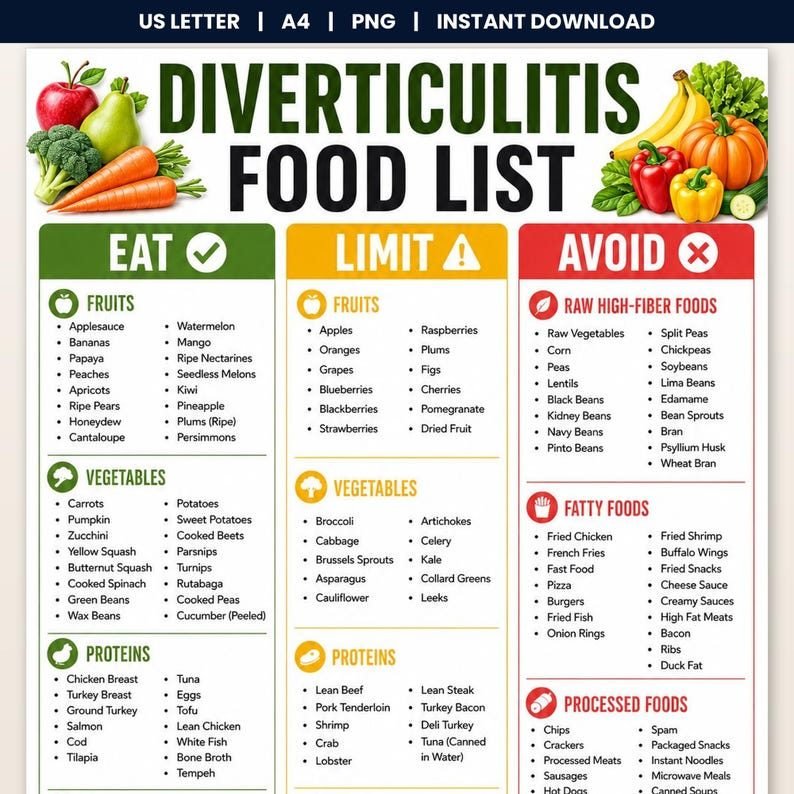
- Eat, limit and avoid columns on one chart, so the safe choices are easy to spot at a glance
- Eat fruits include applesauce, bananas, papaya, peaches, ripe pears, honeydew, cantaloupe and watermelon
- Eat vegetables include carrots, pumpkin, zucchini, cooked spinach, green beans, potatoes and sweet potatoes
- Eat proteins include chicken breast, turkey breast, salmon, cod, tilapia, tuna, eggs and tofu
- Avoid raw high-fiber foods, fatty foods and processed foods are listed in full on the chart
- Print sizes US Letter and A4, as 4 PDFs plus a PNG per the listing (the listing does not state A5)
- Instant download · Print at home · US Letter · A4
Use code BLOG10 for 65% OFF at Etsy checkout!
What the Eat, Limit and Avoid Columns Mean
The chart is headed Diverticulitis Food List, EAT, LIMIT, AVOID. Three columns, one page, and the logic is simple. EAT means choose these more often. LIMIT means watch the portion and the timing. AVOID means skip these as routine choices. The columns do not judge the food. They sort it by how it tends to sit during recovery, and they give you a starting point to talk through with your doctor or dietitian.
The LIMIT column is where most of the real thinking happens. It holds fruits like apples, oranges, grapes, blueberries, blackberries, strawberries, raspberries, plums, figs, cherries, pomegranate and dried fruit. It holds vegetables like broccoli, cabbage, Brussels sprouts, asparagus, cauliflower, artichokes, celery, kale, collard greens and leeks. It holds proteins like lean beef, pork tenderloin, shrimp, crab, lobster, lean steak, turkey bacon, deli turkey and tuna canned in water. None of these are banned by the chart. They are portion and timing foods, and the portion is something to agree with your care team.
The AVOID column has three groups, and the first one is easy to misread. It is raw high fiber foods: raw vegetables, corn, peas, lentils, black beans, kidney beans, navy beans, pinto beans, split peas, chickpeas, soybeans, lima beans, edamame, bean sprouts, bran, psyllium husk and wheat bran. That group is not a fruit group, and this guide never calls it one. The second AVOID group is fatty foods: fried chicken, French fries, fast food, pizza, burgers, fried fish, onion rings, fried shrimp, buffalo wings, fried snacks, cheese sauce, creamy sauces, high fat meats, bacon, ribs and duck fat. The third is processed foods: chips, crackers, processed meats, sausages, hot dogs, Spam, packaged snacks, instant noodles, microwave meals and canned soups.
Why do the same foods appear in different columns. Form matters. A cooked vegetable can sit in EAT while the raw version sits in AVOID. A fresh protein can sit in EAT while the fried version sits in AVOID. Cooking softens fibre, frying adds fat, and processing adds salt and additives. That is why the chart sorts by form as well as by food, and why a printed list beats memory. You can check the form, not just the name.
Timing matters too. During a flare, most care teams narrow the diet sharply, often to low fibre foods and fluids, and then broaden it step by step as symptoms settle. This guide does not set that timeline. It walks through the chart, shows a worked day built only from the EAT column, and gives a shopping list from the same column. If you are in a flare now, stop here and call your doctor or dietitian before changing what you eat. Our gastroparesis food list guide shows another eat, limit and avoid chart where timing and form matter just as much.
| Column | What it means | Examples from the chart |
|---|---|---|
| EAT | Choose more often | Applesauce, bananas, carrots, pumpkin, chicken breast, salmon, eggs, tofu |
| LIMIT | Watch portion and timing | Apples, broccoli, cabbage, lean beef, shrimp, deli turkey, dried fruit |
| AVOID | Skip as routine choices | Raw vegetables, corn, lentils, fried chicken, pizza, chips, sausages, canned soups |
Keep the chart visible while you cook. Stick it inside a cupboard door or on the fridge, and check it before you shop. A list you can see is a list you will use. A list in a drawer is just paper.
What to Eat: The EAT Column in Full
The EAT column is the heart of this guide, and it is generous. Start with fruits. The EAT fruits are applesauce, bananas, papaya, peaches, apricots, ripe pears, honeydew, cantaloupe, watermelon, mango, ripe nectarines, seedless melons, kiwi, pineapple, plums that are ripe, and persimmons. Notice the pattern. Soft, ripe and peeled fruit features heavily, and applesauce sits here while whole apples sit in LIMIT. The form is the difference, and it shows up again and again on this chart.
The EAT vegetables are carrots, pumpkin, zucchini, yellow squash, butternut squash, cooked spinach, green beans, wax beans, potatoes, sweet potatoes, cooked beets, parsnips, turnips, rutabaga, cooked peas and cucumber that is peeled. Cooked spinach sits here while raw vegetables sit in AVOID. Cooked peas sit here while raw peas sit in AVOID. Potatoes and sweet potatoes sit here, plain and cooked, while French fries sit in AVOID. The cooking method is doing a lot of the work, and it is worth cooking vegetables until they are soft and easy to eat.
The EAT proteins are chicken breast, turkey breast, ground turkey, salmon, cod, tilapia, tuna, eggs, tofu, lean chicken, white fish, bone broth and tempeh. These are lean and simply cooked proteins, and they cover most meals without leaving the column. Chicken breast with potatoes, salmon with cooked carrots, eggs with soft vegetables, tofu in a gentle soup. None of these need frying, and none of them need a heavy sauce. Bone broth is in the list too, and it is a useful base for soups when appetite is low.
Put the three EAT groups together and you have a workable week. Fruit for breakfast and snacks. Cooked vegetables with lunch and dinner. A lean protein at the main meal. Water alongside, because fluids matter with any gut condition, and your care team can advise on amounts. The chart does not set fluid targets, and this guide does not either. It just notes that the EAT column is built for simple, soft, plainly cooked food, and that is the pattern to follow.
One more thing to notice. The EAT column does not include bread, pasta or rice by name on the legible chart, so this guide does not add them. That does not mean they are banned. It means the chart as printed does not list them, and this guide only names what the chart names. If you want a grain with a meal, ask your doctor or dietitian which ones fit your current stage, and write the answer on your printed chart. Our high fiber foods list for gut health guide covers fibre in general, and it helps explain why some high fibre foods sit in AVOID here during recovery.
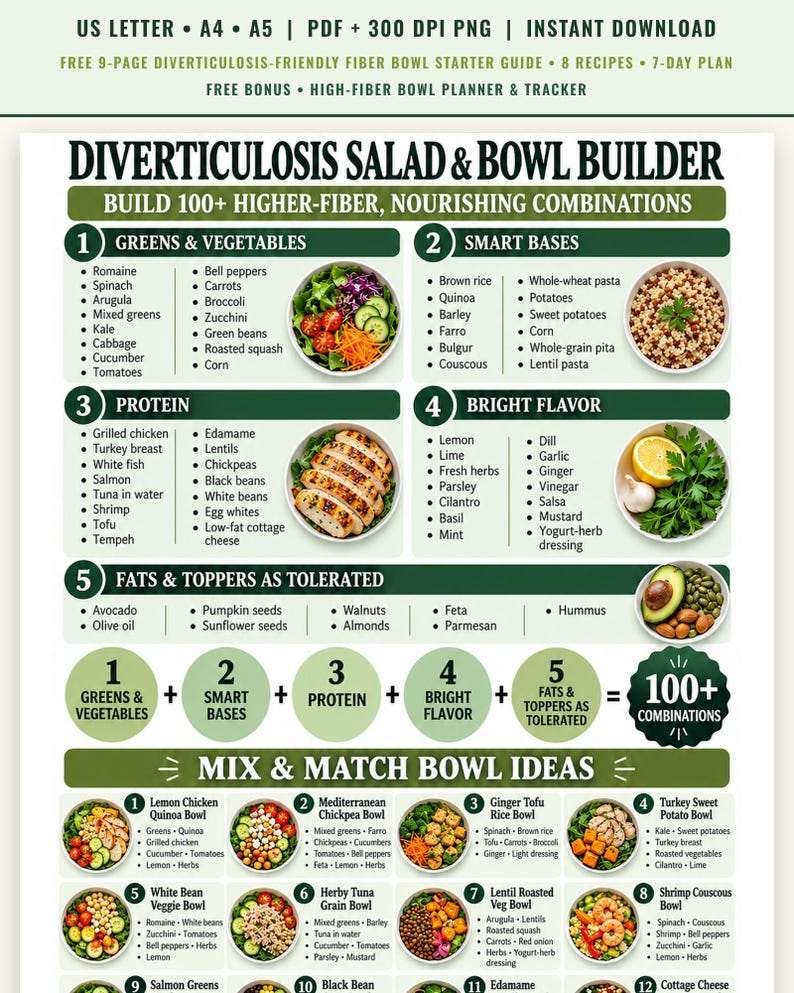
- 100+ higher-fiber bowl combinations built from 5 picks: greens and vegetables, a smart base, a protein, a bright flavor and fats and toppers as tolerated
- 8 mix and match bowl ideas are legible on the chart: Lemon Chicken Quinoa Bowl, Mediterranean Chickpea Bowl, Ginger Tofu Rice Bowl, Turkey Sweet Potato Bowl, White Bean Veggie Bowl, Herby Tuna Grain Bowl, Lentil Roasted Veg Bowl and Shrimp Couscous Bowl; bowls 9 to 12 are named by title only (Salmon Greens, Black Bean, Edamame, Cottage Cheese)
- Note the difference: this builder is for diverticulosis, the related condition, not for a diverticulitis flare
- Print sizes US Letter, A4 and A5, as 3 PDFs plus a PNG and a ZIP per the listing
- Instant download · Print at home · US Letter · A4 · A5
Use code BLOG10 for 65% OFF at Etsy checkout!
Worked Example: A Day of Eating from the EAT Column
Here is a worked day of eating built only from the EAT column of the chart. Breakfast, lunch, dinner and a snack, all from foods the chart lists as EAT. It is one day, not a prescription, and it shows how the column works in practice rather than in theory. If you are in a flare, check this kind of day with your doctor or dietitian first, and adjust the portions to what they have advised.
Breakfast is simple. A banana with applesauce, plus an egg cooked plainly. The banana is soft and ripe, the applesauce is smooth, and the egg is a lean protein that needs no frying. If you want a warm drink, water or a plain warm drink your care team has approved is enough. Keep breakfast light and soft, and eat slowly. A rushed breakfast is harder on the gut than a slow one, whatever is on the plate.
Lunch is chicken breast with cooked carrots and potatoes. The chicken is plain and lean, the carrots are cooked until soft, and the potatoes are plain and cooked. That is three EAT foods on one plate, and it is a full meal without leaving the column. A small bowl of ripe pears or peaches after lunch works as a gentle finish. If you are still hungry, a second small serving of cooked vegetables is a better choice than reaching into the LIMIT column for something raw.
Dinner is salmon with pumpkin and zucchini, all cooked until soft. Salmon is an EAT protein, pumpkin and zucchini are EAT vegetables, and the meal is light but satisfying. A bowl of bone broth before dinner can help if appetite is low, and it is on the EAT list too. Keep the seasoning plain. Salt, herbs and a little oil are usually fine, but heavy sauces and fried coatings belong in the AVOID column, and this guide leaves them there.
The snack is papaya or cantaloupe, ripe and soft, or a small bowl of applesauce if fruit feels too much. Snacks are for topping up, not for a second meal. A small snack between lunch and dinner, or after dinner if you are hungry, keeps energy steady without overloading the gut at one sitting. The whole day uses only EAT foods: bananas, applesauce, eggs, chicken breast, carrots, potatoes, ripe pears, salmon, pumpkin, zucchini, bone broth and papaya. That is the point of the worked day. The EAT column alone can carry a full day, and it does so with plain, soft, simply cooked food.
Now a word on the second box, because it needs a clear label. The diverticulosis salad bowl builder is for diverticulosis, a different related condition. It builds 100+ higher fiber bowl combinations from 5 picks: greens and vegetables, a smart base, a protein, a bright flavor, and fats and toppers as tolerated. The 8 mix and match bowl ideas that are legible on the chart are the Lemon Chicken Quinoa Bowl, the Mediterranean Chickpea Bowl, the Ginger Tofu Rice Bowl, the Turkey Sweet Potato Bowl, the White Bean Veggie Bowl, the Herby Tuna Grain Bowl, the Lentil Roasted Veg Bowl and the Shrimp Couscous Bowl. Bowls 9 to 12 are named by title only, Salmon Greens, Black Bean, Edamame and Cottage Cheese. Those bowls are higher fiber by design, and they are not a diverticulitis flare plan. Do not use a higher fiber bowl builder during a flare unless your doctor or dietitian has said to. The post says so plainly, and the bowl builder is here as a related chart for readers who have diverticulosis, not as treatment for diverticulitis.
A Shopping List from the EAT Lists
Here is a worked shopping list built from the EAT lists on the chart, organised by section so you can walk the store in order. It is a one week shop for one person cooking at home, and it shows how the list works at the shops. Buy what you will use in a few days, and choose three or four items from each group rather than all of them. Fresh food that goes soft in the fridge is wasted money.
Fruit first. From the EAT fruits, take bananas, applesauce, papaya, peaches, ripe pears, honeydew, cantaloupe and watermelon. Choose three or four for the week, and pick the ones that are ripe and reasonably priced. A banana with breakfast and a small bowl of applesauce or ripe pears as a snack covers the fruit for the day without needing a large portion at any one meal. Keep the fruit soft and ripe, and peel it where the chart says peeled.
Vegetables next. From the EAT vegetables, take carrots, pumpkin, zucchini, cooked spinach, green beans, potatoes and sweet potatoes. Those seven are the ones named in the box bullets, and they are enough for a week. Add cooked beets or parsnips if you like them, but do not buy the whole list. Buy the vegetables you will cook, cook them until soft, and use them across lunch and dinner. A pot of cooked carrots and potatoes with chicken one night, and pumpkin and zucchini with salmon another, covers two dinners from one shop.
Proteins last. From the EAT proteins, take chicken breast, turkey breast, salmon, cod, tilapia, tuna, eggs and tofu. Buy two or three for the week, in the amounts the planned meals need. A chicken dinner one night, salmon the next, and eggs for breakfast covers three days from three proteins. The rest of the week can repeat the pattern with a different vegetable, which keeps cooking simple and the shop short. Bone broth is a useful pantry item if you like soup, and it keeps well.
At the checkout, check the trolley against the chart. Every item should be in the EAT column. If a LIMIT food has crept in, decide now whether it belongs this week, in what portion, and at what time. If an AVOID food has crept in, put it back. Chips, sausages, canned soups and fried snacks are easy to grab when tired, and the chart is there to catch them before they reach the kitchen. Keep the printed chart in your bag or on your phone, and tick off the foods as you buy them. Our gallbladder diet meal plan guide follows the same shop from the eat column habit, with a different set of foods.
When you get home, put the EAT foods where you can see them first. Fruit on the counter if it is ripe, vegetables at the front of the fridge, proteins portioned and ready to cook. Cook the softest vegetables first, so they do not sit and spoil. Freeze a portion of chicken or fish if you bought extra. A shop built from the EAT column is a calm shop, because the decisions were made at home with the chart in front of you, not in the aisle.
Once a flare has settled and your doctor says you can go back to normal eating, our diverticulosis diet food list shows the higher fiber foods to choose day to day.
For another bowel condition where food advice changes during flares, see these Crohn’s diet restrictions and a worked flare day, and check any changes with your doctor.
Frequently Asked Questions
What is a diverticulitis food list?
A diverticulitis food list is a chart that sorts foods into eat, limit and avoid groups for people living with diverticulitis. The chart in this guide has an EAT column, a LIMIT column and an AVOID column, so the safe choices are easy to spot at a glance. It is general food information, not a medical prescription, and your own plan comes from your doctor or dietitian, especially during a flare.
What foods can I eat on a diverticulitis food list?
The EAT column on this diverticulitis food list includes applesauce, bananas, papaya, peaches, ripe pears, honeydew, cantaloupe and watermelon, plus carrots, pumpkin, zucchini, cooked spinach, green beans, potatoes and sweet potatoes, and chicken breast, turkey breast, salmon, cod, tilapia, tuna, eggs and tofu. Choose these more often, cooked plainly and until soft, and check portions with your care team.
What foods should I avoid with diverticulitis?
The AVOID column on this diverticulitis food list includes raw high fiber foods such as raw vegetables, corn, peas, lentils and beans, plus fatty foods such as fried chicken, French fries, pizza and burgers, and processed foods such as chips, crackers, sausages, hot dogs, instant noodles, microwave meals and canned soups. Avoid these as routine choices, and check with your doctor or dietitian during a flare.
Is the diverticulosis bowl builder the same as the diverticulitis chart?
No. Diverticulosis is a different related condition from diverticulitis, and the bowl builder in the second box is for diverticulosis. It builds 100+ higher fiber bowl combinations from greens and vegetables, a smart base, a protein, a bright flavor, and fats and toppers as tolerated. It is a higher fiber meal builder angle, never presented as diverticulitis treatment, and it should not be used during a flare unless your doctor or dietitian has said to.
What sizes does the diverticulitis food list print in?
The Diverticulitis Food List Printable from SoftoTech Print Studio is an instant download that prints at home in US Letter and A4 sizes, as 4 PDFs plus a PNG per the listing. The listing does not state A5 for this chart, so this guide does not claim it. The diverticulosis bowl builder prints in US Letter, A4 and A5 sizes, as 3 PDFs plus a PNG and a ZIP per the listing.
This guide is for general wellness and is not medical advice. Check with your doctor before starting a new routine.
Another gentle gut list: our gallbladder diet food list guide covers 180+ foods to eat, limit and avoid, for gallstones and after gallbladder removal.
Another gentle gut list for sensitive days: our ulcerative colitis food list guide covers soft proteins, gentle grains and soft fruits, with portions on the chart.
Related Guides
- Low FODMAP Diet Meal Plan
- Gastroparesis Food List
- High Fiber Foods List for Gut Health
- Gallbladder Diet Meal Plan
Sources
Sources: National Institute of Diabetes and Digestive and Kidney Diseases: Diverticulosis and Diverticulitis, Mayo Clinic: Diverticulitis Diet
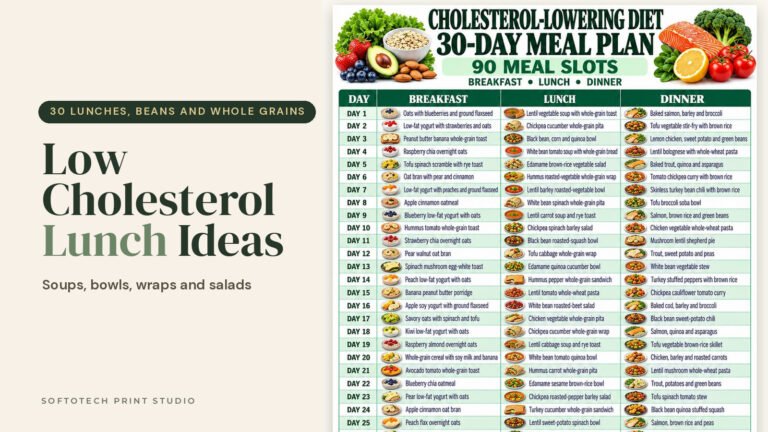 Diet & Food ListsLow Cholesterol Lunch Ideas: 30 Soups, Bowls, Wraps and Salads From a 30 Day Meal Plan, With Swaps and a Prep Week
 Diet & Food ListsPrediabetes Breakfast Ideas: 7 Balanced Breakfasts From a Weekly Meal Plan, Plus Swaps From an Eat, Limit and Avoid List
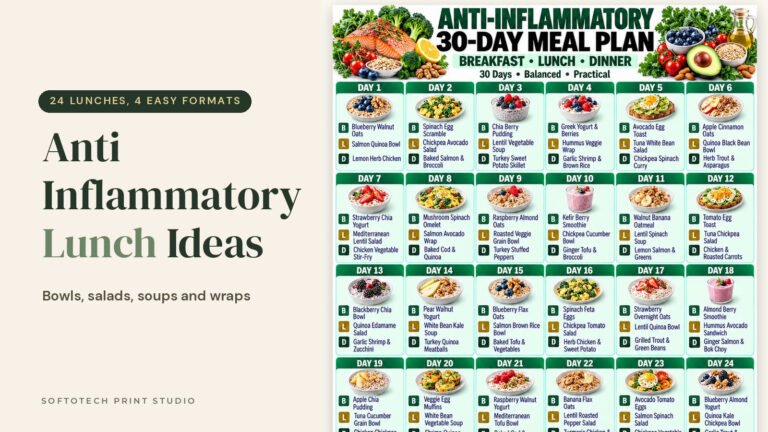 Diet & Food ListsAnti Inflammatory Lunch Ideas: 24 Bowls, Salads, Soups and Wraps From a 30 Day Meal Plan, With a Packed Lunch Week