
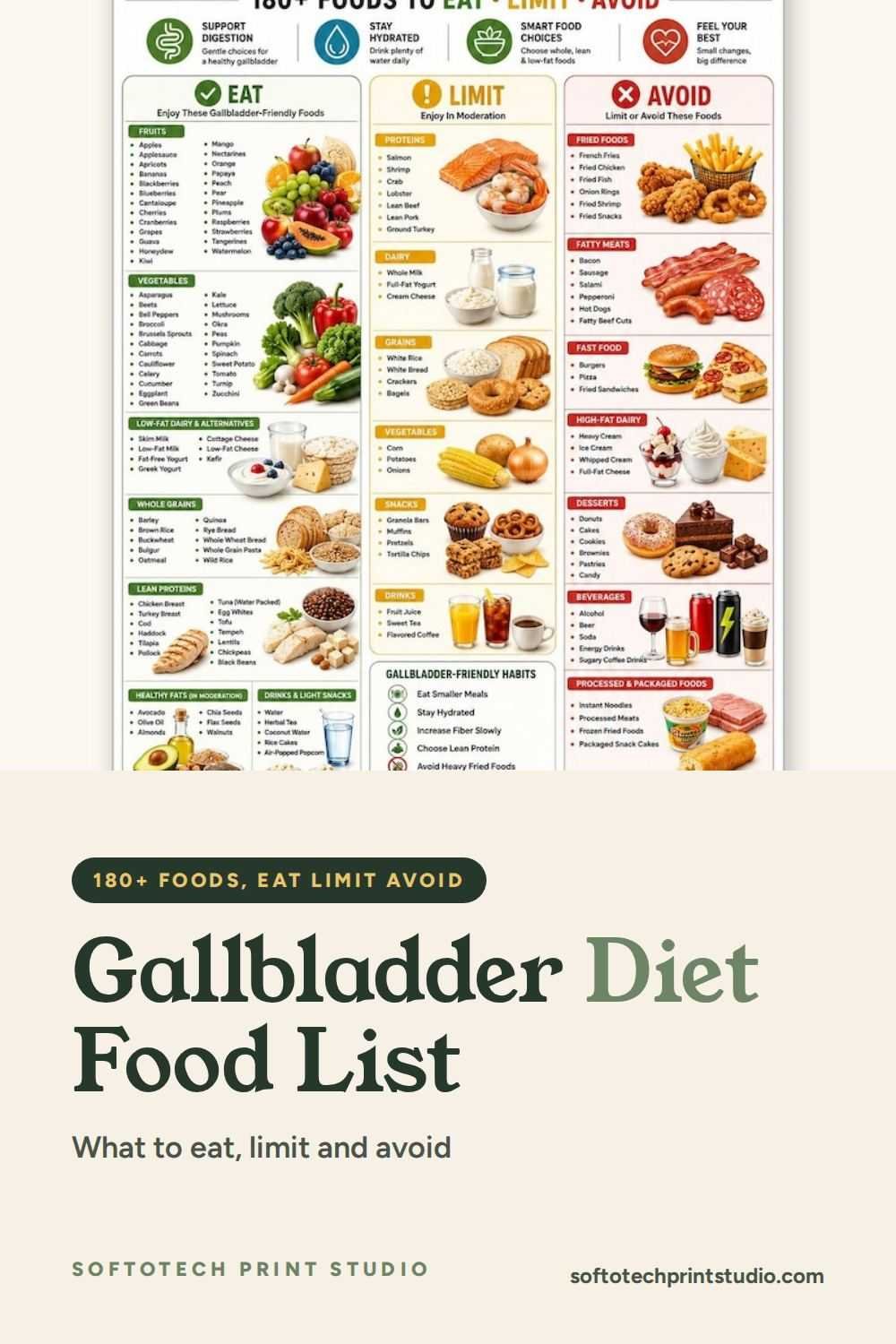
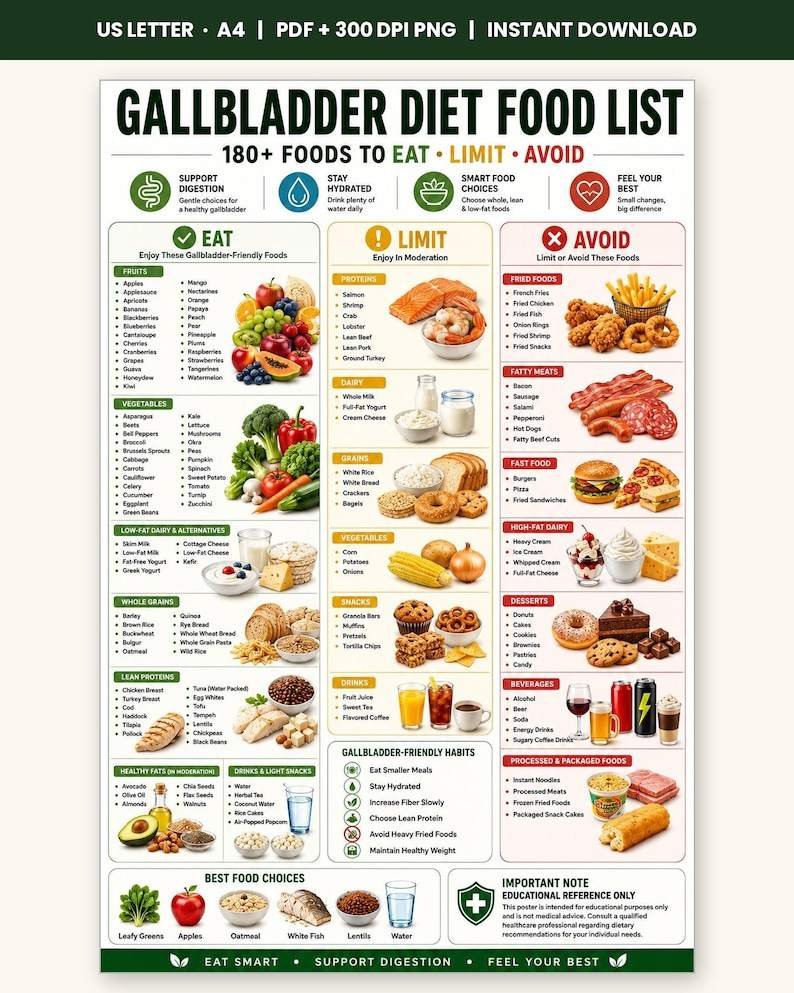
Gallbladder diet food list is the kind of thing you want on the fridge, not in a folder. When you are standing in the kitchen wondering whether something is a safe choice, a chart that sorts foods into eat, limit and avoid is faster than any article. This guide is built around exactly that chart from SoftoTech Print Studio, with 180+ foods sorted into eat, limit and avoid columns on one page, plus a second, different chart with 100+ foods to cross-check against.
The main chart is made for gallstones and for life after gallbladder removal, and it says so in its own title. Its top icons read support digestion, stay hydrated, smart food choices and feel your best, with short lines under each: gentle choices for a healthy gallbladder, drink plenty of water daily, choose whole, lean and low-fat foods, and small changes, big difference. That last line is the honest one. Nobody changes their whole diet in a day. A chart helps you make one better choice at a time, and the small ones add up.
Two things to get straight before we go further. First, the main chart prints in US Letter and A4 only, no A5, as 2 PDFs plus a PNG and a ZIP per the listing. Second, the second chart in this guide is a different gallbladder food list with 100+ foods, not the same chart printed twice. They sort foods the same way, eat, limit and avoid, but they are two different charts, and this guide treats them that way. The second chart’s bottom footer is cut off on the image, so this guide never quotes it. For the meals behind this list, our gallbladder diet meal plan guide is the companion read.
In this guide:
- What to Eat: The EAT Columns
- What to Limit and Avoid
- Worked Grocery List and a Sample Day
- The Second Chart: 100+ Foods to Cross-Check
- Frequently Asked Questions
- 180+ foods sorted into eat, limit and avoid columns on one chart
- Eat fruits include apples, bananas, blueberries, mango, papaya, pears and watermelon
- Eat proteins include chicken breast, turkey breast, cod, tilapia, egg whites, tofu, lentils and chickpeas
- The chart also lists gallbladder friendly habits: eat smaller meals, stay hydrated, increase fiber slowly, choose lean protein
- Print sizes US Letter and A4, as 2 PDFs plus a PNG and a ZIP per the listing (the listing does not state A5)
- Instant download · Print at home · US Letter · A4
Use code BLOG10 for 65% OFF at Etsy checkout!
What to Eat: The EAT Columns
The EAT column on the main chart is the longest one, and that is good news. It is not a short list of sad foods. It is a full pantry: fruits, vegetables, low-fat dairy, whole grains, lean proteins, healthy fats in moderation, and drinks and light snacks. If you shop from this column first, the rest of the chart almost takes care of itself.
Eat fruits on the chart are apples, applesauce, apricots, bananas, blackberries, blueberries, cantaloupe, cherries, cranberries, grapes, honeydew, kiwi, mango, nectarines, orange, papaya, peach, pear, pineapple, plums, raspberries, strawberries, tangerines and watermelon. That is a fruit bowl that covers the whole year, and most of these fruits are gentle on digestion when eaten ripe. Apples and bananas are the everyday picks. Berries are the easy snack. Melon and papaya are the soft, gentle choices for days when your stomach feels sensitive.
Eat vegetables are asparagus, beets, bell peppers, broccoli, Brussels sprouts, cabbage, carrots, cauliflower, celery, cucumber, eggplant, green beans, kale, lettuce, mushrooms, onions, peas, pumpkin, spinach, sweet potato, tomato, turnip and zucchini. Cook them until tender if your digestion is sensitive, and keep the portions modest at first. Carrots, zucchini, green beans and spinach are the gentle end of this list. Cabbage, Brussels sprouts and onions sit in the eat column here, but if you know from experience that they bother you, trust your own experience over any chart.
Low-fat dairy and alternatives on the eat column are skim milk, low-fat milk, fat-free yogurt, Greek yogurt, cottage cheese, low-fat cheese and kefir. Whole grains are barley, brown rice, corn tortillas, bulgur, oatmeal, quinoa, rye bread, whole-wheat bread, whole-grain pasta and wild rice. Lean proteins are chicken breast, turkey breast, cod, haddock, tilapia, pollock, tuna in water, egg whites, tofu, tempeh, lentils, chickpeas and black beans. Healthy fats in moderation are avocado, olive oil, almonds, chia seeds, flax seeds and walnuts. Drinks and light snacks are water, herbal tea, coconut water, rice cakes and air-popped popcorn. For a low fibre comparison that sorts foods the same way, our diverticulitis food list guide is worth a look.
The bottom of the main chart adds gallbladder friendly habits alongside the food lists: eat smaller meals, stay hydrated, increase fiber slowly, choose lean protein, avoid heavy fried foods, and maintain a healthy weight. It also names best food choices outright: leafy greens, apples, oatmeal, white fish, lentils and water. If you remember nothing else from this section, remember those six. Leafy greens, apples, oatmeal, white fish, lentils and water are the backbone of the whole chart, and a day built around them is a day the chart would approve of.
What to Limit and Avoid
The LIMIT column is where most people actually live, because it holds the foods that are fine sometimes and unhelpful every day. Limit proteins are salmon, shrimp, crab, lean beef, lean pork and ground turkey. Limit dairy is whole milk, full-fat yogurt and cream cheese. Limit grains are white rice, white bread, crackers and bagels. Limit vegetables are corn, potatoes and onions. Limit snacks are granola bars, muffins, pretzels and tortilla chips. Limit drinks are fruit juice, sweet tea and flavored coffee. None of these are banned on the chart. They are portion foods, and the chart asks you to watch the portion and the preparation.
The AVOID column is stricter, and it is mostly fried food, fatty meat, fast food and sugar. Avoid fried foods are French fries, fried chicken, fried fish, onion rings, fried shrimp and fried snacks. Avoid fatty meats are bacon, sausage, salami, pepperoni, hot dogs and fatty beef cuts. Avoid fast food is burgers, pizza and fried sandwiches. Avoid high-fat dairy is heavy cream, ice cream, whipped cream and full-fat cheese. Avoid desserts are donuts, cakes, cookies, brownies, pastries and candy. Avoid beverages are alcohol, beer, soda, energy drinks and sugary coffee drinks. Avoid processed and packaged foods are instant noodles, processed meats, frozen fried foods and packaged snack cakes.
Read the avoid column as a pattern, not a punishment. Fried food, fatty meat, cream, sugar and alcohol show up in every group, and that is the point. The gallbladder stores bile and releases it to digest fat, so a meal that is heavy in fat asks a lot of it. Smaller, leaner, lower fat meals ask less. That is the whole logic of the chart, and it is why the eat column is full of lean protein, whole grains and vegetables, while the avoid column is full of the opposite. Our low FODMAP diet meal plan guide uses a similar gentle eating logic for a different condition, and our fatty liver diet food list guide sorts liver friendly foods the same eat, limit and avoid way.
The chart itself carries an important note at the bottom, and this guide repeats it word for word in spirit: educational reference only. The poster is intended for educational purposes only and is not medical advice, and you should consult a qualified healthcare professional regarding dietary recommendations for your individual needs. That matters most after gallbladder removal surgery, when your digestion is still adjusting and your own doctor’s advice comes first. A printable can guide your shopping. It cannot replace your surgeon or your dietitian.
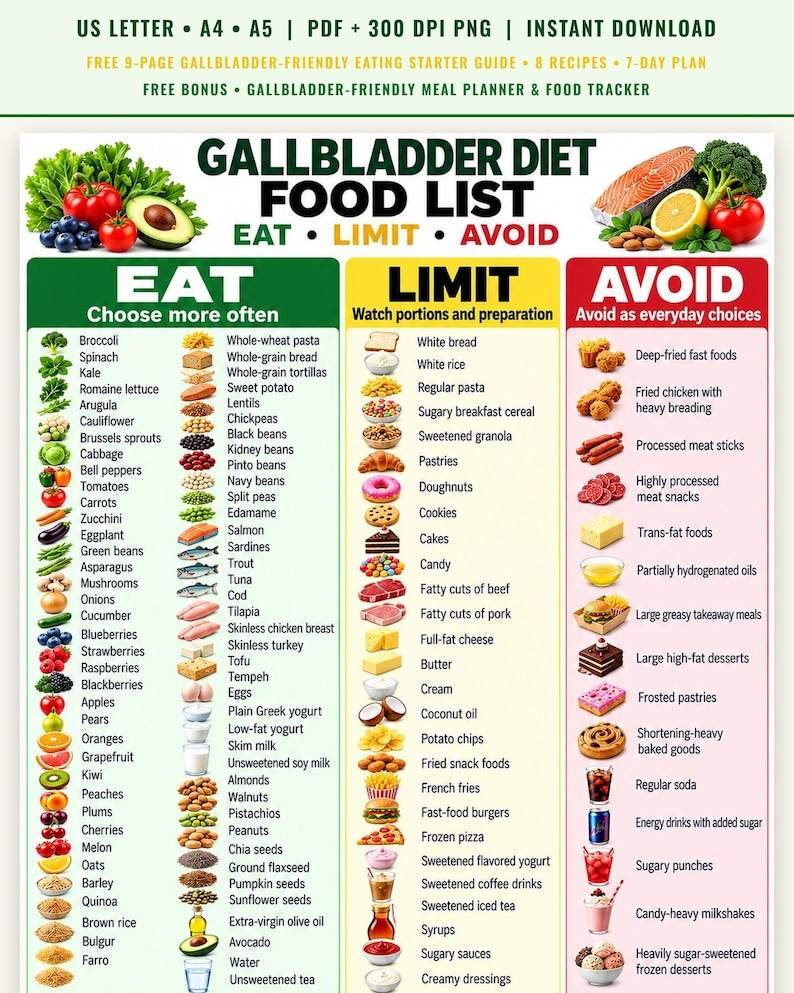
- 100+ foods in eat, limit and avoid columns, a second chart to cross-check against
- Eat choices include leafy greens, berries, oats, quinoa, lentils, salmon, skinless chicken, plain Greek yogurt and olive oil
- Limit choices include white bread, pastries, fatty beef, butter, cream and sweetened coffee drinks
- Avoid choices include deep-fried fast foods, processed meat snacks, trans-fat foods and sugary drinks
- Print sizes US Letter, A4 and A5, as 3 PDFs plus a PNG and a ZIP per the listing
- Instant download · Print at home · US Letter · A4 · A5
Use code BLOG10 for 65% OFF at Etsy checkout!
Worked Grocery List and a Sample Day
Here is a worked grocery list built only from the EAT columns of the main chart, grouped the way the chart groups them, so you can walk the store in order and check things off. Start with fruits: apples, bananas, blueberries, mango, papaya, pears and watermelon. Pick two or three, not all seven, and buy what is in season. Apples and bananas keep well. Berries and mango are the treat. Watermelon is the summer pick.
Next, vegetables: bell peppers, broccoli, carrots, cucumber, green beans, kale, spinach, sweet potato and zucchini. Carrots and cucumber need no cooking at all, which makes them the easy snack. Broccoli, green beans and zucchini cook in ten minutes. Sweet potato roasts in the oven while you do something else. Kale and spinach wilt into soups, eggs and pasta in a minute. Buy the vegetables you will actually cook this week, not the ones you wish you cooked.
Then low-fat dairy and whole grains: skim milk or low-fat milk, fat-free yogurt or Greek yogurt, cottage cheese, oatmeal, quinoa, brown rice and whole-wheat bread. Oatmeal is the breakfast. Quinoa and brown rice are the lunch and dinner grains. Yogurt is the snack and the breakfast backup. Whole-wheat bread is the toast and the sandwich base. That is a full week of grains in four items.
Then lean proteins: chicken breast, turkey breast, cod, tilapia, egg whites, tofu, lentils and chickpeas. Chicken and turkey cover the meat dinners. Cod and tilapia cover the fish dinners. Egg whites cover breakfast. Tofu, lentils and chickpeas cover the plant-based days. Buy the chicken and fish fresh for the first half of the week, and keep the lentils and chickpeas dry or canned for the second half, so nothing goes off before you cook it.
Last, healthy fats in moderation and drinks: avocado, olive oil, almonds, chia seeds, flax seeds and walnuts, plus water, herbal tea and coconut water, and rice cakes and air-popped popcorn for light snacks. A drizzle of olive oil, a spoon of seeds on oatmeal, a small handful of nuts as a snack. That is what in moderation looks like in practice, and it is very different from a meal cooked in a pool of fat.
A sample day of eating built only from EAT foods looks like this. Breakfast is oatmeal with sliced banana and blueberries, with herbal tea. Lunch is a chicken breast salad with lettuce, cucumber, tomato and bell peppers, with a slice of whole-wheat bread. Dinner is cod with brown rice and steamed broccoli and carrots, with water. Snacks are an apple, a small pot of fat-free yogurt, and a rice cake with a thin spread of avocado. Every item on that day comes from the EAT column of the main chart, and the whole day follows the chart’s own habits: smaller meals, lean protein, plenty of water, and fiber built up slowly rather than all at once.
The Second Chart: 100+ Foods to Cross-Check
The second chart is a different gallbladder food list with 100+ foods, and it is useful precisely because it is different. When two charts agree on a food, you can trust the placement more. When they disagree, you learn something about how much room there is for personal tolerance. Use the second chart to cross-check the first, not to replace it.
Eat choices on the second chart include leafy greens, berries, oats, quinoa, lentils, salmon, skinless chicken, plain Greek yogurt and olive oil. The full eat list runs longer: broccoli, spinach, kale, romaine lettuce, arugula, cauliflower, Brussels sprouts, cabbage, bell peppers, tomatoes, carrots, zucchini, eggplant, green beans, asparagus, mushrooms, onions, cucumber, blueberries, strawberries, raspberries, blackberries, apples, pears, oranges, grapefruit, kiwi, peaches, plums, cherries, bananas, oats, barley, quinoa, brown rice, bulgur, farro, whole-wheat pasta, whole-grain bread, whole-grain tortillas, sweet potato, lentils, chickpeas, kidney beans, pinto beans, black beans, split peas, edamame, salmon, sardines, cod, tuna, skinless chicken breast, skinless turkey, tofu, tempeh, eggs, plain Greek yogurt, low-fat yogurt, skim milk, unsweetened soy milk, almonds, walnuts, pistachios, peanuts, pumpkin seeds, ground flaxseed, sunflower seeds, extra-virgin olive oil, avocado, water and unsweetened tea.
One difference worth naming: salmon sits in LIMIT on the main chart, and in EAT on the second chart. Both charts are printed as they are, and this guide follows each chart as printed rather than picking a winner. If you eat salmon, treat it as the second chart does, a lean fish to enjoy, but keep the portion modest and the cooking gentle, which is what the main chart’s limit placement is really asking for. That is the honest way to use two charts that sort one food differently.
Limit choices on the second chart include white bread, pastries, fatty beef, butter, cream and sweetened coffee drinks. The full limit list is white bread, white rice, regular pasta, sugary breakfast cereal, sweetened granola, pastries, doughnuts, cookies, cakes, candy, fatty cuts of beef, fatty cuts of pork, full-fat cheese, butter, cream, coconut oil, potato chips, fried snack foods, french fries, fast-food burgers, frozen pizza, sweetened flavored yogurt, sweetened coffee drinks, sweetened iced tea, syrups, sugary sauces and creamy dressings. Avoid choices include deep-fried fast foods, processed meat snacks, trans-fat foods and sugary drinks, and the full avoid list is deep-fried fast foods, fried chicken with heavy breading, processed meat sticks, highly processed meat snacks, trans-fat foods, partially hydrogenated oils, large greasy takeaway meals, large high-fat desserts, frosted pastries, shortening-heavy baked goods, regular soda, energy drinks with added sugar, sugary punches, candy-heavy milkshakes and heavily sugar-sweetened frozen desserts.
The second chart prints in US Letter, A4 and A5, as 3 PDFs plus a PNG and a ZIP per the listing, which is one more size and one more file than the main chart. Its bottom footer is cut off on the chart image, so this guide never quotes it. Stick both charts on the fridge if you have the wall space, the 180+ chart for the full list and the 100+ chart for the cross-check, and use the pair the way they were made to be used, as a shopping reference you glance at, not a rule book you memorize.
To turn these foods into easy evening meals, try our 50 gallbladder friendly dinner ideas, sorted into ten simple groups.
For another condition where lower-fat meals matter, see this pancreatitis diet plan, and talk to your doctor before changing what you eat.
Frequently Asked Questions
What is a gallbladder diet food list?
A gallbladder diet food list sorts foods into eat, limit and avoid columns so you can see at a glance what to choose more often and what to keep for rare occasions. This guide uses a main chart with 180+ foods from SoftoTech Print Studio, plus a second, different chart with 100+ foods to cross-check against. The charts are educational reference only, not medical advice.
What foods can I eat on a gallbladder diet?
Eat fruits on the main chart include apples, bananas, blueberries, mango, papaya, pears and watermelon. Eat proteins include chicken breast, turkey breast, cod, tilapia, egg whites, tofu, lentils and chickpeas. The chart also lists leafy greens, apples, oatmeal, white fish, lentils and water as its best food choices, with habits like smaller meals, staying hydrated and increasing fiber slowly.
What foods should I avoid with gallstones?
The avoid column on the main chart lists fried foods like French fries and fried chicken, fatty meats like bacon and sausage, fast food like burgers and pizza, high-fat dairy like heavy cream and ice cream, desserts like donuts and cakes, drinks like alcohol, beer, soda and energy drinks, and processed foods like instant noodles and frozen fried foods. Check with your doctor or dietitian for advice about your own situation, especially after gallbladder removal surgery.
Are the two gallbladder charts in this guide the same?
No. The main chart has 180+ foods and prints in US Letter and A4 only, with no A5. The second chart is a different list with 100+ foods and prints in US Letter, A4 and A5. They sort foods the same way, eat, limit and avoid, but they are two different charts. Salmon, for example, sits in LIMIT on the main chart and in EAT on the second chart, and this guide follows each chart as printed.
What sizes does the gallbladder diet food list print in?
The main gallbladder diet food list from SoftoTech Print Studio prints in US Letter and A4, as 2 PDFs plus a PNG and a ZIP per the listing, and the listing does not state A5. The second food list chart prints in US Letter, A4 and A5, as 3 PDFs plus a PNG and a ZIP per the listing.
This guide is for general wellness and is not medical advice. Check with your doctor before starting a new routine.
Related Guides
- Gallbladder Diet Meal Plan
- Diverticulitis Food List
- Low FODMAP Diet Meal Plan
- Fatty Liver Diet Food List
Sources
Sources: National Institute of Diabetes and Digestive and Kidney Diseases, Gallstones, Cleveland Clinic gallbladder diet
 Diet & Food ListsMediterranean Diet for Seniors: A Simple Guide With an Eat, Limit, Avoid List and a 7 Day Plan
 Diet & Food ListsHigh Protein Foods for Muscle Gain: How Much You Need, the Best Picks per Meal and a Worked Training Day
 Diet & Food ListsLow Sodium Dinner Ideas: 24 DASH Style Dinners, a Sodium Budget per Plate and Sauce and Seasoning Swaps