
Dinner is the meal that causes the most worry when you have gallbladder trouble, because it’s often the biggest and richest meal of the day. These gallbladder diet meal ideas give you 50 lower-fat dinners to choose from, plus a 30-day plan for breakfasts and lunches too, so you’re not stuck eating the same plain chicken every night.
This guide is built around the 50 Gallbladder Friendly Dinner Ideas chart from SoftoTech Print Studio. It sorts 50 easy lower-fat dinners into ten groups of five, from chicken and turkey to comforting light dinners. Its tagline is balanced dinner ideas with vegetables, fiber-rich foods and leaner proteins.
I’ll go through all ten groups, then show how to build a week of dinners and a sample day around them. After that I’ll look at a second printable, a gallbladder diet 30-day meal plan with 90 meals, and finish with what the evidence actually says about low-fat eating for gallstones, which is more nuanced than most charts suggest.
One honest limit first. The chart gives the names of the dinners only, with no recipes, portion sizes or fat grams. That’s normal for an ideas chart. Along the bottom it does give one useful cooking rule: choose lower-fat cooking methods such as baking, steaming, poaching or grilling. It also says personal triggers and tolerance vary.
And a plain caution. Gallstones and gallbladder inflammation need a proper diagnosis. Cambridge University Hospitals notes that a gallstone blocking a bile duct can cause sudden belly pain, nausea and vomiting, and that needs a doctor, not a new menu. This guide is general information. Check with your doctor or a dietitian before you change how you eat, especially before or after gallbladder surgery.
In this guide:
- The 50 Gallbladder Friendly Dinners in 10 Groups
- A Worked Week of Dinners and a Sample Day
- The 30-Day Gallbladder Meal Plan for Breakfast and Lunch Too
- What the Evidence Says About Low-Fat Eating for Gallstones
- Frequently Asked Questions
- 50 easy lower-fat dinners in 10 groups of five
- Groups include chicken and turkey, fish and seafood, tofu and tempeh, bean and lentil dinners, soups and stews and quick skillet meals
- Dinners such as lemon chicken with barley and asparagus, baked cod with quinoa and roasted zucchini, and lentil stuffed bell peppers
- A lower-fat cooking tip along the bottom: baking, steaming, poaching or grilling
- US Letter, A4 and A5, as 3 PDFs plus a 300 DPI PNG and a ZIP per the listing
- Instant download · Print at home · US Letter · A4 · A5
Use code BLOG10 for 65% OFF at Etsy checkout!
The 50 Gallbladder Friendly Dinners in 10 Groups
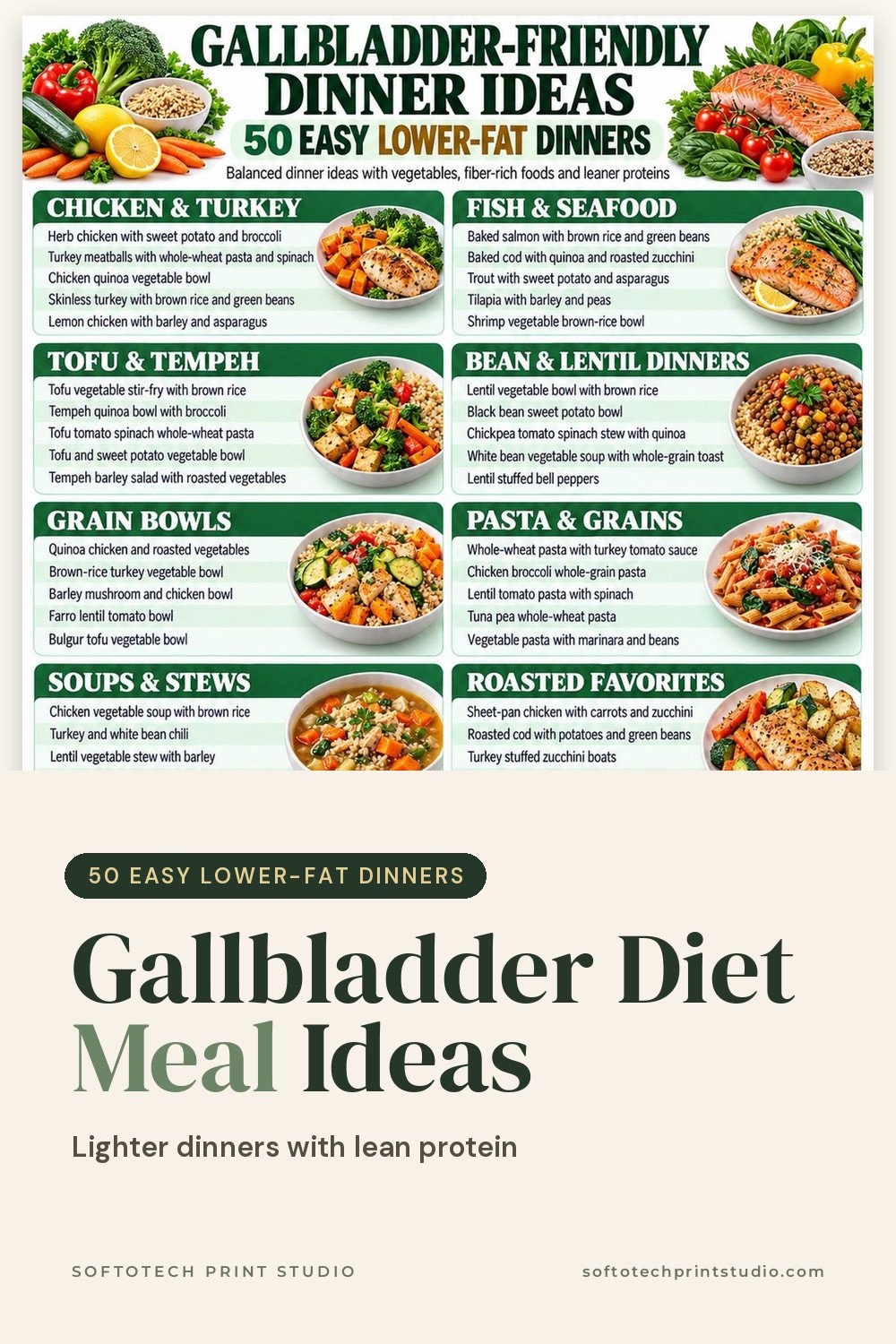
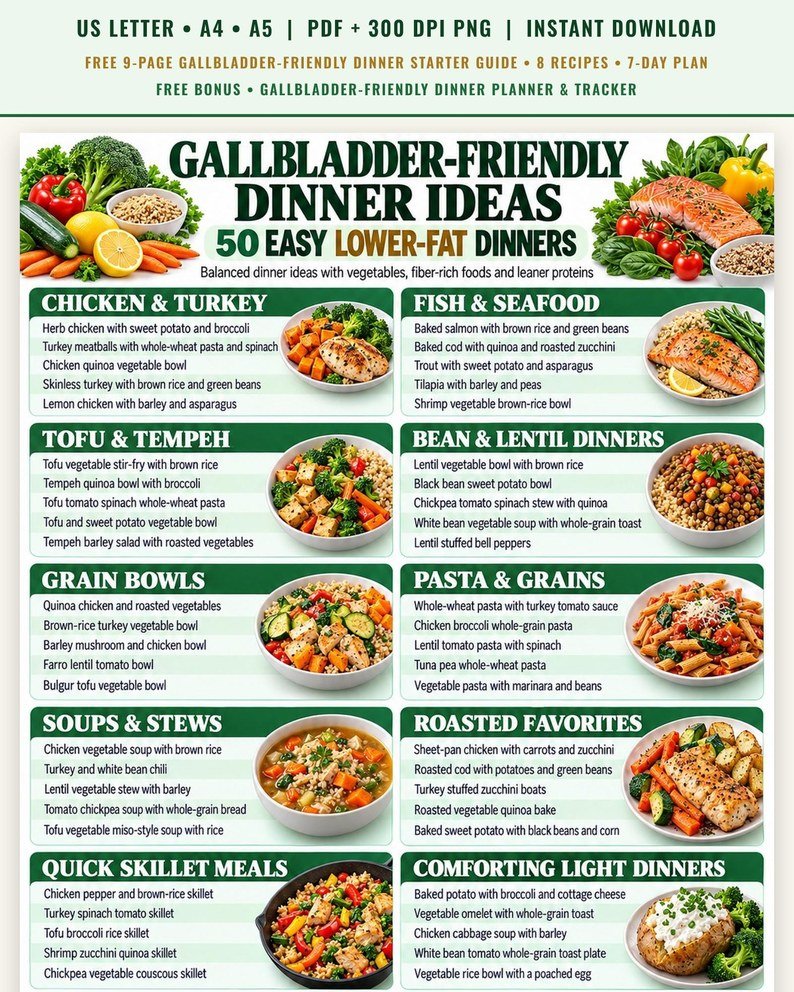
The chart is headed Gallbladder-Friendly Dinner Ideas, with a banner reading 50 easy lower-fat dinners. The dinners sit in ten green-headed boxes, two per row, each with a photo of one of the meals. Here they are, group by group.
Chicken and turkey. Herb chicken with sweet potato and broccoli. Turkey meatballs with whole-wheat pasta and spinach. Chicken quinoa vegetable bowl. Skinless turkey with brown rice and green beans. Lemon chicken with barley and asparagus. The word skinless is a good detail. Cambridge University Hospitals, an NHS trust, suggests taking the skin and visible fat off meat and poultry before cooking if you’re trying to eat less fat.
Fish and seafood. Baked salmon with brown rice and green beans. Baked cod with quinoa and roasted zucchini. Trout with sweet potato and asparagus. Tilapia with barley and peas. Shrimp vegetable brown-rice bowl. Salmon and trout are oily fish, and the NIDDK lists fish oil among the healthy fats that help your gallbladder contract and empty on a regular basis.
Tofu and tempeh. Tofu vegetable stir-fry with brown rice. Tempeh quinoa bowl with broccoli. Tofu tomato spinach whole-wheat pasta. Tofu and sweet potato vegetable bowl. Tempeh barley salad with roasted vegetables.
Bean and lentil dinners. Lentil vegetable bowl with brown rice. Black bean sweet potato bowl. Chickpea tomato spinach stew with quinoa. White bean vegetable soup with whole-grain toast. Lentil stuffed bell peppers. Beans and peas are on the NIDDK’s list of high fiber foods for lowering the risk of gallstones, along with fruits, vegetables and whole grains.
Grain bowls. Quinoa chicken and roasted vegetables. Brown-rice turkey vegetable bowl. Barley mushroom and chicken bowl. Farro lentil tomato bowl. Bulgur tofu vegetable bowl.
Pasta and grains. Whole-wheat pasta with turkey tomato sauce. Chicken broccoli whole-grain pasta. Lentil tomato pasta with spinach. Tuna pea whole-wheat pasta. Vegetable pasta with marinara and beans. Tomato sauces rather than cream sauces are what keep these lighter.
Soups and stews. Chicken vegetable soup with brown rice. Turkey and white bean chili. Lentil vegetable stew with barley. Tomato chickpea soup with whole-grain bread. Tofu vegetable miso-style soup with rice.
Roasted favorites. Sheet-pan chicken with carrots and zucchini. Roasted cod with potatoes and green beans. Turkey stuffed zucchini boats. Roasted vegetable quinoa bake. Baked sweet potato with black beans and corn. A small point here: the CUH leaflet lists grilling, steaming, poaching, boiling and microwaving as lower fat options than roasting or frying. Roasting can still be light if you use an oil spray or a teaspoon of oil rather than pouring it on, which is also what the leaflet suggests.
Quick skillet meals. Chicken pepper and brown-rice skillet. Turkey spinach tomato skillet. Tofu broccoli rice skillet. Shrimp zucchini quinoa skillet. Chickpea vegetable couscous skillet. These are one-pan dinners for busy nights, and a nonstick pan means you need very little oil.
Comforting light dinners. Baked potato with broccoli and cottage cheese. Vegetable omelet with whole-grain toast. Chicken cabbage soup with barley. White bean tomato whole-grain toast plate. Vegetable rice bowl with a poached egg. These are the nights when you want something soft and simple.
Look at the whole chart and the pattern is clear. Every dinner has a lean protein (skinless poultry, fish, tofu, tempeh, beans, lentils or eggs), a starchy food that is usually whole grain (brown rice, quinoa, barley, farro, bulgur or whole-wheat pasta), and at least one vegetable. There’s nothing fried, no creamy sauces, no fatty processed meat and no pastry.
That matches the NIDDK’s advice closely. To help prevent gallstones, it recommends eating more high fiber foods, eating fewer refined carbohydrates and less sugar, eating healthy fats like fish oil and olive oil, and avoiding unhealthy fats like those often found in desserts and fried foods. For a full list of foods sorted by how often to eat them, see our gallbladder diet food list.
A Worked Week of Dinners and a Sample Day
Fifty dinners is more than enough for a month. The easy way to use the chart is to pick seven for the coming week, one from a different group each night, then shop for just those. Here’s an example week, chosen so that a few ingredients carry over from one night to the next.
| Day | Group | Dinner from the chart | Prep note |
|---|---|---|---|
| Monday | Fish and seafood | Baked salmon with brown rice and green beans | Cook extra brown rice for Wednesday |
| Tuesday | Soups and stews | Lentil vegetable stew with barley | Make a big pot, keep two portions for lunches |
| Wednesday | Tofu and tempeh | Tofu vegetable stir-fry with brown rice | Use Monday’s rice |
| Thursday | Chicken and turkey | Lemon chicken with barley and asparagus | Remove skin before cooking |
| Friday | Pasta and grains | Tuna pea whole-wheat pasta | Tuna in water, a light tomato or lemon dressing |
| Saturday | Bean and lentil dinners | Black bean sweet potato bowl | Bake sweet potatoes in the oven, no oil needed |
| Sunday | Comforting light dinners | Vegetable omelet with whole-grain toast | Use any vegetables left from the week |
The shopping list stays short: salmon, chicken breasts, tofu, tinned tuna in water, eggs, brown rice, barley, whole-wheat pasta, whole-grain bread, lentils, black beans, sweet potatoes, green beans, asparagus, frozen peas, stir-fry vegetables, carrots, celery, onion, tomatoes, spinach, lemons and a small bottle of olive oil.
The cooking methods in that week stay light too. The salmon is baked, the chicken is cooked without its skin, the stew is simmered, the sweet potatoes are baked in their skins, and the stir-fry and omelet each need only a teaspoon of oil in a nonstick pan. Those are the kinds of swaps the CUH leaflet suggests: microwaving, steaming, poaching, boiling or grilling instead of frying, using oil sparingly, and choosing foods labeled low fat where it makes sense.
Now a sample day, because dinner is only one part of it. The CUH leaflet has two tips that change the shape of the day more than any single food. First, eat regular meals, since missing meals and fasting reduce gallbladder emptying, which it says increases the risk of stones forming or getting bigger. Second, eat breakfast soon after you wake up, because cholesterol levels are highest in bile made overnight.
So a day might look like this. Breakfast, soon after getting up, is oatmeal with blueberries and chia. Lunch is a bowl of Tuesday’s lentil vegetable stew with a slice of whole-grain bread. An afternoon snack is a piece of fruit. Dinner is lemon chicken with barley and asparagus, cooked without the skin. Plenty of water through the day. CUH suggests 6 to 8 cups or glasses of non-alcoholic fluid a day, in line with UK government advice.
If big meals bring on discomfort, CUH suggests trying smaller portions and eating more often. In practice that could mean splitting dinner: have the chicken and vegetables at the usual time, and the barley later as part of a small supper.
And if you also have reflux, many of these dinners work for that too, since they’re light and not fried. Our GERD diet meal plan has a week of gentle meals with that in mind.
- 30 days of breakfast, lunch and dinner, 90 balanced meals in one table
- Breakfasts like oatmeal with blueberries and chia, and Greek yogurt with strawberries and oats
- Lunches like lentil vegetable soup with whole-grain toast and tuna white-bean salad with greens
- Dinners like baked salmon with brown rice and green beans, and trout with sweet potato and asparagus
- US Letter, A4 and A5, as 3 PDFs plus a 300 DPI PNG and a ZIP per the listing
- Instant download · Print at home · US Letter · A4 · A5
Use code BLOG10 for 65% OFF at Etsy checkout!
The 30-Day Gallbladder Meal Plan for Breakfast and Lunch Too
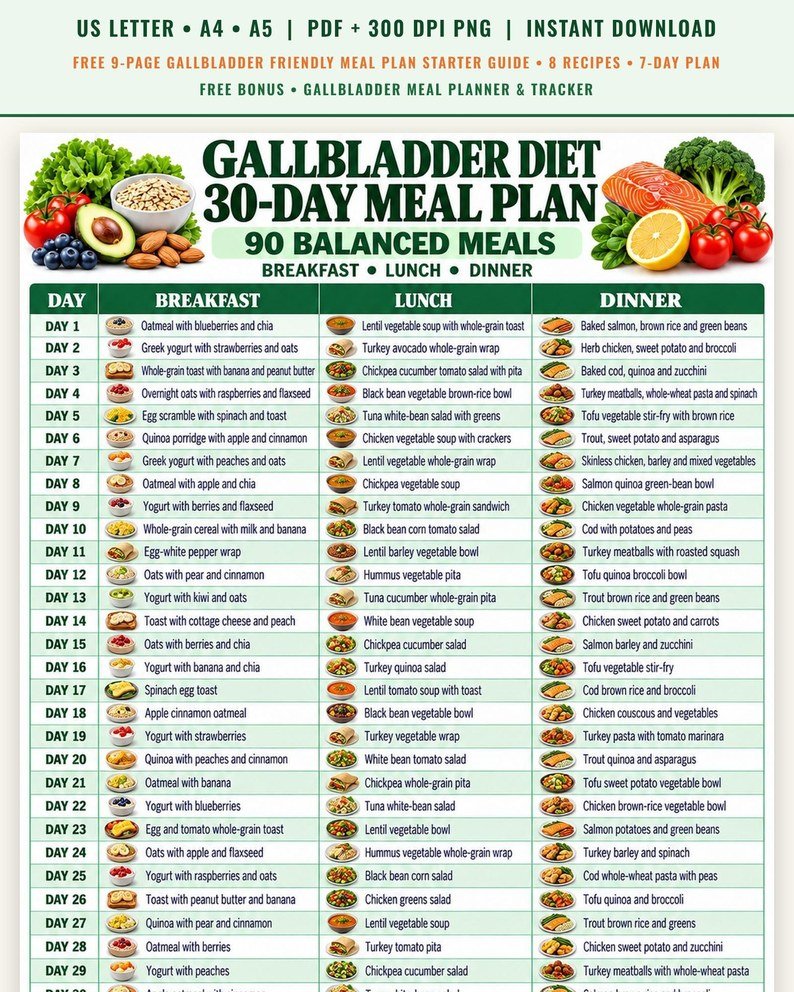
The dinner chart covers one meal a day. The second printable, the Gallbladder Diet 30-Day Meal Plan, covers all three. It’s a single table with 30 rows, one per day, and three columns for breakfast, lunch and dinner, which adds up to 90 balanced meals.
The breakfasts are simple and repeat in a helpful way. Day 1 is oatmeal with blueberries and chia. Day 2 is Greek yogurt with strawberries and oats. Day 3 is whole-grain toast with banana and peanut butter. Day 4 is overnight oats with raspberries and flaxseed. Day 5 is an egg scramble with spinach and toast. Across the month you’ll see oats, yogurt with fruit, quinoa porridge, whole-grain cereal with milk and banana, an egg-white pepper wrap, toast with cottage cheese and peach, and spinach egg toast.
The lunches are soups, salads, wraps and bowls: lentil vegetable soup with whole-grain toast, a turkey avocado whole-wheat wrap, chickpea cucumber tomato salad with pita, a black bean vegetable brown-rice bowl, tuna white-bean salad with greens, chicken vegetable soup with crackers, a lentil vegetable whole-grain wrap, chickpea vegetable soup and a turkey tomato whole-grain sandwich, among others.
The dinners follow the same pattern as the 50 ideas chart: baked salmon, brown rice and green beans; herb chicken, sweet potato and broccoli; baked cod, quinoa and zucchini; turkey meatballs, whole-wheat pasta and spinach; tofu vegetable stir-fry with brown rice; trout, sweet potato and asparagus; and skinless chicken, barley and mixed vegetables, to name the first week. Several dinners appear on both charts, so they work well together.
A note on what I could read. On the main listing photo, days 1 to 29 are clear but day 30 is cut off at the bottom. The PDF will have the full month.
Which one should you use? If you mostly need help with dinner, the 50 ideas chart is enough on its own, and it gives you more choice for that one meal. If you want every meal planned for a month so you don’t have to think about it, the 30-day plan does that. If you buy both, use the plan as your base and swap in dinners from the 50 ideas chart whenever a night doesn’t suit you.
The 30-day plan prints in US Letter, A4 and A5 as PDFs plus a 300 DPI PNG, per the listing, the same as the dinner chart. We’ve written a full walk-through of this plan in our gallbladder diet meal plan guide, which goes through the month week by week.
A practical tip for either chart. Print it at A4 or US Letter and put it on the fridge, then circle the meals you’ve tried and liked. After a few weeks you’ll have your own shortlist of safe, easy dinners you know agree with you.
What the Evidence Says About Low-Fat Eating for Gallstones
Most gallbladder charts, including this one, lean towards lower-fat food. That’s a reasonable place to start, but it’s worth knowing what the evidence says, because it’s not as simple as fat equals bad.
A strict low-fat diet isn’t right for everyone. The CUH leaflet says that you may have been advised to follow a low-fat diet to help manage symptoms, but that this is not the case for all patients and there is little evidence to support it. It adds that removing fats from your diet can lead to rapid weight loss or nutritional deficiencies. Instead it recommends a healthy, varied diet in line with the NHS Eatwell Guide, including moderate amounts of fat, since fat is an essential part of a balanced diet.
Healthy fats have a job to do. The NIDDK goes further, saying healthy fats like fish oil and olive oil help your gallbladder contract and empty on a regular basis. So the goal isn’t zero fat. It’s fewer fried foods, pastries and fatty desserts, and a small, steady amount of olive oil and oily fish. That’s why salmon and trout appear so often on these charts.
Trial and notice. CUH suggests that if you find a link between your fat intake and your symptoms, you try reducing fat to see if it helps. If particular foods seem to trigger symptoms, you can try avoiding those too. This is where the chart’s own line, personal triggers and tolerance vary, makes sense. Keep a simple note of what you ate and how you felt, and take it to your doctor.
Lose weight slowly, if at all. Both sources warn about rapid weight loss. The NIDDK says very low-calorie diets and rapid weight loss can raise your risk of gallstones, and advises talking with your health care professional before changing your eating plan. CUH says gradual weight loss can reduce the risk if you’re overweight, but losing more than 2 pounds or 1 kilogram a week, or yo-yo dieting, is not recommended.
Keep moving. CUH also mentions physical activity and less time sitting as important for lowering the risk of gallstones, and quotes the UK guideline of 150 minutes a week of moderate exercise, like brisk walking.
After gallbladder removal. CUH says most people don’t have digestion problems after their gallbladder is removed, because the liver keeps making the same amount of bile. It also says you do not need to follow a low-fat diet after removal, and there is no evidence that it’s needed. A healthy, balanced diet is advised. If you develop diarrhea after surgery, speak to your doctor.
When to get help. CUH says to speak with your doctor or dietitian if you have pale, yellow, orange or oily stools that may float or smell bad, since you may need more advice about your diet. It also suggests asking for a dietitian referral if you’re underweight, losing weight without trying, or need more tailored advice.
Gallbladder and liver health often go together, and if you’ve also been told you have fatty liver, our fatty liver diet food list sorts foods for that condition in the same eat, limit and avoid style. Many of the same foods turn up on both.
If your digestion needs a lower-fat plan after pancreatitis, our pancreatitis diet plan guide covers 50 low-fat dinners and what NIDDK and MedlinePlus advise.
Frequently Asked Questions
What are good dinner ideas for a gallbladder diet?
The chart lists 50, such as herb chicken with sweet potato and broccoli, baked salmon with brown rice and green beans, tofu vegetable stir-fry with brown rice, lentil vegetable stew with barley and a baked potato with broccoli and cottage cheese. Each pairs a lean protein with a whole grain or starchy vegetable and at least one vegetable.
Do I need a strict low-fat diet for gallstones?
Not always. Cambridge University Hospitals says a low-fat diet is not right for all patients and there is little evidence for it, and recommends a healthy, varied diet with moderate fat instead. If you notice a link between fat and your symptoms, it suggests trying less fat to see if it helps. Ask your doctor what suits you.
Which fats are good for the gallbladder?
The NIDDK says healthy fats like fish oil and olive oil help your gallbladder contract and empty on a regular basis, and advises avoiding unhealthy fats like those in desserts and fried foods. That’s why oily fish such as salmon and trout appear often on the chart, with a little olive oil for cooking.
Should I skip meals if I have gallbladder problems?
No. Cambridge University Hospitals says to eat regular meals, because missing meals and fasting reduce gallbladder emptying, which may increase the risk of stones forming or growing. It also suggests eating breakfast soon after you wake up, and trying smaller, more frequent meals if large meals cause discomfort.
What should I eat after gallbladder removal?
Cambridge University Hospitals says you do not need a low-fat diet after gallbladder removal, and that most people have no digestion problems because the liver still makes bile. A healthy, balanced diet is advised. If you get diarrhea after surgery, speak to your doctor.
This guide is for general wellness and is not medical advice. Check with your doctor before starting a new routine.
Related Guides
- Gallbladder Diet Meal Plan
- Gallbladder Diet Food List
- GERD Diet Meal Plan
- Fatty Liver Diet Food List
Sources
Sources: Cambridge University Hospitals (NHS), Dietary Advice for Patients With Gallstones, NIDDK (NIH), Eating, Diet, and Nutrition for Gallstones
 Diet & Food ListsMediterranean Diet for Seniors: A Simple Guide With an Eat, Limit, Avoid List and a 7 Day Plan
 Diet & Food ListsHigh Protein Foods for Muscle Gain: How Much You Need, the Best Picks per Meal and a Worked Training Day
 Diet & Food ListsLow Sodium Dinner Ideas: 24 DASH Style Dinners, a Sodium Budget per Plate and Sauce and Seasoning Swaps