A pancreatitis diet plan is mostly about two things: eating less fat and eating little and often. The rest, like what to do in the first days, how much fat is right for you and whether you need enzyme medicine, belongs to your doctor. This guide sets out what two NIH sources say, then shows how a chart of 50 lower-fat dinner ideas can make the evening meal easier.
Pancreatitis is swelling of the pancreas, and it can be sudden or ongoing. The advice differs between the two, and between mild and severe cases, so everything here is general. If you’ve just come home from the hospital, follow the instructions you were given. This page isn’t a substitute for them.
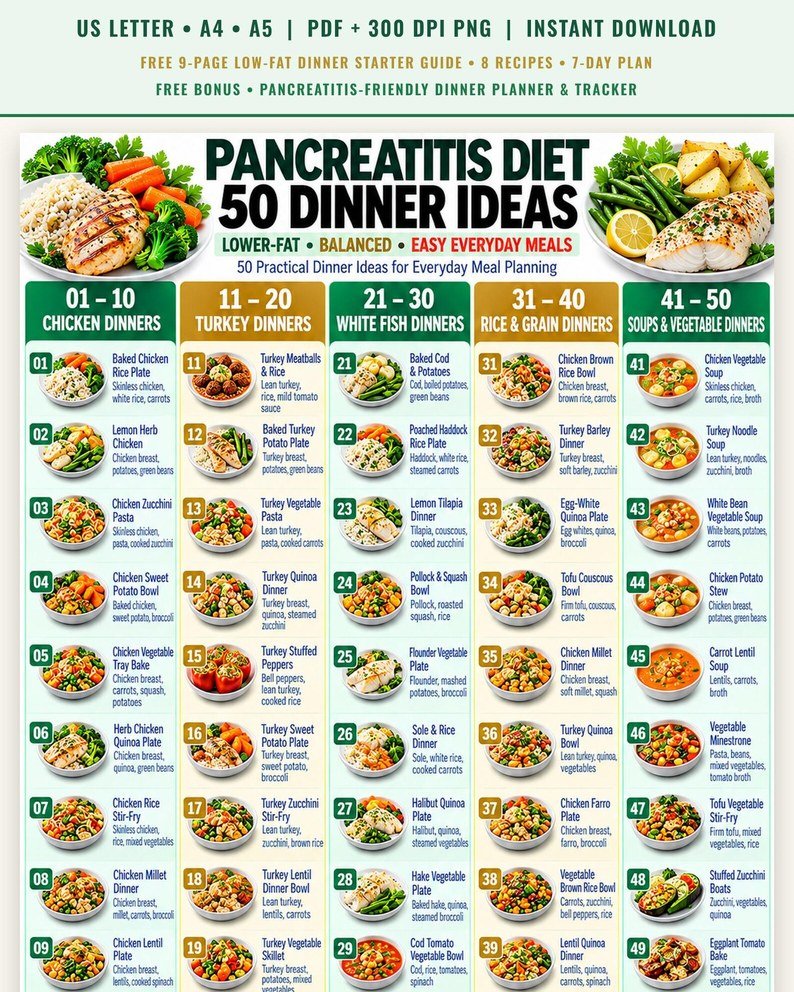
The guide is built around the Pancreatitis Diet 50 Dinner Ideas chart from SoftoTech Print Studio, five groups of ten dinners: chicken, turkey, white fish, rice and grain dinners, and soups and vegetable dinners. The second printable is the shop’s Gallbladder Diet 30-Day Meal Plan, because gallbladder and pancreas problems often share a low-fat approach and sometimes a cause, gallstones.
I’ll start with what NIDDK and MedlinePlus say, in plain words. Then I’ll go through the chart’s five groups and a worked week of dinners, with a sample day of small meals around them. Last comes a section on the other parts of the picture, alcohol, enzymes, pain and warning signs.
In this guide:
- What NIDDK and MedlinePlus Say About Eating With Pancreatitis
- The 50 Dinner Ideas in Five Groups
- A Worked Week of Dinners and a Day of Small Meals
- Alcohol, Enzymes, Pain and When to Call
- Frequently Asked Questions

- 50 numbered lower-fat dinner ideas in 5 color-coded groups of 10
- Chicken, turkey, white fish, rice and grain dinners, and soups and vegetable dinners
- Examples include baked chicken rice plate, turkey meatballs and rice, baked cod and potatoes and carrot lentil soup
- Comes with a 9-page low-fat dinner starter guide (8 recipes, a 7-day plan) and a dinner planner and tracker, per the listing
- US Letter, A4 and A5 PDFs plus a 300 DPI PNG, per the listing
- Instant download · Print at home · US Letter · A4 · A5
Use code BLOG10 for 65% OFF at Etsy checkout!
What NIDDK and MedlinePlus Say About Eating With Pancreatitis
During treatment. NIDDK says that during pancreatitis treatment your doctor may tell you not to eat or drink for a while, and may use a feeding tube to give you nutrition instead. Once you may start eating again, your doctor will prescribe a healthy, low-fat eating plan that includes small, frequent meals.
After you go home. MedlinePlus says that after an episode of pain from pancreatitis you should start off with clear liquids only, such as soup broth or gelatin, and follow that diet until your symptoms get better. Then you slowly add other foods back. It lists things to talk with your provider about: a healthy diet that is low in fat, with no more than 30 grams of fat per day, foods high in protein and carbohydrates but low in fat, smaller meals eaten more often, quitting smoking if you smoke, and losing weight if you are overweight. Your provider helps make sure you’re getting enough calories to avoid weight loss.
Fluids and caffeine. NIDDK says to drink plenty of fluids and limit caffeine.
Alcohol. NIDDK says that health care professionals strongly advise people with pancreatitis not to drink any alcohol, even if the pancreatitis is mild. MedlinePlus says the same: do not drink any alcohol.
Prevention. NIDDK adds that an eating plan high in fat and calories can lead to high levels of fat in the blood, which raises the risk of pancreatitis, and that you can lower your chances by sticking with a low-fat, healthy eating plan.
So the shape of a plan is simple: low in fat, small and frequent, enough protein and carbohydrate, plenty of fluid, no alcohol. What’s less simple is the numbers, and they’re personal. MedlinePlus gives 30 grams of fat a day as a topic to discuss, not a target for everyone. A registered dietitian can set yours.
What a chart can and can’t do. A dinner chart can’t tell you your fat limit or whether you need enzymes. What it can do is take away the daily question of what to cook, which is a real strain when you’re unwell and tired. The chart’s footer says it’s for educational meal planning only, that pancreatitis nutrition needs and food tolerance vary, and to follow your healthcare professional’s individualized advice. That’s the right way to use it.
The 50 Dinner Ideas in Five Groups
The chart is headed Pancreatitis Diet, 50 Dinner Ideas, with a green banner reading lower-fat, balanced, easy everyday meals. Five color-coded columns each hold ten numbered dinners with a photo and the main ingredients. Here are all five.
Chicken dinners, 1 to 10. Baked chicken rice plate (skinless chicken, white rice, carrots). Lemon herb chicken (chicken breast, potatoes, green beans). Chicken zucchini pasta. Chicken sweet potato bowl. Chicken vegetable tray bake. Herb chicken quinoa plate. Chicken rice stir-fry. Chicken millet dinner. Chicken lentil plate. Balsamic chicken vegetable plate.
Turkey dinners, 11 to 20. Turkey meatballs and rice (lean turkey, rice, mild tomato sauce). Baked turkey potato plate. Turkey vegetable pasta. Turkey quinoa dinner. Turkey stuffed peppers. Turkey sweet potato plate. Turkey zucchini stir-fry. Turkey lentil dinner bowl. Turkey vegetable skillet. Turkey brown rice plate.
White fish dinners, 21 to 30. Baked cod and potatoes. Poached haddock rice plate. Lemon tilapia dinner. Pollock and squash bowl. Flounder vegetable plate. Sole and rice dinner. Halibut quinoa plate. Hake vegetable plate. Cod tomato vegetable bowl. Tilapia herb dinner.
Rice and grain dinners, 31 to 40. Chicken brown rice bowl. Turkey barley dinner. Egg-white quinoa plate. Tofu couscous bowl. Chicken millet dinner. Turkey quinoa bowl. Chicken farro plate. Vegetable brown rice bowl. Lentil quinoa dinner. Chickpea rice bowl.
Soups and vegetable dinners, 41 to 50. Chicken vegetable soup. Turkey noodle soup. White bean vegetable soup. Chicken potato stew. Carrot lentil soup. Vegetable minestrone. Tofu vegetable stir-fry. Stuffed zucchini boats. Eggplant tomato bake. Baked vegetable bowl.
Look at what the lists have in common. The proteins are skinless chicken, lean turkey, white fish, egg whites, tofu and legumes, which are lower in fat than red meat, sausage or fried foods. The cooking is baked, poached, stir-fried, roasted or simmered, with nothing fried, creamy or cheesy. The sides are rice, potatoes, quinoa, millet, barley and vegetables. That matches MedlinePlus’s advice for foods high in protein and carbohydrates but low in fat.
Cooking tips for lower-fat dinners. Measure oil with a teaspoon, not a pour. Use a nonstick pan or a light spray. Bake or poach instead of frying. Remove skin from poultry before cooking. Flavor with herbs, lemon, garlic and mild spices in place of butter or cream. Thicken soups with blended vegetables or potato, not cream. These are ordinary low-fat cooking habits, and your dietitian can tell you how strictly to apply them.
If you’re also thinking about gallbladder or fatty liver, our gallbladder diet meal ideas guide takes a similar low-fat approach to a different condition.
A Worked Week of Dinners and a Day of Small Meals
Here’s a week of dinners taken from the chart, one from each group and repeating a few, with a note on how each might be made with little fat. I’ve picked easy, familiar dinners, and varied the proteins. The picks and tips are mine. The dinners and their main ingredients are the chart’s.
| Day | Dinner (chart number) | Main ingredients | Low-fat tip |
|---|---|---|---|
| Mon | Baked chicken rice plate (1) | Skinless chicken, white rice, carrots | Bake with herbs and lemon, no butter |
| Tue | Baked cod and potatoes (21) | Cod, potatoes, green beans | Bake in foil with lemon so no oil is needed |
| Wed | Turkey meatballs and rice (11) | Lean turkey, rice, mild tomato sauce | Bake the meatballs, don’t fry them |
| Thu | Carrot lentil soup (45) | Lentils, carrots, broth | Blend part of it for a creamy feel with no cream |
| Fri | Lemon tilapia dinner (23) | Tilapia, couscous, steamed vegetables | Steam or poach the fish |
| Sat | Chicken rice stir-fry (7) | Skinless chicken, rice, mixed vegetables | Use a splash of broth in the pan |
| Sun | White bean vegetable soup (43) | White beans, vegetables, rice | Make extra for Monday lunch |
A shopping list for that week. Proteins: skinless chicken breast, lean ground turkey, a cod fillet, a tilapia fillet, dried or canned lentils and a can of white beans. Starches: white rice, potatoes, couscous and a loaf of plain bread. Vegetables: carrots, green beans, onions, celery, spinach or other leafy greens, and whatever vegetables you tolerate well. Flavor: lemons, fresh or dried herbs, garlic, low-sodium broth and plain tomato sauce. That’s all ordinary supermarket food, and none of it needs a special shop.
Cook once, eat twice. Lower-fat food often reheats well, which helps when you’re tired. Cook a double pot of rice. Make the lentil soup and the white bean soup on the same afternoon and freeze half. Bake the turkey meatballs in a big batch and freeze them on a tray, then bag them. On a day when you feel rotten, a freezer meal and a bowl of rice are far better than skipping dinner.
Adjusting for your own tolerance. NIDDK and MedlinePlus both say food tolerance matters, and the chart says so too. If a vegetable gives you trouble, such as a gassy one like broccoli or cabbage, swap it for carrots or green beans. If a dinner leaves you in pain, write it down and tell your team. Don’t keep repeating it to see if it was a fluke.
Eating with other people. Family dinners are easier if everyone eats the same base. Cook the chicken, rice and vegetables plainly for you, and let the others add sauce, cheese or fried toppings at the table. It saves cooking two meals and keeps you from feeling singled out.
A day of small meals. NIDDK and MedlinePlus both say small, frequent meals. Dinner is one of five or six. Here’s a way a day might look. It’s an example for talking over with your dietitian, with ordinary low-fat foods, and it is not a prescription. Your plan may be stricter.
| Time | Small meal | Idea |
|---|---|---|
| 7:30 am | Breakfast | Oatmeal made with water and a sliced banana |
| 10:00 am | Snack | Fat-free yogurt and a few berries |
| 12:30 pm | Lunch | Small portion of the soup from last night with a slice of toast |
| 3:30 pm | Snack | A pear and a few plain rice crackers |
| 6:30 pm | Dinner | The day’s dinner from the table above |
| 8:30 pm | Light snack | Applesauce or a small bowl of cereal with skim milk |
Nothing there is high in fat, and each meal is small. MedlinePlus says the aim is smaller meals more often with enough calories to avoid weight loss, so if your appetite is low, make each small meal count, with some protein in most of them.
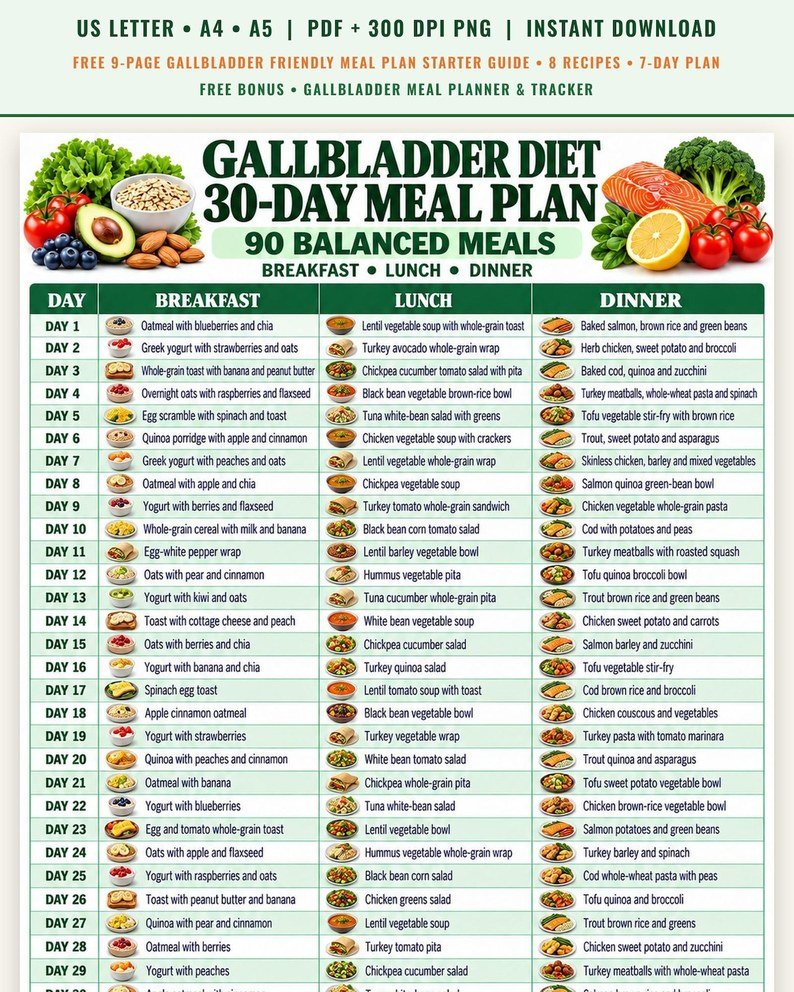
- 30 days of breakfast, lunch and dinner, 90 balanced meals in one table
- Breakfasts like oatmeal with blueberries and chia, and Greek yogurt with strawberries and oats
- Lunches like lentil vegetable soup with whole-grain toast and tuna white-bean salad with greens
- Dinners like baked salmon with brown rice and green beans, and trout with sweet potato and asparagus
- US Letter, A4 and A5, as 3 PDFs plus a 300 DPI PNG and a ZIP per the listing
- Instant download · Print at home · US Letter · A4 · A5
Use code BLOG10 for 65% OFF at Etsy checkout!
Related low-fat guides. Our gallbladder diet food list sorts foods for a low-fat plan, our gastroparesis meal ideas guide covers small, gentle meals for slow stomach emptying, and the fatty liver diet meal ideas guide takes a lower-fat approach for the liver. Each condition has different rules, so use them as ideas and not as medical advice.
If your appetite is poor. That’s common during and after pancreatitis. Try drinking calories if solid food is hard, for example a low-fat smoothie or an oral nutrition drink your dietitian recommends. Keep easy snacks within reach. Eat when you feel best, which for many people is mid-morning. If you’re losing weight, tell your doctor, since MedlinePlus lists weight loss and problems digesting food as reasons to call.
The 30-day gallbladder plan. The second chart in this guide is a monthly table of 90 balanced meals made for a gallbladder-friendly way of eating. It isn’t a pancreatitis plan, and the pancreatitis chart is the one to use for dinners. But some people use the monthly table for breakfast and lunch ideas once their dietitian has agreed to it, as it shows what a lower-fat day can look like.
Alcohol, Enzymes, Pain and When to Call
Alcohol. It bears repeating because it matters most. Both NIDDK and MedlinePlus say not to drink any alcohol, and NIDDK says that applies even to mild pancreatitis. If you find this hard, tell your doctor. There is help available, and they won’t judge.
Smoking. MedlinePlus lists quitting smoking or other tobacco use among the things to talk with your provider about. A doctor or pharmacist can help you choose a way to quit.
Enzymes. MedlinePlus says that if your body can no longer absorb the fats that you eat, your provider may ask you to take pancreatic enzymes, which help your body absorb fats better. They’re taken with every meal and snack, in the amount your provider tells you, and you may need another medicine to decrease stomach acid. That’s why you shouldn’t just cut fat to the bone without advice. Needing enzymes is a medical decision.
Diabetes. MedlinePlus also notes that if the pancreas has a lot of damage you may develop diabetes, and you’ll be checked for it. If you notice a lot of thirst or urination, tell your doctor.
Pain. MedlinePlus says avoiding alcohol, tobacco and foods that make your symptoms worse is the first step to controlling pain. It also says to talk to your provider before taking any medicines or herbs. Don’t self-treat with supplements.
When to call. MedlinePlus says to contact your provider if you have very bad pain that isn’t relieved by over-the-counter drugs, problems eating, drinking or taking your drugs because of nausea or vomiting, problems breathing or a very fast heartbeat, pain with fever, chills, frequent vomiting or feeling faint, weight loss or problems digesting your food, or yellowing of the skin and whites of the eyes. Severe symptoms need urgent care.
Keeping food notes. A short diary of what you ate, the time, and how you felt helps your team spot patterns. Note anything that brings on pain. Bring it to your appointments, along with the chart, so you can mark the dinners you’ve tried and tolerated.
If you remember only three things, make them these: keep meals small and low in fat, avoid alcohol entirely, and let your care team set the numbers. Use the dinner chart to take the stress out of cooking, one evening at a time.
Frequently Asked Questions
What should I eat after pancreatitis?
NIDDK says that once your doctor says you can eat again, they will prescribe a healthy, low-fat eating plan that includes small, frequent meals. MedlinePlus says to start with clear liquids after a painful episode and add other foods back slowly as you feel better.
How much fat can I have with pancreatitis?
MedlinePlus says to talk with your provider about a low-fat diet with no more than 30 grams of fat per day. Your own limit may be different, and some people need enzyme medicines, so get a number from your doctor or dietitian and not from a chart.
Can I drink alcohol with pancreatitis?
No. NIDDK says health care professionals strongly advise people with pancreatitis not to drink any alcohol, even if the pancreatitis is mild, and MedlinePlus also says not to drink alcohol. NIDDK adds that you should drink plenty of fluids and limit caffeine.
Why small meals instead of three big ones?
NIDDK’s advice is a low-fat plan with small, frequent meals, and MedlinePlus says to eat smaller meals, and eat more often, with foods high in protein and carbohydrates but low in fat. Your provider will check that you are getting enough calories so you don’t lose weight.
When should I call the doctor?
MedlinePlus lists very bad pain not relieved by over-the-counter medicine, problems eating or drinking because of nausea or vomiting, a very fast heartbeat or trouble breathing, pain with fever or chills, weight loss or problems digesting food, and yellow skin or eyes. Call your provider, or seek urgent care for severe symptoms.
This guide is general information and is not medical advice. Pancreatitis needs care from your own doctor or dietitian, who can set your fat limit and tell you whether you need enzyme medicine, so check any change to your diet with them first.
Related Guides
- Gallbladder Diet Meal Ideas
- Gallbladder Diet Food List
- Gastroparesis Meal Ideas
- Fatty Liver Diet Meal Ideas
Sources
Sources: NIDDK (NIH), Eating, Diet, & Nutrition for Pancreatitis, MedlinePlus (NIH), Pancreatitis – discharge
 Diet & Food ListsMediterranean Diet for Seniors: A Simple Guide With an Eat, Limit, Avoid List and a 7 Day Plan
 Diet & Food ListsHigh Protein Foods for Muscle Gain: How Much You Need, the Best Picks per Meal and a Worked Training Day
 Diet & Food ListsLow Sodium Dinner Ideas: 24 DASH Style Dinners, a Sodium Budget per Plate and Sauce and Seasoning Swaps