
Finding out you have small pouches in the wall of your colon can sound worrying, but for most people the day to day advice is about food, and mainly about fiber. A diverticulosis diet food list shows you which foods to eat more often and which to cut back on, so you can shop and cook without second guessing every meal.
This guide is built around the Diverticulosis Diet Food List from SoftoTech Print Studio. It sorts more than 140 foods into three color coded columns: eat (choose more often), limit (choose less often) and avoid (may trigger symptoms). There’s a strip of everyday habit tips along the bottom.
I’ll go through all three columns, show how to raise your fiber slowly with a worked plan and a sample day, then look at a second printable, a salad and bowl builder with 100+ higher fiber combinations. I’ll finish with when the advice changes, because diverticulosis and diverticulitis are not the same thing.
Some quick definitions help. UCSF Health describes diverticulosis as small, bulging pouches that form in the lower part of the intestine, usually the colon. Diverticulitis is when those pouches become infected or inflamed. This list is for everyday eating with diverticulosis. It is not the diet for a diverticulitis flare, which is usually much lower in fiber for a short time.
And a plain caution. If you have belly pain, fever, bleeding or a change in your bowel habits, see a doctor rather than changing your diet on your own. This guide is general information, and your doctor or a dietitian can tell you how much fiber suits you, especially if you’ve had diverticulitis in the past.
In this guide:
- The Eat, Limit and Avoid Columns on the Diverticulosis Food List
- Worked Plan: Raising Your Fiber Slowly, With a Sample Day
- The Diverticulosis Salad and Bowl Builder
- When Diverticulosis Advice Changes and When to Call Your Doctor
- Frequently Asked Questions

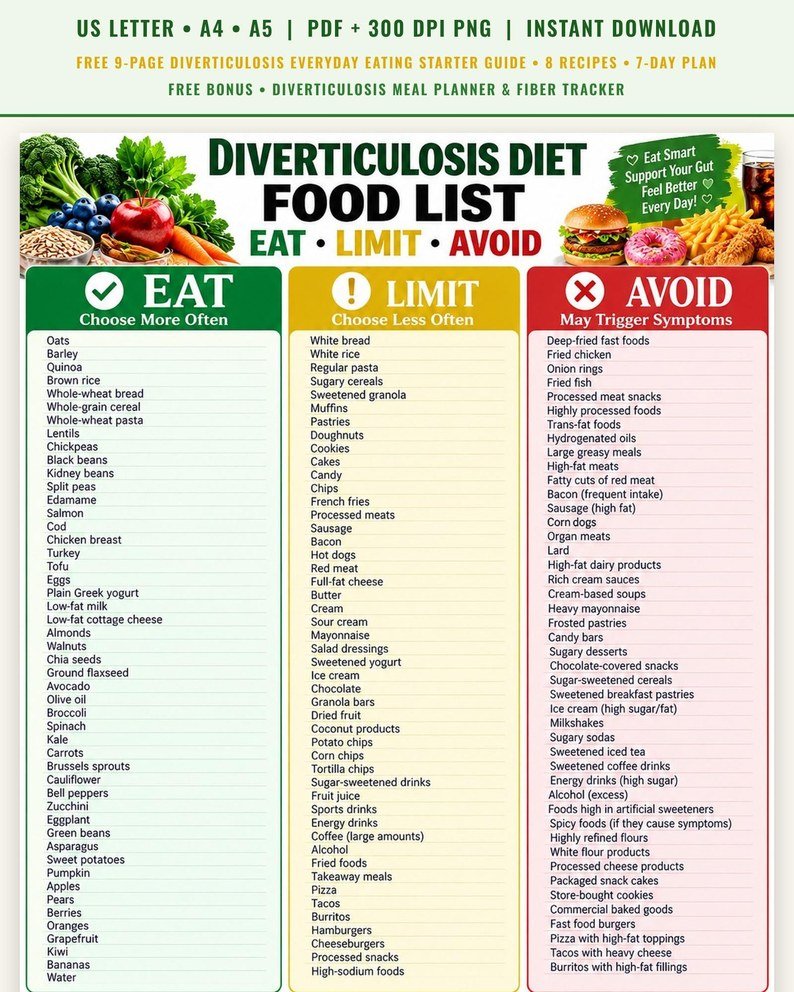
- 140+ foods in three color coded columns: eat (choose more often), limit (choose less often) and avoid (may trigger symptoms)
- The eat column covers whole grains, beans and lentils, vegetables, fruit, lean protein, nuts and seeds, plus water
- The limit column covers refined grains, sweets, processed and red meat, sugary drinks and takeaway foods
- Everyday habit tips along the bottom, such as focus on fiber and drink plenty of water
- US Letter, A4 and A5, as 3 PDFs plus a 300 DPI PNG and a ZIP per the listing
- Instant download · Print at home · US Letter · A4 · A5
Use code BLOG10 for 65% OFF at Etsy checkout!
The Eat, Limit and Avoid Columns on the Diverticulosis Food List
The chart is headed Diverticulosis Diet Food List, with eat, limit and avoid in green, yellow and red underneath. A small badge in the corner says eat smart, support your gut, feel better every day. Below that are three long columns of plain text, one food per line, with no pictures to get in the way. I counted 49 foods in eat, 48 in limit and 45 in avoid, which makes 142 and matches the 140+ in the listing title.
Eat, choose more often (49 foods). This is the high fiber column, and it reads like a good shopping list.
- Whole grains: oats, barley, quinoa, brown rice, whole-wheat bread, whole-grain cereal and whole-wheat pasta.
- Beans and pulses: lentils, chickpeas, black beans, kidney beans, split peas and edamame.
- Protein foods: salmon, cod, chicken breast, turkey, tofu and eggs.
- Dairy: plain Greek yogurt, low-fat milk and low-fat cottage cheese.
- Nuts, seeds and fats: almonds, walnuts, chia seeds, ground flaxseed, avocado and olive oil.
- Vegetables: broccoli, spinach, kale, carrots, Brussels sprouts, cauliflower, bell peppers, zucchini, eggplant, green beans, asparagus, sweet potatoes and pumpkin.
- Fruit: apples, pears, berries, oranges, grapefruit, kiwi and bananas.
- And water, at the very bottom.
This lines up closely with UCSF Health’s list of high fiber foods for diverticulosis: beans and legumes, bran, whole wheat bread and whole grain cereals such as oatmeal, brown and wild rice, fruits such as apples, bananas and pears, vegetables such as broccoli, carrots, corn and squash, and whole wheat pasta.
It’s worth pointing out that almonds, walnuts and chia seeds are in the eat column. For years, people with diverticulosis were told to avoid nuts, seeds and popcorn. The NIDDK says doctors used to recommend that, but more recent research suggests these foods are not harmful to people with diverticulosis. UCSF says to eat popcorn, nuts and seeds as tolerated when the colon is not inflamed. So the chart is up to date on this point.
Water being on the list is no accident either. UCSF advises drinking at least 8 cups of fluid daily, because fluid helps soften the stool, and fiber works best with enough liquid.
Limit, choose less often (48 foods). This column is mostly refined grains, sweets, processed meat and fatty or salty foods.
- Refined grains and baked goods: white bread, white rice, regular pasta, sugary cereals, sweetened granola, muffins, pastries, doughnuts, cookies, cakes and granola bars.
- Sweets and snacks: candy, chocolate, chips, potato chips, corn chips, tortilla chips and processed snacks.
- Meats: processed meats, sausage, bacon, hot dogs and red meat.
- Dairy and fats: full-fat cheese, butter, cream, sour cream, mayonnaise, salad dressings, sweetened yogurt, ice cream and coconut products.
- Drinks: sugar-sweetened drinks, fruit juice, sports drinks, energy drinks, coffee in large amounts and alcohol.
- Takeaway foods: French fries, fried foods, takeaway meals, pizza, tacos, burritos, hamburgers and cheeseburgers.
- Also dried fruit and high-sodium foods.
Red meat being in limit matches the NIDDK, which says research suggests a diet low in fiber and high in red meat may increase the risk of diverticulitis, and that eating high fiber foods and less red meat may lower that risk. White bread, white rice and regular pasta are here simply because they have less fiber than their whole grain versions.
Dried fruit is an interesting one. It’s actually a fiber source, and the NIDDK’s own table lists prunes. The chart doesn’t say why, but it may be the concentrated sugar. A small handful is a reasonable middle ground.
Avoid, may trigger symptoms (45 foods). This column is the heaviest, greasiest and sweetest end of the menu: deep-fried fast foods, fried chicken, onion rings, fried fish, processed meat snacks, highly processed foods, trans-fat foods, hydrogenated oils, large greasy meals, high-fat meats, fatty cuts of red meat, bacon eaten often, high-fat sausage, corn dogs, organ meats and lard. Then rich cream sauces, cream-based soups, heavy mayonnaise, high-fat dairy and processed cheese products. Then sweets: frosted pastries, candy bars, sugary desserts, chocolate-covered snacks, sugar-sweetened cereals, sweetened breakfast pastries, high sugar ice cream, milkshakes, packaged snack cakes, store-bought cookies and commercial baked goods. Drinks: sugary sodas, sweetened iced tea, sweetened coffee drinks, high sugar energy drinks and alcohol in excess. And a few others, like foods high in artificial sweeteners, spicy foods if they cause symptoms, highly refined flours, white flour products, fast food burgers, and pizza, tacos and burritos with high-fat toppings or fillings.
Here’s an honest note on this column. The NIDDK says most people with diverticulosis do not need to avoid specific foods. So read the avoid column as the foods that are least helpful for a high fiber diet, and that some people find upsetting, rather than as a strict medical ban. Several of the entries are worded carefully for that reason, like spicy foods if they cause symptoms and bacon as frequent intake.
Along the bottom of the chart is a dark green strip of habit tips. Two I could read clearly on the preview are focus on fiber, which helps keep bowel movements regular, and drink plenty of water, which supports fiber and digestion. Underneath is a line that says small changes make a big difference, and a note that the chart is for educational purposes only and individual nutrition needs vary.
Worked Plan: Raising Your Fiber Slowly, With a Sample Day
The most common mistake with a high fiber diet is doing it all at once. Going from white toast and chips to beans, bran and broccoli in a single week is a fast way to end up bloated and uncomfortable. UCSF says that if you don’t already eat a high fiber diet, you should add fiber gradually to help avoid bloating and abdominal discomfort. The NIDDK says the same: increase fiber a little at a time so your body gets used to the change.
How much are you aiming for? UCSF gives a target of 25 to 30 grams of fiber a day. The NIDDK quotes the Dietary Guidelines for Americans, which recommend 14 grams per 1,000 calories, so 28 grams a day on a 2,000 calorie diet. Your doctor or dietitian may give you a different number, and that’s the one to follow.
To make those numbers real, here are some foods from the NIDDK’s fiber table, all of which are on the chart’s eat column or close to it.
| Food and portion (NIDDK) | Fiber | On the chart |
|---|---|---|
| 1 cup of raspberries | 8.0 g | Berries, eat |
| 1/2 cup of lentils, cooked | 7.8 g | Lentils, eat |
| 1 cup of sweet potato, cooked | 6.3 g | Sweet potatoes, eat |
| 1/2 cup of chickpeas, cooked | 6.3 g | Chickpeas, eat |
| 1/2 cup of kidney beans, cooked | 5.7 g | Kidney beans, eat |
| 1 cup of broccoli, cooked | 5.2 g | Broccoli, eat |
| 1 medium apple, with skin | 4.8 g | Apples, eat |
| 1/2 cup of bulgur, cooked | 4.1 g | Not on the eat column, but a whole grain |
| 1 ounce of whole wheat crackers | 2.9 g | Close to whole-grain cereal and bread |
You can see how quickly it adds up. Half a cup of lentils and a cup of broccoli at dinner come to about 13 grams on their own, using the NIDDK’s figures. The Nutrition Facts label on packaged foods also lists fiber per portion, which helps with bread and cereal.
Here’s one way to build up over four weeks. It’s a pattern, not a prescription, so slow down if you feel uncomfortable.
- Week 1. Swap one refined grain a day for a whole grain from the eat column. White toast becomes whole-wheat toast, or white rice becomes brown rice. Add a glass of water with each meal.
- Week 2. Add one extra portion of fruit or vegetables a day, like an apple with the skin on at lunch, or a side of broccoli at dinner.
- Week 3. Bring in beans or lentils two or three times. A lentil soup, a chickpea salad or black beans in a wrap. Start with smaller portions if beans give you gas.
- Week 4. Add a spoon of chia seeds or ground flaxseed to breakfast, or a small handful of almonds or walnuts as a snack.
And here’s what a full day can look like once you’ve built up, using only foods from the eat column. Breakfast is oats cooked in low-fat milk, topped with a cup of raspberries and a spoon of ground flaxseed. Mid-morning, a pear. Lunch is a big salad of spinach, bell peppers, cucumber and a little avocado, with half a cup of chickpeas, olive oil and lemon, and a slice of whole-wheat bread. Afternoon snack is plain Greek yogurt with a few walnuts. Dinner is baked salmon with a cup of cooked sweet potato and a cup of cooked broccoli. Water through the day.
Using the NIDDK’s figures where they exist, the raspberries, chickpeas, sweet potato and broccoli alone come to about 26 grams, before you count the oats, pear, bread, flaxseed and walnuts. That’s a high fiber day, and there’s nothing unusual or hard to find in it.
UCSF adds one more piece that’s easy to forget: exercise also helps bowel movements and helps prevent constipation. A daily walk is a good partner to a high fiber plate. For a longer list of fiber-rich foods with portions, our high-fiber foods list for gut health goes group by group.

- A five step formula for 100+ higher fiber salad and bowl combinations
- Steps: greens and vegetables, smart bases, protein, bright flavor, and fats and toppers as tolerated
- 12 mix and match bowl ideas, such as a lemon chicken quinoa bowl and a lentil roasted veg bowl
- Bases include brown rice, quinoa, barley, farro, bulgur and whole-wheat pasta
- US Letter, A4 and A5, as 3 PDFs plus a 300 DPI PNG and a ZIP per the listing
- Instant download · Print at home · US Letter · A4 · A5
Use code BLOG10 for 65% OFF at Etsy checkout!
The Diverticulosis Salad and Bowl Builder
The second printable is the Diverticulosis Salad and Bowl Builder. Where the food list tells you what to buy, this one shows you how to put it together into lunches. The chart’s subtitle is build 100+ higher-fiber, nourishing combinations, and it works as a simple five step formula.
1. Greens and vegetables. Romaine, spinach, arugula, mixed greens, kale, cabbage, cucumber, tomatoes, bell peppers, carrots, broccoli, zucchini, green beans, roasted squash and corn.
2. Smart bases. Brown rice, quinoa, barley, farro, bulgur, couscous, whole-wheat pasta, potatoes, sweet potatoes, corn, whole-grain pita and lentil pasta.
3. Protein. Grilled chicken, turkey breast, white fish, salmon, tuna in water, shrimp, tofu, tempeh, edamame, lentils, chickpeas, black beans, white beans, egg whites and low-fat cottage cheese.
4. Bright flavor. Lemon, lime, fresh herbs, parsley, cilantro, basil, mint, dill, garlic, ginger, vinegar, salsa, mustard and a yogurt-herb dressing.
5. Fats and toppers as tolerated. Avocado, olive oil, pumpkin seeds, sunflower seeds, walnuts, almonds, feta, parmesan and hummus.
The as tolerated wording on step 5 is a nice touch, since it fits UCSF’s advice to eat nuts and seeds as tolerated. A row of circles then shows the sum: greens and vegetables plus smart bases plus protein plus bright flavor plus fats and toppers equals 100+ combinations.
Underneath is a set of 12 mix and match bowl ideas. The first eight are fully visible on the listing image:
- Lemon chicken quinoa bowl: greens, quinoa, grilled chicken, cucumber, tomatoes, lemon and herbs.
- Mediterranean chickpea bowl: mixed greens, farro, chickpeas, cucumbers, tomatoes, bell peppers, feta, lemon and herbs.
- Ginger tofu rice bowl: spinach, brown rice, tofu, carrots, broccoli, ginger and a light dressing.
- Turkey sweet potato bowl: kale, sweet potatoes, turkey breast, roasted vegetables, cilantro and lime.
- White bean veggie bowl: romaine, white beans, zucchini, tomatoes, bell peppers, herbs and lemon.
- Herby tuna grain bowl: mixed greens, barley, tuna in water, cucumber, tomatoes, parsley and mustard.
- Lentil roasted veg bowl: arugula, lentils, roasted squash, carrots, red onion, herbs and yogurt-herb dressing.
- Shrimp couscous bowl: spinach, couscous, shrimp, bell peppers, zucchini, garlic, lemon and herbs.
Bowls 9 to 12 are cut off on the preview, but their names start with salmon greens, black bean, edamame and cottage cheese. Your download will have the full list.
The bowl builder is useful because it solves the lunch problem. Most people can manage a high fiber breakfast with oats, and dinner is easier because there’s more time. Lunch is where white bread sandwiches creep back in. A bowl made on Sunday from cooked barley or brown rice, a tin of beans and chopped vegetables lasts two or three days in the fridge and gets you a long way towards your daily fiber.
The two charts fit together well. Almost every ingredient in the builder sits in the eat column of the food list. A couple, like feta and parmesan, are cheeses you’d use in small amounts as toppers, which is how the builder presents them. Potatoes and couscous are on the bases list. They have less fiber than barley or lentils, so lean on the higher fiber bases most days.
Both printables come in US Letter, A4 and A5 as PDFs plus a 300 DPI PNG, per the listings. If you only want one, the food list is the one to start with, since it covers shopping for every meal. The bowl builder is a good second chart if lunches are where you get stuck.
When Diverticulosis Advice Changes and When to Call Your Doctor
A high fiber diet is the everyday plan for diverticulosis. But there are times when the advice is different, and it’s important to know them.
During a diverticulitis flare. UCSF says that during flare-ups of diverticulitis you follow a clear liquid diet, and your doctor tells you when to move from clear liquids to low fiber solids and then back to your normal diet. Low fiber foods while healing include things like white bread and white rice, eggs, tender well cooked meat, and cooked fruit and vegetables without seeds or skin. That’s close to the opposite of the eat column on this chart. Our diverticulitis food list covers that stage in detail. UCSF adds that after symptoms improve, usually within two to four days, you may add 5 to 15 grams of fiber a day back in, and return to your high fiber diet when you no longer have symptoms.
If you’ve had diverticulitis before. The NIDDK says that if you have chronic symptoms of diverticular disease, or have had diverticulitis in the past, your doctor may recommend eating more high fiber foods. Talk with your doctor or a dietitian to plan meals with the right amount of fiber for you.
If beans and some vegetables give you a lot of gas or pain. Some bloating is normal while you build up fiber. But if certain foods keep causing trouble, talk to your doctor, who can check whether something else is going on. For example, if your doctor suspects irritable bowel syndrome, they may suggest trying a low FODMAP approach for a while, and our low FODMAP diet food list explains how that works. Don’t start cutting out whole food groups without that advice, though.
If you have a different bowel condition. Diverticulosis advice doesn’t fit every gut, and the advice for other conditions can be quite different. Our ulcerative colitis food list covers that condition, but always follow the plan your own team gives you.
When to call your doctor. Get medical help if you have new belly pain, a fever, blood in your stool or a sudden change in your bowel habits. Those need checking by a doctor, and they aren’t something to fix with a food list.
Day to day, though, the plan is simple and the chart makes it easier. Print it at A4 or US Letter for the fridge or take the A5 size shopping. Pick from the eat column most of the time, keep the limit column for now and then, and build your fiber up slowly with plenty of water. Small changes really do add up.
If you’d like to see protein and fiber together, our guide to high protein foods with fiber charts 60 foods with the grams of each.
Frequently Asked Questions
What foods should you eat with diverticulosis?
Mostly high fiber foods. The chart’s eat column includes oats, barley, quinoa, brown rice, whole-wheat bread and pasta, lentils, chickpeas and beans, vegetables like broccoli and Brussels sprouts, fruit like apples, pears and berries, lean protein, nuts and seeds, and water. UCSF Health recommends a high fiber diet for diverticulosis because fiber softens the stool and helps prevent constipation.
Can I eat nuts, seeds and popcorn with diverticulosis?
For most people, yes. The NIDDK says doctors used to recommend avoiding nuts, popcorn and seeds, but more recent research suggests these foods are not harmful to people with diverticulosis. UCSF says to eat them as tolerated when the colon is not inflamed. The chart includes almonds, walnuts and chia seeds in its eat column.
How much fiber do I need with diverticulosis?
UCSF Health gives a target of 25 to 30 grams a day. The NIDDK quotes 14 grams per 1,000 calories, or 28 grams a day on a 2,000 calorie diet. Add fiber gradually to avoid bloating, drink plenty of fluid, and ask your doctor or dietitian for the amount that’s right for you.
Is a diverticulosis diet the same as a diverticulitis diet?
No. Diverticulosis is the everyday condition, and the advice is a high fiber diet. Diverticulitis is when the pouches become inflamed or infected. UCSF says that during a flare you follow a clear liquid diet and then low fiber foods, as your doctor advises, before going back to high fiber eating once symptoms are gone.
Do I have to avoid every food in the avoid column?
Not necessarily. The NIDDK says most people with diverticulosis do not need to avoid specific foods. The chart’s avoid column lists fried, very fatty, sugary and highly processed foods that are least helpful for a high fiber diet and that some people find trigger symptoms. Talk with your doctor about whether you should change what you eat.
This guide is for general wellness and is not medical advice. Check with your doctor before starting a new routine.
Related Guides
- Diverticulitis Food List
- High-Fiber Foods List for Gut Health
- Low FODMAP Diet Food List
- Ulcerative Colitis Food List
Sources
Sources: NIDDK (NIH), Eating, Diet, and Nutrition for Diverticular Disease, UCSF Health, Diverticular Disease and Diet
 Diet & Food ListsMediterranean Diet for Seniors: A Simple Guide With an Eat, Limit, Avoid List and a 7 Day Plan
 Diet & Food ListsHigh Protein Foods for Muscle Gain: How Much You Need, the Best Picks per Meal and a Worked Training Day
 Diet & Food ListsLow Sodium Dinner Ideas: 24 DASH Style Dinners, a Sodium Budget per Plate and Sauce and Seasoning Swaps