
Ulcerative colitis food list is a search people do on hard days, usually during a flare, when the question is not what is healthy in general but what is gentle right now. This guide is built around a printable chart from SoftoTech Print Studio with 50+ gentle food choices for ulcerative colitis, with portions printed on the chart. It is a gentle foods list, not a treatment plan, and it works best as a kitchen reference you keep handy for the days when your gut needs soft, simple food.
The chart calls its foods gentle choices, flare-friendly options and everyday nutrition, and its small badges read gentle choices, lean protein, soft textures, personal tolerance and balanced nutrition. The personal tolerance badge is the one to take seriously. Everyone is different, and a food that sits well for one person with ulcerative colitis can bother another. The chart gives you a starting list with portions. Your own experience, and your doctor or dietitian, decide what stays on your list.
Two honest notes before we start. First, this guide uses only sections 1 to 4 of the main chart, because sections 5 to 9 are not legible on the chart image and this guide never quotes them. The sections that are legible are gentle proteins, gentle grains and starches, fruits, and vegetables. Second, the second chart in this guide is a Crohn’s disease food list, not an ulcerative colitis list. The shop has only one ulcerative colitis listing, and the Crohn’s chart is here as the IBD sibling angle, for the wider IBD family. This post says that plainly and never presents the Crohn’s chart as ulcerative colitis guidance. For a similar gentle eating list, our gastroparesis food list guide is the closest companion read.
In this guide:
- Gentle Proteins With Portions
- Gentle Grains, Fruits and Vegetables
- Worked Gentle Day: Proteins and Grains Only
- What the Crohn’s Chart Adds for the IBD Family
- Frequently Asked Questions

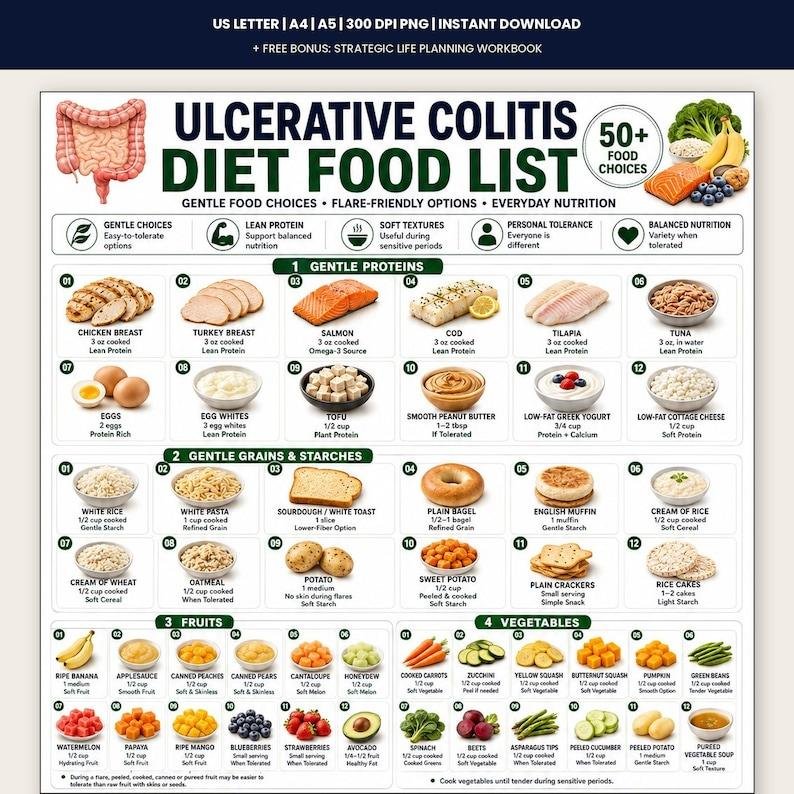
- 50+ gentle food choices for ulcerative colitis, with portions on the chart
- Gentle proteins include chicken breast, turkey breast, salmon, cod, eggs, tofu and low-fat Greek yogurt
- Gentle grains include white rice, white pasta, sourdough toast, cream of rice and plain crackers
- Gentle fruits include ripe banana, applesauce, canned peaches, canned pears, cantaloupe and honeydew
- Print sizes US Letter, A4 and A5, as 3 PDFs plus a PNG and a ZIP per the listing
- Instant download · Print at home · US Letter · A4 · A5
Use code BLOG10 for 65% OFF at Etsy checkout!
Gentle Proteins With Portions
Section 1 of the chart is gentle proteins, and it lists 12 items with a portion and a short label for each. The portions matter here, because a gentle food in a large portion can still be too much during a flare. The chart gives you the portion so you do not have to guess.
The proteins are chicken breast, 3 oz cooked, lean protein; turkey breast, 3 oz cooked, lean protein; salmon, 3 oz cooked, omega-3 source; cod, 3 oz cooked, lean protein; tilapia, 3 oz cooked, lean protein; tuna, 3 oz in water, lean protein; eggs, 2 eggs, protein rich; egg whites, 3 egg whites, lean protein; tofu, half a cup, plant protein; smooth peanut butter, 1 to 2 tablespoons, if tolerated; low-fat Greek yogurt, three quarters of a cup, protein plus calcium; and low-fat cottage cheese, half a cup, soft protein. Read that list slowly and you can see the logic. Lean, plain, soft, and cooked simply. Chicken, turkey, white fish and eggs are the backbone. Tofu is the plant option. Yogurt and cottage cheese are the soft dairy options.
The labels on the chart are worth noticing too. Salmon is the only protein labelled as an omega-3 source. Smooth peanut butter is the only one labelled if tolerated, which is the chart’s way of saying that nuts can be a problem for some people even when the butter is smooth. Eggs are labelled protein rich, and egg whites are labelled lean protein, which is a useful distinction if whole eggs feel heavy for you. Tofu is labelled plant protein, and the two dairy items carry their own labels, protein plus calcium for the yogurt and soft protein for the cottage cheese.
In practice, a gentle protein day leans on the simplest cooking. Chicken breast poached or baked, white fish steamed or baked, eggs scrambled soft or boiled, tofu simmered in a light broth. No frying, no heavy sauces, no spice blends you have not tried before. Three ounces is a modest portion, about the size of a deck of cards, and that modesty is part of the point. During a flare, smaller and simpler beats bigger and richer, and the chart’s portions reflect that. Our diverticulitis food list guide sorts gentle foods the same way, and our low FODMAP diet meal plan guide shows how a gentle week of meals can look.
Gentle Grains, Fruits and Vegetables
Section 2 of the chart is gentle grains and starches, items 13 to 24, and it is the section that carries most flare days. White rice, half a cup cooked, gentle starch. White pasta, half a cup cooked, refined grain. Sourdough or white toast, 1 slice, lower-fiber option. Plain bagel, half a bagel, refined grain. English muffin, half a muffin. Cream of rice, half a cup cooked, gentle cereal. Cream of wheat, half a cup cooked, soft cereal. Oatmeal, half a cup cooked, when tolerated. Potato, half a cup, no skin during flares, soft starch. Sweet potato, half a cup mashed, peeled and cooked, soft starch. Plain crackers, 4 to 5 crackers, simple snack. Rice cakes, 1 cake, light starch.
The pattern here is white, refined, soft and low fiber. That is the opposite of the usual healthy eating advice, and it surprises people the first time they see it. During a flare, the chart leans toward foods that are easy to digest, and that means white rice over brown rice, white pasta over whole wheat, and peeled potato with no skin. Oatmeal is the one item labelled when tolerated, which is the chart telling you that oats can be a problem for some people during a flare even though they are gentle for others. Sweet potato is labelled peeled and cooked, and potato is labelled no skin during flares, because the skin is the part that adds fiber your gut may not want right now.
Section 3 is fruits, items 25 to 30, and only those six are quoted here by number, because the fruit items past number 30 are only partly visible on the chart image. The six are ripe banana, 1 small, soft fruit; applesauce, half a cup, smooth fruit; canned peaches, half a cup, soft fruit; canned pears, half a cup, soft fruit; cantaloupe, half a cup, soft fruit; and honeydew, half a cup, soft fruit. The fruit note on the chart is partially legible and worth passing on: during a flare, peeled, cooked, canned or pureed fruit may be easier to digest, and it is better to eat less fiber with skins or seeds. Ripe banana and applesauce are the two most useful items on this list, because they need no cooking and they are soft enough for a bad day. Further fruit items are partly visible at the bottom edge of the chart, watermelon, papaya, ripe mango, blueberries, strawberries and avocado, but they are cut off, so this guide names them only as partly visible and does not quote portions for them.
Section 4 is vegetables, and it is only partly visible on the chart image, so this guide lists what can be read and nothing more. Cooked carrots, zucchini, yellow squash, butternut squash, pumpkin, green beans, spinach, beets, asparagus tips, peeled cucumber, peeled potato, and vegetable soup or pureed. The vegetable note on the chart is partially legible: cook vegetables until tender during sensitive periods. That one line is the whole method for this section. Peel them, cook them until tender, and eat them soft. Raw vegetables are not on this part of the chart, and that is deliberate. For more on gentle, low fiber eating, our low histamine diet food list guide is another useful comparison.
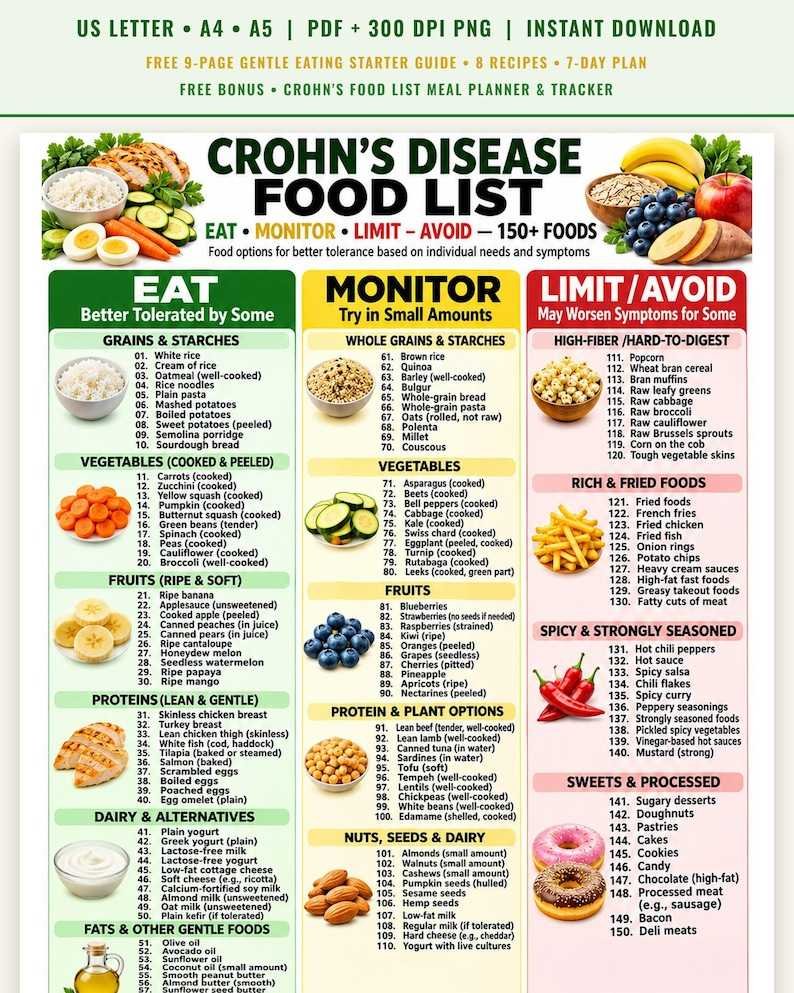
- 150 foods for Crohn’s disease, the IBD sibling of ulcerative colitis, in eat, monitor and limit/avoid columns
- Eat choices include white rice, cooked carrots, ripe banana, skinless chicken breast, plain yogurt and olive oil
- Monitor choices include brown rice, quinoa, cooked kale, blueberries, lentils and chickpeas
- Limit and avoid choices include popcorn, raw leafy greens, fried foods, hot chili peppers and sugary desserts
- Print sizes US Letter, A4 and A5, as 3 PDFs plus a PNG and a ZIP per the listing
- Instant download · Print at home · US Letter · A4 · A5
Use code BLOG10 for 65% OFF at Etsy checkout!
Worked Gentle Day: Proteins and Grains Only
Here is a worked gentle day built only from sections 1 and 2 of the main chart, proteins and grains with their portions, plus the fruit items 25 to 30 where they fit. It uses nothing from sections 5 to 9, because those sections are not legible, and nothing from the partly visible fruit and vegetable items beyond what is quoted above. This is a quiet day of eating, and it is meant to be.
Breakfast is cream of rice, half a cup cooked, with a small ripe banana on the side. Cream of rice is item 18, gentle cereal, and ripe banana is item 25, soft fruit. Both are soft, both are simple, and neither needs much chewing or digesting. If cream of rice is not in your cupboard, oatmeal is item 20 at half a cup cooked, labelled when tolerated, so try it on a calmer day first and keep cream of rice for the flare days.
Lunch is chicken breast, 3 oz cooked, with white rice, half a cup cooked, and cooked carrots on the side. Chicken breast is item 01, lean protein. White rice is item 13, gentle starch. Cooked carrots are from section 4, and the chart’s own note says to cook vegetables until tender during sensitive periods. Keep the chicken plain, poached or baked with no skin, and keep the rice plain. This is not the day for a sauce or a spice blend you have not tried.
Dinner is cod, 3 oz cooked, with potato, half a cup, no skin during flares, and a slice of sourdough or white toast. Cod is item 04, lean protein. Potato is item 21, soft starch, with the chart’s own instruction to leave the skin off during flares. The toast is item 15, lower-fiber option, and it is there to soak up the plate and add a little bulk without adding fiber. If you want a second protein option for dinner, tilapia at 3 oz cooked is item 05, and salmon at 3 oz cooked is item 03.
Snacks through the day are plain crackers, 4 to 5 crackers, and applesauce, half a cup. Plain crackers are item 23, simple snack. Applesauce is item 26, smooth fruit. A rice cake, item 24, is the other light option. Low-fat Greek yogurt, three quarters of a cup, is item 11, and it works as a snack if dairy sits well for you. Smooth peanut butter, 1 to 2 tablespoons, is item 10, labelled if tolerated, so only add it if you know it suits you.
That is the whole day, and it is deliberately small. Three ounces of protein at lunch and dinner, half a cup of grain at each meal, soft fruit and plain crackers between meals, and water through the day. If the day goes well, repeat it tomorrow with turkey breast instead of chicken and sweet potato instead of white potato. If it does not go well, note which item you suspect and talk to your doctor or dietitian. The chart gives you the portions. Your own notes give you the pattern.
What the Crohn’s Chart Adds for the IBD Family
The second chart in this guide is a Crohn’s disease food list, and it needs a clear label every time it is mentioned. Crohn’s disease and ulcerative colitis are both inflammatory bowel disease, IBD, but they are not the same condition, and a Crohn’s chart is not ulcerative colitis guidance. The shop has only one ulcerative colitis listing, which is why the Crohn’s chart is here at all, as the IBD sibling angle for families where both conditions show up, or for readers who want to see how a Crohn’s list sorts the same foods.
The Crohn’s chart lists 150 foods in eat, monitor and limit or avoid columns, which is a different structure from the ulcerative colitis chart’s gentle sections. Eat choices on the Crohn’s chart include white rice, cooked carrots, ripe banana, skinless chicken breast, plain yogurt and olive oil. The full eat list runs from white rice, cream of rice, well-cooked oatmeal, rice noodles, plain pasta, mashed potatoes, boiled potatoes, peeled sweet potatoes, semolina porridge and sourdough bread, through cooked and peeled vegetables like carrots, zucchini, yellow squash, pumpkin, butternut squash, tender green beans, cooked spinach, cooked peas, cooked cauliflower and well-cooked broccoli, to ripe and soft fruits like ripe banana, unsweetened applesauce, cooked peeled apple, canned peaches in juice, canned pears in juice, ripe cantaloupe, honeydew melon, seedless watermelon, ripe papaya and ripe mango, and lean and gentle proteins like skinless chicken breast, turkey breast, skinless lean chicken thigh, white fish such as cod and haddock, baked or steamed tilapia, baked salmon, scrambled eggs, boiled eggs, poached eggs and plain egg omelet, with dairy and alternatives like plain yogurt, plain Greek yogurt, lactose-free milk, lactose-free yogurt, low-fat cottage cheese, soft cheese such as ricotta, calcium-fortified soy milk, unsweetened almond milk, unsweetened oat milk and plain kefir if tolerated, and gentle fats like olive oil, avocado oil, sunflower oil, a small amount of coconut oil, smooth peanut butter and smooth almond butter.
Monitor choices on the Crohn’s chart, the try in small amounts column, include brown rice, quinoa, cooked kale, blueberries, lentils and chickpeas. The full monitor list adds well-cooked barley, bulgur, whole-grain bread, whole-grain pasta, rolled oats, polenta, millet and couscous, cooked vegetables like asparagus, beets, bell peppers, cabbage, Swiss chard, peeled and cooked eggplant, cooked turnip, rutabaga and cooked leeks, fruits like strawberries with no seeds if needed, strained raspberries, ripe kiwi, peeled oranges, seedless grapes, pitted cherries, ripe pineapple, ripe apricots and peeled nectarines, proteins like tender well-cooked lean beef, well-cooked lean lamb, canned tuna in water, sardines in water, soft tofu, well-cooked tempeh, well-cooked lentils, well-cooked chickpeas, well-cooked white beans and shelled cooked edamame, and nuts, seeds and dairy like small amounts of almonds, walnuts and cashews, hulled pumpkin seeds, sesame seeds, hemp seeds, low-fat milk, regular milk if tolerated, hard cheese such as cheddar, and yogurt with live cultures.
Limit and avoid choices on the Crohn’s chart include popcorn, raw leafy greens, fried foods, hot chili peppers and sugary desserts. The full list covers high-fiber and hard-to-digest foods like wheat bran cereal, bran muffins, raw cabbage, raw broccoli, raw cauliflower, raw Brussels sprouts, corn on the cob and tough vegetable skins, rich and fried foods like french fries, fried chicken, fried fish, onion rings, potato chips, heavy cream sauces, high-fat fast foods, greasy takeaway foods and fatty cuts of meat, spicy and strongly seasoned foods like hot sauce, spicy salsa, chili flakes, spicy curry, peppery seasonings, strongly seasoned foods, pickled spicy vegetables, vinegar-based hot sauces and strong mustard, and sweets and processed foods like doughnuts, pastries, cakes, cookies, candy, high-fat chocolate, processed meat such as sausage, bacon and deli meats.
Notice how much the two charts agree on, even though they are for different conditions. White rice, cooked carrots, ripe banana, skinless chicken, plain yogurt and olive oil sit in the gentle column on both. Popcorn, raw leafy greens, fried foods and hot chili peppers sit in the avoid column on the Crohn’s chart, and the ulcerative colitis chart’s own logic points the same way, toward soft, cooked, low fiber foods during sensitive periods. That overlap is reassuring, but it does not make the Crohn’s chart an ulcerative colitis chart. Use it as a cross-check for the wider IBD family, and keep the ulcerative colitis chart as your main list. The Crohn’s chart prints in US Letter, A4 and A5, as 3 PDFs plus a PNG and a ZIP per the listing.
One last note, and it matters most. This chart is general information, not medical advice. Check with your doctor or a dietitian before changing what you eat, especially during a flare, when your needs can change quickly and your own clinician knows your history. A printable can help you plan a gentle day. It cannot tell you what your gut needs today, and it never tries to.
If you have been told to try a low FODMAP diet for IBS, our low FODMAP diet food list is the matching chart.
Frequently Asked Questions
What is an ulcerative colitis food list?
An ulcerative colitis food list is a chart of gentle, flare-friendly foods with portions, so you can see what to eat when your gut is sensitive. This guide uses a chart from SoftoTech Print Studio with 50+ gentle food choices, and it uses only sections 1 to 4, proteins, grains, fruits and vegetables, because sections 5 to 9 are not legible on the chart image. The chart is general information, not medical advice.
What gentle proteins are on the ulcerative colitis food list?
Gentle proteins on the chart include chicken breast, turkey breast, salmon, cod, eggs, tofu and low-fat Greek yogurt. Each one has a portion printed on the chart, for example 3 oz cooked for chicken breast, turkey breast, salmon, cod and tilapia, 2 eggs, half a cup of tofu, and three quarters of a cup of low-fat Greek yogurt. Smooth peanut butter is listed at 1 to 2 tablespoons, if tolerated.
What gentle grains are on the ulcerative colitis food list?
Gentle grains on the chart include white rice, white pasta, sourdough toast, cream of rice and plain crackers. White rice and white pasta are listed at half a cup cooked, sourdough or white toast at 1 slice, cream of rice at half a cup cooked, and plain crackers at 4 to 5 crackers. Potato is listed at half a cup with no skin during flares, and sweet potato at half a cup mashed, peeled and cooked.
Is the Crohn’s chart in this guide an ulcerative colitis list?
No. The second chart is a Crohn’s disease food list with 150 foods in eat, monitor and limit or avoid columns, and it is not ulcerative colitis guidance. The shop has only one ulcerative colitis listing. The Crohn’s chart is here as the IBD sibling angle, for the wider IBD family, and this post says so plainly. The two charts agree on many gentle foods, like white rice, cooked carrots, ripe banana, skinless chicken and plain yogurt, but they are for different conditions.
What sizes does the ulcerative colitis food list print in?
The ulcerative colitis diet food list from SoftoTech Print Studio prints at home in US Letter, A4 and A5 sizes, as 3 PDFs plus a PNG and a ZIP per the listing. The Crohn’s disease food list prints in the same sizes, US Letter, A4 and A5, as 3 PDFs plus a PNG and a ZIP per the listing.
This guide is for general wellness and is not medical advice. Check with your doctor before starting a new routine.
Related Guides
- Gastroparesis Food List
- Diverticulitis Food List
- Low FODMAP Diet Meal Plan
- Low Histamine Diet Food List
Sources
Sources: Crohn’s and Colitis Foundation, National Institute of Diabetes and Digestive and Kidney Diseases, Ulcerative Colitis
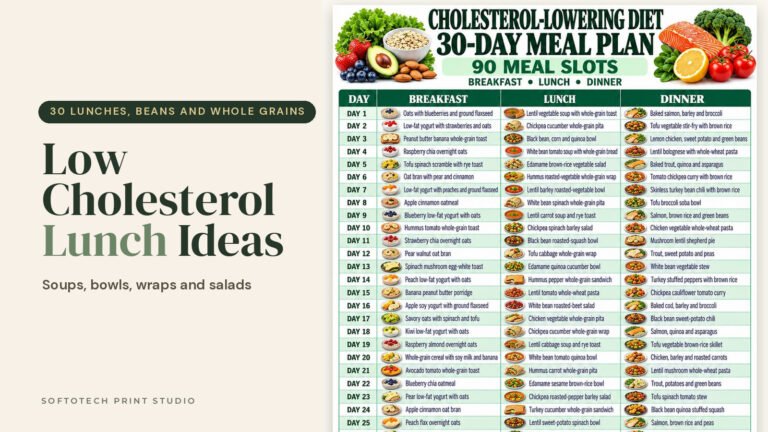 Diet & Food ListsLow Cholesterol Lunch Ideas: 30 Soups, Bowls, Wraps and Salads From a 30 Day Meal Plan, With Swaps and a Prep Week
 Diet & Food ListsPrediabetes Breakfast Ideas: 7 Balanced Breakfasts From a Weekly Meal Plan, Plus Swaps From an Eat, Limit and Avoid List
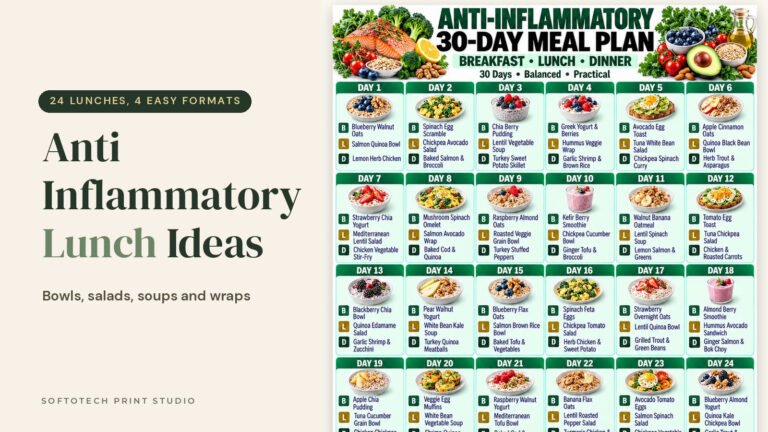 Diet & Food ListsAnti Inflammatory Lunch Ideas: 24 Bowls, Salads, Soups and Wraps From a 30 Day Meal Plan, With a Packed Lunch Week