
Low histamine diet food list is the chart I wish I had found the first time someone told me histamine in food might be part of the problem. Not a long article. A list. Three columns: EAT, foods that are common starting choices; LIMIT, foods to check against your own tolerance; and AVOID, foods that are commonly restricted. The chart in this guide sorts 100 plus foods into those three groups, and it prints at home in US Letter, A4 and A5 sizes, so you can stick it on the fridge and check it before you shop. It comes from SoftoTech Print Studio.
Histamine is a compound found in food, and the amount in a food can rise as the food ages, ferments or sits in storage. That is why freshness matters so much on a low histamine list, and why the same food can be fine fresh and a problem a few days later. Aged cheese, cured meat, fermented foods and canned fish sit in the AVOID column for that reason. Fresh chicken, fresh turkey and fresh lamb sit in the EAT column, because fresh is the point. A printed list helps because it keeps that sorting in front of you at the shop, instead of trying to remember which cheese is aged and which fish is canned.
Three honest notes before we start. First, the bottom rows of the first chart are cut off. The Proteins list continues below the visible edge, the Oils and Seasonings group is cut off, the Drinks and Other group is cut off, and the Alcohol group is cut off. This guide names only the foods that were legible, and it says so wherever the count comes up. Second, the second chart in this guide is a sibling chart with small differences, and this guide notes them where they appear. Third, this post is a food list, distinct from the low histamine diet meal plan post published Nov 6, which is a week of meals. The list is general food information for histamine intolerance, not a medical prescription, and tolerance varies person to person. For a related list, our low FODMAP diet meal plan guide covers another food sorting system, built around a different set of foods.
In this guide:
- What the Low Histamine Diet Food List Covers
- Why Freshness Matters So Much
- The Sibling Chart and Its Small Differences
- Worked Example: A Low Histamine Grocery List
- Frequently Asked Questions


The printable from this guide
Low Histamine Food List Printable
- 100 plus foods in three groups: EAT common starting choices, LIMIT check individual tolerance, AVOID commonly restricted
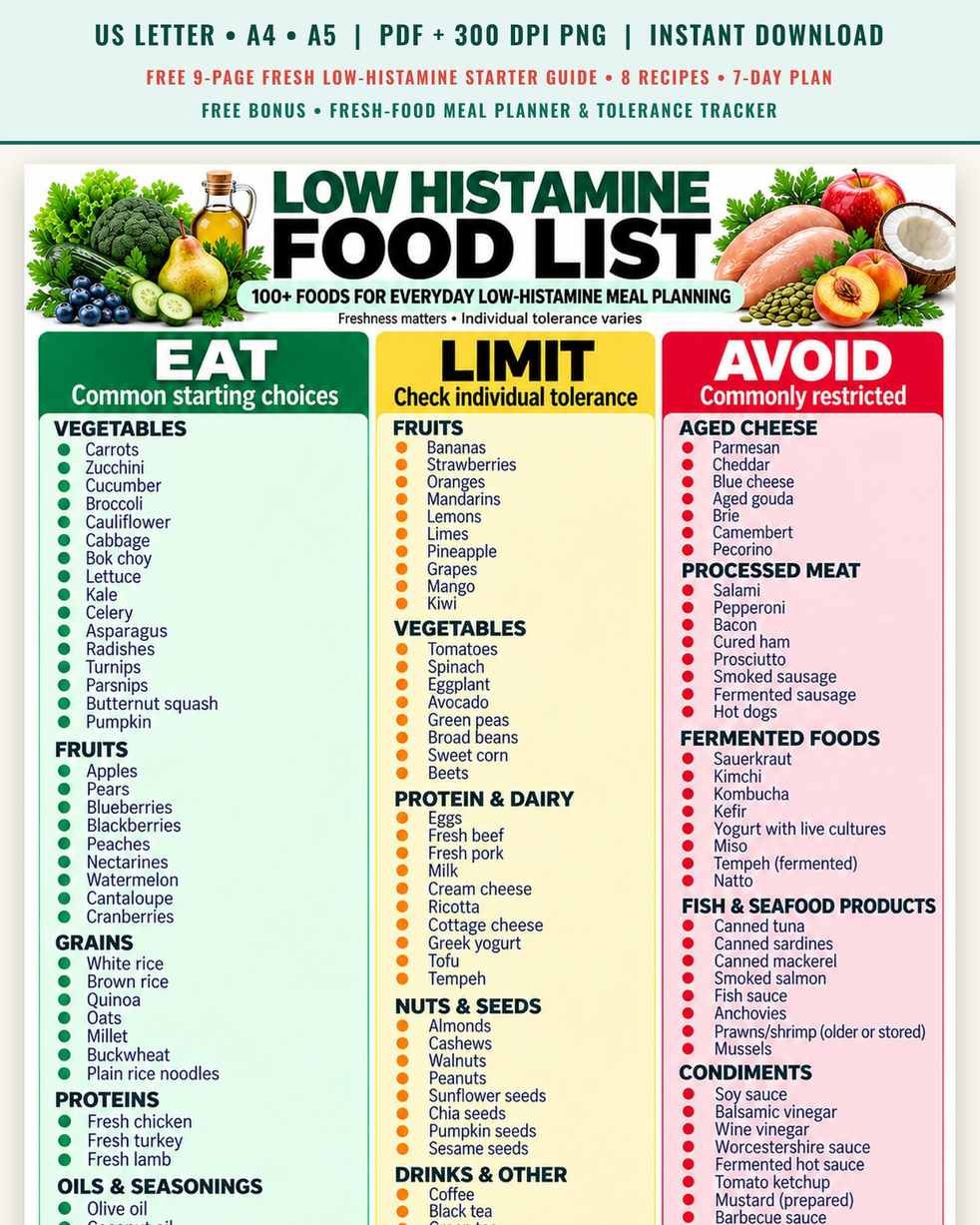
- EAT vegetables include carrots, zucchini, cucumber, broccoli, cauliflower, cabbage, bok choy, lettuce, kale, celery, asparagus, radishes, turnips, parsnips, butternut squash and pumpkin; EAT fruits include apples, pears, blueberries, blackberries, peaches, nectarines, watermelon, cantaloupe and cranberries
- EAT grains include white rice, brown rice, quinoa, oats, millet, buckwheat and plain rice noodles; EAT proteins include fresh chicken, fresh turkey and fresh lamb, with more proteins below the visible edge of the chart that are not named here
- LIMIT foods include bananas, strawberries, oranges, tomatoes, spinach, eggplant, avocado, eggs, fresh beef, fresh pork, milk, cottage cheese, almonds, cashews, walnuts and peanuts
- AVOID foods include aged cheeses like Parmesan, Cheddar and blue cheese; processed meats like salami, pepperoni and bacon; fermented foods like sauerkraut, kimchi and kombucha; canned tuna, canned sardines, smoked salmon and soy sauce
- Print sizes US Letter, A4 and A5, as 3 PDFs plus a PNG and a ZIP per the listing
- Instant download · Print at home · US Letter · A4 · A5
Use code BLOG10 for 65% OFF at Etsy checkout!
Get the Low Histamine Food List on Etsy →
What the Low Histamine Diet Food List Covers
The chart sorts 100 plus foods into three groups. EAT means common starting choices. LIMIT means check your individual tolerance. AVOID means commonly restricted. Those three headings matter, because they are not the same as safe and unsafe. EAT foods are starting choices, not a promise that everyone tolerates them. LIMIT foods are the ones to test in small amounts and watch. AVOID foods are the ones most people on a low histamine plan skip as routine choices. Your own tolerance is the final judge, and it varies person to person.
The EAT column starts with vegetables and fruit. EAT vegetables include carrots, zucchini, cucumber, broccoli, cauliflower, cabbage, bok choy, lettuce, kale, celery, asparagus, radishes, turnips, parsnips, butternut squash and pumpkin. EAT fruits include apples, pears, blueberries, blackberries, peaches, nectarines, watermelon, cantaloupe and cranberries. Those two lists alone give you a full week of produce without leaving the EAT column. The grains are simple too: white rice, brown rice, quinoa, oats, millet, buckwheat and plain rice noodles. EAT proteins include fresh chicken, fresh turkey and fresh lamb, with more proteins below the visible edge of the chart that are not named here, because that part of the chart was cut off.
The LIMIT column is where most of the real decisions happen, because it holds foods most people already buy. LIMIT foods include bananas, strawberries, oranges, tomatoes, spinach, eggplant, avocado, eggs, fresh beef, fresh pork, milk, cottage cheese, almonds, cashews, walnuts and peanuts. The full LIMIT lists on the chart are wider than that short summary. LIMIT fruits are bananas, strawberries, oranges, mandarins, lemons, limes, pineapple, grapes, cherries and raspberries. LIMIT vegetables are tomatoes, spinach, eggplant, avocado, green peas, broad beans, olives and sweet corn. LIMIT protein and dairy are eggs, fresh beef, fresh pork, milk, cream cheese, ricotta, cottage cheese, mozzarella and mascarpone. LIMIT nuts and seeds are almonds, cashews, walnuts, peanuts, sunflower seeds, pumpkin seeds, hazelnuts and pecans. The Drinks and Other group below is cut off, so it is not named here.
| Column on the chart | What it means | Examples from the chart |
|---|---|---|
| EAT | Common starting choices | Carrots, zucchini, cucumber, apples, pears, blueberries, white rice, quinoa, oats, fresh chicken, fresh turkey, fresh lamb |
| LIMIT | Check individual tolerance | Bananas, strawberries, oranges, tomatoes, spinach, avocado, eggs, fresh beef, milk, cottage cheese, almonds, walnuts |
| AVOID | Commonly restricted | Parmesan, Cheddar, blue cheese, salami, pepperoni, bacon, sauerkraut, kimchi, kombucha, canned tuna, soy sauce |
The AVOID column is mostly aged, cured, fermented and canned food. AVOID foods include aged cheeses like Parmesan, Cheddar and blue cheese; processed meats like salami, pepperoni and bacon; fermented foods like sauerkraut, kimchi and kombucha; canned tuna, canned sardines, smoked salmon and soy sauce. The full lists are wider. Aged cheese on the chart is Parmesan, Cheddar, blue cheese, aged gouda, Brie, Camembert and Pecorino. Processed meat is salami, pepperoni, bacon, cured ham, prosciutto, smoked sausage and fermented sausage. Fermented foods are sauerkraut, kimchi, kombucha, kefir, yogurt with live cultures, miso, tempeh and natto. Fish and seafood products are canned tuna, canned sardines, canned mackerel, smoked salmon and fish sauce. Condiments are soy sauce, balsamic vinegar, wine vinegar, Worcestershire sauce and fermented hot sauce. The Alcohol group below is cut off, so it is not named here. Our anti-inflammatory food list guide sorts foods in a similar three column layout, for a different purpose, if you want to compare the two.
Why Freshness Matters So Much
Freshness is the rule that sits behind the whole chart, and the second chart in this guide even carries it in the title: Freshness Matters. Histamine builds up in food over time, so a food that is fresh today can carry more histamine after days in the fridge, and a food that is cured, aged or fermented starts with more of it already. That is why the EAT proteins say “fresh” in front of them. Fresh chicken, fresh turkey, fresh lamb. The word fresh is doing real work there. It is not decoration. It is the difference between a starting choice and a food to watch.
That rule changes how you shop. Buy fresh meat and cook it the same day or the next day, instead of letting it sit for a week. Buy vegetables you will use in a few days, not a big bag that goes soft in the fridge. Cook a pot of rice or quinoa and eat it while it is fresh, instead of keeping leftovers for many days. Leftovers are the quiet problem on a low histamine plan, because time is the thing that raises histamine, and a fridge does not stop that clock. If you cook in bulk, freeze portions the same day instead of keeping them in the fridge for the week.
The AVOID column makes more sense once you see it through freshness. Aged cheese has been aged on purpose. Cured ham, prosciutto, salami and pepperoni have been cured on purpose. Sauerkraut, kimchi, miso and kombucha have been fermented on purpose. Canned tuna, canned sardines and canned mackerel have been stored for a long time. Smoked salmon has been smoked and stored. Every one of those foods is a food that has spent time becoming what it is, and that time is the problem. The chart is not saying those foods are bad in general. It is saying they are commonly restricted on a low histamine plan, and the reason is how they are made and stored.
The LIMIT column is where freshness meets your own tolerance. Eggs, fresh beef, fresh pork, milk and cottage cheese are all foods that are fresh when you buy them, and the chart still puts them in LIMIT, because some people tolerate them and some do not. Bananas, strawberries, oranges, tomatoes, spinach, eggplant and avocado are the same. They are ordinary foods, and the chart asks you to check them against your own tolerance instead of treating them as a clear yes or no. Test one LIMIT food at a time, in a small amount, and watch how you feel. If you test five new foods in one day, you will not know which one mattered. Our fatty liver diet food list guide uses the same test one food at a time idea, for a different set of foods.
A practical habit helps here. Keep the printed chart on the fridge, and keep a small notebook next to it. When you try a LIMIT food, write the date, the food, and how you felt. After a few weeks you will have your own list, built from your own tolerance, and that list is more useful than any chart, because it is yours. The printed chart is the starting point. Your notes are the plan.
The sibling low histamine chart
Low Histamine Diet Food Chart
- A second low histamine chart with 100 plus foods for everyday meal planning, same eat, limit and avoid layout, with small differences from the first chart
- LIMIT fruits here include mango and kiwi instead of cherries and raspberries; LIMIT vegetables include beets instead of olives; LIMIT protein and dairy include Greek yogurt, tofu and tempeh instead of mozzarella and mascarpone
- LIMIT nuts and seeds include chia seeds and sesame seeds instead of hazelnuts and pecans; the Drinks and Other group shows coffee and black tea, partly visible
- AVOID adds hot dogs to processed meats, anchovies, prawns or shrimp and mussels to fish and seafood, and tomato ketchup and prepared mustard to condiments
- Print sizes US Letter, A4 and A5, as 3 PDFs plus a PNG and a ZIP per the listing
- Instant download · Print at home · US Letter · A4 · A5
Use code BLOG10 for 65% OFF at Etsy checkout!
Get the Low Histamine Food Chart on Etsy → Instant download · Print at home
The Sibling Chart and Its Small Differences
The second chart in this guide is a sibling low histamine chart, with 100 plus foods for everyday meal planning, the same eat, limit and avoid layout, and small differences from the first chart. It is a separate listing, and it is worth having in the same guide because it shows how two charts can cover the same ground and still disagree on a few foods. If you print both, follow one at a time, and note the differences instead of trying to merge them.
The differences are small but real. LIMIT fruits here include mango and kiwi instead of cherries and raspberries. LIMIT vegetables include beets instead of olives. LIMIT protein and dairy include Greek yogurt, tofu and tempeh instead of mozzarella and mascarpone. LIMIT nuts and seeds include chia seeds and sesame seeds instead of hazelnuts and pecans. The Drinks and Other group shows coffee and black tea, partly visible, and the rest of that group is cut off. None of these differences change the shape of the chart. They change a handful of entries, and the honest thing is to say so rather than pretend the two charts are identical.
The AVOID column on the second chart adds a few foods too. AVOID adds hot dogs to processed meats, anchovies, prawns or shrimp and mussels to fish and seafood, and tomato ketchup and prepared mustard to condiments. The rest of the AVOID column matches the first chart: the same aged cheeses, the same processed meats, the same fermented foods, and the same canned fish. The additions are worth knowing if you eat those foods often, because hot dogs, anchovies, prawns, mussels, ketchup and mustard are everyday foods, and seeing them in AVOID on the second chart is a useful warning even if the first chart does not list them.
The EAT column on the second chart is identical to the first as far as visible: the same vegetables, the same fruits, the same grains, and the same proteins. That is reassuring. The two charts agree on the starting choices, and they only differ on a few LIMIT and AVOID entries. If you are starting out, use the EAT column from either chart and you will be on the same ground. The differences only matter when you move into the LIMIT column and start testing foods, and that is where your own notes take over anyway. Both charts print at home in US Letter, A4 and A5 sizes, as 3 PDFs plus a PNG and a ZIP per the listing.
Worked Example: A Low Histamine Grocery List
Here is a worked grocery list built from the EAT groups on the first chart: vegetables, fruits, grains and proteins, with the LIMIT and AVOID rules applied. It is a one week shop for one person cooking at home, and it shows how the list works in practice rather than in theory. The list is organised by section, so you can walk the store in order and check each item off the printed chart as you go.
Vegetables first, from the EAT column: carrots, zucchini, cucumber, broccoli, cauliflower, cabbage, bok choy, lettuce, kale, celery, asparagus, radishes, turnips, parsnips, butternut squash and pumpkin. Choose four or five for the week rather than all sixteen, and pick the ones that are in season and reasonably priced. Carrots, zucchini, cucumber and broccoli cover most meals. Cabbage and cauliflower are good for cooking in bulk. Lettuce and celery are good for salads and snacks. Buy what you will use in a few days, because freshness is the rule that sits behind this whole list, and vegetables that go soft in the fridge are wasted money.
Fruits next, also from EAT: apples, pears, blueberries, blackberries, peaches, nectarines, watermelon, cantaloupe and cranberries. Choose three or four for the week. Apples and pears keep well. Blueberries and blackberries are good for breakfast. Watermelon and cantaloupe are good for a hot day. A piece of fruit with breakfast and a piece as a snack covers the fruit for the day without needing a large portion at any one meal. Do not buy the LIMIT fruits on the same shop unless you are testing one of them that week. Bananas, strawberries and oranges are LIMIT foods here, not EAT foods, and they belong on a test list, not on the regular shop.
Grains and proteins finish the main shop. Grains from EAT are white rice, brown rice, quinoa, oats, millet, buckwheat and plain rice noodles. Pick two or three for the week. White rice and quinoa cover most meals, oats cover breakfast, and plain rice noodles cover a quick dinner. Proteins from EAT are fresh chicken, fresh turkey and fresh lamb, and the chart says more proteins sit below the visible edge, so this guide does not name them. Buy the fresh protein for the first two or three days and cook it promptly. That is the freshness rule in action: fresh meat, cooked soon, not stored for a week.
Now apply the LIMIT and AVOID rules as a check before you leave the store. If a LIMIT food is on the list, it should be there because you are testing it that week, one food at a time, in a small amount. Eggs, milk, cottage cheese, almonds or fresh beef are all LIMIT foods, and they belong on the list only as a deliberate test. The AVOID foods should not be on the list at all as routine choices: Parmesan, Cheddar and blue cheese, salami, pepperoni and bacon, sauerkraut, kimchi and kombucha, canned tuna, canned sardines, smoked salmon and soy sauce. Walk past them. Keep the printed chart visible while you unpack, put the EAT foods where you can see them first, and write your test notes in the notebook next to the chart. Next week, build from the foods that were easy to cook and easy to enjoy, and test one more LIMIT food if you are ready.
For a morning version of this chart, see these low histamine breakfast ideas, built from the EAT column and a 7 day plan.
Frequently Asked Questions
What is a low histamine diet food list?
A low histamine diet food list is a chart that sorts foods into eat, limit and avoid groups for histamine intolerance. The chart in this guide lists 100 plus foods: EAT for common starting choices, LIMIT for foods to check against your own tolerance, and AVOID for foods that are commonly restricted. It is a shopping aid, not a medical prescription.
Which foods can I eat on a low histamine diet food list?
The EAT column on this low histamine diet food list includes carrots, zucchini, cucumber, broccoli, cauliflower, cabbage, bok choy, lettuce, kale, celery, asparagus, radishes, turnips, parsnips, butternut squash, pumpkin, apples, pears, blueberries, blackberries, peaches, nectarines, watermelon, cantaloupe, cranberries, white rice, brown rice, quinoa, oats, millet, buckwheat, plain rice noodles, fresh chicken, fresh turkey and fresh lamb. More proteins sit below the visible edge of the chart and are not named here.
Which foods should I limit on a low histamine diet?
The LIMIT column includes bananas, strawberries, oranges, tomatoes, spinach, eggplant, avocado, eggs, fresh beef, fresh pork, milk, cottage cheese, almonds, cashews, walnuts and peanuts, along with the wider lists on the chart. Test one LIMIT food at a time, in a small amount, and watch how you feel. Tolerance varies person to person, so your own notes matter more than the chart alone.
Why do the two charts differ on some foods?
The two charts are siblings with the same layout and small differences. The second chart puts mango and kiwi in LIMIT fruits instead of cherries and raspberries, beets instead of olives, Greek yogurt, tofu and tempeh instead of mozzarella and mascarpone, and chia and sesame seeds instead of hazelnuts and pecans. It also adds hot dogs, anchovies, prawns and mussels, and tomato ketchup and mustard, to AVOID. The EAT column matches on both charts as far as visible.
What size is the printable low histamine food list?
Both low histamine charts are instant downloads that print at home in US Letter, A4 and A5 sizes, as 3 PDFs plus a PNG and a ZIP per the listing. Each chart holds 100 plus foods in EAT, LIMIT and AVOID groups, so you can keep one on the fridge and check it before you shop or cook.
This guide is for general wellness and is not medical advice. Check with your doctor before starting a new routine.
Flare-friendly eating, another angle: our ulcerative colitis food list guide sets out gentle food choices for flares and everyday eating.
Related Guides
- Low Histamine Diet Meal Plan
- Anti-Inflammatory Food List
- Low FODMAP Diet Meal Plan
- Fatty Liver Diet Food List
Sources
Sources: Cleveland Clinic: Histamine Intolerance, National Health Service: Food Intolerance
 Diet & Food ListsMediterranean Diet for Seniors: A Simple Guide With an Eat, Limit, Avoid List and a 7 Day Plan
 Diet & Food ListsHigh Protein Foods for Muscle Gain: How Much You Need, the Best Picks per Meal and a Worked Training Day
 Diet & Food ListsLow Sodium Dinner Ideas: 24 DASH Style Dinners, a Sodium Budget per Plate and Sauce and Seasoning Swaps