
People searching for Crohn’s disease diet restrictions usually want a straight list of foods to cut. The honest answer is that there isn’t one list that fits everyone, and cutting too much can cause its own problems. What does exist is a set of foods that many people find hard going during a flare, and a sensible way to test them without losing the foods that keep you nourished.
This guide is built around the Crohn’s Disease Food List from SoftoTech Print Studio. The chart sorts 150 plus foods into three columns: Eat, headed better tolerated by some, Monitor, headed try in small amounts, and Limit or Avoid, headed may worsen symptoms for some. The second printable is the shop’s Ulcerative Colitis Diet Food List, for readers whose family or own diagnosis sits on the other side of IBD.
It’s a general guide, not medical advice, and I’ll lean on NIDDK and Cleveland Clinic rather than my own opinions. Crohn’s affects people very differently. Some have a small bowel that’s inflamed and some have a narrowed stretch, some are in remission for years and others are not, and diet advice differs for each. Your gastroenterologist or an IBD dietitian knows which applies to you.
I’ll start with what the experts say about diet and restriction. Then I’ll go through the chart’s Limit and Avoid column, what is in the Monitor column, and what the Eat column offers. After that there’s a worked example of a flare day, and a short section on nutrition gaps and when to call your team.
In this guide:
- What the Experts Say About Restrictions
- The Limit and Avoid Column, Group by Group
- Eat and Monitor: A Worked Flare Day and How to Reintroduce Foods
- Nutrition Gaps, Medicines and When to Call Your Team
- Frequently Asked Questions
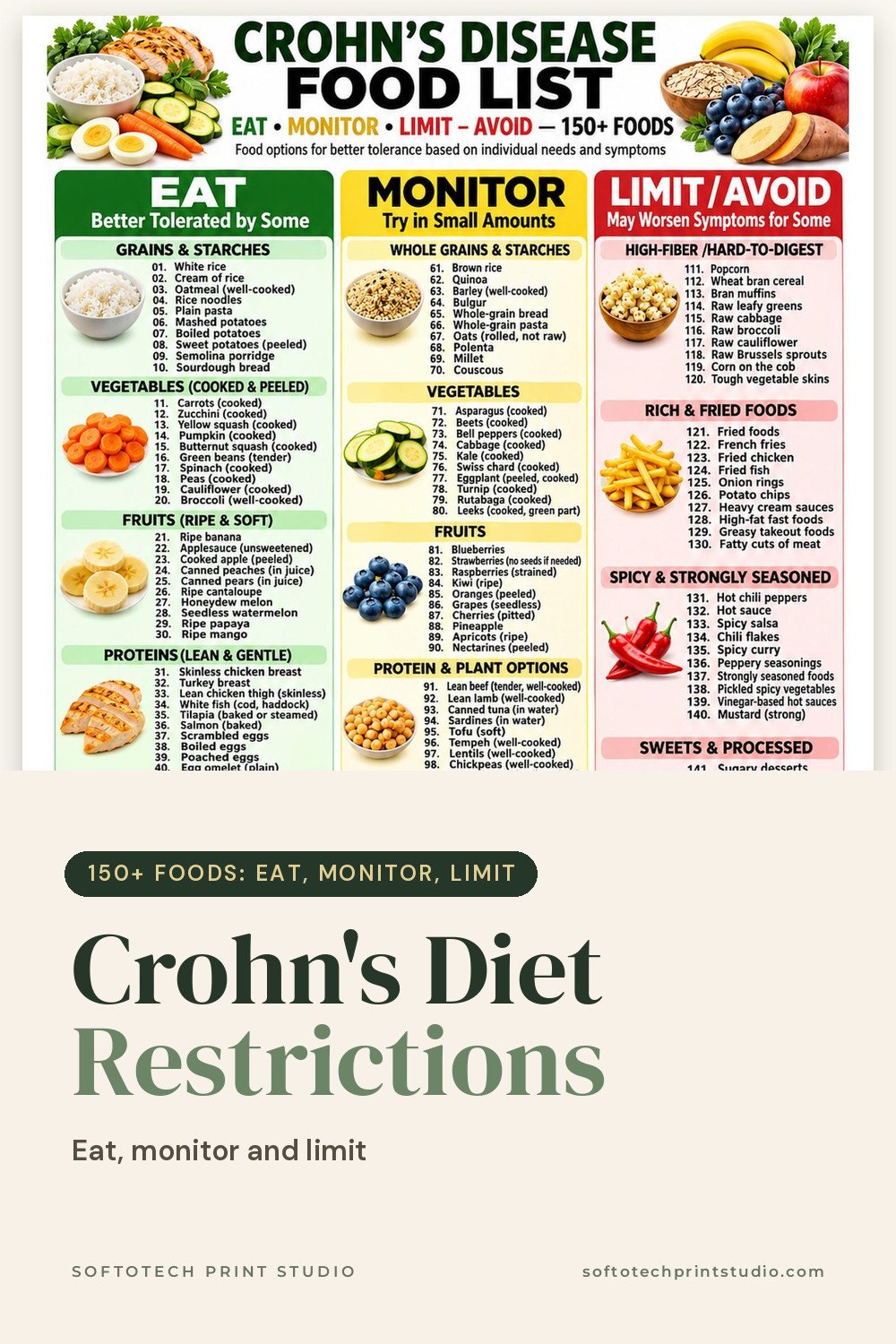
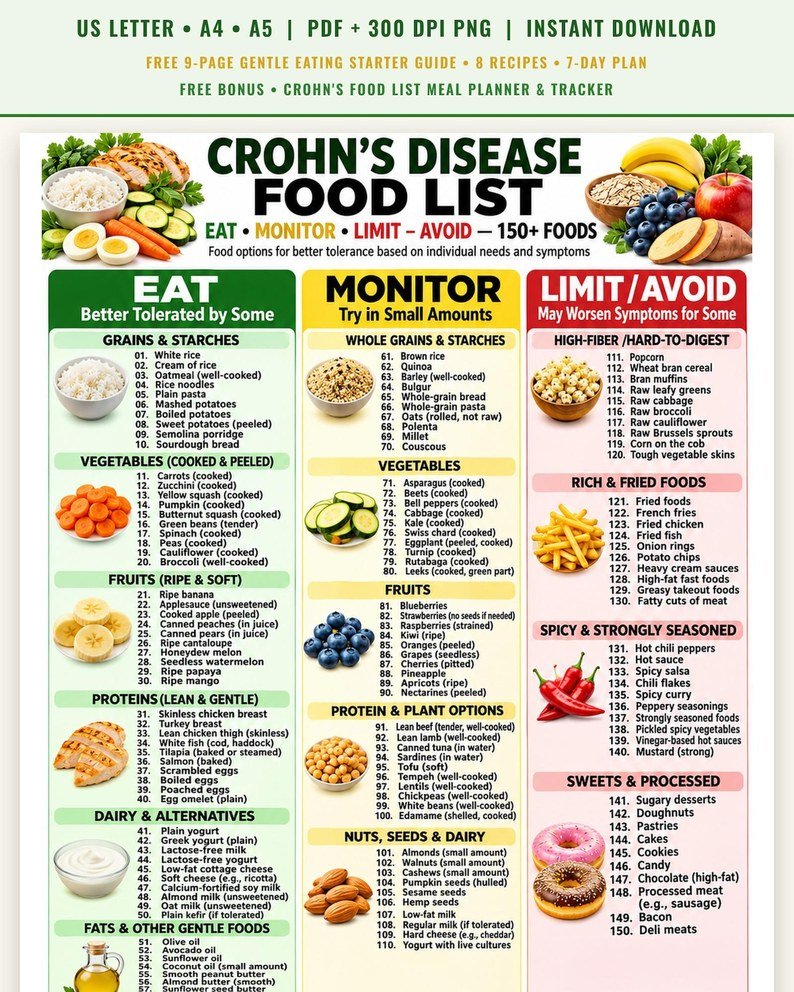
- 150 numbered foods in three columns: Eat, Monitor and Limit or Avoid
- Eat: better tolerated by some, including white rice, cooked carrots, ripe banana, skinless chicken breast and plain yogurt
- Monitor: foods to try in small amounts, including brown rice, quinoa, cooked kale, blueberries, lentils and chickpeas
- Limit or avoid: foods that may worsen symptoms for some, including popcorn, raw leafy greens, fried foods, hot chili peppers and sugary desserts
- Comes with a gentle eating starter guide and a meal planner and tracker, per the listing
- Instant download · Print at home · US Letter · A4 · A5
Use code BLOG10 for 65% OFF at Etsy checkout!
What the Experts Say About Restrictions
NIDDK on food and Crohn’s. The National Institute of Diabetes and Digestive and Kidney Diseases says that researchers have not found that specific foods cause or worsen Crohn’s disease symptoms. It says you should choose healthy foods and drinks and talk with your doctor about a healthy eating plan, and that your doctor may suggest keeping a food diary to help identify foods that seem to make your symptoms worse. It also notes that Crohn’s can affect nutrition, because symptoms may reduce appetite, inflammation in the small intestine may reduce how many nutrients you absorb, and some medicines and surgery can do the same.
Cleveland Clinic on trigger foods. Cleveland Clinic’s dietitian says that you can’t cure IBD with diet and that you need a healthcare team treating it. She adds that during a flare there are foods you may want to avoid or limit to lessen symptoms, and that trigger foods are different for everyone, so if you’re unsure where to start you should talk to a healthcare provider before cutting anything.
The warning about doing too much. The same Cleveland Clinic article makes a point that gets lost in many diet lists. It says that when you aren’t having symptoms you should try to eat a balanced diet, and that you don’t want to regularly shun foods like whole grains, vegetables or beans. Because malnutrition can be a problem for people with IBD, it says to avoid certain foods only during a flare, and only if those foods bring on symptoms.
That’s the frame I’d keep in mind as you read the chart. The Limit and Avoid column is a list of foods worth being careful with during a flare. It isn’t a permanent ban list, and the chart says so itself, with the wording may worsen symptoms for some.
What the chart is and isn’t. It’s a food-sorting reference, with a numbered list and pictures. It doesn’t give nutrient numbers or portion sizes, it doesn’t tell you what stage of disease you’re in, and it can’t replace advice from the team that knows your history. The footer wording about individual needs and symptoms is a good reminder of that.
The Limit and Avoid Column, Group by Group
The red column runs from number 111 to 150 and has four groups of ten. Here’s what’s in each and why people often find them difficult. The reasons come mainly from Cleveland Clinic’s flare advice, plus common sense about how foods behave in a sensitive gut.
High-fiber and hard-to-digest foods, 111 to 120. Popcorn, wheat bran cereal, bran muffins, raw leafy greens, raw cabbage, raw broccoli, raw cauliflower, raw Brussels sprouts, corn on the cob and tough vegetable skins. Cleveland Clinic says high amounts of fiber can cause a lot of traffic in your digestive tract, and it names whole-grain bread, whole-wheat pasta, popcorn and bran as examples that can be irritating during a flare. It also says to avoid fruits and vegetables with skins and seeds intact, to choose cooked rather than raw, and to steer clear of gassy vegetables like broccoli, cabbage and Brussels sprouts when you’re flaring.
Rich and fried foods, 121 to 130. Fried foods, French fries, fried chicken, fried fish, onion rings, potato chips, heavy cream sauces, high-fat fast foods, greasy takeout foods and fatty cuts of meat. Cleveland Clinic says whole-fat dairy products like whole milk, ice cream and sour cream can be a problem when you have symptoms, and the same logic applies to other very rich foods. Heavy, fatty meals are simply harder on a gut that is already irritated.
Spicy and strongly seasoned foods, 131 to 140. Hot chili peppers, hot sauce, spicy salsa, chili flakes, spicy curry, peppery seasonings, strongly seasoned foods, pickled spicy vegetables, vinegar-based hot sauces and strong mustard. Cleveland Clinic says spices like chili powder, cayenne pepper and spicy curries can add heat to an inflamed gut. Mild herbs are a different matter, and the chart’s Eat column leaves them alone.
Sweets and processed foods, 141 to 150. Sugary desserts, doughnuts, pastries, cakes, cookies, candy, high-fat chocolate, processed meat such as sausage, bacon and deli meats. Some of these are on the list for fat, some for sugar, and the processed meats for both fat and heavy seasoning.
Notice how much of this column is about texture and richness, not about one forbidden ingredient. That’s consistent with NIDDK’s statement that specific foods haven’t been shown to cause Crohn’s. They may still make a flare feel worse, and that’s what the column is for.
If diverticulitis is also on your radar, our diverticulitis food list covers another condition where food advice shifts during a flare, and the gastroparesis food list does the same for slow stomach emptying.
Which of these matter most? That’s personal. For one person raw salad is the trigger and a curry is fine. For another it’s the other way round. A food diary is the way to find out. If you’re curious about how the low FODMAP approach compares for gas and bloating, our low FODMAP diet food list covers it, and it’s another thing to talk through with your dietitian rather than start alone.
Eat and Monitor: A Worked Flare Day and How to Reintroduce Foods
The Eat column. Numbered 1 to 60 in six groups, the green column is headed better tolerated by some. Grains and starches include white rice, cream of rice, well-cooked oatmeal, rice noodles, plain pasta, mashed and boiled potatoes, peeled sweet potato, semolina porridge and sourdough bread. Cooked and peeled vegetables include carrots, zucchini, yellow squash, pumpkin, butternut squash, tender green beans, cooked spinach, peas, cooked cauliflower and well-cooked broccoli. Ripe and soft fruits include ripe banana, unsweetened applesauce, a cooked peeled apple, canned peaches and pears in juice, ripe cantaloupe, honeydew, seedless watermelon, ripe papaya and ripe mango. Lean and gentle proteins include skinless chicken breast, turkey breast, white fish like cod and haddock, baked salmon and eggs. Dairy and alternatives include plain and lactose-free yogurt, lactose-free milk, low-fat cottage cheese and ricotta, and fats include olive oil, avocado oil and smooth nut butters.
The Monitor column. Numbered 61 to 110 and headed try in small amounts, the yellow column has foods that many people tolerate but some don’t: whole grains like brown rice, quinoa, well-cooked barley and whole-grain bread, cooked vegetables like asparagus, beets, kale and Swiss chard, fruits like blueberries, kiwi, peeled oranges and seedless grapes, proteins and plant options like tender lean beef, canned tuna in water, soft tofu, lentils and chickpeas, and small amounts of almonds, walnuts, pumpkin seeds and hard cheese. This is the column that does the most to prevent over-restriction, because it says try, in small amounts, instead of don’t.
Here’s a worked flare day using only foods from the Eat column, as an example to talk over with your dietitian, not a prescription. It’s built around the small, frequent meals that doctors often suggest when appetite is low. The foods are all from the chart, and the timing is my own.
| Time | Meal | Foods from the chart |
|---|---|---|
| Breakfast | Well-cooked oatmeal with a ripe banana | Eat: oatmeal, ripe banana |
| Mid-morning | Plain yogurt or lactose-free yogurt | Eat: plain yogurt, lactose-free yogurt |
| Lunch | Scrambled eggs, a slice of sourdough, unsweetened applesauce | Eat: eggs, sourdough bread, applesauce |
| Mid-afternoon | Plain white rice with a spoon of smooth peanut butter | Eat: white rice, smooth peanut butter |
| Dinner | Baked cod, mashed potatoes, cooked carrots | Eat: cod, mashed potatoes, carrots |
| Evening | Canned pears in juice | Eat: canned pears |
Nothing in that day is raw, fried, spicy or high in fiber, and it’s more than a plate of toast. Protein is spread through the day, which matters because Crohn’s can leave you short of nutrients. If milk gives you trouble, the chart’s lactose-free choices are there for a reason, and Cleveland Clinic says lactose-free dairy may be better tolerated during a flare.
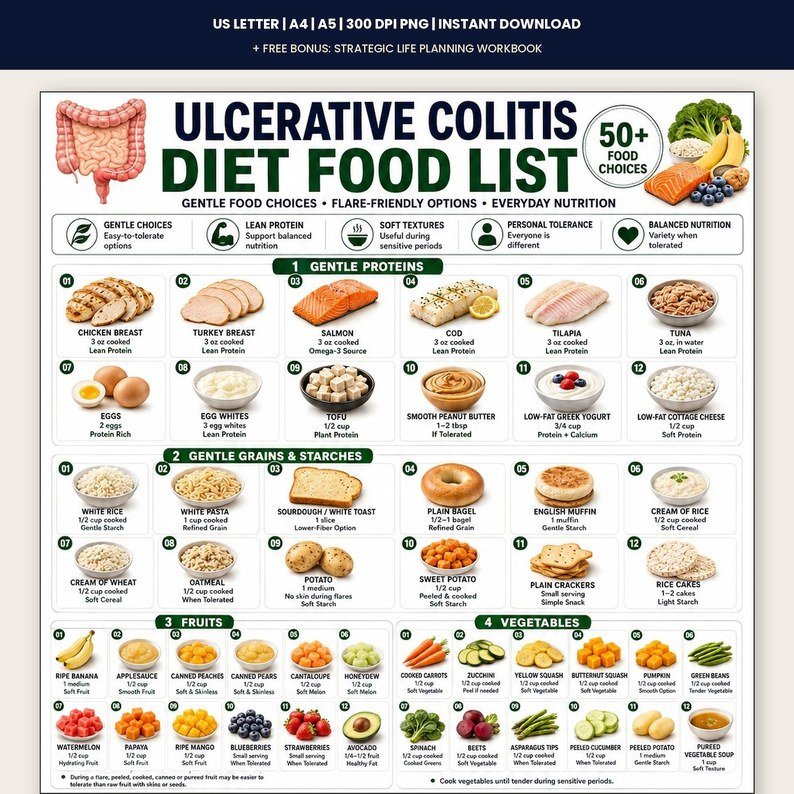
- 50+ gentle food choices for ulcerative colitis, with portions on the chart
- Gentle proteins include chicken breast, turkey breast, salmon, cod, eggs, tofu and low-fat Greek yogurt
- Gentle grains include white rice, white pasta, sourdough toast, cream of rice and plain crackers
- Gentle fruits include ripe banana, applesauce, canned peaches, canned pears, cantaloupe and honeydew
- US Letter, A4 and A5 print-ready files, per the listing
- Instant download · Print at home · US Letter · A4 · A5
Use code BLOG10 for 65% OFF at Etsy checkout!
Bringing foods back after a flare. The sensible way to test foods is slowly. When symptoms ease, try one Monitor food at a time, in a small portion, and wait a day or two before adding another. Write down what you tried and how you felt. If something causes trouble, drop it for a few weeks and try again later, since tolerance can change. If a food goes through without any trouble, keep it. Over time the diary shows your pattern, and you can show it to your team.
A simple order to try. Many people begin with cooked vegetables from the Monitor column, like cooked kale or asparagus tips, then soft fruits, then well-cooked beans and lentils, and leave the Limit column’s raw, fibrous foods for last. That’s a common-sense order, not a rule, and your dietitian may suggest a different one.
The ulcerative colitis chart in the shop uses a gentler structure, with portions on the chart, and our ulcerative colitis food list guide goes through it. Crohn’s and ulcerative colitis are both inflammatory bowel disease, but they aren’t the same condition, and a chart for one is not advice for the other, so use the one that matches your diagnosis.
Nutrition Gaps, Medicines and When to Call Your Team
Eating enough matters more than eating perfectly. NIDDK points out that Crohn’s can lead to malnutrition and, in children, problems with growth and development, and that getting the amount of nutrients that is best for you may help prevent those complications. If your restrictions leave you eating very little, or losing weight without trying, tell your doctor. It’s a more urgent problem than an occasional trigger food.
Supplements. NIDDK says your doctor may recommend dietary supplements if your body doesn’t absorb enough nutrients, and for safety reasons you should talk with your doctor before using supplements such as vitamins, or any complementary or alternative medicines. Don’t start high-dose supplements on the strength of a blog post, including this one.
Gut bacteria and variety. NIDDK notes that eating a variety of healthy foods can improve healthy bacteria in the gut, and that your doctor may recommend eating more fruits and vegetables. That’s another argument against long lists of permanent bans. The aim is to widen your diet as far as your symptoms allow.
Medicines. Some medicines used for Crohn’s affect how you absorb nutrients, according to NIDDK. If you’re on steroids, immunosuppressants or biologics, ask your team about anything you add to your diet, including herbal products.
When to get help. Contact your doctor if you have severe or worsening abdominal pain, blood in your stool, a fever, repeated vomiting, a bloated belly with no gas or stool passing, unexplained weight loss, or you can’t keep food or fluids down. Those need medical care, not a food list. If you ever feel faint or very unwell, get urgent help.
Working with an IBD dietitian. If you can, see a dietitian who knows IBD. They can look at your actual symptoms, your blood tests and your diary, and suggest a plan that restricts as little as possible. The chart in this guide is a handy thing to take along, since you can mark the foods you’ve tried and how they went.
The short version is this. Limit what truly bothers you during a flare, test carefully when you feel better, and keep your diet as wide as your gut allows. Use the chart as a talking point with your team.
Frequently Asked Questions
Are there foods everyone with Crohn’s disease must avoid?
No. NIDDK says researchers have not found that specific foods cause or worsen Crohn’s disease symptoms, and Cleveland Clinic says trigger foods are different for everyone. Many people find certain foods bother them during a flare, which is why a food diary and your care team are the best guide.
What foods are usually limited during a Crohn’s flare?
Cleveland Clinic lists high-fiber whole grains, beans, fruits and vegetables with skins and seeds, gassy vegetables, whole-fat dairy and spicy foods as things people often avoid or limit during a flare. The chart’s Limit and Avoid column covers similar ground, with popcorn, raw cabbage, fried foods, hot chili peppers and sugary sweets.
Should I cut foods out when my symptoms are quiet?
Usually not without advice. Cleveland Clinic notes that malnutrition can be a problem for people with IBD, and says to avoid certain foods only if they cause symptoms during a flare. When you aren’t having symptoms it suggests trying to eat a balanced diet. Check with your doctor or an IBD dietitian before dropping a whole food group.
Is dairy off the menu with Crohn’s disease?
Not for everyone. Cleveland Clinic says many people with Crohn’s can eat dairy, while whole-fat dairy such as whole milk, ice cream and sour cream can be a problem during a flare, and lactose-free dairy may be better tolerated. The chart puts lactose-free milk and yogurt, plain yogurt and low-fat cottage cheese in its Eat column.
How do I find my own trigger foods?
NIDDK suggests that your doctor may recommend keeping a food diary to help find foods that seem to make your symptoms worse. Write down what you ate, when, and how you felt over the next day or so, and bring it to your appointment. Change one thing at a time so the pattern is clear.
This guide is for general information and is not medical advice. Crohn’s disease needs care from your own doctor or IBD dietitian, so check any change to your diet with them first.
Related Guides
- Ulcerative Colitis Food List
- Diverticulitis Food List
- Low FODMAP Diet Food List
- Gastroparesis Food List
Sources
Sources: NIDDK (NIH), Eating, Diet, & Nutrition for Crohn’s Disease, Cleveland Clinic, Creating a Crohn’s Disease and Colitis Diet Plan
 Diet & Food ListsMediterranean Diet for Seniors: A Simple Guide With an Eat, Limit, Avoid List and a 7 Day Plan
 Diet & Food ListsHigh Protein Foods for Muscle Gain: How Much You Need, the Best Picks per Meal and a Worked Training Day
 Diet & Food ListsLow Sodium Dinner Ideas: 24 DASH Style Dinners, a Sodium Budget per Plate and Sauce and Seasoning Swaps