
Once a GLP-1 medicine starts working, the usual problem flips, and many people find they can barely finish a plate. A GLP-1 diet meal plan helps by giving you a week of small, balanced meals and snacks, so you still get enough protein, fibre and fluids without staring into the fridge wondering what you can actually face. This guide walks through a printable 7 day plan and a matching food list.
First, a plain caution. This is general eating guidance for people taking GLP-1 medicines, like semaglutide or tirzepatide. It is not advice about the medicine, your dose or your diagnosis, and it doesn’t replace what your prescriber or dietitian tells you. Needs vary a lot, especially if you have diabetes, kidney disease or a history of disordered eating, or if you’re losing weight very quickly. Please check with your prescriber or a registered dietitian before you change how you eat, and follow their advice where it differs from anything here.
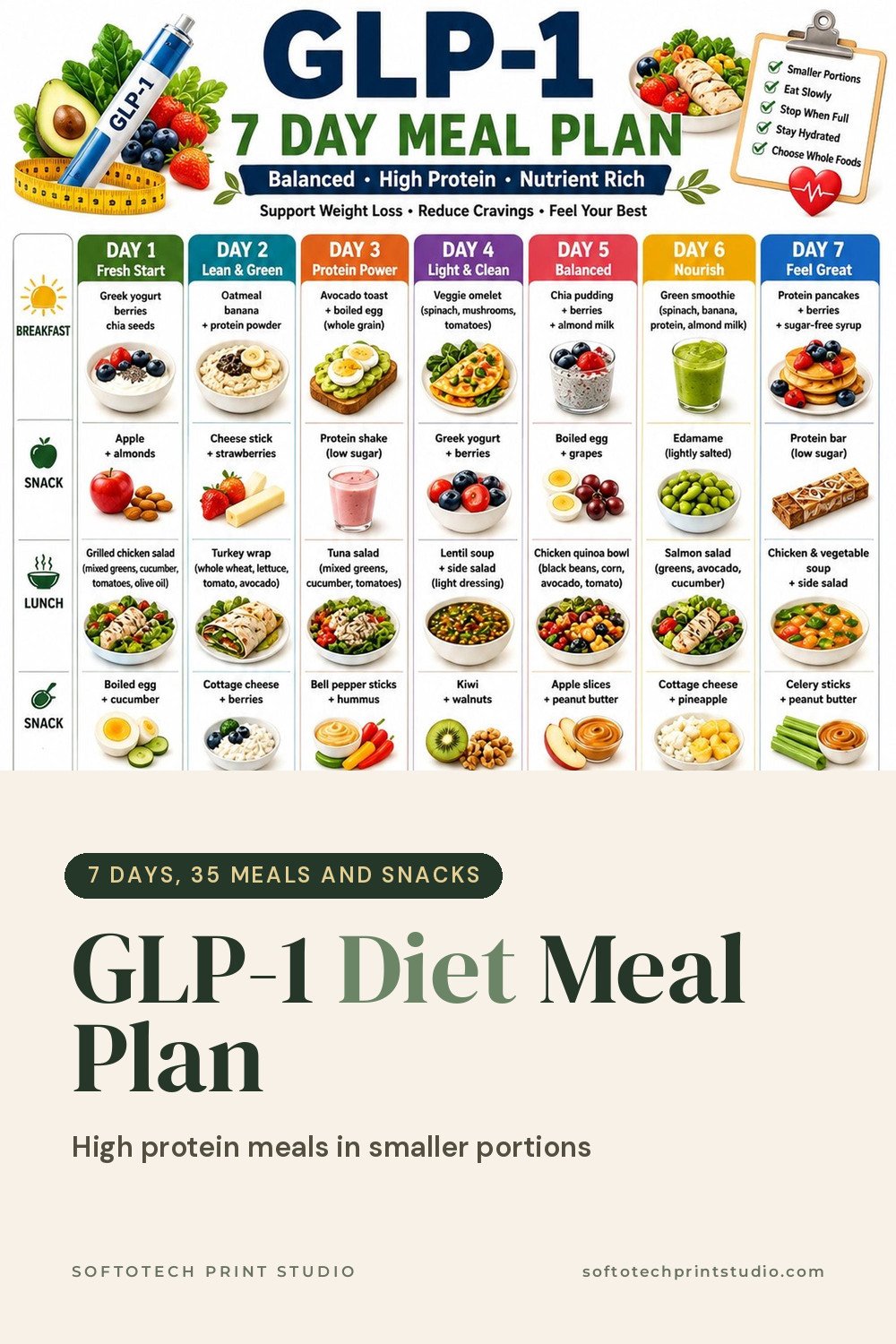
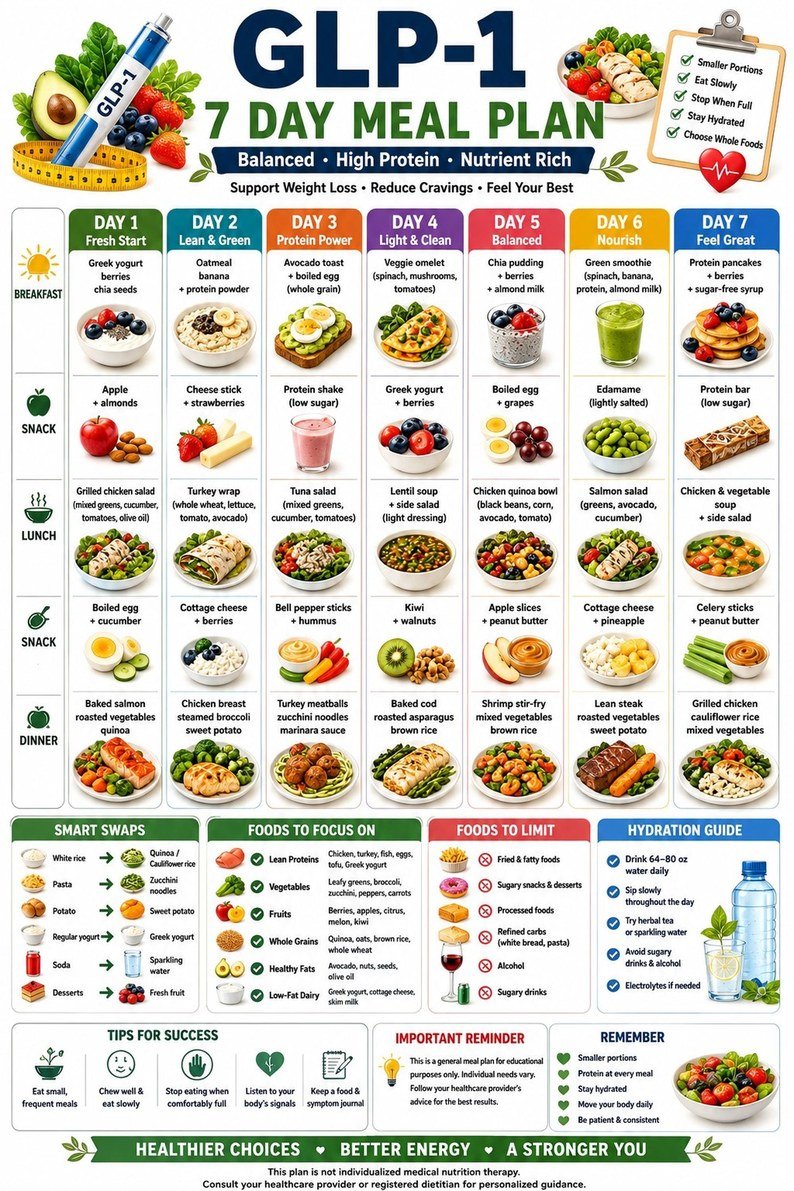
The main chart is the GLP-1 7 Day Meal Plan, with the line Balanced, High Protein, Nutrient Rich. Each day has a breakfast, a snack, lunch, a second snack and dinner, so there are 35 meal and snack ideas across the week. Below the grid are panels for smart swaps, foods to focus on, foods to limit, a hydration guide and tips for success. The chart names the foods but doesn’t give portion sizes, calories or protein grams, so treat it as a menu of ideas, not a measured prescription.
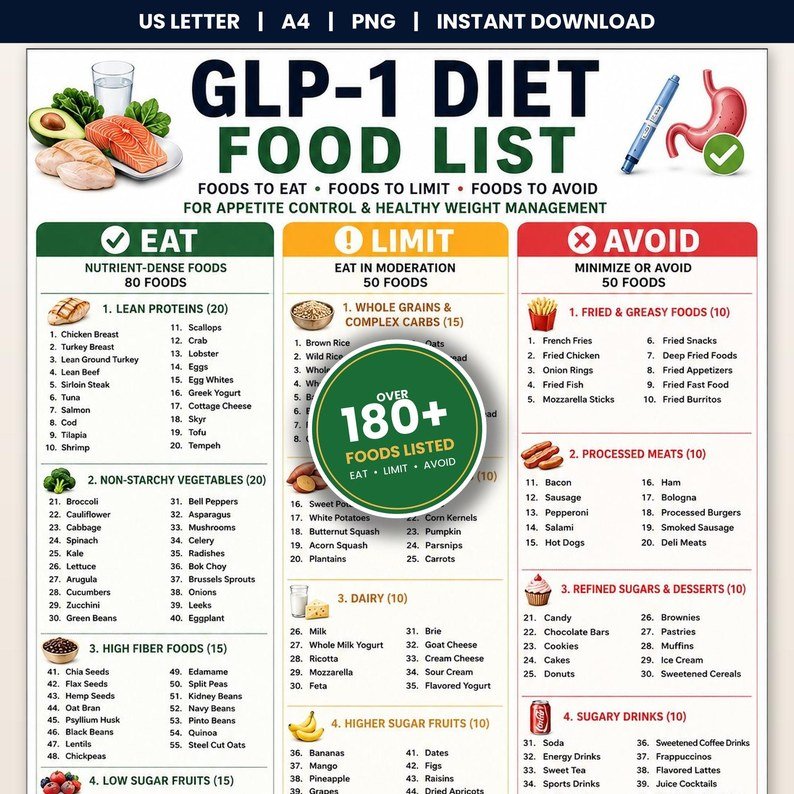
The second chart is a GLP-1 Diet Food List that sorts 180 foods into three columns: 80 to eat, 50 to limit and 50 to avoid. It’s handy when you’re shopping, or when you want to swap a meal on the plan for something else.
Both charts carry their own reminders. The meal plan says it is a general plan for educational purposes and that individual needs vary, and at the foot it says it is not individualized medical nutrition therapy. The food list’s footer reads educational purposes only, not medical advice, always consult your healthcare provider. I agree with them on that.
In this guide:
- What Is on the GLP-1 7 Day Meal Plan
- Worked Week: All 35 Meals and Snacks in a Table
- The GLP-1 Diet Food List: Eat, Limit, Avoid
- How to Use the Plan Alongside GLP-1 Medicine
- Frequently Asked Questions
- A 7 day plan with breakfast, a snack, lunch, a second snack and dinner for every day, 35 meal and snack ideas in all
- Meals include Greek yogurt with berries and chia, a turkey wrap, lentil soup, baked cod and shrimp stir-fry
- Panels for smart swaps, foods to focus on, foods to limit and a hydration guide
- Tips like eat small, frequent meals, chew well and stop eating when comfortably full
- Print sizes US Letter, A4 and A5, as 3 PDFs plus a PNG and a ZIP per the listing
- Instant download · Print at home · US Letter · A4 · A5
Use code BLOG10 for 65% OFF at Etsy checkout!
What Is on the GLP-1 7 Day Meal Plan
Under the title, the chart sums itself up as support weight loss, reduce cravings, feel your best. A small clipboard drawing in the corner lists five habits: smaller portions, eat slowly, stop when full, stay hydrated, and choose whole foods. Each day also has a name, which is a nice touch: Day 1 Fresh Start, Day 2 Lean and Green, Day 3 Protein Power, Day 4 Light and Clean, Day 5 Balanced, Day 6 Nourish, and Day 7 Feel Great.
The meals themselves are simple, everyday food. Breakfasts include Greek yogurt with berries and chia seeds, oatmeal with banana and protein powder, avocado toast on whole grain with a boiled egg, and a veggie omelet with spinach, mushrooms and tomatoes. Lunches are mostly salads, wraps, bowls and soups. Dinners follow a protein plus vegetables plus a starch pattern, like baked salmon with roasted vegetables and quinoa, or chicken breast with steamed broccoli and sweet potato.
What stands out is how often protein appears. Nearly every meal and most snacks have a protein food in them: Greek yogurt, eggs, cheese, cottage cheese, chicken, turkey, tuna, salmon, cod, shrimp, lean steak, lentils, edamame, a protein shake or a protein bar. That fits the chart’s Remember panel, which says protein at every meal. The Mayo Clinic Diet’s GLP-1 sample plan, listed in the sources, makes a similar point, describing its plan as higher protein to help preserve muscle while appetite is low.
The smart swaps panel has six simple trades: white rice for quinoa or cauliflower rice, pasta for zucchini noodles, potato for sweet potato, regular yogurt for Greek yogurt, soda for sparkling water, and desserts for fresh fruit.
The foods to focus on panel lists lean proteins (chicken, turkey, fish, eggs, tofu, Greek yogurt), vegetables (leafy greens, broccoli, zucchini, peppers, carrots), fruits (berries, apples, citrus, melon, kiwi), whole grains (quinoa, oats, brown rice, whole wheat), healthy fats (avocado, nuts, seeds, olive oil) and low-fat dairy (Greek yogurt, cottage cheese, skim milk).
The foods to limit panel lists fried and fatty foods, sugary snacks and desserts, processed foods, refined carbs like white bread and pasta, alcohol, and sugary drinks. Cleveland Clinic explains why this matters on these medicines: GLP-1 drugs slow down how fast the stomach empties, so greasy, high fat foods sit there longer and may cause indigestion, nausea or heartburn, and sugary drinks can upset the stomach too.
The hydration guide says drink 64 to 80 oz of water daily, sip slowly throughout the day, try herbal tea or sparkling water, avoid sugary drinks and alcohol, and use electrolytes if needed. That’s roughly 1.9 to 2.4 litres. It’s a general figure, so if you’ve been told to limit fluids for a heart or kidney condition, follow your doctor’s number instead.
The tips for success are eat small, frequent meals; chew well and eat slowly; stop eating when comfortably full; listen to your body’s signals; and keep a food and symptom journal. That last one is useful. Writing down what you ate and how you felt afterwards makes it much easier to spot which foods don’t agree with you.
For the full background on which foods tend to sit well, our GLP-1 diet food list post goes through the eat and limit groups in more detail.
Worked Week: All 35 Meals and Snacks in a Table
Here are the main meals from the chart, day by day, exactly as printed. The snacks follow below the table.
| Day | Breakfast | Lunch | Dinner |
|---|---|---|---|
| Day 1, Fresh Start | Greek yogurt, berries, chia seeds | Grilled chicken salad (mixed greens, cucumber, tomatoes, olive oil) | Baked salmon, roasted vegetables, quinoa |
| Day 2, Lean and Green | Oatmeal, banana and protein powder | Turkey wrap (whole wheat, lettuce, tomato, avocado) | Chicken breast, steamed broccoli, sweet potato |
| Day 3, Protein Power | Avocado toast and boiled egg (whole grain) | Tuna salad (mixed greens, cucumber, tomatoes) | Turkey meatballs, zucchini noodles, marinara sauce |
| Day 4, Light and Clean | Veggie omelet (spinach, mushrooms, tomatoes) | Lentil soup and side salad (light dressing) | Baked cod, roasted asparagus, brown rice |
| Day 5, Balanced | Chia pudding, berries and almond milk | Chicken quinoa bowl (black beans, corn, avocado, tomato) | Shrimp stir-fry, mixed vegetables, brown rice |
| Day 6, Nourish | Green smoothie (spinach, banana, protein, almond milk) | Salmon salad (greens, avocado, cucumber) | Lean steak, roasted vegetables, sweet potato |
| Day 7, Feel Great | Protein pancakes, berries and sugar-free syrup | Chicken and vegetable soup and side salad | Grilled chicken, cauliflower rice, mixed vegetables |
The snacks, in order. The first snack of each day, between breakfast and lunch: Day 1 apple and almonds, Day 2 cheese stick and strawberries, Day 3 protein shake (low sugar), Day 4 Greek yogurt and berries, Day 5 boiled egg and grapes, Day 6 edamame (lightly salted), Day 7 protein bar (low sugar).
The second snack, between lunch and dinner: Day 1 boiled egg and cucumber, Day 2 cottage cheese and berries, Day 3 bell pepper sticks and hummus, Day 4 kiwi and walnuts, Day 5 apple slices and peanut butter, Day 6 cottage cheese and pineapple, Day 7 celery sticks and peanut butter.
That’s 7 breakfasts, 7 lunches, 7 dinners and 14 snacks, which is where the 35 comes from.
A few practical ways to make this week easier. Cook once, eat twice. The salmon from Day 1’s dinner can go cold into Day 6’s salmon salad if you cook extra, and roasted vegetables keep well for a couple of days. Grilled chicken turns up on Days 1, 5 and 7, so a tray of chicken breasts on the weekend covers several meals. Soups, like Day 4’s lentil soup and Day 7’s chicken and vegetable soup, freeze well in single portions. The Mayo Clinic Diet’s GLP-1 plan suggests batch cooking freezable meals for exactly this reason: it cuts the cooking in weeks when eating feels like a chore.
If a full meal is too much, split it. The Mayo Clinic Diet plan suggests eating half a meal and the rest two to three hours later, rather than skipping it. A turkey wrap or a quinoa bowl halves easily. Its plan also suggests eating dinner early, giving your body at least two hours before bed.
Shopping is simpler than the 35 ideas suggest, because the same foods repeat. A basic list for the week would cover Greek yogurt, cottage cheese, eggs, cheese sticks, chicken breasts, turkey mince for the meatballs, cooked turkey breast for the wrap, canned tuna, salmon, cod, shrimp, a small lean steak, lentils, black beans, edamame, quinoa, brown rice, oats, whole grain bread and whole wheat wraps, mixed greens, spinach, cucumbers, tomatoes, broccoli, asparagus, zucchini, bell peppers, celery, mushrooms, sweet potatoes, avocados, berries, apples, bananas, kiwi, grapes, pineapple, almonds, walnuts, chia seeds, hummus, peanut butter and unsweetened almond milk. Add the protein powder, low sugar protein shake and protein bar only if you use them.
For more ways to build meals around protein, our high protein meal plan has another full week with macros. If snacks are where you struggle, the healthy snacks for weight loss list has plenty of small, easy options to rotate in.
- 180 everyday foods sorted into three columns: 80 to eat, 50 to limit and 50 to avoid
- EAT groups: lean proteins, non-starchy vegetables, high fiber foods, low sugar fruits and healthy fats
- LIMIT groups include whole grains, starchy vegetables, dairy, higher sugar fruits and calorie dense foods
- Quick GLP-1 success tips, like prioritize protein at every meal and eat slowly and stop when satisfied
- Print sizes US Letter and A4 PDFs plus a 300 DPI PNG per the listing; A5 and a ZIP are not listed
- Instant download · Print at home · US Letter · A4
Use code BLOG10 for 65% OFF at Etsy checkout!
The GLP-1 Diet Food List: Eat, Limit, Avoid
The second chart is titled GLP-1 Diet Food List, foods to eat, foods to limit, foods to avoid, for appetite control and healthy weight management. A green badge on the main listing photo says over 180 foods listed, and the column counts add up to exactly 180. Each column is split into numbered groups.
EAT, nutrient-dense foods, 80 foods. Lean proteins (20), from chicken breast, turkey breast and lean ground turkey to salmon, cod, tilapia, shrimp, eggs, egg whites, Greek yogurt, cottage cheese, skyr, tofu and tempeh. Non-starchy vegetables (20), such as broccoli, cauliflower, cabbage, spinach, kale, arugula, zucchini, green beans, bell peppers, asparagus, mushrooms, Brussels sprouts and eggplant. High fiber foods (15), including chia seeds, flax seeds, hemp seeds, oat bran, psyllium husk, black beans, lentils, chickpeas, edamame, split peas, kidney beans, quinoa and steel cut oats. Low sugar fruits (15), like blueberries, strawberries, raspberries, apples, pears, kiwi, grapefruit, peaches, plums, cherries and oranges. Healthy fats (10), such as avocado, olive oil, walnuts, almonds, pistachios, pecans, cashews, pumpkin seeds and sunflower seeds.
LIMIT, eat in moderation, 50 foods. Whole grains and complex carbs (15), such as brown rice, wild rice, whole wheat pasta, whole grain bread, barley, oats, rye bread, rice cakes and granola. Starchy vegetables (10), including sweet potatoes, white potatoes, butternut squash, plantains, peas, corn and carrots. Dairy (10), like milk, whole milk yogurt, ricotta, mozzarella, feta, brie and flavored yogurt. Higher sugar fruits (10), such as bananas, mango, pineapple, grapes, watermelon, dates, figs, raisins and dried apricots. Calorie dense foods (5): peanut butter, almond butter, tahini, trail mix and coconut flakes. A note under the column says these foods can be part of a healthy diet in small portions, and to listen to your body’s hunger cues.
AVOID, minimize or avoid, 50 foods. Fried and greasy foods (10), like French fries, fried chicken, onion rings and mozzarella sticks. Processed meats (10), such as bacon, sausage, pepperoni, salami, hot dogs, ham and deli meats. Refined sugars and desserts (10), including candy, cookies, cakes, donuts, ice cream and sweetened cereals. Sugary drinks (10), such as soda, energy drinks, sweet tea, sports drinks, milkshakes and flavored lattes. Ultra-processed foods (10), like instant noodles, frozen pizza, packaged snacks, chips and fast food burgers.
Along the bottom, the Quick GLP-1 Success Tips say prioritize protein at every meal, eat slowly and stop when satisfied, focus on fiber-rich whole foods, stay hydrated throughout the day, avoid ultra-processed foods, and get enough sleep and manage stress. The Remember panel says everyone is different, listen to your body, and consult your healthcare provider for personalized advice.
The chart also has a GLP-1 Diet Benefits panel listing reduces appetite and cravings, helps improve portion control, supports steady blood sugar, promotes healthy weight loss, increases satiety and fullness, and supports long-term healthy habits. I’d read those as the aims of eating this way, not as promises from a food list.
One honest point about using the two charts together. They don’t line up perfectly. Several foods on the meal plan, including brown rice, sweet potato, bananas, grapes, pineapple, whole wheat wraps and peanut butter, sit in the food list’s LIMIT column. That isn’t a contradiction so much as a reminder of what limit means here: eat in moderation, in small portions, not never. Two items are worth a second look against the AVOID column. The Day 7 protein bar is a packaged snack, so pick a low sugar one, as the plan says, or swap it for Greek yogurt. And for the Day 2 turkey wrap, cooked turkey breast fits the food list better than processed deli slices, which it lists under avoid.
If you want to boost protein further with foods not on either chart, our high protein food list for weight loss has more options sorted by type.
How to Use the Plan Alongside GLP-1 Medicine
Start small and don’t aim for perfect. Especially in the first weeks on a new medicine or a new dose, you may not manage everything on the chart. The Mayo Clinic Diet’s GLP-1 plan says that’s OK, and suggests getting as close to your food targets as you can rather than forcing yourself to finish meals.
Don’t skip meals just because you’re not hungry. Smaller, more frequent meals are easier on a slow-emptying stomach and help you get enough protein through the day. If solid food is hard, Cleveland Clinic notes that protein or meal replacement shakes can be easier to manage. Day 3’s protein shake snack is a good example.
Go easy on fat and grease. Fried foods, rich sauces and very fatty meals are the ones most likely to cause nausea, reflux or an uncomfortable full feeling on these medicines. The plan’s dinners are mostly baked, grilled, steamed or stir-fried, which helps.
Keep the fibre and fluids up. Cleveland Clinic points out that not getting enough fibre can lead to constipation or diarrhea. The plan includes beans, lentils, oats, chia, vegetables and fruit, and the hydration panel suggests sipping water through the day. Add fibre gradually if your current diet is low in it.
Eat slowly and stop early. The chart says chew well, eat slowly and stop when comfortably full. On a GLP-1 medicine, fullness can arrive suddenly, and eating past it is a common cause of feeling sick. Put your fork down between bites and check in with yourself halfway through.
Keep a food and symptom journal for the first few weeks, as the chart suggests. Note what you ate, roughly how much, and how you felt. Take it to your next appointment. It gives your prescriber or dietitian real information to work with.
Know when to call. Contact your prescriber or doctor if you have vomiting or diarrhea that doesn’t settle, signs of dehydration like dizziness or very dark urine, severe or ongoing stomach pain, or if you’re eating very little day after day. If you also take insulin or other diabetes medicines, ask how changes in what you eat could affect your blood sugar. And never change or stop your medicine because of anything in a meal plan. That’s a decision for you and your prescriber.
If mornings are the hardest meal to get right, our guide to high protein foods for breakfast has 50 easy breakfasts with the protein grams behind them.
For evenings when you want a bigger protein serving, see these high protein dinners, from a 32 gram baked cod plate to a 45 gram chicken pasta.
Frequently Asked Questions
What should I eat on a GLP-1 diet meal plan?
Most guidance points to small, balanced meals built around protein, vegetables, fruit, whole grains and healthy fats. The 7 day chart in this guide puts a protein food in nearly every meal, like Greek yogurt, eggs, chicken, fish, turkey or lentils, and lists fried foods, sugary drinks and alcohol as foods to limit.
How many meals a day are on the GLP-1 7 day plan?
Five eating times a day: breakfast, a morning snack, lunch, an afternoon snack and dinner, so 35 ideas across the week. The chart does not give portion sizes or calories. If your appetite is low, smaller portions or splitting a meal in two is in line with the chart’s tip to eat small, frequent meals.
Is this meal plan medical or dosing advice for GLP-1 medicines?
No. It is general eating guidance for people taking GLP-1 medicines, not advice about the medicine or your dose. The chart itself says it is not individualized medical nutrition therapy. Ask your prescriber or a registered dietitian how to adjust it for you.
When should I call my doctor while eating on GLP-1 medicine?
Contact your prescriber or doctor if you have vomiting or diarrhea that does not settle, signs of dehydration, severe or ongoing stomach pain, trouble keeping fluids down, or if you are eating very little day after day. If you also take diabetes medicines, ask how food changes may affect your blood sugar.
What sizes do the GLP-1 meal plan charts print in?
The 7 day meal plan prints in US Letter, A4 and A5, as 3 PDFs plus a PNG and a ZIP per the listing. The GLP-1 diet food list comes in US Letter and A4 PDFs plus a 300 DPI PNG, and its listing does not mention A5 or a ZIP.
This guide is for general wellness and is not medical advice. Check with your doctor before starting a new routine.
Related Guides
- GLP-1 Diet Food List
- High Protein Meal Plan
- High Protein Food List for Weight Loss
- Healthy Snacks for Weight Loss
Sources
Sources: Mayo Clinic Diet, Protein Balance for GLP-1s Sample Meal Plan (PDF), Cleveland Clinic, Foods to Avoid on Ozempic and Other GLP-1 Medicines
 Diet & Food ListsMediterranean Diet for Seniors: A Simple Guide With an Eat, Limit, Avoid List and a 7 Day Plan
 Diet & Food ListsHigh Protein Foods for Muscle Gain: How Much You Need, the Best Picks per Meal and a Worked Training Day
 Diet & Food ListsLow Sodium Dinner Ideas: 24 DASH Style Dinners, a Sodium Budget per Plate and Sauce and Seasoning Swaps