
Stage 3 is often the point where a kidney diagnosis starts to feel real, and a CKD stage 3 food list gives you somewhere simple to start. Your doctor mentions eGFR numbers, maybe a dietitian, and suddenly every trip to the shop comes with questions. A good list answers the first ones: foods to choose more often, foods to keep an eye on, and foods to leave off the regular menu.
This guide is built around the CKD Stage 3 Food List from SoftoTech Print Studio. It sorts 105 foods into three columns, Eat, Limit and Avoid, with a small picture next to every food. The footer counts 55 foods to eat, 30 to limit and 20 to avoid, which matches the 105 in the title.
I’ll walk through every column, build a sample day from the chart, look at a bigger 126-food kidney chart for people who want more choice, and finish with the habits that make a list like this actually useful.
Before we start, a plain caution. Kidney diets are personal. The NIDDK says there is no single meal plan for everyone with CKD, and that in the early stages you may have few limits at all. Your blood tests, your medicines and any other conditions, like diabetes or heart disease, change what’s right for you. The chart says the same thing in its footer. Treat this as general information and check any big change with your kidney doctor or a renal dietitian.
In this guide:
- What Is on the CKD Stage 3 Food List
- Worked Day: A Sample Stage 3 Day Built From the Chart
- The 126-Food Kidney Friendly Chart Goes Further
- How to Use a CKD Stage 3 Food List Safely
- Frequently Asked Questions
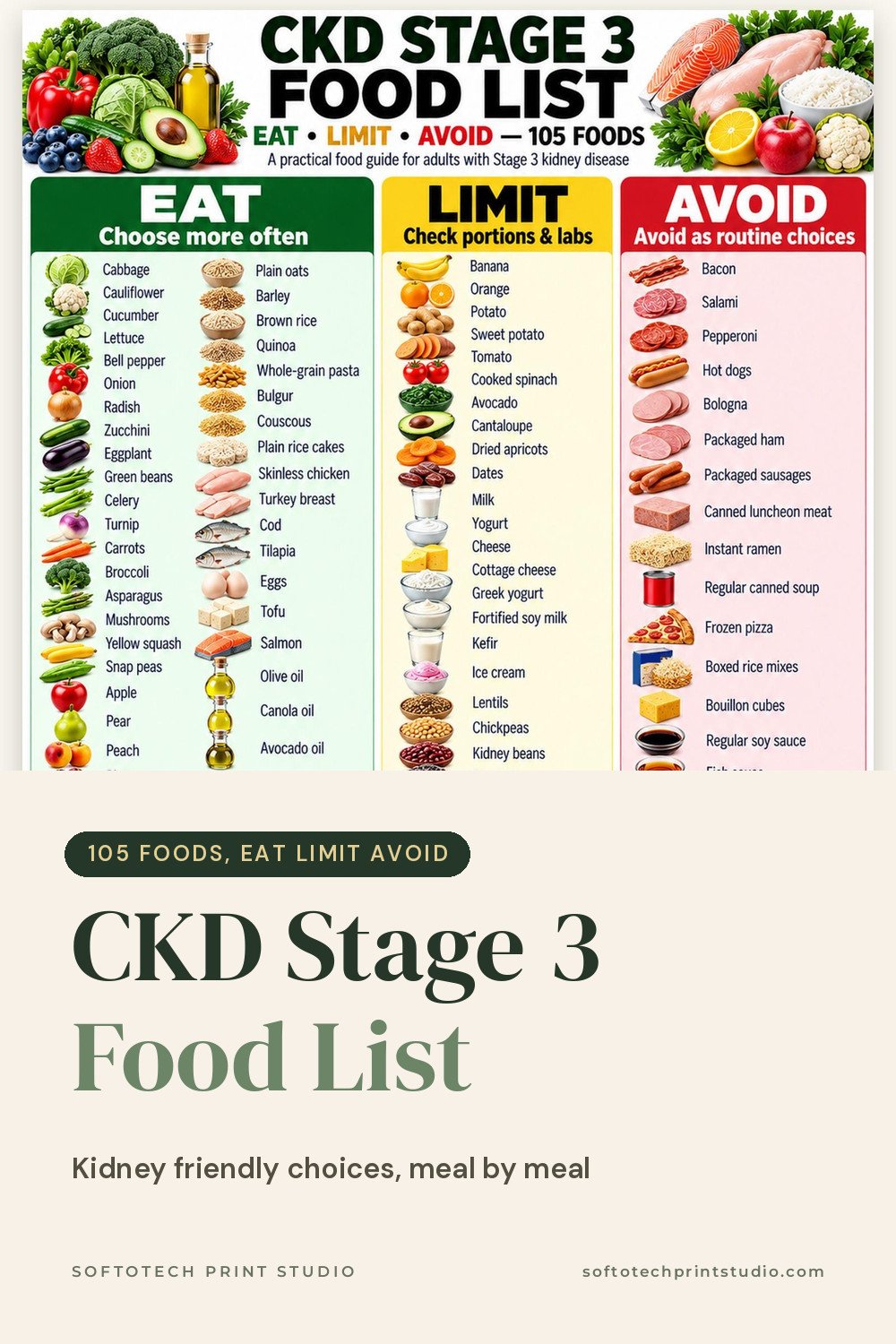

- 105 foods in three color-coded columns with a picture for each: 55 to eat, 30 to limit and 20 to avoid
- The Eat column runs from cabbage, cauliflower and berries to plain oats, cod, tofu, olive oil and lemon juice
- The Limit column covers higher potassium and phosphorus picks like banana, potato, dairy, beans, nuts and lean beef, with the note to check portions and labs
- The Avoid column lists processed meats, instant ramen, bouillon cubes, cola with phosphoric acid, star fruit and potassium-chloride salt substitutes
- Comes with a 9-page CKD stage 3 starter guide (8 recipes, a 7-day plan) and a meal planner and food tracker; 3 PDFs, 1 PNG and 1 ZIP per the listing
- Instant download · Print at home · US Letter · A4 · A5
Use code BLOG10 for 65% OFF at Etsy checkout!
What Is on the CKD Stage 3 Food List
The chart’s heading reads CKD Stage 3 Food List, with Eat, Limit, Avoid and 105 foods underneath, and the line a practical food guide for adults with Stage 3 kidney disease. Below that are three tall columns in green, yellow and red. Each column has a short instruction under its name, and that instruction tells you a lot about how the chart wants to be used.
The green Eat column says choose more often. It’s the biggest column by far, with 55 foods split over two rows of pictures. The first row is mostly produce. Vegetables come first: cabbage, cauliflower, cucumber, lettuce, bell pepper, onion, radish, zucchini, eggplant, green beans, celery, turnip, carrots, broccoli, asparagus, mushrooms, yellow squash and snap peas. Then fruit: apple, pear, peach, plum, grapes, blueberries, strawberries, raspberries, blackberries, pineapple, cherries and cranberries.
If you’ve read other kidney diet handouts, you’ll recognise a lot of these. The NIDDK points out that fruits and vegetables are naturally low in phosphorus, and suggests eating larger portions of them and smaller portions of high-phosphorus foods.
The second row of the Eat column covers grains, proteins, fats and flavour. Grains: plain oats, barley, brown rice, quinoa, whole-grain pasta, bulgur, couscous and plain rice cakes. Proteins: skinless chicken, turkey breast, cod, tilapia, eggs, tofu and salmon. Fats: olive oil, canola oil, avocado oil, unsalted butter and unsalted mayonnaise. Then the flavour foods that replace salt: garlic, ginger, parsley, basil and lemon juice.
That last group matters more than it looks. Cutting salt is one of the most common changes in a kidney diet, and food without salt tastes flat until you learn to season it another way. The NIDDK suggests exactly this kind of swap: spices, herbs and sodium-free seasonings, lemon juice and hot peppers in place of salt.
The yellow Limit column says check portions and labs. That second word, labs, is the honest part. Whether a food belongs in your Limit column depends on your blood results, and the chart doesn’t pretend otherwise. It holds 30 foods. Higher potassium produce: banana, orange, potato, sweet potato, tomato, cooked spinach, avocado, cantaloupe, dried apricots and dates. Dairy: milk, yogurt, cheese, cottage cheese, Greek yogurt, fortified soy milk, kefir and ice cream. Beans, nuts and seeds: lentils, chickpeas, kidney beans, black beans, almonds, peanuts, pumpkin seeds and peanut butter. And a few proteins: lean beef, lean pork, sardines and shrimp.
Many of those are healthy foods by any normal standard. They’re in Limit because of what kidneys have to clear. The NIDDK explains that phosphorus is found naturally in protein-rich foods like meat, dairy and beans, and that CKD can make it harder for the kidneys to remove potassium, so these foods need more thought as kidney function drops. Limit doesn’t mean never. It means think about how much and how often, and ask your team what your numbers allow.
The red Avoid column says avoid as routine choices, and it has 20 items. Most are processed: bacon, salami, pepperoni, hot dogs, bologna, packaged ham, packaged sausages, canned luncheon meat, instant ramen, regular canned soup, frozen pizza, boxed rice mixes and bouillon cubes. Then the salty sauces: regular soy sauce and fish sauce. Then the phosphate group: phosphate-enhanced meats, processed cheese with phosphates and cola with phosphoric acid. The last two are star fruit and potassium-chloride salt substitutes without clinician approval.
That column lines up closely with NIDDK advice. Its kidney eating page names deli meats and processed foods as common sources of added phosphorus, tells you to look for PHOS words like phosphoric acid on the ingredient list, and warns that salt substitutes can be high in potassium. It also lists soy and teriyaki sauces among high-sodium foods. So the Avoid column isn’t random. It’s mostly salt and additives.
At the foot of the chart is a one-line note: for general education only, stage 3 nutrition varies by kidney function, lab results, medications and treatment, follow your renal dietitian’s guidance. I’d rather a chart say that than act like a prescription.
Worked Day: A Sample Stage 3 Day Built From the Chart
A list tells you what to buy. It doesn’t tell you what to eat at seven in the evening when you’re tired. So here’s one sample day built almost entirely from the green Eat column, with a single item from Limit, to show how the chart turns into meals.
I’ve used the plate shape the American Kidney Fund’s Kidney Kitchen dietitian describes for stage 3: about half the plate vegetables and some fruit, a quarter whole grains and a quarter lean protein. For snacks, the same dietitian suggests a small fruit with a small portion of protein. There are no portion sizes in the table because the chart doesn’t give any, and your dietitian should set them.
| Meal | What’s on the plate | Chart column |
|---|---|---|
| Breakfast | Plain oats cooked in water, topped with blueberries and a few raspberries | Eat |
| Snack | Apple slices with a small portion of plain yogurt | Eat, plus one Limit food (yogurt) |
| Lunch | Quinoa bowl with skinless chicken, cucumber, bell pepper, lettuce, olive oil and lemon juice | Eat |
| Snack | Plain rice cakes and a pear | Eat |
| Dinner | Baked cod with garlic and parsley, steamed green beans and carrots, and brown rice | Eat |
| Swap night | Tofu and vegetable stir-fry with broccoli, snap peas, mushrooms, ginger and couscous | Eat |
A few notes on how I built it. Breakfast keeps it simple with oats and berries, both in the Eat column. Cooking the oats in water rather than milk keeps the dairy portion for the snack, where it’s easier to control. If your dietitian is fine with milk at breakfast, use it.
The yogurt snack is deliberate. Yogurt sits in Limit, not Avoid, and a small portion with a piece of fruit is exactly the kind of snack the Kidney Kitchen dietitian suggests. That’s how Limit foods are meant to work: in small amounts, alongside Eat foods.
Lunch and dinner both follow the half, quarter, quarter plate. Notice the seasoning. There’s no salt and no sauce from a bottle. Lemon juice, garlic, parsley and ginger come straight from the chart’s flavour group and do the job salt would normally do. Dinner uses cod, but tilapia, salmon or turkey breast would all work in its place, as they’re in the same Eat row.
The swap night line is there to show how flexible the Eat column is. You can build a week of dinners just by rotating one protein, two or three vegetables and one grain. Chicken with zucchini and barley. Salmon with asparagus and bulgur. Eggs with mushrooms and peppers on whole-grain pasta. None of it needs a recipe.
Turning the day into a shopping list is easy, because it all comes from two rows of one column. Produce: blueberries, raspberries, apples, pears, cucumber, bell peppers, lettuce, green beans, carrots, broccoli, snap peas and mushrooms. Grains: oats, quinoa, brown rice, couscous and plain rice cakes. Protein: chicken, cod, tofu and a small tub of plain yogurt. Flavour: olive oil, lemons, garlic, ginger and parsley. If you shop with the chart in hand, circle the foods you already like. Most people find they eat more of the green column than they expected.
Fluid deserves a mention here too, even though it isn’t on the chart. The NIDDK notes that some people with CKD need to limit how much liquid they drink, because damaged kidneys can’t remove extra fluid. Many people in stage 3 don’t need a limit, but ask, rather than guess.
If you’d like more than one sample day, our kidney diet meal plan lays out a full 30 days of kidney friendly breakfasts, lunches and dinners.

- 126 everyday foods in three columns with food pictures: 54 to eat, 42 to limit and 30 to avoid
- More grains and seasonings in Eat, including plain corn tortillas, homemade unsalted flatbread, white rice, oregano, thyme, rosemary and cinnamon
- A more detailed Limit column with tomato paste, beet greens, Swiss chard, edamame, whole eggs, quinoa, whole-wheat bread and bran cereal
- Avoid adds salted chips, packaged gravy mix, teriyaki and bottled barbecue sauce, seasoned salt and packaged foods with phosphate additives
- Includes a 9-page kidney friendly starter guide (8 recipes, a 7-day plan) and a meal planner and food tracker; 3 PDFs, 1 PNG and 1 ZIP per the listing
- Instant download · Print at home · US Letter · A4 · A5
Use code BLOG10 for 65% OFF at Etsy checkout!
The 126-Food Kidney Friendly Chart Goes Further
The second printable is the Kidney Friendly Food List from the same shop. It uses the same three-column idea, Eat, Limit and Avoid, but covers 126 foods instead of 105. The footer splits them into 54 to eat, 42 to limit and 30 to avoid. It isn’t labelled for a stage, so it works as a general kidney-friendly chart.
The Eat column overlaps a lot with the stage 3 chart. Cabbage, cauliflower, cucumber, lettuce, bell pepper, onion, radish, zucchini, eggplant, green beans, celery and turnip are all there, along with apple, the berries, grapes, pineapple, peach, pear and plum. Its grain list is different, though. It adds unsalted rice cakes, plain corn tortillas, homemade unsalted flatbread, white rice, white pasta, couscous, bulgur, oats and barley, and it keeps brown rice. Proteins include skinless chicken, turkey breast, cod, tilapia, pollock, egg whites, lean beef and lean pork. Then oils, unsalted butter, unsalted mayonnaise and a long herb row: garlic, ginger, parsley, basil, oregano, thyme, rosemary and cinnamon.
The bigger differences show up in Limit. With 42 foods it’s more detailed. Next to potato, sweet potato, tomato, tomato paste, spinach, beet greens, Swiss chard, winter squash and pumpkin, it lists banana, orange, orange juice, kiwi, cantaloupe, honeydew, dried apricots and dates. Dairy and dairy swaps include milk, yogurt, Greek yogurt, cheese, cottage cheese, fortified soy milk and almond milk with phosphate additives. Then lentils, chickpeas, black beans, kidney beans, edamame, almonds, peanuts, pumpkin seeds, peanut butter, whole eggs, salmon, sardines, tofu, quinoa, whole-wheat bread, bran cereal, dark chocolate and avocado.
Two things stand out. Whole eggs and salmon sit in Limit here, while the stage 3 chart puts eggs and salmon in Eat. And quinoa and whole-wheat bread are in Limit, while the stage 3 chart has quinoa and whole-grain pasta in Eat. That isn’t a mistake on either chart. Protein foods naturally carry phosphorus, as the NIDDK notes, and different charts draw the line in different places. How much it matters for you depends on how your kidneys are doing and what your labs show. The stage 3 chart is a little more relaxed, which fits the American Kidney Fund dietitian’s view that most people in stage 3 aren’t yet on a potassium restriction. The 126-food chart is a little stricter.
The Avoid column grows to 30 items. Along with the processed meats, canned soup, instant ramen, bouillon cubes, soy sauce, fish sauce, phosphate-enhanced meats, processed cheese with phosphates, cola with phosphoric acid and potassium-chloride salt substitutes, it adds boxed noodle mixes, frozen breaded dinners, salted chips, salted pretzels, packaged gravy mix, teriyaki sauce, bottled barbecue sauce, seasoned salt, packaged taco seasoning, packaged foods with phosphate additives and star fruit.
So which one should you print? If you’ve been told you’re in stage 3 and your labs are mostly steady, the stage 3 chart is the simpler place to start. If your dietitian has asked you to watch potassium or phosphorus more closely, or you want more grains and seasonings to choose from, the 126-food chart gives you more detail. Some people print both and keep the bigger one inside a cupboard door.
If you want to read about the bigger chart column by column, our kidney diet food list guide covers it in full. And if your team has flagged one mineral in particular, our low potassium food list and low phosphorus food list each go deeper on one.
How to Use a CKD Stage 3 Food List Safely
Take it to your next appointment. The most useful thing you can do with this chart is put it in front of your doctor or dietitian and ask them to mark it up. Cross off anything they want you to skip. Tick anything in Limit they’re happy for you to eat more often. A personalised chart beats a generic one every time.
Ask which numbers matter for you. Potassium, phosphorus, sodium and protein don’t all matter equally for everyone. The NIDDK explains that a dietitian or health care professional can check potassium and phosphorus with a blood test and suggest changes if they’re out of range. Once you know which of your numbers is the concern, the Limit column makes a lot more sense.
Read labels for salt and PHOS. Most of the Avoid column is there because of sodium or added phosphorus. The NIDDK suggests checking the Nutrition Facts label, where 5% Daily Value or less of sodium per serving counts as low, and checking the ingredient list for phosphorus words like phosphoric acid, disodium phosphate and monosodium phosphate. It also notes that adults are advised to keep sodium to 2,300 milligrams a day or less, and that many people with CKD need to go lower. Your doctor can tell you your own limit.
Be careful with salt substitutes. They look like an easy fix, but many use potassium chloride, which is why the chart puts them in Avoid unless your doctor approves. The NIDDK gives the same warning. Use herbs, garlic, ginger and lemon instead.
Choose whole fruit over juice. The Kidney Kitchen dietitian encourages fresh or frozen fruit, not in syrup, over juice, because whole fruit brings fibre and fills you up more. She also notes that some people need to avoid grapefruit because of their medicines. If that’s you, keep avoiding it.
Keep protein moderate, not low. Some people with CKD are asked to eat moderate amounts of protein, but the NIDDK warns that too little can lead to malnutrition. Your team may suggest getting more of your protein from plants, choosing lean meats, or limiting meat and dairy. Don’t cut protein hard on your own.
Watch for weight loss. Kidney disease can blunt your appetite, and food may taste different. If you find you’re eating much less, tell your dietitian. Getting enough calories matters as much as avoiding the wrong foods.
Ask about a dietitian visit. The NIDDK notes that if you’re on Medicare and have CKD, medical nutrition therapy with a registered dietitian is covered with a written referral from a doctor. If you have other insurance, check your plan. A few sessions with someone who knows kidneys can save a lot of guesswork.
Print it where you’ll see it. US Letter or A4 works on the fridge. A5 fits in a handbag for shopping trips. Each time you shop, aim to fill most of the basket from the green column and keep the red column on the shelf.
If your renal team has asked you to cut salt, these lower sodium meal ideas show where salt hides in everyday meals, so check the list with your dietitian first.
Frequently Asked Questions
What foods can I eat with stage 3 kidney disease?
The stage 3 chart puts 55 foods in its Eat column. They include vegetables like cabbage, cauliflower, peppers, green beans and broccoli, fruits like apples, pears and berries, grains like oats, barley and brown rice, proteins like skinless chicken, cod, eggs and tofu, plus olive oil and salt-free flavours like garlic, ginger and lemon juice. Your own list may differ depending on your blood tests, so check it with your dietitian.
Do I need to cut potassium in CKD stage 3?
Not always. The American Kidney Fund’s Kidney Kitchen dietitian says most people in stage 3 have not been placed on a potassium restriction yet, and that all fruits and vegetables can fit. The chart is more cautious and puts foods like banana, orange, potato and tomato in Limit. Your potassium blood test decides which approach suits you, so ask your doctor.
Why are processed meats and colas on the avoid list?
Most of the Avoid column is high in salt or has added phosphorus. The NIDDK names deli meats and processed foods as common sources of added phosphorus and says to look for words with PHOS, like phosphoric acid, on ingredient lists. Too much sodium makes your body hold on to fluid, which can raise blood pressure and strain the kidneys and heart.
When should I see a dietitian about my kidney diet?
As early as you can, ideally when you’re first told you have stage 3 CKD. The NIDDK says nutrition needs change as CKD advances and that your health care team may suggest a registered dietitian who can create a plan for you. If you have Medicare and CKD, medical nutrition therapy is covered with a written referral from your doctor.
What sizes does the CKD stage 3 food list print in?
The CKD Stage 3 Food List comes as PDFs in US Letter, A4 and A5 plus a 300 DPI PNG, listed as 3 PDF, 1 PNG and 1 ZIP. The 126-food Kidney Friendly Food List comes in the same sizes and formats. Both are instant downloads you can print at home.
This guide is for general wellness and is not medical advice. Check with your doctor before starting a new routine.
Related Guides
Sources
Sources: NIDDK (NIH), Healthy Eating for Adults with Chronic Kidney Disease, American Kidney Fund Kidney Kitchen, What fruits are good for stage 3 kidney disease?
 Diet & Food ListsMediterranean Diet for Seniors: A Simple Guide With an Eat, Limit, Avoid List and a 7 Day Plan
 Diet & Food ListsHigh Protein Foods for Muscle Gain: How Much You Need, the Best Picks per Meal and a Worked Training Day
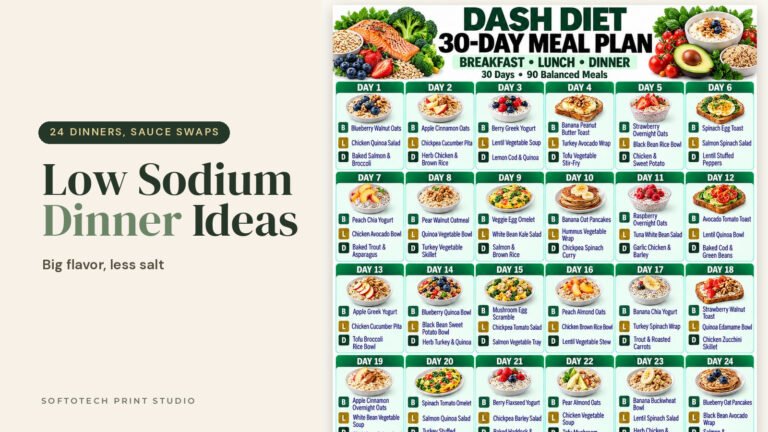 Diet & Food ListsLow Sodium Dinner Ideas: 24 DASH Style Dinners, a Sodium Budget per Plate and Sauce and Seasoning Swaps