
If you are trying to lose weight, protein is the hardest-working nutrient on your plate. Of the three macronutrients, protein does the most for the fewest calories: it keeps you full for hours, protects the muscle you want to keep, and even burns extra calories during digestion. This protein foods list for weight loss doubles as a foods high in protein printable list you can keep on your fridge.
The problem? Most people have no idea which foods are actually high in protein — or how much they are really getting each day. That is why we created this ultimate high protein food list for weight loss: more than 50 foods organized by category, each with its protein per serving, plus simple meal ideas and practical tips to help you hit your targets.
Whether you eat meat, prefer plant-based meals, or land somewhere in between, you will find plenty of options here — and a free printable chart to keep on your fridge.
Protein Foods List for Weight Loss
Use the sections below to build balanced, filling meals from foods you already enjoy.
Foods High in Protein Printable List
Keep the chart handy when you shop or plan meals.
Why Protein Matters for Weight Loss
Not all calories keep you equally satisfied. Here is why protein deserves special attention when you are losing weight:
- Satiety. Protein is the most filling macronutrient. A protein-rich breakfast keeps you satisfied far longer than a pastry with the same calories, which means you naturally eat less without feeling deprived.
- Muscle preservation. When the scale drops, you want to lose fat — not muscle. Eating enough protein protects your lean mass, and since muscle burns more calories at rest than fat does, that helps keep your metabolism from slowing as you lose weight.
- Thermic effect. Your body burns calories just digesting food, and protein costs the most to process — roughly 20–30% of its own calories, compared with about 5–10% for carbohydrates and 0–3% for fat. It is a small but real metabolic bonus.
How Much Protein Do You Actually Need?
A widely used target for weight loss is about 1.6–2.2 grams of protein per kilogram of body weight per day — roughly 0.7–1 gram per pound. For a 150-pound (68 kg) person, that works out to about 105–150 grams daily.
Do not try to cram it all into dinner. Your body uses protein most efficiently when it is spread across the day — aim for 25–40 grams per meal, plus one or two protein-rich snacks. Individual needs vary with age, activity level, and health conditions, so check with your doctor or a registered dietitian for personalized guidance.
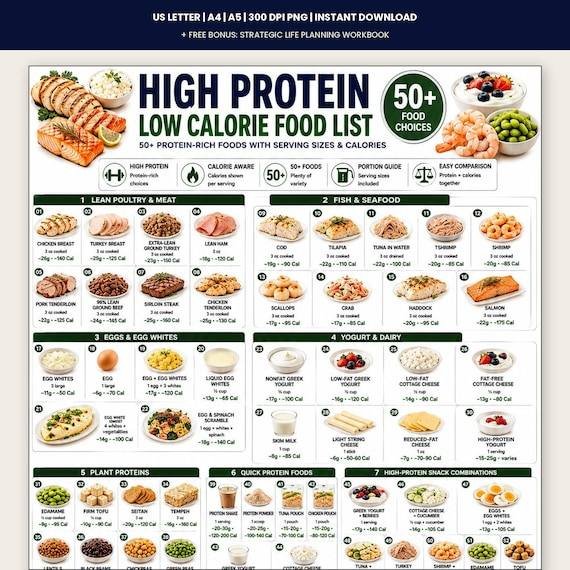
The printable from this guide
High Protein Low Calorie Food List — Printable
- 50+ lean protein foods with calories and serving sizes
- Weight-loss diet chart PDF, organized by category
- Instant download · Print at home
Get the High-Protein Food List on Etsy →
Instant download · Print at home

The Complete High-Protein Food List
All values below are per the serving listed. Where a food is marked “cooked,” the weight refers to the food after cooking.
Eggs & Dairy
| Food | Serving | Protein |
|---|---|---|
| Large egg | 1 egg | 6 g |
| Egg whites | 3 large whites | 11 g |
| Greek yogurt, plain nonfat | 3/4 cup (170 g) | 15–17 g |
| Cottage cheese, low-fat | 1/2 cup | 12–14 g |
| Milk, skim | 1 cup | 8 g |
| Cheddar cheese | 1 oz (28 g) | 7 g |
Tip: choose plain yogurt and add your own fruit — flavored versions can pack in a surprising amount of added sugar.
Poultry & Meat
| Food | Serving | Protein |
|---|---|---|
| Chicken breast | 3 oz cooked | 26 g |
| Turkey breast | 3 oz cooked | 26 g |
| Lean ground turkey (93%) | 3 oz cooked | 22 g |
| Sirloin steak, lean | 3 oz cooked | 25 g |
| Pork tenderloin | 3 oz cooked | 24 g |
| Lean ground beef (90%) | 3 oz cooked | 22 g |
Tip: a 3-ounce cooked portion is about the size of a deck of cards — most restaurant servings are two to three times that.
Fish & Seafood
| Food | Serving | Protein |
|---|---|---|
| Tuna, canned in water | 3 oz | 22–25 g |
| Salmon | 3 oz cooked | 22 g |
| Shrimp | 3 oz cooked | 18 g |
| Cod | 3 oz cooked | 19 g |
| Tilapia | 3 oz cooked | 21 g |
| Sardines | 3 oz | 21 g |
Tip: fatty fish like salmon and sardines add heart-healthy omega-3s along with the protein.
Beans, Lentils & Legumes
| Food | Serving | Protein |
|---|---|---|
| Lentils | 1/2 cup cooked | 9 g |
| Black beans | 1/2 cup cooked | 7–8 g |
| Chickpeas | 1/2 cup cooked | 7 g |
| Edamame, shelled | 1/2 cup | 9 g |
| Black-eyed peas | 1/2 cup cooked | 6–7 g |
Tip: legumes also deliver fiber, which teams up with protein to keep you full for hours.
Plant-Based Proteins
| Food | Serving | Protein |
|---|---|---|
| Tofu, firm | 1/2 cup | 10 g |
| Tempeh | 3 oz | 16 g |
| Seitan | 3 oz | 21 g |
| Soy milk, unsweetened | 1 cup | 7–8 g |
Tip: soy foods and quinoa are complete proteins, meaning they contain all essential amino acids.
Nuts, Seeds & Nut Butters
| Food | Serving | Protein |
|---|---|---|
| Almonds | 1 oz (about 23 nuts) | 6 g |
| Peanuts | 1 oz | 7 g |
| Peanut butter | 2 tablespoons | 8 g |
| Pumpkin seeds | 1 oz | 8–9 g |
| Hemp seeds | 3 tablespoons | 10 g |
| Chia seeds | 1 oz | 5 g |
| Pistachios | 1 oz | 6 g |
Tip: nuts and seeds are protein-plus-healthy-fat combos — nutritious but calorie-dense, so stick to the serving sizes.
Protein Boosters
| Food | Serving | Protein |
|---|---|---|
| Whey or plant protein powder | 1 scoop | 20–25 g |
| Nutritional yeast | 2 tablespoons | 8 g |
| Collagen peptides | 1 scoop | 9–10 g |
| Quinoa | 1/2 cup cooked | 4 g |
A Sample High-Protein Day (About 120 g)
Here is what a day of eating at the higher end of the range can look like — no protein shakes required (though you can add one if you like):
- Breakfast: Greek yogurt with berries and hemp seeds — about 28 g
- Snack: 2 hard-boiled eggs — about 12 g
- Lunch: big grilled-chicken salad with chickpeas — about 38 g
- Snack: cottage cheese with cucumber and black pepper — about 14 g
- Dinner: baked salmon with quinoa and roasted broccoli — about 32 g
Total: roughly 124 g. Adjust portions up or down to match your own target.
7 Easy Tips to Add More Protein
- Front-load your day. Breakfast is the most commonly protein-skipped meal. Eggs, Greek yogurt, or a smoothie with protein powder sets the tone.
- Anchor every meal with protein. Build the plate around the protein first, then add vegetables and whole grains.
- Double up on legumes. Toss beans or lentils into soups, salads, pasta sauce, and tacos — they disappear into the dish while adding protein and fiber.
- Snack with purpose. Keep hard-boiled eggs, edamame, roasted chickpeas, or single-serve cottage cheese on hand for the afternoon slump.
- Go Greek. Plain Greek yogurt has nearly double the protein of regular yogurt — use it in place of sour cream, too.
- Add a scoop where it fits. Protein powder blends into oatmeal, smoothies, and even pancake or muffin batter.
- Prep once, eat all week. Cook a batch of chicken breasts, lentils, quinoa, or hard-boiled eggs on the weekend so protein is always ready.
Protein After 40
If you are over 40, protein matters even more. From around midlife, our bodies become less efficient at turning dietary protein into maintained muscle — a phenomenon researchers call anabolic resistance — and age-related muscle loss quietly accelerates.
That means adults over 40 often do best aiming for the higher end of the protein range, spreading it evenly across meals (about 30–40 grams per meal), and pairing it with resistance exercise like bodyweight workouts or light strength training. Protecting muscle during weight loss is one of the best things you can do for your metabolism, balance, and long-term independence.
5 Quick High-Protein Meal Ideas
- Veggie omelet with feta and spinach — about 24 g. Three eggs plus an ounce of feta, loaded with vegetables.
- Tuna and white-bean salad on whole-grain toast — about 30 g. A pantry-friendly lunch in five minutes.
- Turkey chili with black beans — about 32 g per generous bowl. Make a big pot; it reheats beautifully.
- Tofu and vegetable stir-fry with edamame — about 22 g. Use firm tofu and a savory sauce over cauliflower rice or quinoa.
- Cottage cheese bowl with pineapple and pumpkin seeds — about 24 g. Sweet, crunchy, and surprisingly filling.
How to Read a Label for Protein
Packaged foods can help or hurt your protein goals. Here is what to check:
- Serving size first. Protein grams are listed per serving — and many packages contain two or three servings.
- Look for at least 10 grams per serving in any meal component you are counting as a protein source.
- Compare the protein-to-calorie ratio. A food with 20 g of protein for 200 calories is a leaner choice than 10 g for 300 calories.
- Watch the sugar trade-off. Flavored yogurts, bars, and powders can carry as much sugar as a candy bar — plain versions with your own add-ins are usually the better bet.
The complete bundle
High Protein Food List Bundle — Printable
- 12 printable meal prep guides and food charts in one set
- Breakfast, lunch, dinner, and snack plans for high-protein eating
- Fitness nutrition PDF set · Instant download · Print at home
Get the High-Protein Bundle on Etsy →
Instant download · Print at home
Common Mistakes to Avoid
- Eating protein only at dinner. Skimpy breakfasts and light lunches followed by one giant evening meal means most of the day’s protein goes underused — spread it out.
- Falling for “protein” bars that are candy in disguise. If sugar is the first or second ingredient, it is dessert.
- Forgetting that plant proteins count. You do not need meat at every meal to hit your target.
- Drinking your calories. Sugary coffees, sodas, and alcohol add calories without protein or fullness — trade them for water, tea, or black coffee most of the time.
- Cutting calories too aggressively. Very low-calorie diets make it nearly impossible to eat enough protein, and your body will burn muscle along with fat.
To pair your protein with steadier carbs, our low glycemic food list shows which grains and fruits sit lower on the GI scale.
To compare foods by calories, see our guide to high protein foods low calorie, which ranks 25 foods by grams of protein per 100 calories.
Training to build strength rather than lose weight? See our guide to protein foods for muscle gain, with a worked day and per meal totals.
Frequently Asked Questions
How much protein should I eat per day to lose weight?
A common evidence-based target is 1.6–2.2 grams per kilogram of body weight daily (about 0.7–1 gram per pound), spread across three to four meals. For personalized advice, check with your doctor or a registered dietitian.
What is the highest-protein food for weight loss?
Per serving, lean animal proteins lead the pack: chicken breast, turkey breast, tuna, and Greek yogurt each deliver 20+ grams of protein for relatively few calories. Among plant foods, seitan, tempeh, and lentils are standouts.
Can I get enough protein on a vegetarian diet?
Absolutely. A day built around lentils, tofu or tempeh, edamame, Greek yogurt, eggs, quinoa, nuts, and seeds can easily top 100 grams of protein with a little planning.
Is eating too much protein bad for you?
For most healthy people, protein intakes within the ranges in this guide are considered safe. If you have kidney disease or another medical condition, talk to your doctor before significantly increasing your protein intake.
Pair protein with fiber for meals that truly fill you up — see our high fiber foods list for gut health for the best fiber sources to add to this chart.
Protein builds the framework, calcium fills it in — pair this chart with our calcium rich foods for bone health list.
For the hours between meals, our healthy snacks for weight loss guide turns the protein foods on this list into 30 ready to eat snacks, every one under 200 calories, with the protein and calories for each and a one week snack plan built from the chart.
Fish, beans, lentils and yogurt carry the protein in this pattern: our Mediterranean diet meal ideas guide lists 28 meals built around them.
Lean protein stays on the eat side of this list: our fatty liver diet food list guide covers 115 foods with portions to watch and foods to avoid.
Turn the food list into a week of menus with our high protein meal plan guide: 7 days and 28 meals with macros counted, plus a 35 meal weekly plan.
Ideas by the plate, not by the day: our high protein meal ideas guide covers 50 meals under 500 calories, with protein and calorie figures on each one.
Related Guides
- Low-Carb Food List for Beginners
- Anti-Inflammatory Food List (Free Printable)
- Meal Prep for Seniors: A Simple Weekly Plan
Sources
Sources: NIH, Mayo Clinic, Harvard Health
This guide is for general wellness and is not medical advice. Check with your doctor before starting a new routine.
Put this list to work with our Weekly Meal Planner Template — plan seven days of protein-rich meals and build your grocery list in one go.
 Diet & Food ListsMediterranean Diet for Seniors: A Simple Guide With an Eat, Limit, Avoid List and a 7 Day Plan
 Diet & Food ListsHigh Protein Foods for Muscle Gain: How Much You Need, the Best Picks per Meal and a Worked Training Day
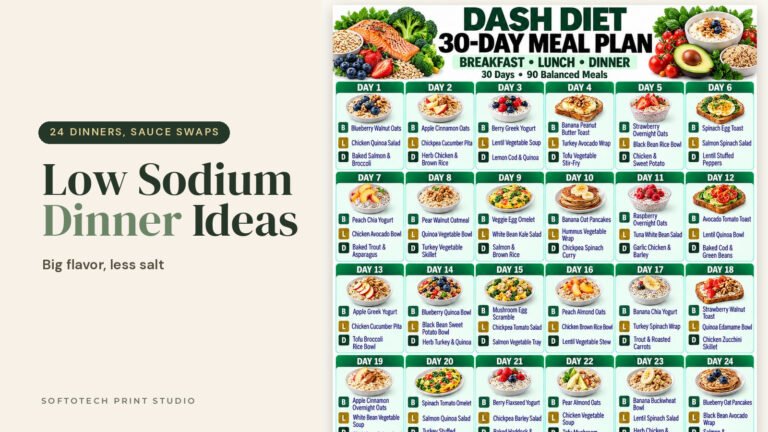 Diet & Food ListsLow Sodium Dinner Ideas: 24 DASH Style Dinners, a Sodium Budget per Plate and Sauce and Seasoning Swaps