
Renal diet snacks are small, simple foods that fit inside your kidney eating plan: lower in sodium, careful with potassium and phosphorus, and portioned so they don’t quietly add up. The easiest ones are fresh fruit like apples, berries and grapes, crunchy vegetables like cucumber and peppers, unsalted starches, and a little protein such as egg whites.
Snacks are where a lot of kidney plans come unstuck. Meals get planned. Snacks get grabbed. And the usual grab foods, crisps, salted crackers, cheese, nuts, a slice of ham, are exactly the ones a kidney diet asks you to watch.
This guide gives you 24 snack ideas, sorted into fruit, vegetables, starches and protein, with portion notes from the National Kidney Foundation’s potassium list. It also uses two printables from SoftoTech Print Studio: the Kidney Friendly 30 Day Meal Plan, which keeps your main meals on track, and the Kidney Friendly Protein Foods List, which tells you which protein snacks belong in Eat, Limit or Avoid.
One important note before you start. Kidney diets are not one size fits all. Your stage of kidney disease, your blood results, your medicines and dialysis all change what you should eat. Use this as general information and check every change with your doctor or renal dietitian.
In this guide:
- 24 Kidney Friendly Snack Ideas
- The Three Things to Watch in Every Snack
- Protein Snacks From the Eat, Limit and Avoid List
- A Sample Day With Snacks and How to Shop
- Frequently Asked Questions
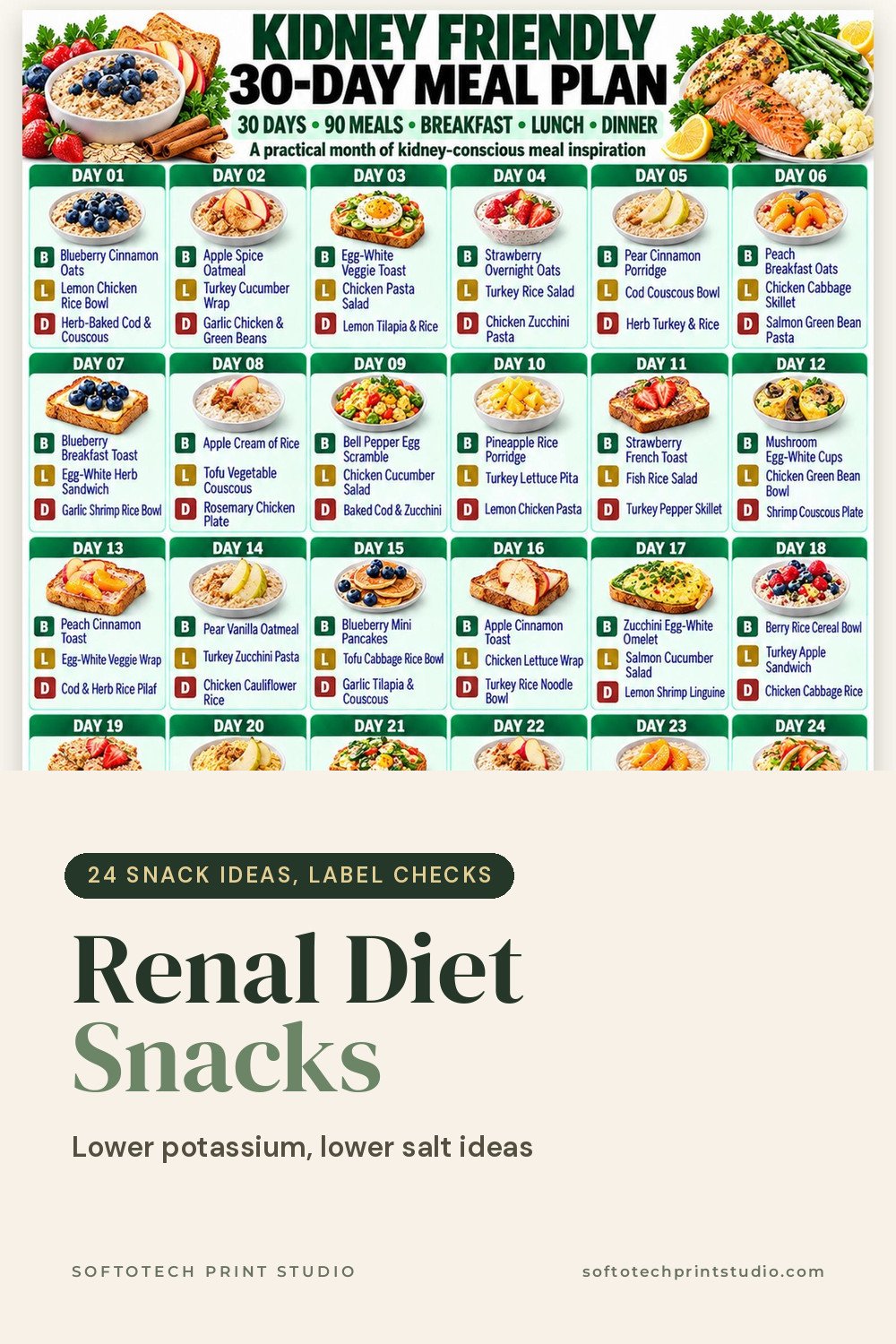
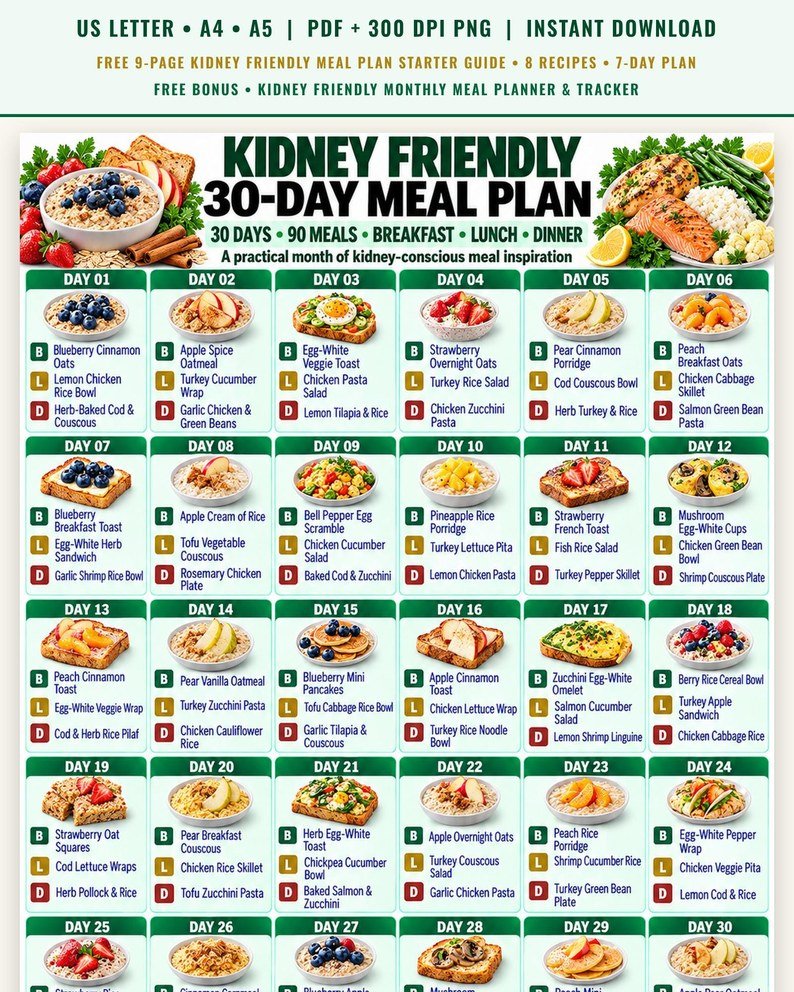
- 30 days and 90 kidney friendly meals on one page: breakfast, lunch and dinner for every day
- Breakfasts include blueberry cinnamon oats, apple spice oatmeal, egg-white veggie toast and strawberry oat squares
- Lunches and dinners include a turkey cucumber wrap, a tofu cabbage rice bowl, herb-baked cod and couscous, and lemon tilapia and rice
- Color coded B, L and D labels with a food picture for every day
- Comes with a 9-page kidney friendly starter guide, 8 recipes, a 7-day plan and a monthly planner and tracker, per the listing
- Instant download · Print at home · US Letter · A4 · A5
Use code BLOG10 for 65% OFF at Etsy checkout!
24 Kidney Friendly Snack Ideas
The foods below come from the National Kidney Foundation’s list of foods lower in potassium (under 200 mg per serving), the NIDDK advice on salt and phosphorus, and the Eat column of the protein list. The snack pairings are mine. Serving sizes in brackets follow the NKF table, where one serving of fruit or vegetables is half a cup unless it says otherwise.
| Group | Snack ideas | Portion note |
|---|---|---|
| Fresh fruit | 1. A small apple. 2. Half a cup of blueberries. 3. Half a cup of strawberries. 4. Half a cup of grapes. 5. A small pear. 6. A small peach. 7. A tangerine. 8. Half a cup of pineapple chunks. | NKF lists all of these as lower potassium at the serving shown. Watermelon is lower too, but limit it to 1 cup. |
| Fruit, ready to go | 9. Half a cup of unsweetened applesauce. 10. Canned peaches or pears, drained (half a cup). 11. Mandarin oranges, drained. 12. A handful of fresh raspberries or blackberries with a few cranberries. | NIDDK suggests draining canned fruit and throwing out the liquid, which is often high in potassium. |
| Crunchy vegetables | 13. Cucumber slices. 14. Red or green pepper strips. 15. Radishes. 16. A celery stalk. 17. Raw cauliflower or raw broccoli florets. | All on the NKF lower potassium side (celery is 1 stalk). Cooked broccoli moves to the higher side. |
| Starches | 18. Unsalted rice cakes. 19. A slice of white toast with a thin spread of jam. 20. A small bowl of plain rice or noodles with herbs and lemon. | NKF lists rice, noodles, pasta and bread (not whole grain) as lower potassium. Choose unsalted versions. |
| Protein | 21. Two hard cooked egg whites with black pepper. 22. Leftover skinless chicken, sliced, with cucumber. 23. A few cubes of firm tofu, baked with garlic and herbs. 24. Cold leftover cod or salmon flaked onto a rice cake. | All from the Eat column of the protein list. Keep portions small, as your dietitian advises. |
What isn’t on the table, and why. Bananas, oranges, kiwi, mango, dried fruit, raisins and avocado are on the NKF higher potassium side, so I’ve left them out. So are nuts and seeds, yogurt, milk and chocolate. That doesn’t mean you can never eat them. Some people on a kidney diet do, in measured amounts. It means they’re not easy grab snacks, and your dietitian should decide where they fit.
Mix two groups. A snack that sticks with you usually pairs something fresh with something more filling. An apple with two egg whites. Cucumber and pepper strips with a rice cake. Pineapple with a few cubes of baked tofu. That pairing habit is mine, but it’s easy, and it means you don’t reach for the crisps an hour later.
If you want the full shopping picture, our kidney diet food list guide goes food group by food group, and the low potassium food list guide covers potassium in more depth.
The Three Things to Watch in Every Snack
Most renal diet advice comes back to three minerals. Here’s what NIDDK, part of the US National Institutes of Health, says about each one, and how it plays out at snack time.
Sodium. NIDDK explains that too much sodium makes your body hold on to fluid, which can cause high blood pressure and swelling and put stress on your kidneys and heart. It says most sodium comes from packaged, prepared and restaurant foods, not the saltshaker, and it names snack foods such as chips and crackers as high in salt. For adults generally, the Dietary Guidelines limit is no more than 2,300 mg a day, and NIDDK notes that many people with CKD need to limit sodium even more. Your health care professional sets your number.
At snack time, that means unsalted rice cakes instead of salted crackers, plain popcorn only if your dietitian is happy with it, and herbs, lemon juice or black pepper instead of salt. NIDDK suggests looking for labels that say sodium free, low sodium, no salt added, unsalted or lightly salted. On the Nutrition Facts label, a % Daily Value of 5% or less is low in sodium, and 20% or more is high.
Potassium. When kidneys struggle, potassium can build up in the blood. NIDDK warns that too much or too little can cause heart and muscle problems, which is why your target is personal. The National Kidney Foundation calls a food high potassium if it has 200 mg or more per serving, and it makes a point worth repeating: a large amount of a low potassium food can easily turn it into a high potassium food. Half a cup of grapes is a snack. A whole bunch is not.
Two more NIDDK tips matter here. Use herbs and spices rather than salt substitutes, which can be high in potassium. And avoid foods with potassium chloride on the ingredient list, because it’s sometimes used in place of salt in packaged foods.
Phosphorus. Damaged kidneys can’t clear phosphorus well, and NIDDK says high blood phosphorus can harm blood vessels and weaken bones. Phosphorus is found naturally in protein foods, but NIDDK points out that phosphorus additives are the main source for many people. Your body absorbs more phosphorus from additives than from foods that contain it naturally. So the snack rule is simple: fewer packaged and processed foods, more fresh ones.
Fruit and vegetables are naturally low in phosphorus, so NIDDK suggests larger portions of those and smaller portions of high phosphorus foods. That’s one more reason the fruit and vegetable rows in the table above are the backbone of your snacks.
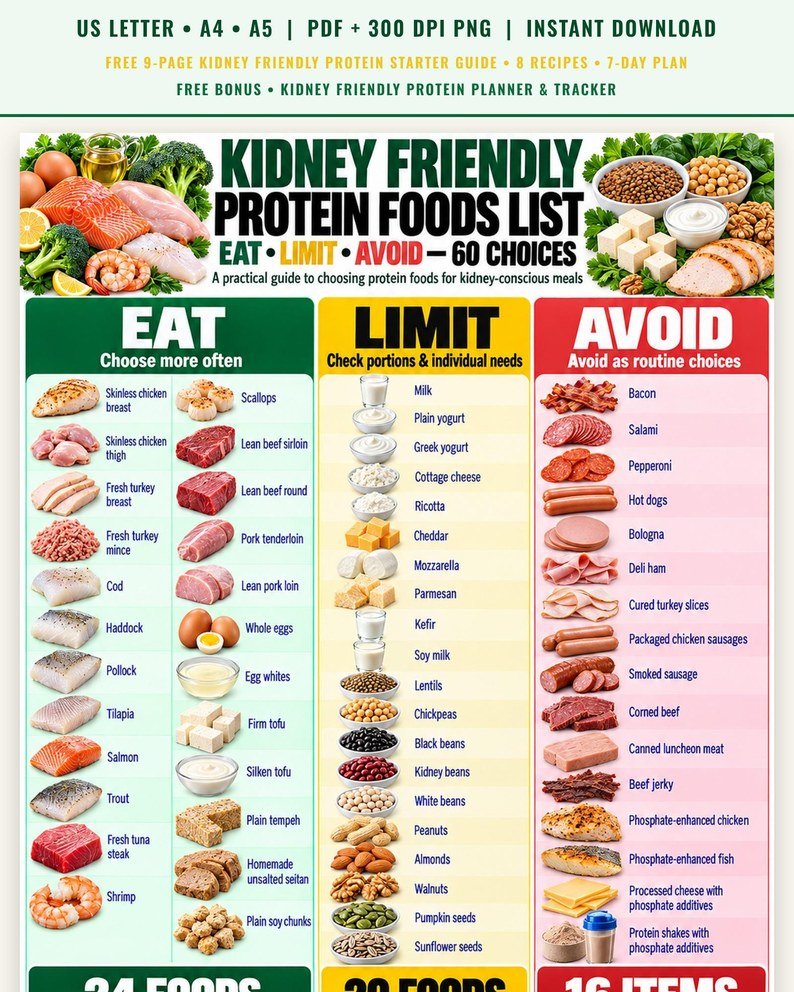
- 60 protein foods in three color coded columns: Eat (24), Limit (20) and Avoid (16)
- Eat includes skinless chicken, cod, salmon, egg whites, firm tofu and plain tempeh
- Limit includes milk, yogurt, cottage cheese, lentils, beans, peanuts, almonds and seeds, with a reminder to check portions
- Avoid includes bacon, salami, hot dogs, deli ham, beef jerky and processed cheese with phosphate additives
- Comes with a 9-page kidney friendly protein starter guide and a planner and tracker, per the listing
- Instant download · Print at home · US Letter · A4 · A5
Use code BLOG10 for 65% OFF at Etsy checkout!
Protein Snacks From the Eat, Limit and Avoid List
Protein is the trickiest snack group, and that’s where the Kidney Friendly Protein Foods List earns its place. It sorts 60 protein foods into three color coded columns: 24 to eat, 20 to limit and 16 to avoid. NIDDK says some people with CKD need moderate protein so waste doesn’t build up, while people on dialysis may need more. Too little protein brings its own risk, malnutrition. So the amount is for your dietitian to set. The list helps with the type.
Eat column, good snack picks. Skinless chicken breast or thigh, fresh turkey breast, cod, haddock, pollock, tilapia, salmon, trout, fresh tuna steak, shrimp, egg whites, whole eggs, firm or silken tofu and plain tempeh. For snacks, the easiest are egg whites boiled in a batch, leftover chicken or fish from dinner, and baked tofu cubes. Notice that every one of these is fresh, not packaged.
Limit column, small portions only. Milk, plain yogurt, Greek yogurt, cottage cheese, ricotta, cheddar, mozzarella, Parmesan, kefir, soy milk, lentils, chickpeas, black, kidney and white beans, peanuts, almonds, walnuts, pumpkin seeds and sunflower seeds. Many of these are standard healthy snacks for other diets, which is why kidney snacking can feel confusing. The chart doesn’t ban them. It asks you to check portions.
Avoid column, the snack traps. Bacon, salami, pepperoni, hot dogs, bologna, deli ham, cured turkey slices, packaged chicken sausages, smoked sausage, corned beef, canned luncheon meat, beef jerky, phosphate enhanced chicken and fish, processed cheese with phosphate additives, and protein shakes with phosphate additives. Look at that list and you’ll see almost every grab and go protein snack sold in a petrol station. That’s the point.
A quick label check. NIDDK says to read the ingredient list for phosphorus or any word with PHOS in it, such as phosphoric acid, disodium phosphate or monosodium phosphate. It also notes that some packaged meats and poultry have added phosphorus, and suggests asking at the meat counter which ones don’t. If a snack has PHOS on the label, it’s usually one to skip.
Our CKD stage 3 food list guide covers the middle stage in more detail, if that’s where you are.
A Sample Day With Snacks and How to Shop
Here’s how snacks slot in around a day from the 30 day meal plan. The meals are Day 2 of the chart. The snacks are my suggestions from the table above. Portions and timing are for your dietitian to adjust.
| Time | What | Where it comes from |
|---|---|---|
| Breakfast | Apple spice oatmeal | Meal plan, Day 2 |
| Mid morning snack | Half a cup of grapes and an unsalted rice cake | Snack ideas 4 and 18 |
| Lunch | Turkey cucumber wrap | Meal plan, Day 2 |
| Afternoon snack | Cucumber and red pepper sticks with two egg whites | Snack ideas 13, 14 and 21 |
| Dinner | Garlic chicken and green beans | Meal plan, Day 2 |
| Evening, if hungry | A small pear | Snack idea 5 |
What’s on the meal plan. The Kidney Friendly 30 Day Meal Plan lays out 90 meals on one page. The first week runs like this: Day 1 is blueberry cinnamon oats, a lemon chicken rice bowl and herb-baked cod with couscous. Day 3 is egg-white veggie toast, chicken pasta salad and lemon tilapia with rice. Day 4 is strawberry overnight oats, turkey rice salad and chicken zucchini pasta. Day 5 is pear cinnamon porridge, a cod couscous bowl and herb turkey with rice. Day 6 is peach breakfast oats, a chicken cabbage skillet and salmon green bean pasta. Day 7 is blueberry breakfast toast, an egg-white herb sandwich and a garlic shrimp rice bowl.
The chart has no snack column, so this guide adds snacks around it. Several of its breakfasts make good snack templates at a smaller size, though. Half a portion of Day 19’s strawberry oat squares, or Day 8’s apple cream of rice, works well mid morning. Days 25 to 30 are partly cut off on the listing photo, so I haven’t quoted them.
A snack shopping list. Apples, pears, grapes, berries, a pineapple, cucumbers, peppers, radishes, celery, cauliflower, eggs, unsalted rice cakes, plain rice or noodles, firm tofu, and fresh chicken or fish you’ll cook for dinner anyway. Canned peaches, pears or mandarins in juice are handy too, as long as you drain them. Skip anything with salt, potassium chloride or PHOS high on the ingredient list.
Prep once a week. Boil six eggs and keep the whites. Wash and slice cucumbers, peppers and celery into a box with a damp paper towel. Bake a block of tofu with garlic and herbs. Portion grapes and berries into half cup tubs, so the portion is already decided. That last one is the habit that makes the biggest difference, because it takes the guesswork out of “how much is a serving”.
When snacks need extra care. If you have diabetes as well as kidney disease, your snack timing and carbs matter too. NIDDK notes that if your blood sugar gets low, apple, grape or cranberry juice is a better choice than juices higher in potassium, such as orange juice. If you’re on dialysis, your protein and fluid needs are different again. And if you’re losing weight without trying or don’t feel like eating, NIDDK suggests talking to your dietitian about getting enough calories.
For a full week of meals with built in snacks, our kidney diet meal plan guide walks a 7 day starter plan alongside this 30 day chart.
Frequently Asked Questions
What snacks are good for a renal diet?
Snacks built from lower potassium fruit and vegetables, unsalted starches and small amounts of the right protein. Think a small apple, half a cup of berries or grapes, cucumber and pepper sticks, unsalted rice cakes or a hard cooked egg white. Your renal dietitian may change the list once your blood results are in.
Are crackers OK on a kidney diet?
Plain salted crackers are a problem because of the sodium. NIDDK lists chips and crackers among the snack foods that are high in salt. Look for unsalted or low sodium versions, check the label for sodium, and read the ingredient list for any word with PHOS in it.
Can I eat nuts and cheese as a kidney friendly snack?
The kidney friendly protein list puts nuts, seeds, peanuts, yogurt and cheese in its Limit column, which means small portions rather than every day. The National Kidney Foundation also lists nuts and seeds (1 ounce) and yogurt among foods higher in potassium. Ask your dietitian how much fits your plan.
How do I spot phosphorus additives on a label?
NIDDK says to check the ingredient list for phosphorus or words with PHOS, such as phosphoric acid, disodium phosphate and monosodium phosphate. Additives are found in many deli meats, flavored drinks and processed foods, which is why the protein list puts deli ham, salami and processed cheese in Avoid.
What sizes does the kidney friendly meal plan print in?
The listing offers US Letter, A4 and A5 PDFs plus a 300 DPI PNG, with a 9-page starter guide, 8 recipes, a 7-day plan and a monthly planner and tracker included. The protein list comes in the same sizes, per its listing.
This guide is general information and is not medical advice. Kidney diets differ from person to person, so check every change with your doctor or renal dietitian.
Related Guides
Sources
Sources: NIDDK (NIH), Healthy Eating for Adults with Chronic Kidney Disease, National Kidney Foundation, Potassium and Your CKD Diet
 Diet & Food ListsMediterranean Diet for Seniors: A Simple Guide With an Eat, Limit, Avoid List and a 7 Day Plan
 Diet & Food ListsHigh Protein Foods for Muscle Gain: How Much You Need, the Best Picks per Meal and a Worked Training Day
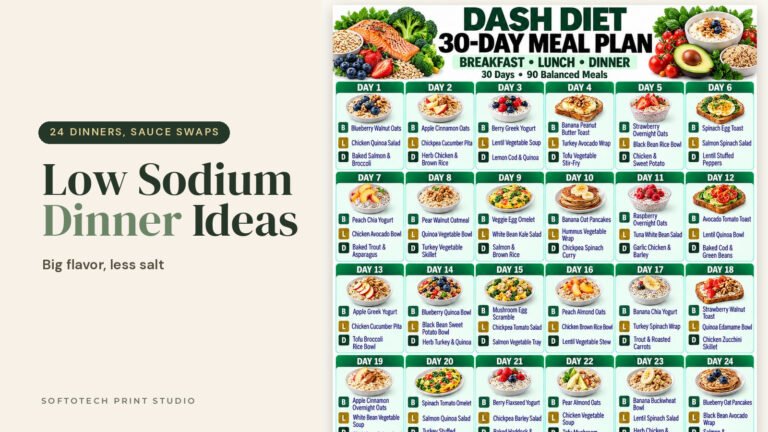 Diet & Food ListsLow Sodium Dinner Ideas: 24 DASH Style Dinners, a Sodium Budget per Plate and Sauce and Seasoning Swaps