
A dessert charcuterie board is the sweet version of a grazing board: chocolates, cookies, mini cakes, pastries, candies and fruit arranged for guests to pick and mix their own small desserts. It is the easiest party dessert there is, because almost nothing on it needs baking on the day, it serves a crowd from one board, and it covers every taste at the table, from the chocolate loyalist to the guest who only wants fruit.
The boards that disappoint are the ones built by enthusiasm alone: all chocolate, nothing fresh, nothing crunchy, and no dips. That is why this guide is built around one printed chart: a dessert board builder with 104 sweet ideas in 12 categories, so you choose a balanced board across every group instead of filling a cart with whatever looks good.
Below you will find all 12 categories on the chart, the balance rules for a sweet board, serving and storage notes for chocolate and fruit, a worked example that builds a complete birthday board step by step, and the matching printable chart from SoftoTech Print Studio.
In this guide:
- The 12 Categories on the Dessert Board Chart
- Balance Rules for a Sweet Board
- Serving and Storage Notes
- Worked Example: A Birthday Dessert Board
- Frequently Asked Questions
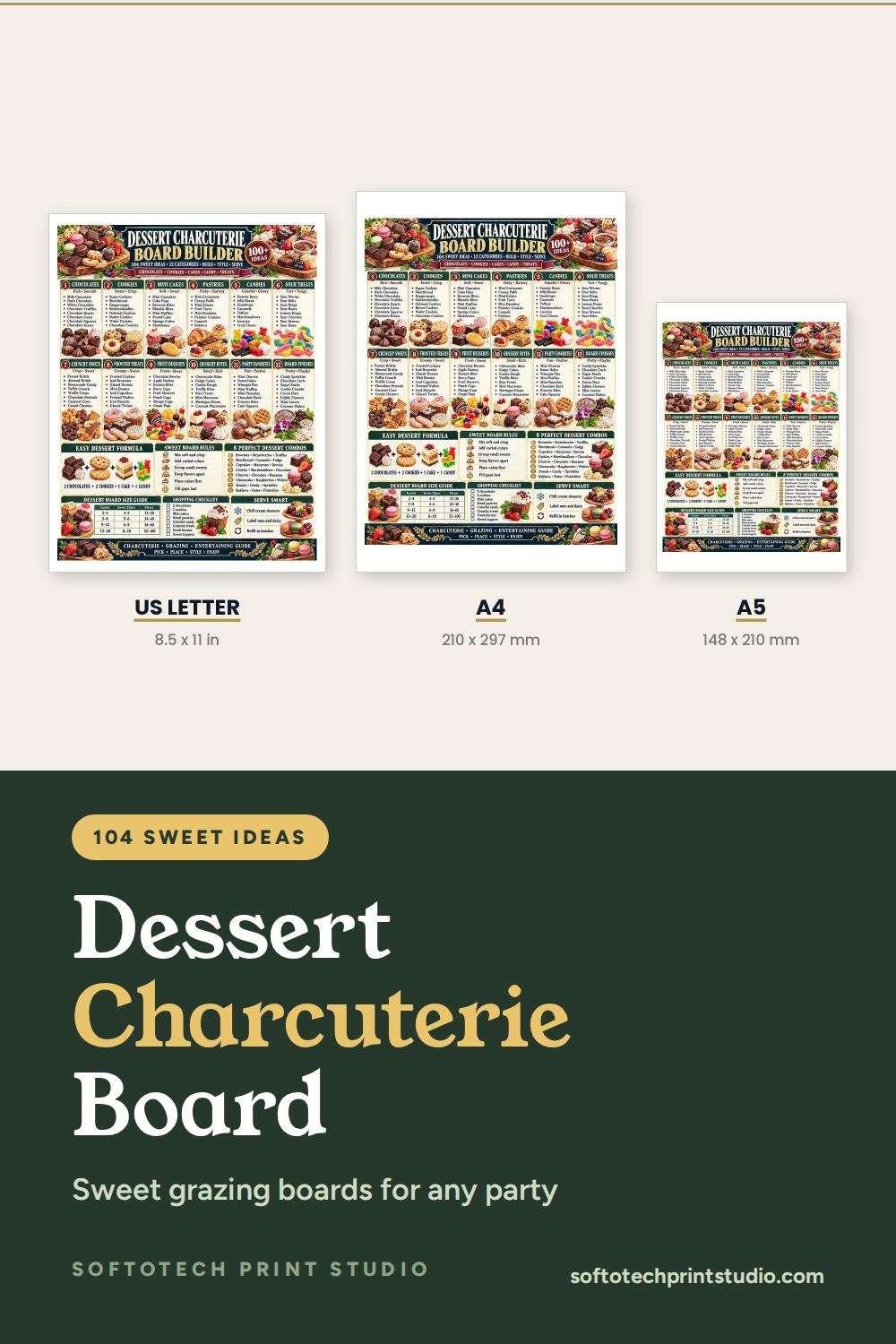

The printable from this guide
Dessert Charcuterie Board Builder Printable: 100+ Sweet B…
- 104 sweet ideas in 12 categories on one chart: Chocolates, Cookies, Mini Cakes, Pastries, Candies, Sour Treats, Crunchy Sweets, Frosted Treats, Fruit Desserts, Dessert Bites, Party Favourites and Board Finishes
- The worked birthday board in this guide uses nine of these categories
- Includes a free bonus set of Dessert Board Food Labels per the listing
- Print sizes US Letter, A4 and A5, as 3 PDFs plus a 300 DPI PNG
- Instant download · Print at home · US Letter · A4 · A5
Use code BLOG10 for 65% OFF at Etsy checkout!
Get the Dessert Board Builder on Etsy →
Instant download · Print at home
The 12 Categories on the Dessert Board Chart
The printable chart in this guide, the Dessert Charcuterie Board Builder, lists 104 sweet ideas across 12 categories: Chocolates, Cookies, Mini Cakes, Pastries, Candies, Sour Treats, Crunchy Sweets, Frosted Treats, Fruit Desserts, Dessert Bites, Party Favourites and Board Finishes. Grouped by job, they make the formula obvious.
| Group | Categories on the chart | Role on the board |
|---|---|---|
| Rich centre | Chocolates, Mini Cakes, Pastries, Frosted Treats | The indulgent items guests come for first |
| Crunch and chew | Cookies, Candies, Sour Treats, Crunchy Sweets | Texture contrast and small handful grazing |
| Fresh break | Fruit Desserts, Dessert Bites | Freshness that resets the palate between rich bites |
| Finish | Party Favourites, Board Finishes | The extras that fill gaps and make the board look complete |
A good board uses at least one category from every row. Two rich items, two crunchy items, one fresh item and the finishes is the smallest board that still feels like a dessert board rather than a plate of biscuits. The second chart in this guide takes a different cut at the same job, organising 80 plus ideas by sections such as Chocolate, Cookies and Biscuits, Fresh Fruit, Dips and Spreads and Sweet Extras, which is handy when you want pairings rather than categories. For the savoury original, see our charcuterie board ideas for beginners.
Balance Rules for a Sweet Board
Rule one: chocolate is a category, not the board. Cap the rich centre at about a third of the board and let cookies, fruit and crunch do the rest, or the board becomes heavy after three bites. Rule two: always include a sour or fresh note. The chart has a whole Sour Treats category and a Fruit Desserts category for a reason: a sharp bite between rich ones is what keeps guests grazing happily. Rule three: dips earn their space. One or two small pots, a chocolate spread or a caramel style dip from the board finishes, turn plain cookies and fruit into the most visited corner of the board.
Rule four: size everything to one or two bites. Mini cakes, dessert bites and broken up bars graze well; whole slices stall a board. Rule five: colour is a category too. A dessert board is mostly brown by default, so the fruit desserts, candies and frosted treats are doing visual work as well as flavour work: spread them through the board instead of grouping them. For how the same builder method handles a morning spread, see our breakfast charcuterie board guide.

The pairing based dessert builder
Dessert Charcuterie Board Builder Printable: 80+ Sweet Gr…
- A second dessert builder organised by sections rather than categories: Chocolate, Cookies and Biscuits, Fresh Fruit, Baked and Bite-Size Treats, Crunchy and Salty, Dips and Spreads, Sweet Extras and Finishing Touches
- Useful when you want pairing suggestions for a smaller or more focused sweet board
- Print sizes US Letter, A4 and A5, as 3 PDFs plus a 300 DPI PNG per the listing
- Instant download · Print at home · US Letter · A4 · A5
Use code BLOG10 for 65% OFF at Etsy checkout!
Get the 80+ Dessert Builder on Etsy →
Instant download · Print at home
Serving and Storage Notes
Dessert boards are the most forgiving boards for timing, and the least forgiving for heat. Chocolate softens and blooms in a warm room, frosted treats slump, and fruit weeps. Build the board in a cool room, keep chocolate and frosted items refrigerated until close to serving, and put the board out as dessert is announced rather than hours ahead. Most items on the chart are shelf stable or fridge friendly, which is exactly why this format works for parties: the shopping and most of the prep can happen days before.
Allergen labelling matters on a sweet board more than anywhere, because nut and gluten items hide inside cookies, candies and crunchy sweets. Use the printable food labels from the listing, group nut containing items in one area of the board with their own small tongs, and keep one clearly fresh section, fruit and dips, that every guest can use. Small tongs and spoons at each cluster also keep the board looking cared for as the evening goes on.
Leftovers are simple: cookies, candies and crunchy sweets go back into airtight containers, chocolate into a cool cupboard, and fruit and frosted items into the fridge for the next day only. A dessert board is one of the few party foods where the leftovers are genuinely welcome.
Worked Example: A Birthday Dessert Board
Here is a complete board for a birthday group of about ten, built only from chart categories. Rich centre: Chocolates in two clusters and Mini Cakes as the birthday anchor in the middle. Crunch and chew: Cookies in two stacks, Crunchy Sweets scattered as filler, and a small Sour Treats corner for contrast. Fresh break: Fruit Desserts in two bright clusters with one dip pot beside them. Finish: Party Favourites around the edges and Board Finishes, small sweets and sprinkles of colour, into every gap. That is nine categories, which fills a large board without crowding it.
Assembly order: dip pots and the mini cakes first, since they fix the geography, then chocolate clusters, then cookies along the edges, then fruit, and finishes last into the gaps. Five minutes before serving, add anything frosted from the fridge. The board works because every guest can build three different small desserts from it: a chocolate plate, a cookie and dip plate, and a fruit plate. For the holiday versions of the same idea, see our Thanksgiving charcuterie board and Christmas charcuterie board guides, and for portions per person across group sizes, our portions per person chart.
Frequently Asked Questions
What do you put on a dessert charcuterie board?
A balanced mix of rich, crunchy, fresh and finishing items. The builder chart in this guide lists 104 ideas in 12 categories, including Chocolates, Cookies, Mini Cakes, Pastries, Candies, Sour Treats, Crunchy Sweets, Frosted Treats, Fruit Desserts, Dessert Bites, Party Favourites and Board Finishes. Choose from every group, not just the chocolate.
How far ahead can I make a dessert board?
Shop and prep days ahead, assemble on the day. Lay out the shelf stable items, cookies, candies and crunchy sweets, a few hours ahead covered, and add chocolate, frosted treats and cut fruit close to serving. Keep chocolate and frosted items cool until they go out, especially in a warm room.
How much dessert do I need per person?
Because guests graze small bites, a handful of items per person across the groups is usually right after a meal, and more if the board is the only dessert. Our portions per person guide gives grazing quantities for groups from 2 to 50 and the same maths applies to a sweet board.
How do I handle nut allergies on a dessert board?
Label everything, using the printable food labels from the listing, group nut containing cookies, candies and crunchy sweets in one area with separate tongs, and keep a clearly fresh fruit and dip section that all guests can use safely. When in doubt, leave a risky item off the board entirely.
What size is the printable dessert board chart?
The SoftoTech Print Studio Dessert Charcuterie Board Builder is an instant download that prints at home in US Letter, A4 and A5 sizes, as 3 PDFs plus a 300 DPI PNG per the listing. It lists 104 sweet ideas in 12 categories and includes a free bonus set of Dessert Board Food Labels.
This guide is for general wellness and is not medical advice. Check with your doctor before starting a new routine.
For the party version with nine different sweet bars, see our dessert bar ideas guide: donut, cupcake, brownie, cheesecake, pie, cookie dough, sundae and fondue bars with a worked birthday board.
Related Guides
- Charcuterie Board Ideas for Beginners
- Breakfast Charcuterie Board
- Thanksgiving Charcuterie Board
- Christmas Charcuterie Board
- How Much Charcuterie Per Person: Portions for 2 to 50 Guests
Sources
Sources: USDA Food Safety and Inspection Service: Food Safety Basics, FDA: Buy, Store and Serve Safe Food
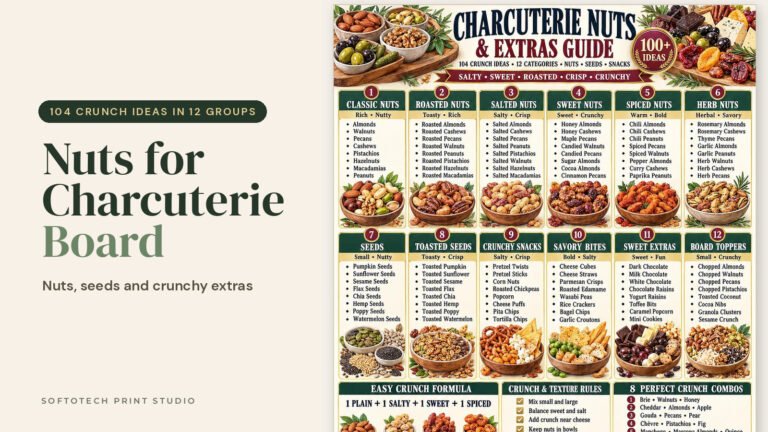 Charcuterie & EntertainingNuts for Charcuterie Board: 104 Crunchy Ideas in 12 Groups, 8 Pairings and How Much to Buy
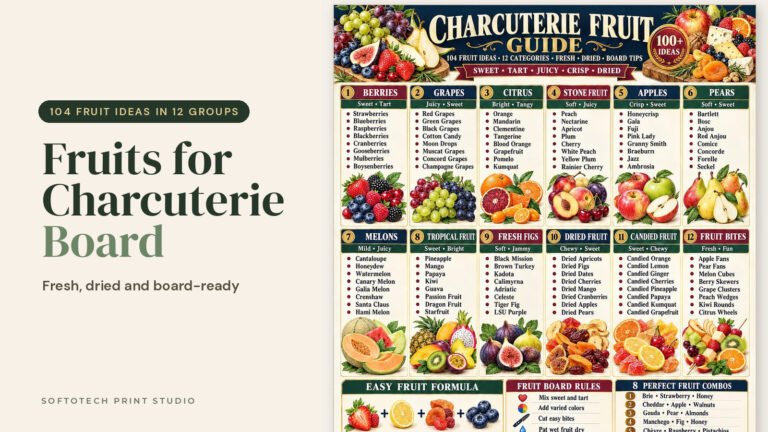 Charcuterie & EntertainingFruits for Charcuterie Board: 104 Ideas in 12 Groups, Pairings and Quantities
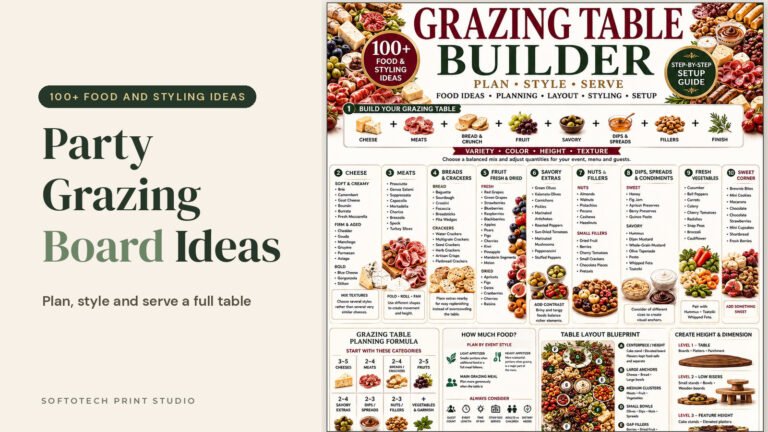 Charcuterie & EntertainingParty Grazing Board Ideas: 100+ Foods and a Simple Setup Plan