
When you’re first told you have celiac disease, the shop suddenly looks like a minefield. A celiac disease food list makes it simpler: one column of foods you can eat, one of foods you need to check, and one of foods to leave on the shelf. Once you can see it laid out, a gluten-free diet starts to feel a lot more doable.
This guide walks through two printable charts from SoftoTech Print Studio. The first is the Celiac Disease Food List, an Eat, Limit and Avoid poster with more than 180 entries, a hidden gluten sources box and a strip of quick reminders. The second is the Gluten-Free Diet Food List, which pictures and numbers 153 foods: 82 to eat, 31 to check labels on and 40 to avoid.
The idea behind both is the same, and it matches what the Celiac Disease Foundation and the NIDDK say. Gluten is a protein in wheat, barley and rye. People with celiac disease need to cut it out completely, for life, to let the small intestine heal and keep symptoms away. Most fresh, whole foods are naturally gluten-free. The risk mostly sits in grains, baked goods and processed foods where gluten hides in sauces, thickeners and coatings.
A plain caution before we start. Needs vary from person to person, and this guide is general information, not a diagnosis or a treatment plan. If you think you might have celiac disease, don’t go gluten-free yet; talk to your doctor about testing first. If you’ve already been diagnosed, check with your doctor or a registered dietitian, who can help you build a balanced gluten-free diet that suits you.
In this guide:
- What Is on the Celiac Disease Food List
- Worked Grocery List: A Gluten-Free Week
- The Numbered Chart Pictures 153 Foods
- How to Use a Celiac Food List Day to Day
- Frequently Asked Questions

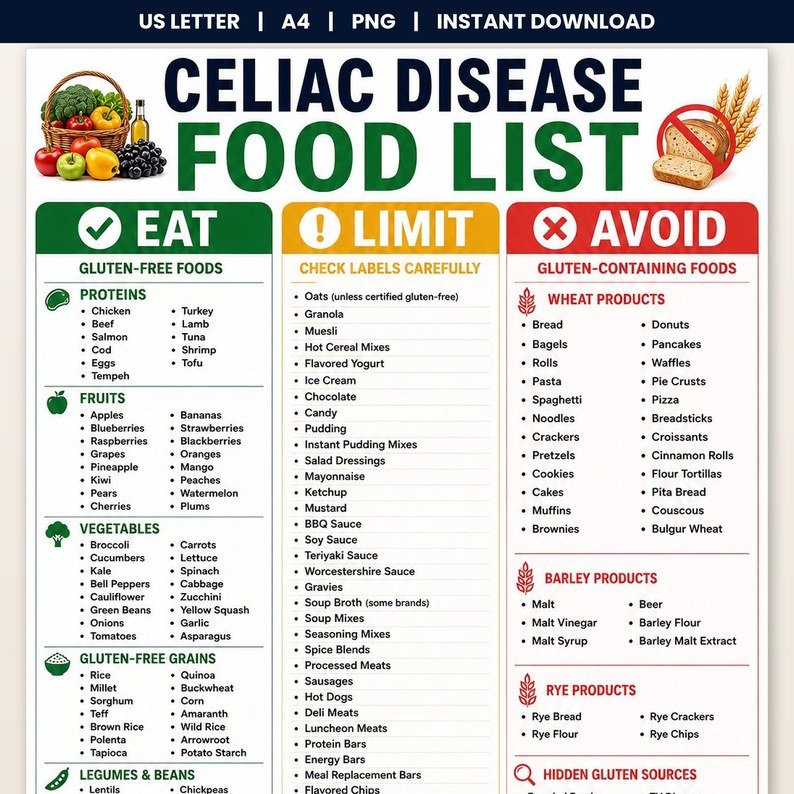
- Three color-coded columns: Eat (gluten-free foods), Limit (check labels carefully) and Avoid (gluten-containing foods)
- Eat column in 8 groups: proteins, fruits, vegetables, gluten-free grains, legumes and beans, nuts and seeds, healthy fats and oils, and dairy
- 41 check-the-label foods, from oats and granola to soy sauce, deli meats, protein bars and coffee creamers
- Avoid column covers wheat, barley and rye products plus a hidden gluten sources list, such as seitan, matzo and hydrolyzed wheat protein
- Quick reminders strip on labels, cross-contamination and eating out; US Letter and A4 PDFs plus a 300 DPI PNG
- Instant download · Print at home · US Letter · A4
Use code BLOG10 for 65% OFF at Etsy checkout!
What Is on the Celiac Disease Food List
The main chart is headed Celiac Disease Food List and split into three colored columns, Eat, Limit and Avoid, with a reminders strip along the bottom.
The Eat column. The green column is titled Gluten-Free Foods and has eight groups. At the bottom it says these foods are naturally gluten-free and safe to enjoy. That’s true of the foods in their plain form. A plain chicken breast is gluten-free; a breaded or marinated one may not be, which is why the other two columns matter just as much.
Proteins: chicken, beef, salmon, cod, eggs, tempeh, turkey, lamb, tuna, shrimp and tofu. These are the backbone of most gluten-free meals. Buy them plain and season them yourself. Tempeh and tofu are gluten-free in their basic form, but flavored or marinated versions can contain soy sauce, so they’re worth a quick label check.
Fruits: apples, blueberries, raspberries, grapes, pineapple, kiwi, pears, cherries, bananas, strawberries, blackberries, oranges, mango, peaches, watermelon and plums. All fresh fruit is gluten-free, so this group is about variety rather than safety.
Vegetables: broccoli, cucumbers, kale, bell peppers, cauliflower, green beans, onions, tomatoes, carrots, lettuce, spinach, cabbage, zucchini, yellow squash, garlic and asparagus. Again, fresh and plain frozen vegetables are fine. Frozen vegetables in a sauce are a different story, and the chart puts vegetables in sauce in its Limit column.
Gluten-free grains: rice, millet, sorghum, teff, brown rice, polenta, tapioca, quinoa, buckwheat, corn, amaranth, wild rice, arrowroot and potato starch. This is the group that surprises people most. Buckwheat sounds like wheat but isn’t related to it. Teff, sorghum and millet are less familiar in many kitchens, but they’re worth trying. The NIDDK also lists flours made from potatoes, rice, corn, soy, nuts, cassava, amaranth, quinoa, buckwheat and beans as safe.
Legumes and beans: lentils, black beans, pinto beans, green peas, chickpeas, kidney beans, navy beans and split peas. Beans are a cheap, filling source of protein and fiber, and fiber can be easy to fall short on when you stop eating wheat bread and cereal.
Nuts and seeds: almonds, pecans, sunflower seeds, chia seeds, walnuts, cashews, pumpkin seeds and flax seeds. Plain nuts are gluten-free. Some roasted, flavored or trail-mix versions are made on shared lines, so check the bag.
Healthy fats and oils: olive oil, avocado, flaxseed oil, coconut oil, nut butters and sesame oil.
Dairy (naturally gluten-free): milk, plain yogurt, cottage cheese, cheese, butter and sour cream. The chart says plain yogurt on purpose; flavored yogurt is in the Limit column, since some flavors and mix-ins add gluten.
That’s 85 foods in the Eat column. You don’t need all of them. What it shows is that a gluten-free plate can still be a full plate: protein, a couple of vegetables, a gluten-free grain or potato, and some fat. If you want to keep fiber up, our high-fiber foods list for gut health has more ideas, and beans, berries, chia and quinoa from this column are all good places to start.
The Limit column. The yellow middle column is headed Limit, with the line Check Labels Carefully. I’d read it as “check” more than “limit”. These aren’t foods you need to eat less of. They’re foods where some brands contain gluten and some don’t, so the label decides. The note at the bottom says these foods may contain hidden gluten and to always read labels.
There are 41 items. I’ve grouped them here to make them easier to remember:
- Breakfast and grains: oats (unless certified gluten-free), granola, muesli, hot cereal mixes, baking mixes (some), rice cakes (some brands) and pretzels (some brands).
- Sweets and dairy treats: flavored yogurt, ice cream, chocolate, candy, pudding and instant pudding mixes.
- Sauces and condiments: salad dressings, mayonnaise, ketchup, mustard, BBQ sauce, soy sauce, teriyaki sauce, Worcestershire sauce and gravies.
- Soups and seasonings: soup broth (some brands), soup mixes, seasoning mixes and spice blends.
- Meats: processed meats, sausages, hot dogs, deli meats and luncheon meats.
- Bars and snacks: protein bars, energy bars, meal replacement bars, flavored chips and dried fruits (processed).
- Convenience foods and drinks: frozen meals, vegetables in sauce, canned foods (some), coffee creamers and instant coffee mixes.
This matches the NIDDK’s own warning. Many additives, such as starches, thickeners, colorings and flavorings, can be made from gluten grains, and they turn up in boxed, canned, frozen and packaged foods. The NIDDK names candy, condiments, hot dogs and sausages, ice cream, salad dressing and soups as examples, and all of those are in this column.
Oats deserve their own note. Oats don’t contain gluten, but they’re often grown and milled next to wheat, so regular oats can be contaminated. The NIDDK says research suggests most people with celiac disease can eat moderate amounts of oats, as long as they’re gluten-free, and that you should talk to your doctor or dietitian about whether to include them and how much.
In the U.S., a “gluten-free” label has a legal meaning. The FDA requires foods labeled gluten-free to contain less than 20 parts per million of gluten, which the NIDDK says is too small to cause problems for most people with celiac disease. That rule doesn’t cover meat, poultry and some egg products, which are regulated by the USDA, or most alcoholic drinks. So deli meats and sausages still need a careful read.
The Avoid column. The red Avoid column is headed Gluten-Containing Foods, and it’s split into four boxes.
Wheat products: bread, bagels, rolls, pasta, spaghetti, noodles, crackers, pretzels, cookies, cakes, muffins, brownies, donuts, pancakes, waffles, pie crusts, pizza, breadsticks, croissants, cinnamon rolls, flour tortillas, pita bread, couscous and bulgur wheat. These mean the regular wheat versions. Gluten-free bread, pasta and crackers exist, and the second chart lists them under check labels.
Barley products: malt, malt vinegar, malt syrup, beer, barley flour and barley malt extract. Malt is the one to watch, because it turns up in cereals, sweets and malted drinks without the word barley anywhere on the front of the pack.
Rye products: rye bread, rye flour, rye crackers and rye chips.
Hidden gluten sources: breaded foods, batter-fried foods, chicken nuggets, fish sticks, some soups, some sauces, cream soups, pasta sauces, certain frozen meals, certain snack foods, some processed meats, stuffing, croutons, seitan, TV dinners, some canned foods, imitation crab, some soy products, thickening agents, wheat starch, hydrolyzed wheat protein, modified food starch, graham crackers, matzo, farro, kamut and spelt.
That hidden gluten box is useful, but I want to be honest about one thing. The note under it says these foods contain gluten and should be strictly avoided. For seitan, matzo, farro, kamut, spelt, wheat starch and hydrolyzed wheat protein, that’s right; they’re made from wheat. But items like “some soups”, “some canned foods”, “pasta sauces” and “modified food starch” aren’t always gluten-containing. Plenty of pasta sauces and canned foods are gluten-free, and modified food starch is often made from corn. For those, treat the box as a list of foods to check closely, the same as the Limit column, rather than foods you can never buy.
Farro, kamut and spelt are worth knowing by name, since they’re often sold as “ancient grains” in health food aisles. All three are types of wheat, and the NIDDK lists spelt, durum, emmer and semolina as wheat too.
Along the bottom of the poster is a Quick Reminders strip with six lines: always read ingredient labels, look for “Certified Gluten-Free” on packaging, prevent cross-contamination, use a separate toaster, cutting boards and condiments, inform the staff when dining out, and plan meals ahead and keep safe snacks on hand. The footer says it’s for educational purposes only, not medical advice, and to always consult your healthcare provider.
Worked Grocery List: A Gluten-Free Week
Here’s a sample week’s shop built only from the two charts. Most of it comes from the Eat columns, so there’s very little label reading. The few packaged items are marked so you know to check them. Scale it up or down for your household.
| Section | What to buy | Chart column |
|---|---|---|
| Proteins | Plain chicken breast, salmon, eggs, tofu | Eat |
| Vegetables | Spinach, broccoli, bell peppers, carrots, onions, garlic | Eat |
| Fruit | Bananas, apples, berries (fresh or plain frozen), lemons | Eat |
| Grains and starches | Brown rice, quinoa, buckwheat, potatoes, sweet potatoes | Eat |
| Beans | Dried lentils, canned chickpeas and black beans | Eat |
| Dairy | Milk, plain Greek yogurt, cheddar | Eat |
| Nuts, seeds and oils | Almonds, chia seeds, olive oil, avocado | Eat |
| Labeled staples | Certified gluten-free oats, gluten-free bread, gluten-free tamari | Check labels |
| Condiments | Salsa and mustard marked gluten-free | Check labels |
A sample day from that basket. Breakfast: certified gluten-free oats cooked in milk, with banana, berries and chia. Lunch: a quinoa bowl with chickpeas, spinach, peppers, avocado and a squeeze of lemon. Snack: plain Greek yogurt or an apple with almonds. Dinner: baked salmon with roasted potatoes and broccoli, cooked in olive oil with garlic. Every food is on one of the charts, and only the oats need a special label.
Two habits make a shop like this easier. Fill the trolley with fresh foods first, then go to the packaged aisles with a short list rather than browsing. And when you find a labeled brand you trust for bread, oats or tamari, stick with it; it saves reading the same labels every week.
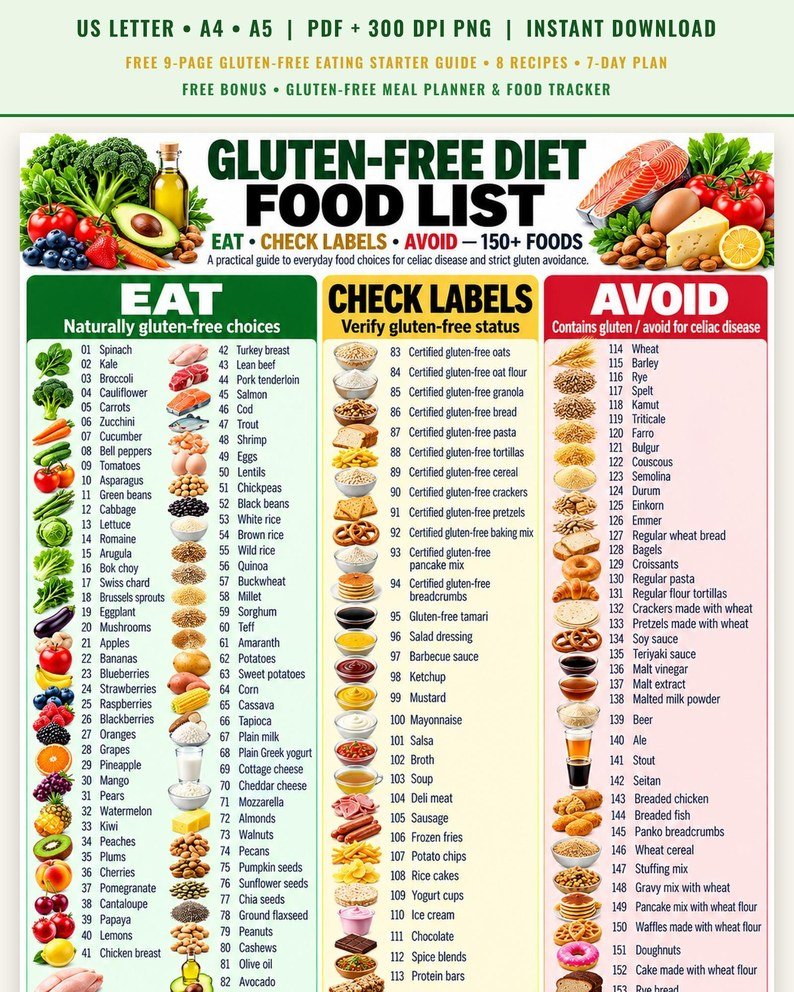
- 153 numbered, pictured foods in three columns: 82 to eat, 31 to check labels on and 40 to avoid
- Eat foods run from spinach and bok choy to quinoa, teff, cassava, plain Greek yogurt and ground flaxseed
- Check Labels column starts with 12 certified gluten-free staples like oats, bread, pasta and breadcrumbs, plus gluten-free tamari
- Avoid column names grains like spelt, kamut, triticale, einkorn and emmer, plus malt extract, beer and stuffing mix
- US Letter, A4 and A5 PDFs plus a 300 DPI PNG, listed on Etsy as 3 PDFs, a PNG and a ZIP
- Instant download · Print at home · US Letter · A4 · A5
Use code BLOG10 for 65% OFF at Etsy checkout!
The Numbered Chart Pictures 153 Foods
The second chart is headed Gluten-Free Diet Food List, with the line “A practical guide to everyday food choices for celiac disease and strict gluten avoidance.” Every food has a small photo and a number, from 1 to 153. The column totals are printed at the bottom: 82 foods, 31 foods and 40 foods. Those add up to 153, which fits the 150+ in the listing title.
Eat, naturally gluten-free choices (1 to 82): 20 vegetables, from spinach, kale and broccoli to bok choy, Swiss chard, Brussels sprouts, eggplant and mushrooms. 20 fruits, including pomegranate, cantaloupe, papaya and lemons. Then chicken breast, turkey breast, lean beef, pork tenderloin, salmon, cod, trout, shrimp and eggs; lentils, chickpeas and black beans; white, brown and wild rice, quinoa, buckwheat, millet, sorghum, teff and amaranth; potatoes, sweet potatoes, corn, cassava and tapioca; plain milk, plain Greek yogurt, cottage cheese, cheddar and mozzarella; almonds, walnuts, pecans, pumpkin, sunflower and chia seeds, ground flaxseed, peanuts and cashews; and olive oil and avocado.
Check labels, verify gluten-free status (83 to 113): the first 12 are certified gluten-free versions of oats, oat flour, granola, bread, pasta, tortillas, cereal, crackers, pretzels, baking mix, pancake mix and breadcrumbs. Then gluten-free tamari, salad dressing, barbecue sauce, ketchup, mustard, mayonnaise, salsa, broth, soup, deli meat, sausage, frozen fries, potato chips, rice cakes, yogurt cups, ice cream, chocolate, spice blends and protein bars. Frozen fries are a good catch; some are coated in wheat flour for crispness, and shared fryers are a cross-contact risk when you eat out.
Avoid, contains gluten (114 to 153): wheat, barley, rye, spelt, kamut, triticale, farro, bulgur, couscous, semolina, durum, einkorn and emmer; regular wheat bread, bagels, croissants, regular pasta and regular flour tortillas; crackers and pretzels made with wheat; soy sauce, teriyaki sauce, malt vinegar, malt extract and malted milk powder; beer, ale and stout; seitan; breaded chicken, breaded fish and panko breadcrumbs; wheat cereal and stuffing mix; gravy mix with wheat, pancake mix and waffles made with wheat flour, doughnuts, cake made with wheat flour and rye bread.
A footer says celiac disease requires strict gluten avoidance, and to verify ingredients, product labeling and cross-contact risks according to your individual needs.
The two charts mostly agree, with one difference worth knowing. Soy sauce sits in the Limit column on the first chart and the Avoid column on the second, where gluten-free tamari gets its own spot under check labels. Most regular soy sauce is brewed with wheat, so the second chart’s version is the safer rule: buy soy sauce or tamari only if it’s labeled gluten-free.
The second chart is also the easier one to shop from, because the numbers and photos make it quick to scan. The first chart has more detail on hidden sources. If you can only print one, pick the numbered chart for the fridge and keep the first one’s hidden gluten box in mind when you read labels.
How to Use a Celiac Food List Day to Day
Build meals from the Eat column first. The simplest gluten-free meals use foods that never had gluten in them. Breakfast could be eggs with spinach and potatoes, or plain Greek yogurt with berries, chia and walnuts. Lunch might be a rice bowl with black beans, peppers, avocado and salsa from a labeled jar. Dinner could be salmon, roasted sweet potato and broccoli with olive oil and lemon. None of these need a single specialty product.
Read every label, every time. Recipes change. A brand that was safe last year may not be now. Look for wheat, barley, rye, malt and brewer’s yeast in the ingredients, and look for a gluten-free label. The NIDDK’s advice is simple: if you aren’t sure whether something contains gluten, don’t eat it, and contact the company if you can.
Set up your kitchen against cross-contact. Cross-contact is when gluten-free food touches gluten, and it can happen anywhere from the field to your plate. At home, the chart’s reminders cover the big ones: a separate toaster, separate cutting boards and separate jars of butter, jam and spreads so crumbs don’t get in. Store gluten-free foods apart from the rest of the household’s, and wash pans and colanders well.
Plan for eating out. Look up menus before you go, call ahead if you need to, and tell the server you have celiac disease, not just that you’re avoiding gluten. Ask how food is cooked. Fried foods often share oil with breaded items, and grills and pasta water can carry gluten too. For parties, tell the host and bring something safe to share.
Watch your nutrients. The NIDDK notes that cutting out gluten without advice can leave you short of fiber, iron and calcium, and that some packaged gluten-free foods are higher in fat and sugar than the regular versions. Leaning on whole foods from the Eat column helps. For calcium, dairy, leafy greens and chia from these charts are a start, and our calcium-rich foods for bone health list goes further.
If you still have symptoms, say so. Some people with celiac disease also have trouble with other foods, at least while the gut heals. Your doctor may look into lactose or other triggers. If you’ve been told to try a low FODMAP approach as well, our low FODMAP diet food list can sit beside this one; many of its foods are gluten-free too. And if you’re looking for anti-inflammatory foods to round out your plate, the anti-inflammatory food list has plenty that fit a gluten-free diet.
Print a copy for the people around you. A chart on the fridge helps partners, kids, grandparents and house guests know what’s safe without asking every time. Both charts print in US Letter and A4, and the numbered one also comes in A5, which is handy for a bag or a school lunch folder.
A gluten-free diet takes a few weeks to get used to. After that, most people find they shop on autopilot, reaching for the same safe brands and naturally gluten-free foods. These charts are there for the first few months and for the odd tricky product along the way.
If you’ve also been told you have diverticulosis, this printable diverticulosis food list sorts 140+ foods by how often to eat them.
Frequently Asked Questions
What foods can you eat with celiac disease?
Plenty of everyday foods are naturally gluten-free: fresh meat, fish, eggs, beans and lentils, fruits and vegetables, plain dairy, nuts and seeds, and oils. Grains like rice, quinoa, buckwheat, millet, sorghum, teff, amaranth and corn are gluten-free too. The trouble usually starts with processed foods, where gluten can be added, so those go on the check labels list.
Are oats safe on a celiac disease diet?
Oats don’t contain gluten themselves, but they’re often grown and processed alongside wheat, so regular oats are easily contaminated. Both charts put oats in the check labels column. The NIDDK says research suggests most people with celiac disease can eat moderate amounts of gluten-free oats, but ask your doctor or dietitian before adding them.
Why is soy sauce on the list?
Most regular soy sauce is brewed with wheat. The numbered chart puts soy sauce in its Avoid column and lists gluten-free tamari under Check Labels. The Celiac Disease Food List chart puts soy sauce in its Limit column instead. Either way, the safe move is the same: buy a soy sauce or tamari that is clearly labeled gluten-free.
Should I go gluten-free before I get tested for celiac disease?
No. The NIDDK says to talk with your doctor about testing before you begin a gluten-free diet, because avoiding gluten first can make the test results inaccurate. Cutting gluten without advice can also leave gaps in fiber, iron and calcium. Get tested while you’re still eating gluten, and only then switch to the food list.
What sizes do the celiac food charts print in?
The Celiac Disease Food List prints in US Letter and A4, with a 300 DPI PNG; Etsy’s file summary says 4 PDFs and 1 PNG. The numbered Gluten-Free Food List prints in US Letter, A4 and A5, plus a 300 DPI PNG, listed as 3 PDFs, a PNG and a ZIP. Both are instant downloads.
This guide is for general wellness and is not medical advice. Check with your doctor before starting a new routine.
Related Guides
- Low FODMAP Diet Food List
- High-Fiber Foods List for Gut Health
- Calcium-Rich Foods for Bone Health
- Anti-Inflammatory Food List
Sources
Sources: Celiac Disease Foundation, Gluten-Free Foods, NIDDK (NIH), Eating, Diet and Nutrition for Celiac Disease
 Diet & Food ListsMediterranean Diet for Seniors: A Simple Guide With an Eat, Limit, Avoid List and a 7 Day Plan
 Diet & Food ListsHigh Protein Foods for Muscle Gain: How Much You Need, the Best Picks per Meal and a Worked Training Day
 Diet & Food ListsLow Sodium Dinner Ideas: 24 DASH Style Dinners, a Sodium Budget per Plate and Sauce and Seasoning Swaps