
A good cheese pairing guide answers one simple question: what should sit next to this cheese so both taste better? The short answer is contrast and balance. A salty, rich cheese wants something sweet or acidic beside it, a mild cheese wants a gentle partner that does not drown it, and every cheese on the board wants one crunchy thing to change the texture. Once you know those three ideas, you can pair any cheese with confidence, even one you have never tried before.
In this cheese pairing guide you will learn the five simple rules behind every classic pairing, see a table of reliable matches for the cheeses people buy most often, and follow a worked example that builds a complete board for six guests using our printable chart. No guesswork at the shop, no random jars bought in a panic, and no cheese left sitting alone at the end of the night.
In this guide:
- Why Cheese Pairing Works: Salt, Fat, Acid and Sweet
- The 5 Rules in This Cheese Pairing Guide
- Cheese Pairing Table: 12 Cheeses and Their Best Matches
- Worked Example: A Beginner Board for 6 Guests
- Serving Rules That Make Pairings Taste Better
- Common Pairing Mistakes
- Frequently Asked Questions
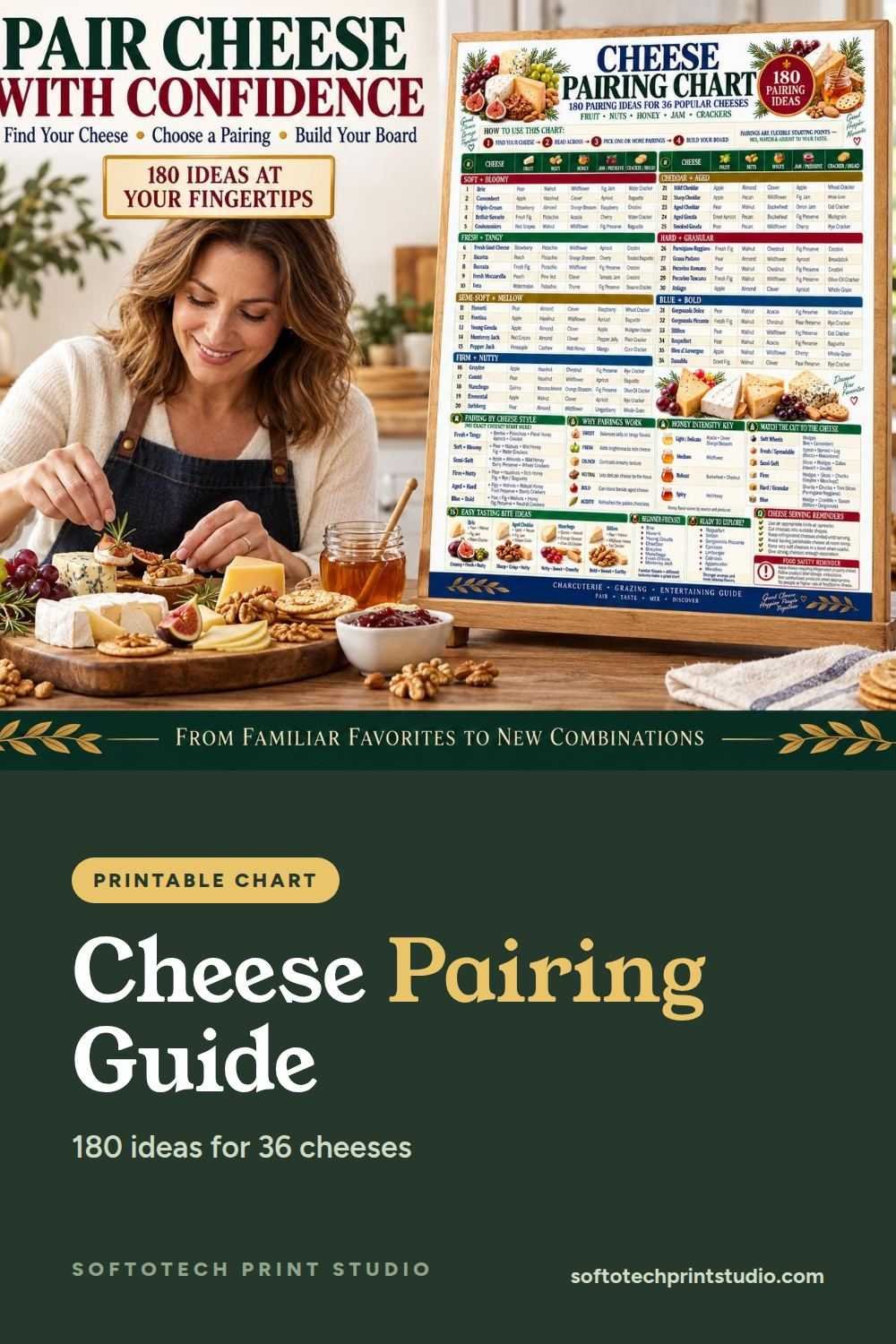

The printable from this guide
Cheese Pairing Chart: 180 Ideas for 36 Cheeses
- One chart: 36 popular cheeses with their best fruit, nut, honey, jam and cracker pairings
- 180 pairing ideas in a single at-a-glance table for shopping and board building
- Instant download · Print at home · A4 · US Letter · A5
Use code BLOG10 for 65% OFF at Etsy checkout!
Get the Cheese Pairing Chart on Etsy →
Instant download · Print at home
Why Cheese Pairing Works: Salt, Fat, Acid and Sweet
Cheese is concentrated flavour. It is salty, fatty and often tangy, all at the same time. A pairing works when the food beside it supplies whatever the cheese is missing. Sweet foods like honey, fig jam and fresh fruit soften salt and fat. Acidic foods like pickles, chutneys and crisp apples cut through richness and refresh your mouth for the next bite. Crunchy foods like nuts, crackers and toasted bread change a soft, creamy bite into something more interesting.
That is also why some pairings fail. Two very strong flavours side by side fight each other, so a pungent blue cheese next to a fiery chilli jam leaves you tasting neither properly. And two very mild flavours side by side can taste flat, so a gentle fresh mozzarella needs a partner with a little life in it, like ripe tomatoes, basil and good olive oil, rather than a plain water cracker alone.
Keep one sentence in mind while you shop: match intensity first, then add contrast. A mild cheese takes mild to medium partners, a strong cheese can handle bold partners, and every pairing improves when one element is sweet, one is acidic or one is crunchy. Our charcuterie board ideas for beginners show how these flavours sit together on a finished board.
The 5 Rules in This Cheese Pairing Guide
Rule 1: Pair like with like, then contrast. Start by matching strength. Delicate cheeses go with delicate partners, aged cheeses go with deeper, darker partners like walnuts, cured meats and dark honey. Then add one contrasting element per cheese, something sweet, acidic or crunchy, so the pairing has a reason to exist.
Rule 2: Give every cheese a sweet option. Honey, jam, fresh grapes, apple slices and dried apricots are the peacemakers of the board. They calm salty and sharp cheeses and make mild cheeses taste more like themselves. If you only add one extra to a cheese board, make it a small pot of honey or fig jam.
Rule 3: Give every cheese a crunch. Texture is half the pleasure. Marcona almonds, walnuts, pecans and simple crackers give soft cheeses structure and give hard cheeses a buttery break. Keep crackers plain so they carry flavour instead of competing with it.
Rule 4: Serve three to five cheeses, not ten. A focused board pairs better than a crowded one. Choose one soft, one hard, one aged and, if your guests are adventurous, one blue. Then spend your effort on the pairings for those few cheeses instead of thin coverage of many.
Rule 5: Let the chart do the remembering. Nobody memorises hundreds of pairings, and you do not need to. A printed cheese pairing guide on the counter turns shopping and board building into a quick lookup: pick the cheese, read across the row, choose one fruit, one nut and one sweet. That is exactly how the printable in this guide is laid out, with 36 cheeses and their fruit, nut, honey, jam and cracker matches in one table.
Cheese Pairing Table: 12 Cheeses and Their Best Matches
These are the classic, reliable matches for the cheeses most boards include. Use them as your starting point, then adjust to what your guests like.
| Cheese | Fruit | Nut or crunch | Sweet or spread |
|---|---|---|---|
| Brie | Pear | Walnut | Fig jam, wildflower honey |
| Camembert | Apple | Hazelnut | Apricot preserve, clover honey |
| Aged cheddar | Pear | Walnut | Onion jam, buckwheat honey |
| Gouda (aged) | Dried apricot | Pecan | Fig preserve, buckwheat honey |
| Manchego | Quince | Marcona almond | Fig preserve, orange blossom honey |
| Parmigiano-Reggiano | Fresh fig | Walnut | Fig preserve, chestnut honey |
| Goat cheese (fresh) | Strawberry | Pistachio | Apricot, wildflower honey |
| Stilton (blue) | Pear | Walnut | Fig preserve, wildflower honey |
| Gruyere | Apple | Hazelnut | Fig preserve, chestnut honey |
| Mozzarella (fresh) | Peach | Pine nut | Tomato jam, clover honey |
| Smoked gouda | Pear | Pecan | Cherry preserve, wildflower honey |
| Burrata | Fresh fig | Pistachio | Fig preserve, wildflower honey |
Notice the pattern in the table: salty and aged cheeses lean on fruit and honey, soft creamy cheeses lean on jam and almonds, and strong cheeses like blue always get something sweet to round them out. Once you see the pattern, new cheeses stop being a gamble. If you are planning quantities for a party, our guide to how much charcuterie per person gives the portions for cheese, meat and extras by guest count.

Pair it with the wine chart
Wine and Cheese Pairing Guide
- 30+ wine and cheese pairings organised by wine style
- Fruit and crunch suggestions for every pairing, plus a tasting and hosting guide
- Instant download · Print at home · A4 · US Letter · A5
Use code BLOG10 for 65% OFF at Etsy checkout!
Get the Wine and Cheese Guide on Etsy →
Instant download · Print at home
Worked Example: A Beginner Board for 6 Guests, Built With the Chart
Here is the unique part of this guide: one complete board, built step by step from the chart, so you can copy it exactly for your next gathering.
The cheeses (four, one per family): a small wheel of brie (soft), a wedge of aged cheddar (hard), a piece of manchego (aged and nutty), and a modest wedge of blue cheese (strong). Four cheeses keep the board generous without waste, and they cover every taste at the table.
Reading the chart, cheese by cheese: For the brie, the chart row lists pear, walnut and fig jam, so add pear slices, a small pile of walnuts and a pot of fig jam beside the wheel. For the aged cheddar, the row gives pear, walnut and onion jam, so the same pear and walnuts can serve both cheeses, with a spoonful of onion jam for the cheddar corner. For the manchego, the chart match is quince, marcona almond and fig preserve, so place slices of quince paste right beside the wedge. For the stilton, the row reads pear, walnut and wildflower honey, so set a small honey pot with a dipper next to it: honey is the pairing that converts blue cheese sceptics.
The supporting cast: one sliced baguette and one box of plain crackers for crunch and carrying, a small bowl of cornichons or olives for acidity, and a handful of dried apricots scattered in the empty spaces. Arrange each cheese with its own pairings in a loose cluster, so guests naturally taste the combinations the chart suggests instead of random bites.
The result: every guest finds at least one combination they love, the strong cheese has a sweet partner that makes it friendly, and nothing on the board is there by accident. The whole shop took one pass through the chart, four rows, and about ten minutes of list making at home. If you need a bigger or smaller board, our charcuterie board size guide matches board dimensions and amounts to your guest count.
Serving Rules That Make Pairings Taste Better
Take cheese out of the fridge early. Cold mutes flavour. Let cheeses sit at room temperature for about 30 to 60 minutes before serving so their texture and aroma open up, and keep an eye on food safety on warm days: perishable foods should not sit out for more than about two hours, as FoodSafety.gov advises for gatherings.
Serve in order, mild to strong. If you are tasting in sequence, start with the mildest cheese and finish with the blue. Strong flavours linger, and a palate that starts with blue will miss the gentle notes of a fresh goat cheese entirely.
Give each cheese its own knife. One knife for everything drags blue mould through the brie and garlic from a flavoured cheese into a plain one. A knife per cheese keeps every pairing tasting the way the chart intends.
Label the cheeses for guests. Small handwritten labels remove the guessing and the polite nibbling. Guests pair more bravely when they know what they are eating, and they will find the chart combinations faster.
Common Pairing Mistakes
Too many strong flavours at once. Smoked cheese, spicy salami, chilli jam and pickled chillies on one board is a fight, not a tasting. Keep one bold item per cluster and let the rest support it.
Flavoured crackers under delicate cheese. Rosemary, garlic and seeded crackers are delicious, but they bury mild cheeses. Keep a plain cracker or baguette as the default base, and treat flavoured crackers as a pairing in their own right for robust cheeses.
Skipping the sweet element. Boards without honey, jam or fruit taste heavier with every bite. One sweet pot in the middle of the board resets palates and makes the salty items taste fresh again.
Pairing by colour or habit instead of the chart. Serving the same grapes and walnuts with every cheese is easy, but it wastes the differences you paid for. Thirty seconds with the chart per cheese is the whole secret of this cheese pairing guide.
To add crunch to your cheese pairings, see our guide to nuts for charcuterie board, with 104 crunch ideas and eight cheese and nut combinations.
Frequently Asked Questions
What is the best all-round cheese pairing?
Honey is the closest thing to a universal pairing. It softens salty and strong cheeses like blue and aged cheddar, and it lifts mild cheeses like brie and goat cheese without covering their flavour. If you add only one extra to a board, add a small pot of honey.
How many cheeses should a cheese board have?
Three to five cheeses work best for most gatherings. Choose one soft, one hard, one aged and optionally one blue. Fewer cheeses with well-chosen pairings taste better than many cheeses with none, and it keeps shopping and costs under control.
What fruit goes best with cheese?
Grapes and crisp apple pair with almost everything, figs and fig jam are classic with soft and blue cheeses, and pear suits aged and hard cheeses like parmesan, gouda and manchego. Match the fruit to the cheese using the table in this guide rather than serving one fruit for all.
Should cheese be served cold or at room temperature?
At room temperature for flavour, after about 30 to 60 minutes out of the fridge. Cold cheese tastes muted and its texture stays firm. Keep food safety in mind at parties and return leftovers to the fridge within about two hours.
What size is the printable cheese pairing chart?
The SoftoTech Print Studio Cheese Pairing Chart is an instant PDF download that prints at home in A4, US Letter and A5 sizes. It covers 36 cheeses with 180 pairing ideas across fruit, nuts, honey, jam and crackers, so you can keep it in the kitchen and check a pairing in seconds.
Planning a festive board this year? Our christmas charcuterie board guide builds a complete holiday spread from a printable chart: 104 festive ideas in 12 categories, an easy board formula, a size guide and a worked example for 6 guests.
Cheese also anchors a morning board: our breakfast charcuterie board guide includes a Middle Eastern version with cheeses and labneh among its 104 brunch ideas.
Harvest cheeses carry the holiday appetizer board in our Thanksgiving charcuterie board guide, which pairs them with fall fruit, nuts and spreads from a 104 idea chart.
Before pairings, the board itself needs a formula: our cheese board ideas guide sets out the 3 to 5 cheese rule across six styles, with accompaniments for every job on the board.
For the full shopping list behind a board like this, our charcuterie board ingredients checklist walks through every category in order, with a complete party board list worked end to end.
Related Guides
- Charcuterie Board Ideas for Beginners
- How Much Charcuterie Per Person: Portions for 2 to 50 Guests
- What Size Charcuterie Board Do I Need?
- Free Printables
Sources
Sources: FoodSafety.gov: Keep Food Safe, U.S. Department of Agriculture (USDA), U.S. Food and Drug Administration (FDA): Buy, Store and Serve Safe Food
This guide is for general wellness and is not medical advice. Check with your doctor before starting a new routine.
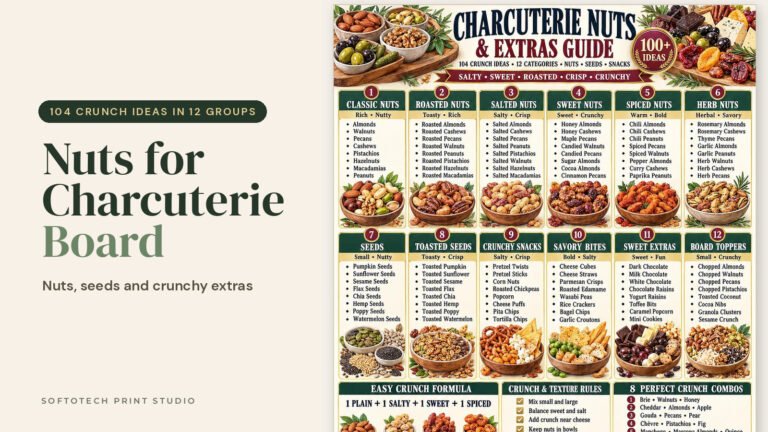 Charcuterie & EntertainingNuts for Charcuterie Board: 104 Crunchy Ideas in 12 Groups, 8 Pairings and How Much to Buy
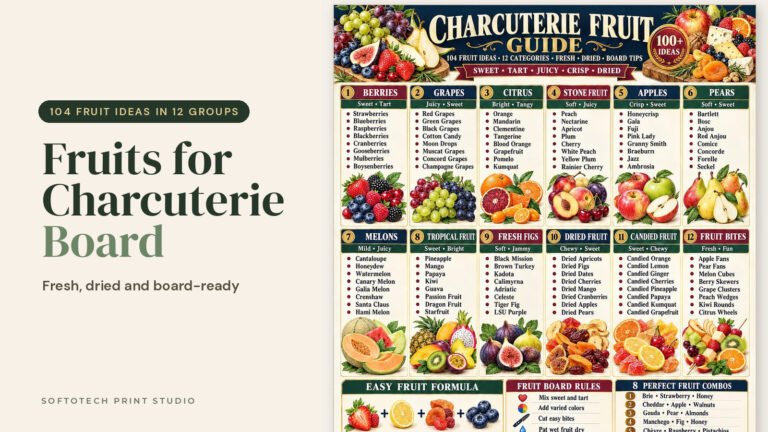 Charcuterie & EntertainingFruits for Charcuterie Board: 104 Ideas in 12 Groups, Pairings and Quantities
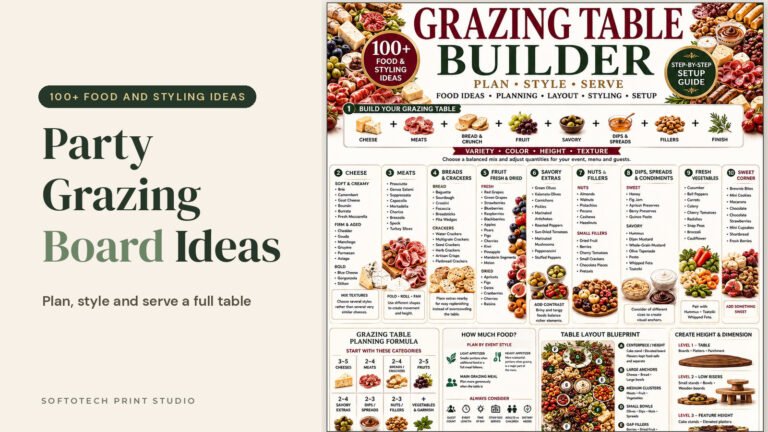 Charcuterie & EntertainingParty Grazing Board Ideas: 100+ Foods and a Simple Setup Plan