
The best healthy snacks for seniors are small, soft and protein rich, easy to put together and easy to chew. Greek yogurt with berries, cottage cheese with soft peach, a couple of hard-boiled eggs, tuna on cucumber slices or a protein pudding all do the job in a few minutes. Add a glass of water or milk and the snack does two things at once.
Snacks matter more as we get older, not less. Appetite often shrinks. Big meals feel like hard work. Teeth or dentures make some foods a chore. And many people quietly eat less protein than they did at 50, just because the plate got smaller.
This isn’t a list of 30 snacks. Our healthy snacks for weight loss guide already goes through the 30 High Protein Snacks chart from SoftoTech Print Studio one by one. Here I’m taking a different angle: what changes with age, which snacks from that chart suit older mouths and appetites best, how to spread protein across the day, and how to fit drinks in.
If you have trouble swallowing, or you’ve lost weight without trying, talk to your doctor before changing what you eat.
In this guide:
- Small Appetites Need Snacks That Earn Their Place
- Soft Protein Snacks Make Chewing Easier
- Protein Works Better Spread Across the Day
- Snack Time Is Also Drink Time
- Frequently Asked Questions
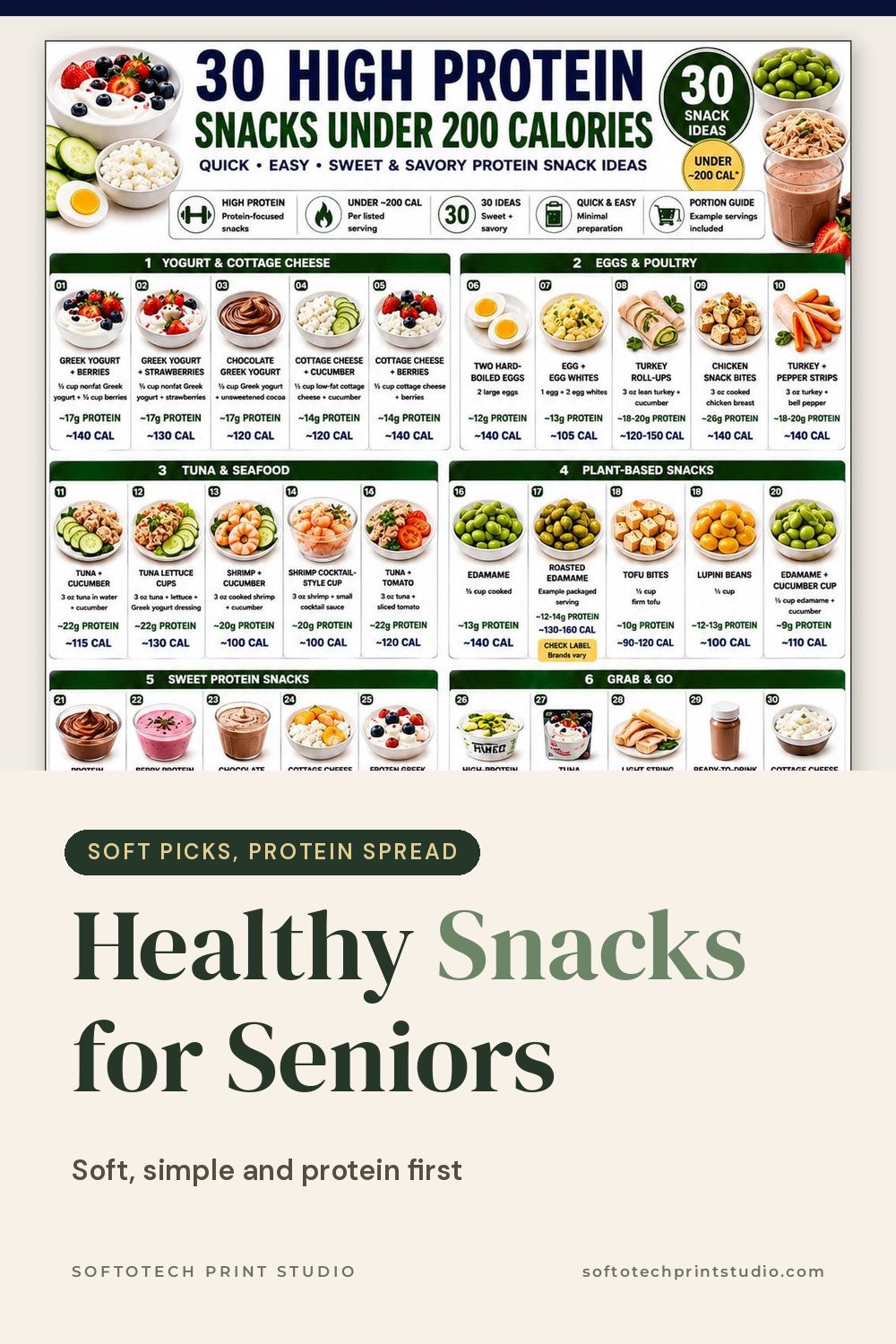
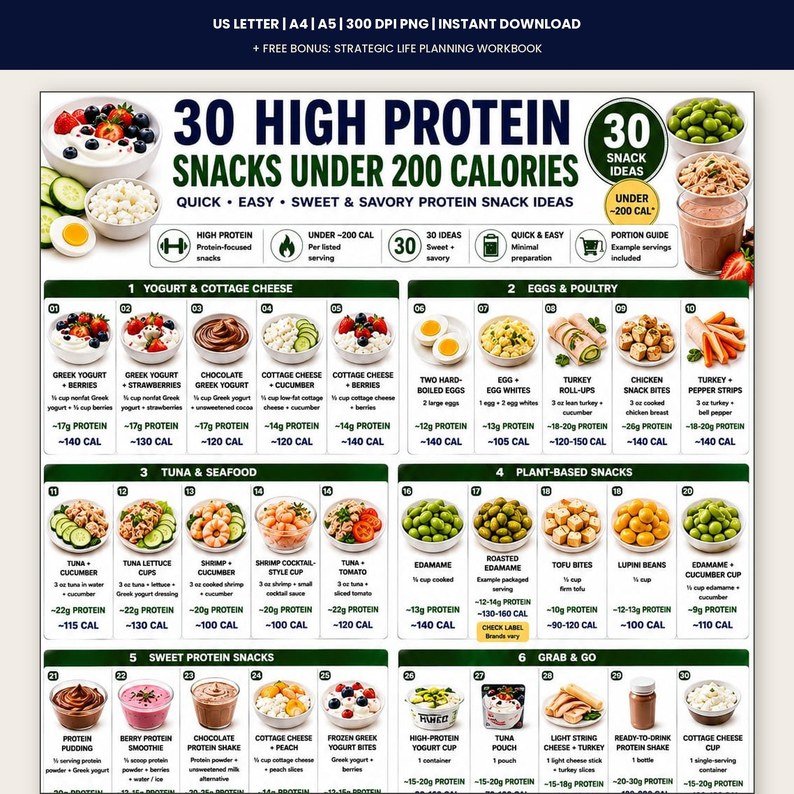
- 30 snack ideas, each under about 200 calories, with approximate protein and calories for every one
- Six groups: yogurt and cottage cheese, eggs and poultry, tuna and seafood, plant-based, sweet protein snacks, and grab and go
- Soft choices include Greek yogurt with berries, cottage cheese with peach, two hard-boiled eggs and protein pudding
- Each snack shows an example serving, such as 3/4 cup Greek yogurt or 1/2 cup cottage cheese
- Also has top protein-for-calorie picks, a build-your-own formula and swaps, per the listing
- Instant download · Print at home · US Letter · A4 · A5
Use code BLOG10 for 65% OFF at Etsy checkout!
Small Appetites Need Snacks That Earn Their Place
The National Institute on Aging lists several reasons older adults eat less, and most of them have nothing to do with willpower.
- Feeling full sooner. The NIA says changes to the body with age cause some people to feel full sooner than they did when they were younger.
- Medicines. Lack of appetite can be a side effect of a medicine, and some medicines change how food tastes. The NIA suggests asking your doctor about side effects, since a different drug may be possible.
- Taste and smell. If food isn’t as tasty as you remember, your sense of taste, smell or both may have changed. Dental problems can play a part too.
- Mood. The NIA notes that being unhappy can cause a loss of appetite, and that if low feelings last a few weeks or months, it’s worth talking to your doctor.
What that means for snacks. When you can only manage a few bites, each bite should carry some protein, some fiber or some fluid. A plain cracker or a biscuit fills the gap but brings little else. A pot of Greek yogurt with a spoonful of berries is the same effort and does far more.
Make it taste of something. The NIA suggests adding fresh herbs, spices or lemon juice to your plate when taste fades, and seasoning well without adding extra salt. On a snack plate that might be black pepper and dill on egg, lemon on tuna, or cinnamon on cottage cheese and peach.
Vary color and texture. The NIA also suggests varying the shape, color and texture of food to make it more appealing, and trying a fruit, vegetable or seafood you haven’t had in a while. A snack plate with orange peach, white cottage cheese and green cucumber looks more inviting than a beige one.
Don’t fight the clock. If you’re rarely hungry at 3 pm, don’t force a snack then. Have it when you are hungry, even if that’s 10 am and 8 pm. What matters is that the day adds up.
Soft Protein Snacks Make Chewing Easier
The NIA says people who have trouble chewing may avoid some foods and miss out on important nutrients, and that the first step is seeing a dentist to check for problems, including how dentures fit. While that gets sorted, soft snacks keep protein coming in.
Here are six snacks from the 30 High Protein Snacks chart that suit a softer diet. The servings, protein and calories are as printed on the chart, all approximate. The bottom row of the listing photo is cut off, so two calorie figures aren’t shown. The texture notes are mine.
| Snack on the chart | Example serving | Protein, calories | Why it suits |
|---|---|---|---|
| Greek Yogurt + Berries | 3/4 cup nonfat Greek yogurt + 1/2 cup berries | About 17 g, about 140 cal | Spoonable; mash the berries if needed |
| Cottage Cheese + Peach | 1/2 cup cottage cheese + peach slices | About 14 g (calories cut off on the photo) | Soft; use ripe or canned peach in juice |
| Two Hard-Boiled Eggs | 2 large eggs | About 12 g, about 140 cal | Can be mashed with a fork |
| Protein Pudding | 1/2 serving protein powder + Greek yogurt | About 20 g (calories cut off on the photo) | Smooth, no chewing at all |
| Tuna + Cucumber | 3 oz tuna in water + cucumber | About 22 g, about 115 cal | Flakes easily; peel the cucumber if skins are hard |
| Edamame | 3/4 cup cooked | About 13 g, about 140 cal | Soft once cooked; shelled is easier |
A few more soft ideas from the chart. The chart’s sweet protein snacks group includes a Berry Protein Smoothie and a Chocolate Protein Shake, which can be sipped slowly. The yogurt and cottage cheese group includes Chocolate Greek Yogurt, made with unsweetened cocoa, for anyone who misses dessert.
Skip or soften the hard ones. Roasted edamame, whole nuts, jerky and string cheese are on many protein snack lists, but they’re hard work for some mouths. Nut butter spread thinly on soft bread gives you the same food in an easier form.
If food sticks. The NIA says food that seems to get stuck in your throat might be down to a dry mouth, or problems with the muscles or nerves in the throat or the esophagus, and that you should talk to your doctor about it. Soft snacks are a stopgap, not a fix.
For more soft meals as well as snacks, our meal prep for seniors guide covers batch cooking that’s easy to portion and reheat.
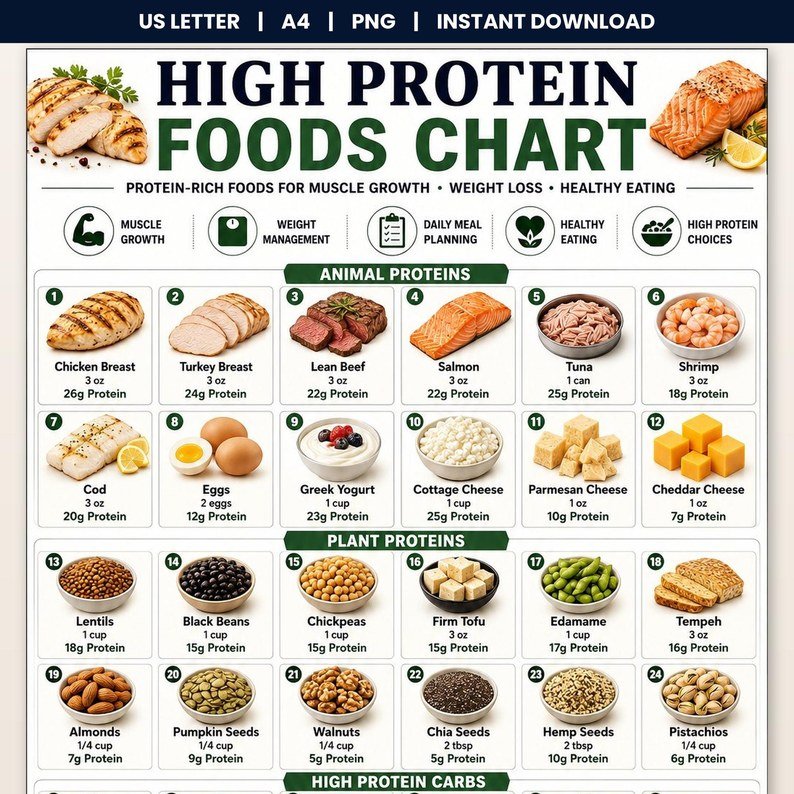
- 36 protein foods with a serving size and grams of protein for each
- Four groups: animal proteins, plant proteins, high-protein carbs, and protein snacks and drinks
- Soft foods include eggs, Greek yogurt, cottage cheese, cod, salmon, tuna and firm tofu
- Also has daily tips and a who benefits guide, per the listing
- US Letter and A4 PDFs plus a high-resolution PNG
- Instant download · Print at home · US Letter · A4
Use code BLOG10 for 65% OFF at Etsy checkout!
Protein Works Better Spread Across the Day
The NIA’s meal planning advice for older adults says that to get enough protein through the day and maintain muscle, try adding seafood, dairy or fortified soy products, along with beans, peas and lentils, to your meals. The key words are through the day. A lot of older adults have tea and toast for breakfast, a light lunch and most of their protein at dinner.
Snacks are the easy way to move some of that protein earlier. The Protein Food List from the same shop gives a serving and protein figure for 36 foods. Here are the soft ones that work as snacks or snack add ons, with the chart’s numbers:
| Food on the chart | Serving | Protein |
|---|---|---|
| Cottage cheese | 1 cup | 25 g |
| Tuna | 1 can | 25 g |
| Greek yogurt | 1 cup | 23 g |
| Salmon | 3 oz | 22 g |
| Cod | 3 oz | 20 g |
| Edamame | 1 cup | 17 g |
| Firm tofu | 3 oz | 15 g |
| Eggs | 2 eggs | 12 g |
| Hemp seeds | 2 tbsp | 10 g |
| Chia seeds | 2 tbsp | 5 g |
A full cup of cottage cheese or yogurt is a meal for a small appetite. Half a cup as a snack still gives you a useful amount, and a spoonful of hemp or chia seeds stirred in adds a little more without adding much bulk.
A simple snack day. Here’s how two snacks can fit around three smaller meals. It’s an example, not a prescription.
| Time | What | Protein source |
|---|---|---|
| Breakfast | Porridge made with milk, plus a scrambled egg | Milk, egg |
| Mid morning | Greek yogurt with soft berries and a glass of water | Greek yogurt |
| Lunch | Lentil soup and soft bread | Lentils |
| Mid afternoon | Tuna mashed on cucumber rounds with a cup of tea | Tuna |
| Dinner | Baked cod, mashed potato and soft carrots | Cod |
| Evening, if hungry | Cottage cheese with peach | Cottage cheese |
Our high protein foods for seniors guide goes further into how much protein to aim for and what to put on the plate at main meals.
Snack Time Is Also Drink Time
The NIA suggests drinking plenty of water throughout the day to stay hydrated and to aid the digestion of food and absorption of nutrients, and it says to avoid sugary drinks. Many older adults feel less thirsty than they used to, so tying a drink to every snack is a simple habit that works.
- Water with every snack. Put the glass down next to the plate. If plain water is dull, add a slice of lemon or cucumber.
- Milk counts twice. A glass of milk with a snack adds fluid and protein. If dairy is a problem, the NIA notes that even lactose intolerant people may manage small amounts of milk with food, and that lactose free and calcium and vitamin D fortified options exist.
- Watery foods help a little. Cucumber, melon and berries on a snack plate add some fluid along with the crunch or the sweetness.
- Tea and coffee. A cup of tea with an afternoon snack is a lovely ritual. Just don’t let it replace water entirely.
Make snacks easy to reach. The NIA suggests looking for pre cut fruit and vegetables if slicing and chopping are a challenge, and adding sliced or chopped fruit and vegetables to meals and snacks. Hard-boiled eggs peeled and kept in the fridge for three or four days, yogurt pots at eye level, tuna in single cans and a bowl of soft fruit on the counter all lower the effort.
Keep the cost down. The NIA suggests planning around what’s on sale, buying extra canned goods when they’re cheap and asking your store about senior discounts. Canned tuna and salmon, eggs, dried lentils, frozen berries and frozen edamame are some of the cheapest protein on the chart.
Watch the salt and sugar. Flavored yogurts, protein bars and some ready to drink shakes can be high in added sugar, and the NIA advises choosing foods with little to no added sugars, saturated fats and sodium. Plain yogurt with your own fruit is usually the better buy.
If you follow a Mediterranean style of eating, our Mediterranean diet for seniors guide has snacks and meals built on fish, yogurt, beans and olive oil that fit right in.
Frequently Asked Questions
What are good snacks for elderly people?
Soft, protein rich snacks that are easy to chew and quick to put together: Greek yogurt with berries, cottage cheese with soft peach, a hard-boiled egg, tuna on cucumber slices, a protein pudding, or a small bowl of edamame. Pair each one with a drink, because snack time is a good moment to top up fluids too.
How can seniors get more protein between meals?
Use snacks to spread protein across the day instead of saving it all for dinner. The National Institute on Aging suggests adding seafood, dairy or fortified soy products along with beans, peas and lentils to meals to get enough protein and maintain muscle. A yogurt mid morning and an egg mid afternoon both help.
What snacks are easy to chew for seniors?
Yogurt, cottage cheese, puddings, soft fruit like ripe peach or banana, hard-boiled or scrambled eggs, flaked tuna or salmon, soft tofu and smooth nut butter on soft bread. If chewing is getting harder, the National Institute on Aging suggests seeing your dentist to check for problems.
What if I have no appetite as I get older?
The National Institute on Aging says some people feel full sooner as they age, and that a lack of appetite can be a side effect of medicine. Small, frequent snacks with real nutrition can help. Talk to your doctor if you’re losing weight without trying or your appetite changes suddenly.
Are low calorie snacks right for older adults?
Not always. The 30 high protein snacks chart was built around snacks under about 200 calories, which suits people watching their weight. If you’re underweight or struggling to eat enough, bigger portions or two snacks together may suit you better. Your doctor or a dietitian can tell you which applies.
This guide is general information and is not medical advice. Check with your doctor or a dietitian before changing your diet, especially if you have trouble swallowing, kidney disease or unplanned weight loss.
Related Guides
- Meal Prep for Seniors
- High Protein Foods for Seniors
- Healthy Snacks for Weight Loss
- Mediterranean Diet for Seniors
Sources
Sources: National Institute on Aging, Healthy Meal Planning: Tips for Older Adults, National Institute on Aging, Overcoming Roadblocks to Healthy Eating
 Diet & Food ListsAcid Reflux Breakfast Ideas: What to Leave Out, 7 Gentle Plan Breakfasts and How to Build Your Own
 Diet & Food ListsPCOS Breakfast Ideas: 16 Breakfasts From the Last Half of a 30 Day Plan, an Eat Limit Avoid Check and a Simple Formula
 Diet & Food ListsAnti Inflammatory Dinner Ideas: 24 Dinners From a 30 Day Plan, What to Limit at Night and a Weeknight Plan