
A gym machine workout is a full body strength session built around fixed gym machines, and this guide follows a 16 exercise chart made for women over 40. The chart lists 16 machine exercises in a set order, from the leg press to the seated calf raise, and it is built for beginners who want to build strength, support muscle and bone health, and train with confidence. Machines guide the path of each move, so you can focus on the muscles working instead of on balancing a free weight, which is exactly what a first gym routine needs.
Machines suit a first gym routine for a simple reason: the seat, the handles and the weight stack are all set before the first rep. You sit down, adjust the seat so the handles line up with your chest or shoulders, pick a weight you can move with control, and press or pull along a fixed path. That setup removes the guesswork that puts many new gym goers off, and it lets you train legs, chest, back, arms and core in one visit without learning a new skill for every exercise. If a machine feels unfamiliar, watch one rep done by someone else, or ask a member of gym staff to show you the seat setting, and the move usually clicks in a minute.
This guide walks through the 16 moves on the chart, grouped by lower body, upper body and core, then explains how a machine session works, how to choose a starting weight, and how the chart’s double progression rule works. The worked session at the end runs through all 16 moves in chart order, grouped by lower body, upper body and core. Two printable charts go with this guide. The women’s chart in Box 1 is the gym machine chart for women over 40 and the closest match for this topic. The men’s version of the same 16 machine format sits in Box 2, presented as the companion for a partner or household member, not as a women’s chart.
In this guide:
- The 16 Machine Exercises on the Chart
- How a Gym Machine Session Works
- Starting Weight and Progression Rules
- Worked Example: A Full Body Gym Session
- Frequently Asked Questions


The printable from this guide
Gym Machine Full-body Workout for Women Over 40
- 16 machine exercises in chart order: Leg Press Machine, Chest Press Machine, Lat Pulldown Machine, Seated Row Machine, Seated Leg Curl Machine, Leg Extension Machine, Shoulder Press Machine, Hip Abduction Machine, Hip Adduction Machine, Glute Drive / Hip Thrust Machine, Assisted Pull-Up Machine, Cable Tricep Pushdown, Cable Bicep Curl, Back Extension Machine, Abdominal Crunch Machine and Seated Calf Raise Machine
- The session in this guide is built from these 16 chart moves, in chart order
- Built for women over 40: build strength, support muscle and bone health, train with confidence, with a beginner schedule of 2 days per week and an intermediate schedule of 3 days per week
- Print sizes US Letter, A4 and A5, as 3 PDFs plus a PNG and a ZIP per the listing
- Instant download · Print at home · US Letter · A4 · A5
Use code BLOG10 for 65% OFF at Etsy checkout!
Get the Gym Machine Chart for Women on Etsy →
The 16 Machine Exercises on the Chart
The printable chart in this guide, the Gym Machine Full-body Workout for Women Over 40, lists 16 machine exercises in chart order. In practice the moves fall into three groups: seven for the lower body, seven for the upper body, and two for the core and lower back. The table below keeps the chart numbers, so you can find each move on the poster at a glance.
| Chart number | Machine | Main area |
|---|---|---|
| 01 | Leg Press Machine | Lower body |
| 02 | Chest Press Machine | Upper body |
| 03 | Lat Pulldown Machine | Upper body |
| 04 | Seated Row Machine | Upper body |
| 05 | Seated Leg Curl Machine | Lower body |
| 06 | Leg Extension Machine | Lower body |
| 07 | Shoulder Press Machine | Upper body |
| 08 | Hip Abduction Machine | Lower body |
| 09 | Hip Adduction Machine | Lower body |
| 10 | Glute Drive / Hip Thrust Machine | Lower body |
| 11 | Assisted Pull-Up Machine | Upper body |
| 12 | Cable Tricep Pushdown | Upper body |
| 13 | Cable Bicep Curl | Upper body |
| 14 | Back Extension Machine | Core and back |
| 15 | Abdominal Crunch Machine | Core |
| 16 | Seated Calf Raise Machine | Lower body |
The lower body group is the largest on the chart, and it covers the legs from every angle. The Leg Press Machine works the thighs and glutes in a seated press. The Seated Leg Curl Machine and the Leg Extension Machine work the backs and the fronts of the thighs in turn. The Hip Abduction Machine and the Hip Adduction Machine work the outer and inner thighs, and the Glute Drive / Hip Thrust Machine targets the glutes. The Seated Calf Raise Machine finishes the legs with the calves. Strong legs matter more than any other group after 40, because the legs carry you up stairs, out of chairs and across a room, and the chart puts them first for that reason.
The upper body group covers pushing, pulling and arm work. The Chest Press Machine and the Shoulder Press Machine are the two pushing moves, one for the chest and one for the shoulders. The Lat Pulldown Machine, the Seated Row Machine and the Assisted Pull-Up Machine are the three pulling moves, and they work the back from different angles, with the assisted pull-up giving help on the hardest part of the pull. The Cable Tricep Pushdown and the Cable Bicep Curl finish the arms, one for the backs of the arms and one for the fronts. Together the seven moves give the chest, back, shoulders and arms a balanced session with no free weights in sight.
The core group is short on purpose: the Back Extension Machine and the Abdominal Crunch Machine. The back extension strengthens the muscles along the spine, which support posture when you sit and stand, and the abdominal crunch machine works the front of the trunk. The chart places them near the end of the session, after the bigger leg and upper body moves, so the trunk is still fresh enough to work with control. A strong trunk is what keeps the rest of the session steady, and two focused machines are enough to cover it.
The chart itself states its aim plainly: build strength, support muscle and bone health, and train with confidence. Its recommended training schedule is 2 days per week for beginners and 3 days per week for intermediate trainers, which leaves rest days between sessions. The chart also includes a tracker for 30 strength workouts, so you can tick off each session as you go and see the routine build into a habit. If you want a deeper look at one machine family, our smith machine workout guide and our cable machine workout guide each cover a single machine type in more detail.
How a Gym Machine Session Works
A gym machine session works best when it follows the chart in order and never rushes the setup. Start with a few minutes of easy movement, such as walking on a treadmill or pedalling a bike at a gentle pace, so the legs and hips are warm before the first loaded move. Then take the machines in chart order, beginning with the leg press. At each machine, set the seat first, then choose the weight, then do a slow practice rep to check the range feels right before the working reps begin.
Move with control on every rep. Press or pull smoothly, pause briefly at the end of the move, and lower the weight back slowly instead of letting it drop. The fixed path of a machine makes this easier than a free weight does, but the tempo is still yours to keep. Breathe normally through the set: breathe out on the effort and in on the return, and never hold your breath to force a rep. If the last rep of a set feels rushed or the form breaks, the set is done, and the weight was right for the day.
Rest between machines for as long as you need to feel ready for the next one. A beginner session on 16 machines takes a while, so treat it as a full visit rather than a quick stop: walk between machines, take a drink, and let the breathing settle. Finish with the two core machines, then walk gently for a few minutes to cool down. Tick the session off on the chart’s 30 workout tracker before you leave, so the next visit starts with a small win already recorded. Our kettlebell workout for beginners guide offers a free weight alternative for days when the gym floor is busy, and our dumbbell arm workout for women covers arm work you can do at home.
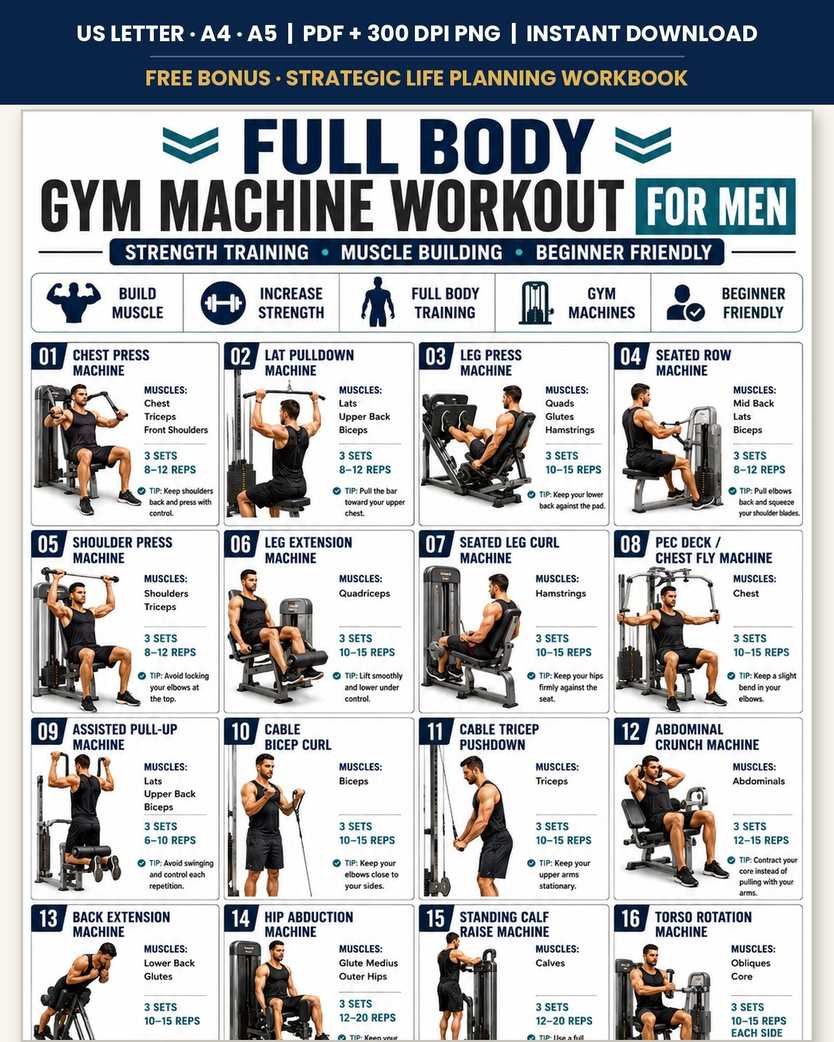
The men’s version of the same chart
Full Body Gym Machine Workout for Men
- 16 machine exercises in chart order: Chest Press Machine, Lat Pulldown Machine, Leg Press Machine, Seated Row Machine, Shoulder Press Machine, Leg Extension Machine, Seated Leg Curl Machine, Pec Deck / Chest Fly Machine, Assisted Pull-Up Machine, Cable Bicep Curl, Cable Tricep Pushdown, Abdominal Crunch Machine, Back Extension Machine, Hip Abduction Machine, Standing Calf Raise Machine and Torso Rotation Machine
- The same 16-machine format as Box 1, written for men: build strength and muscle, beginner friendly
- The companion chart for a partner or household member training on the same machines
- Print sizes US Letter, A4 and A5, as 3 PDFs plus a PNG and a ZIP per the listing
- Instant download · Print at home · US Letter · A4 · A5
Use code BLOG10 for 65% OFF at Etsy checkout!
Get the Gym Machine Chart for Men on Etsy → Instant download · Print at home
Starting Weight and Progression Rules
Choosing a starting weight is the one decision that shapes the whole session, and the chart has a section for it. Start light, with a weight you can move through the full range with control and good form. The right starting weight feels like real work by the last few reps, but it never forces you to twist, lean or rush to finish a rep. If you are unsure between two settings, take the lighter one: you can always add weight next time, and a clean set at a light weight teaches the movement better than a strained set at a heavy one.
The chart’s Double Progression Rule explains when to add weight. In plain terms, you only add a small amount when the current weight feels controlled and manageable across your sets. Add the smallest increment the machine allows, then spend the next sessions getting comfortable at the new weight before thinking about another increase. Progress on machines is usually slow and steady, which is a strength rather than a weakness: small, regular increases add up over weeks, and they do it without the sore joints that come from jumping ahead.
Recovery matters as much as the session itself, and the chart includes recovery tips for women over 40. The schedule of 2 days per week for beginners and 3 days per week for intermediate trainers leaves rest days between sessions, and those rest days are when the muscles adapt to the work. Gentle movement on rest days, such as walking or stretching, keeps the body loose without adding load. The CDC notes that adults benefit from muscle strengthening activities on two or more days each week, alongside regular aerobic activity, and a 2 to 3 day machine routine fits that guidance neatly. If a joint feels sore rather than simply tired after a session, give it an extra rest day and check with your doctor if the soreness keeps returning.
Worked Example: A Full Body Gym Session
Here is how a full body gym session runs when you follow the chart in order, with the moves grouped by lower body, upper body and core. Begin with the lower body group. The Leg Press Machine opens the session: feet flat on the platform, knees tracking over the toes, pressing smoothly and lowering with control. Then the Seated Leg Curl Machine for the backs of the thighs, and the Leg Extension Machine for the fronts, so the thigh is worked from both sides. The Hip Abduction Machine and the Hip Adduction Machine follow, outer thighs then inner thighs, and the Glute Drive / Hip Thrust Machine works the glutes. The Seated Calf Raise Machine closes the lower body group with the calves.
Next, the upper body group, still in chart order. The Chest Press Machine comes first, with the seat set so the handles sit at chest height. The Lat Pulldown Machine follows, pulling the bar down to the upper chest with a steady rhythm, then the Seated Row Machine, pulling the handles toward the waist with the back straight. The Shoulder Press Machine presses overhead from a seated position. The Assisted Pull-Up Machine gives a platform to stand on, so the pull-up becomes a controlled pull rather than a struggle. The Cable Tricep Pushdown and the Cable Bicep Curl finish the arms, pushing down for the triceps and curling up for the biceps.
Finish with the core group. The Back Extension Machine works the muscles along the spine with a slow, small range, and the Abdominal Crunch Machine works the front of the trunk. Both are done slowly, with the breath steady and the range kept comfortable. Then walk gently for a few minutes, tick the session off on the 30 workout tracker, and note the weights you used so the next visit starts from a known place. A full session through all 16 machines is a solid hour in the gym, and two such sessions a week for a beginner, moving to three as an intermediate trainer, is exactly the schedule the chart recommends.
Frequently Asked Questions
What is a gym machine workout?
A gym machine workout is a strength session built around fixed gym machines, where each machine guides the path of the move. The chart in this guide lists 16 machine exercises for women over 40, covering the legs, chest, back, shoulders, arms and core, in a set order from the leg press to the seated calf raise.
Is a gym machine workout good for women over 40?
Yes, machines suit women over 40 well, because the seat and the fixed path support the body while the muscles work. The chart is built around building strength and supporting muscle and bone health, with a beginner schedule of 2 days per week. As with any new routine, check with your doctor first if you have a condition that affects joints, bones or blood pressure.
How many days per week should a beginner train on gym machines?
The chart recommends 2 days per week for beginners and 3 days per week for intermediate trainers, which leaves rest days between sessions. Two or three full body sessions a week also fits the CDC guidance for muscle strengthening activity on two or more days each week. Rest days matter: the muscles adapt to the training between sessions, not during them.
What is the double progression rule?
The double progression rule is the chart’s guide for when to add weight. In plain terms, you only add a small amount of weight when the current weight feels controlled and manageable across your sets. Add the smallest increment the machine allows, then spend the next sessions getting comfortable at the new weight before adding again.
What size is the printable gym machine chart?
The SoftoTech Print Studio Gym Machine Full-body Workout for Women Over 40 chart is an instant download that prints at home in US Letter, A4 and A5 sizes, as 3 PDFs plus a PNG and a ZIP per the listing. It shows all 16 machine exercises in chart order, with a 30 workout tracker so you can record each session.
This guide is for general wellness and is not medical advice. Check with your doctor before starting a new routine.
Related Guides
- Smith Machine Workout
- Cable Machine Workout
- Kettlebell Workout for Beginners
- Dumbbell Arm Workout for Women
Sources
Sources: CDC: Physical Activity Guidelines for Adults, Mayo Clinic: Exercise: 7 benefits of regular physical activity
 Home WorkoutsWorkout Plan for Women Over 50: A Gentle 28 Day Start, Then a Weekly Plan for Strength, Balance and Walking
 Home WorkoutsFace Yoga for Jowls: A 10 Minute Jaw and Neck Routine From a 12 Exercise Chart, With Honest Expectations
 Home WorkoutsMilitary Workout Routine: A 3 Level Bodyweight Plan From Beginner to Advanced, With a Weekly Schedule