
If you have never heard of dry brushing for lymphatic drainage, here is the short version: it is a simple self-care technique where you sweep a natural-bristle brush over dry skin in long, gentle strokes, always working toward the heart. The whole routine takes about five minutes, needs no water or products, and many people find it a pleasant way to start or end the day.
Dry brushing has been used for generations in wellness traditions around the world, and interest in it has grown alongside the popularity of at-home lymphatic drainage massage. In this beginner guide, you will learn what dry brushing is, how it is thought to support lymphatic flow, how to choose a brush, and the exact stroke-by-stroke routine to follow — plus safety notes so you know when to skip it.
A quick, honest note before we begin: dry brushing is a gentle wellness practice, not a medical treatment. It will not cure any condition, and you should check with your doctor first if you have a health condition affecting your skin, circulation, or lymphatic system.
What Is Dry Brushing?
Dry brushing is exactly what it sounds like: brushing your skin with a dry, natural-bristle brush before you shower or bathe. Unlike body scrubbing, which usually happens with water and soap, dry brushing is done on dry skin with light, sweeping strokes. Practitioners typically brush each area of the body several times, always moving in the direction of lymph flow — which generally means brushing toward the heart, and finishing with light sweeps around the collarbones where lymphatic fluid drains back toward the bloodstream.
The practice is often described as invigorating. Many people do it in the morning because the light, repetitive strokes and the gentle stimulation of the skin feel energizing, a bit like the wake-up effect of a cool splash of water. Others prefer it in the evening as a mindful, screen-free wind-down ritual before a warm shower.
Beyond how it feels, dry brushing is valued for two simple, practical benefits: it gently exfoliates the outer layer of skin, which can leave skin feeling smoother and looking more even, and it gives you a few minutes of focused attention on your body — something most of us rarely get in a busy day.
How Dry Brushing for Lymphatic Drainage Is Thought to Work
To understand the connection between dry brushing and the lymphatic system, it helps to know a little about how that system works. The lymphatic system is a network of vessels and nodes that runs throughout your body, carrying lymph fluid — a clear fluid that contains immune cells and collects waste products from tissues. Unlike blood, lymph has no pump like the heart to move it along. It relies on muscle movement, breathing, and gentle external pressure to keep flowing.
That is why gentle practices like walking, deep breathing, self-massage, and light skin stimulation are often grouped together as supportive habits for lymphatic flow. The light pressure and rhythmic strokes of dry brushing are thought to encourage the movement of fluid in the vessels just beneath the skin’s surface, particularly when the strokes follow the direction of lymph flow — toward the large lymph node clusters (at the neck, armpits, and groin) and toward the heart.
It is important to keep expectations grounded: dry brushing is a complementary wellness practice, not a therapy. It does not replace medical treatment for lymphatic conditions such as lymphedema, and it is not a way to “detox” the body on its own. Think of it as one small, pleasant habit in a bigger picture that includes movement, hydration, and rest.

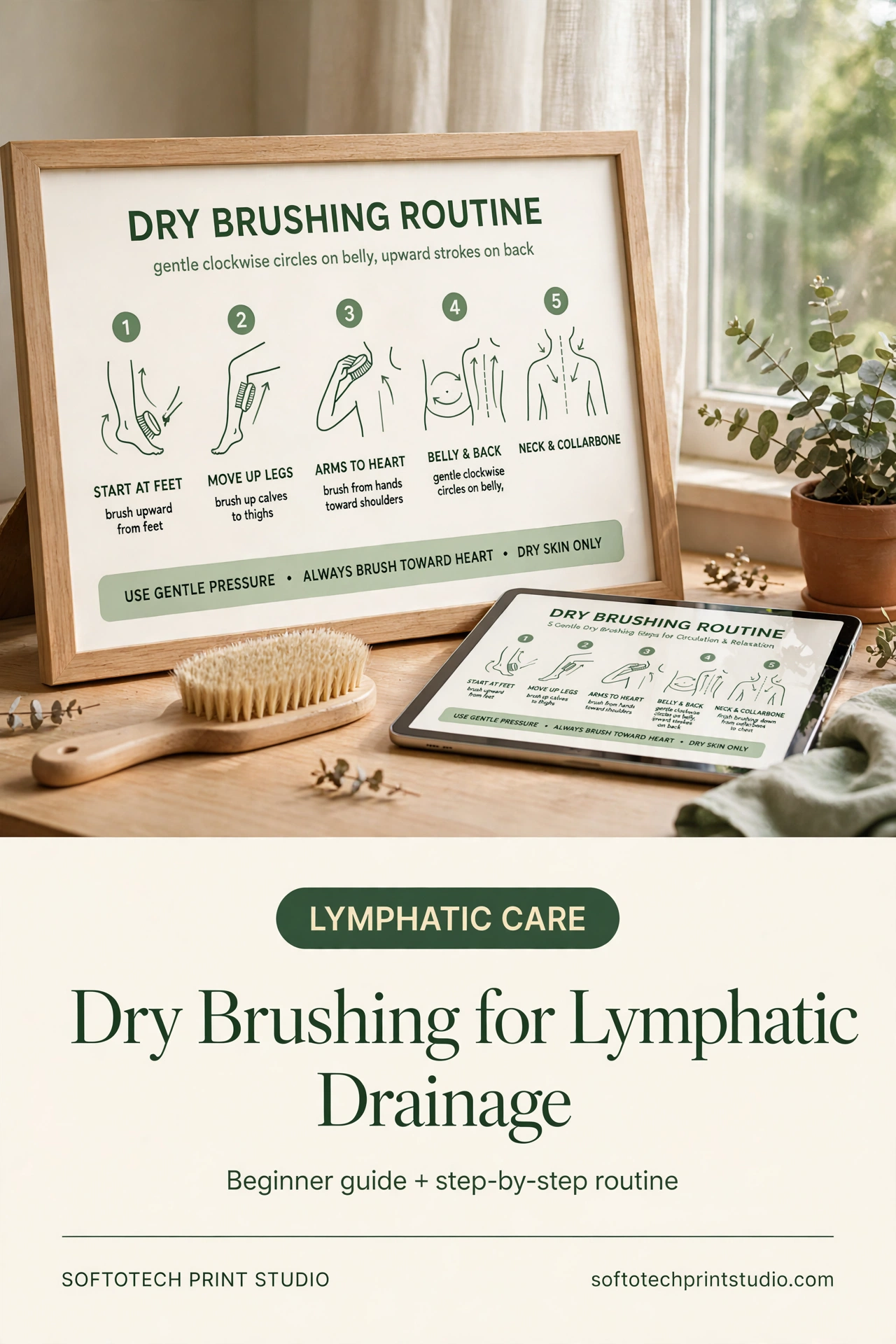
The printable from this guide
Dry Brushing Routine — Printable Step-by-Step Guide
- Step-by-step body brushing guide for lymphatic flow
- Self-care wellness poster — printable PDF
- Instant download · Print at home · A4 · US Letter · A5
Use code BLOG10 for 65% OFF at Etsy checkout!
Get the Dry Brushing Routine Printable on Etsy →
Instant download · Print at home
Choosing Your First Dry Brush
Not all brushes are equal, and the right one makes the routine far more comfortable — especially for beginners with sensitive skin. Here is what to look for:
- Natural bristles: look for plant-based bristles such as sisal, cactus, or boar hair. Natural bristles have the right balance of firmness and flex; avoid hard plastic bristles, which can be too harsh for daily use.
- Medium softness for beginners: if you are new to dry brushing, choose a brush labeled soft or medium. You can always move to a firmer brush later once your skin adjusts.
- A long handle: a brush with a detachable or fixed long handle lets you reach your back comfortably without twisting.
- A comfortable grip: some brushes come as a palm-sized oval with a strap — great for travel and for arms and legs.
- Replace every 6–12 months: when bristles start to look worn or feel scratchy, it is time for a new brush. Let it air-dry fully between uses and wash it every couple of weeks with mild soap and water.
Beginner tip: press the bristles lightly against the inside of your forearm before your first session. It should feel like a gentle scratching sensation — noticeable but never painful. If it hurts, your brush is too firm or you are pressing too hard.
Step-by-Step: The Dry Brushing for Lymphatic Drainage Routine
Do this routine on dry skin, ideally right before a shower so you can rinse off afterward. The whole sequence takes about five minutes. Use long, light strokes — the pressure should feel like you are petting a cat, not scrubbing a floor. Brush each area 3–5 times, always stroking toward the heart.
1. Feet and Legs
Start at the tops of your feet and brush upward along the shins and calves toward the knees. Then brush from the knees up the thighs toward the groin, where a major cluster of lymph nodes sits. Use long, straight strokes on the front and back of the legs.
2. Hands and Arms
Brush from your fingertips up the backs and palms of your hands, along the forearms, past the elbows, and up the upper arms toward the armpits — another key lymph node area. Keep the strokes long and smooth rather than short and scrubby.
3. Belly and Torso
On the abdomen, many practitioners use light circular strokes moving clockwise, which follows the general direction of the digestive tract. On the chest, brush gently upward and outward toward the armpits and collarbones. Keep pressure very light here — the skin is thinner and more sensitive.
4. Back
Use a long-handled brush to sweep from the lower back upward toward the shoulders, and from the sides of the back inward toward the spine and upward. If you cannot reach comfortably, skip this area — the routine works just fine without it.
5. Neck and Collarbones (the Finish)
End with very light downward sweeps along the sides of the neck toward the collarbones, then a few gentle strokes just above the collarbones pointing toward the center of the chest. This is where lymphatic fluid returns to the bloodstream, so it is a natural, gentle place to finish the routine.
After brushing, shower as usual, then moisturize — dry brushing exfoliates, and freshly brushed skin absorbs moisturizer well. Drink a glass of water afterward; many practitioners find it a nice way to close the ritual.
When and How Often to Dry Brush
For beginners, 2–3 times per week is plenty. This gives your skin time to adjust. After a few weeks, if your skin tolerates it well, you can work up to once a day — most daily brushers do it in the morning before showering because of the energizing effect.
- Best time: right before a shower, on completely dry skin.
- Session length: about five minutes once you know the sequence.
- Consistency beats intensity: a gentle five-minute routine three times a week is better than one aggressive session.
- Skip it on irritated skin: if you have a sunburn, rash, or a breakout in one area, brush around it or skip the session.
Safety Notes: Who Should Skip Dry Brushing
Dry brushing is gentle, but it is not for everyone. Skip it or check with your doctor first if any of these apply:
- Broken skin or active skin conditions: cuts, wounds, rashes, eczema flare-ups, psoriasis plaques, sunburn, or skin infections — brushing over these can irritate or spread them.
- Lymphedema or lymph node removal: if you have lymphedema or have had lymph nodes removed (for example, after cancer surgery), do not attempt lymphatic techniques on your own — ask your care team what is safe for you.
- Blood clots, varicose veins, or circulation disorders: brushing over varicose veins or areas with known clots is not advisable; check with your doctor.
- Very sensitive or thin skin: if your skin reddens easily or you take medications that thin the skin, use the softest brush available and the lightest pressure — or skip it.
- Pregnancy: gentle dry brushing is commonly done during pregnancy, but keep pressure very light on the belly and check with your healthcare provider first.
The redness test: mild pinkness that fades within a few minutes is normal. If your skin stays red, feels sore, or looks scratched after brushing, your pressure is too firm or your brush is too stiff.
Common Beginner Mistakes
Most dry brushing problems come from doing too much, too soon. Avoid these five mistakes:
- Pressing too hard. Light, sweeping strokes are the goal. More pressure does not mean better results — it means irritated skin.
- Brushing wet skin. Water makes bristles drag and scratch. Always brush on dry skin before showering.
- Brushing in random directions. The toward-the-heart direction matters for lymphatic flow. Take a moment to learn the sequence and follow it.
- Starting every day. Begin 2–3 times per week and build up only if your skin is happy.
- Sharing your brush. A dry brush is a personal tool — like a toothbrush. Keep yours to yourself and let it dry fully between uses.
Prefer a printable version? The printable from this guide is linked below.
Prefer working with your hands instead of a brush? Our guide to lymphatic drainage massage at home follows the same drainage paths as a gentle step-by-step self-massage.
Frequently Asked Questions
What is dry brushing for lymphatic drainage?
Dry brushing for lymphatic drainage is a self-care technique where you sweep a natural-bristle brush over dry skin in long, light strokes toward the heart. The gentle, rhythmic pressure is thought to encourage the movement of lymph fluid in the vessels just beneath the skin, while also exfoliating the outer skin layer.
Which direction should I brush?
Always brush toward the heart: from the feet up the legs, from the hands up the arms, and from the outer chest and back inward and upward. Finish with light downward sweeps along the neck toward the collarbones, where lymphatic fluid drains back into the bloodstream.
How often should beginners dry brush?
Start with 2–3 sessions per week for the first few weeks so your skin can adjust. If your skin tolerates it well, you can work up to once daily — most people do it in the morning before showering. Skip sessions whenever your skin is sunburned, irritated, or broken.
Can dry brushing help with lymphedema?
Dry brushing is a general wellness practice, not a medical treatment, and it should not be used to self-treat lymphedema. If you have lymphedema or have had lymph nodes removed, talk to your doctor or a certified lymphedema therapist before trying any lymphatic technique.
What kind of brush is best for dry brushing?
Choose a brush with natural bristles (such as sisal or cactus fiber) in a soft or medium firmness if you are a beginner. A long handle helps you reach your back. Replace the brush every 6–12 months, let it air-dry between uses, and wash it every couple of weeks with mild soap and water.
Pair dry brushing on the body with our gentle face lymphatic massage for the face — both use feather-light strokes that follow the drainage paths toward the lymph nodes.
Related Guides
- Lymphatic Drainage Massage at Home: Full-Body Step-by-Step Guide
- Fascia Release + Lymph Flow: A Gentle Body Reset Routine
- 10 Morning Stretches for Seniors Over 60
Sources
Sources: Mayo Clinic, Cleveland Clinic, NIH
This guide is for general wellness and is not medical advice. Check with your doctor before starting a new routine.


