
A weekly meal planner printable is a simple one-page template where you map out seven days of meals — breakfast, lunch, dinner, and snacks — before the week begins. Instead of the daily 5 PM “what’s for dinner?” scramble, you decide once, shop once, and eat well all week. For many households, it is the single highest-leverage healthy-eating habit there is.
Meal planning does not mean rigid dieting or cooking every meal from scratch. It means having a plan: which nights you cook, which nights you use leftovers, and what groceries you need. The weekly meal planner printable in this guide keeps it to one page so planning takes about ten minutes — and a printable version on your fridge keeps the whole household on the same page.
In this guide, I will show you how to use a weekly meal planner printable step by step, share a simple formula for building balanced weeks, give you a sample 7-day plan, and show you how to turn your plan into a grocery list in minutes. You will also find a printable template from SoftoTech Print Studio to reuse every week.
In this guide:
- What Is a Weekly Meal Planner Printable?
- Why Meal Planning Works So Well
- How to Use Your Weekly Meal Planner Printable (5 Steps)
- A Simple Formula for Balanced Weeks
- Sample 7-Day Meal Plan
- Turn Your Plan into a Grocery List
- 7 Tips That Make Meal Planning Stick
- Common Mistakes to Avoid
- Frequently Asked Questions


The printable from this guide
7-Day High Protein Meal Plan — Printable
- 35 protein-packed meals & snacks across a full 7-day week
- Weekly meal-prep planner with grocery checklist & prep formula
- Instant download · Print at home · A4 · US Letter · A5
Use code BLOG10 for 65% OFF at Etsy checkout!
Get the 7-Day Meal Plan on Etsy →
Instant download · Print at home
What Is a Weekly Meal Planner Printable?
A weekly meal planner printable is a template — usually a grid with seven columns (one per day) and rows for each meal — that you fill in once a week. Some templates add a grocery-list section, a “use up first” box for perishables, and space for notes. The best ones fit on a single page so the whole week is visible at a glance.
Unlike a diet plan, a weekly meal planner printable does not tell you what to eat. It is a blank structure you fill with your own meals, which makes it flexible for any household: picky eaters, dietary restrictions, tight budgets, or cooking for one. The planner is the system; your meals are the content.
If you are also working on the cooking side of healthy eating, our Meal Prep for Seniors: A Simple Weekly Plan walks through the actual prep session that turns a plan into ready-to-eat food.
Why Meal Planning Works So Well
Most unhealthy eating does not come from lack of knowledge — it comes from decision fatigue. When you are tired and hungry at 6 PM with no plan, the fastest option wins, and the fastest option is rarely the healthiest. A weekly meal planner printable removes that daily decision: dinner was decided on Sunday, when you were calm and thinking clearly.
Planning also saves real money. Households that plan meals waste less food, because the grocery list matches actual meals instead of hopeful guesses. And it reduces the mental load of feeding a family — one ten-minute planning session replaces seven daily rounds of “what should we eat?”
There is a nutrition angle too: people who plan tend to eat more vegetables and cook at home more often, simply because the plan makes it the default. For building those meals around good nutrition, our High-Protein Food List for Weight Loss is a handy reference for protein at every meal.
How to Use Your Weekly Meal Planner Printable (5 Steps)
Set aside ten quiet minutes once a week — Sunday morning with coffee is classic. Here is the process:
Step 1: Check your calendar
Look at the week ahead. Which nights are busy? Which nights will someone eat late? Mark the nights you need a 15-minute meal versus the nights you can cook properly. A plan that ignores your real schedule will not survive Tuesday.
Step 2: Take inventory
Quickly check the fridge, freezer, and pantry. Note what needs using up (the wilting spinach, the chicken thighs bought on sale) and what staples you already have. Planning around what you own cuts waste and cost.
Step 3: Fill in the planner
Write one main dish per dinner, plus rough ideas for breakfasts and lunches (these can repeat — nobody needs seven different breakfasts). Assign the quick meals to busy nights and the bigger cooking to nights with time. Leave one night flexible for leftovers or eating out.
Step 4: Make the grocery list
Go meal by meal and list what you need that you do not already have. Group the list by store section (produce, dairy, meat, pantry) so shopping is one efficient trip. This is where the planner pays for itself.
Step 5: Post it where everyone sees it
Stick the filled planner on the fridge. This ends the “what’s for dinner?” question for the whole week — anyone can look. Next week, print a fresh copy and do it again; the second week takes half the time.
A Simple Formula for Balanced Weeks
You do not need to be a nutritionist to plan balanced weeks. Use this loose formula for each dinner:
| Component | Examples | Why it matters |
|---|---|---|
| Protein (palm-sized portion) | Chicken, fish, eggs, beans, lentils, tofu, Greek yogurt | Keeps you full; supports muscle as you age |
| Vegetables (half the plate) | Broccoli, carrots, salad, peppers, frozen mixed veg | Fiber, vitamins, volume without many calories |
| Whole grain or starchy veg (quarter plate) | Brown rice, oats, quinoa, sweet potato, whole-wheat pasta | Steady energy |
| Healthy fat (small amount) | Olive oil, nuts, avocado | Flavor and satisfaction |
Rotate proteins through the week (poultry, fish, beans, eggs) and you will naturally get variety. For anti-inflammatory ideas to weave in, see our Anti-Inflammatory Food List.
Sample 7-Day Meal Plan
Here is what a filled-in weekly meal planner printable might look like for one household:
| Day | Breakfast | Lunch | Dinner |
|---|---|---|---|
| Monday | Oatmeal + berries | Leftover soup | Baked chicken, broccoli, brown rice |
| Tuesday | Greek yogurt + granola | Tuna salad sandwich | Bean & vegetable chili (slow cooker) |
| Wednesday | Oatmeal + banana | Chili leftovers | Salmon, roasted carrots, quinoa |
| Thursday | Scrambled eggs + toast | Soup + salad | Leftovers night (clean the fridge) |
| Friday | Greek yogurt + fruit | Egg salad wrap | Whole-wheat pasta with turkey meatballs |
| Saturday | Veggie omelet | Out for lunch | Stir-fry: tofu, peppers, snap peas + rice |
| Sunday | Pancakes + fruit | Big salad with chicken | Roast vegetables + lentil soup (cook extra for Monday) |
Notice the repeats and the planned leftovers — this is what makes the week realistic rather than aspirational. Nobody cooks seven unique dinners.
Turn Your Plan into a Grocery List in Minutes
The grocery list is where most people abandon meal planning, because they try to do it from memory. Do it meal by meal instead:
- Go down the planner, meal by meal. For Monday dinner (baked chicken, broccoli, brown rice), write: chicken breasts, broccoli, brown rice — minus anything you already have.
- Group by section. Produce together, dairy together, pantry together. One pass through the store, no backtracking.
- Add the “always” items. Eggs, milk, bread, fruit for snacks — the staples you buy every week regardless.
- Shop the list, not your hunger. Eat a snack before you go. The list is the plan; impulse buys are how food waste happens.
A printable grocery list template helps — our meal prep guide includes list-building tips, and pairing your planner with a dedicated grocery list printable keeps everything in one system.
7 Tips That Make Meal Planning Stick
Start with dinners only. Planning all 21 meals at once overwhelms beginners. Dinners are where the money and health impact are — master those first, then add lunches.
Keep a “greatest hits” list. Write down the 10–12 dinners your household actually likes. Planning from this list each week is faster than inventing meals, and it guarantees the food gets eaten.
Theme your nights. Meatless Monday, Taco Tuesday, Slow-Cooker Wednesday, Leftovers Thursday — themes remove decisions while keeping variety.
Cook once, eat twice. Every plan should include at least two “cook extra” meals. Intentional leftovers are the highest-ROI cooking you do.
Keep breakfast and lunch boring. Rotation of 2–3 options for these meals is a feature, not a failure. Save your creativity for dinner.
Plan for the week you actually have. A chaotic week gets simple meals, not ambitious ones. The plan serves your life, not the other way around.
Review for two minutes on Saturday. What got eaten? What went to waste? One tiny adjustment per week compounds into a system that fits you perfectly.
Common Mistakes to Avoid
Planning meals nobody wants to eat. A plan full of aspirational kale salads that end up in the bin helps no one. Plan food your household will actually eat.
No backup plan. Keep two “emergency” meals always available (frozen stir-fry mix + eggs, or canned soup + toast) for nights the plan falls apart.
Overcomplicating the template. If your planner has 47 boxes, you will not fill it in. One page, seven days, done.
Forgetting to check the calendar. Planning a big roast for the night of the school concert guarantees a wasted plan. Calendar first, always.
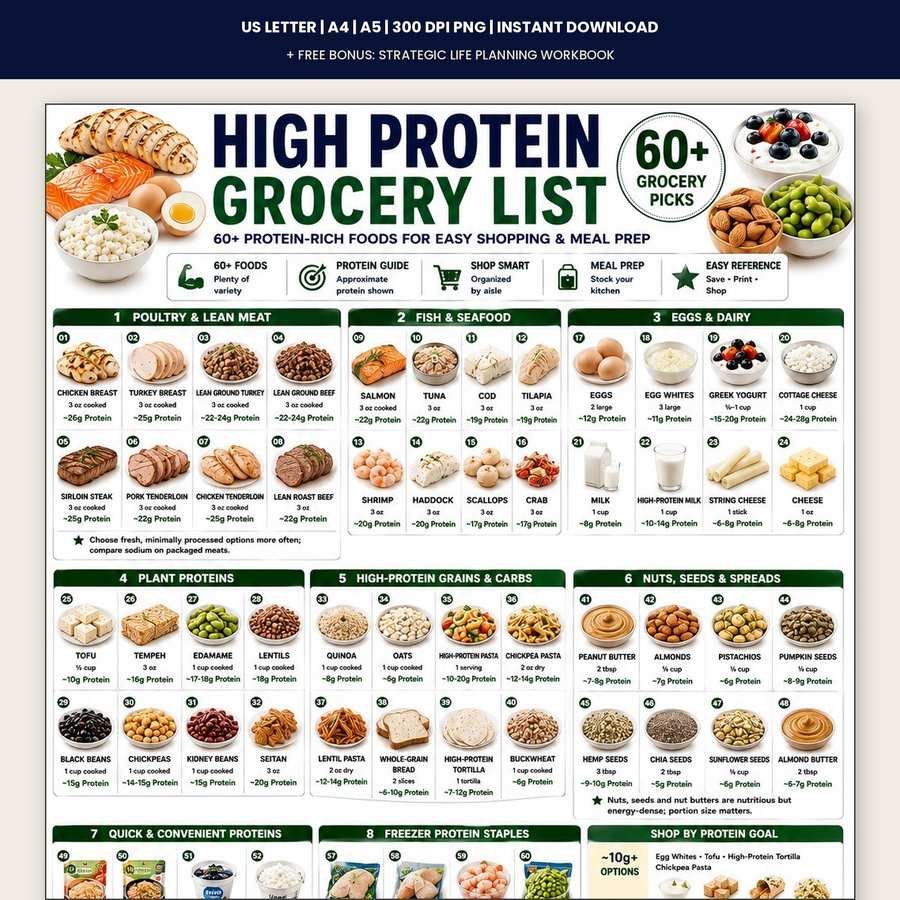
Shop smarter with this
High Protein Grocery List — Printable
- 60+ lean protein foods organized by aisle
- Shopping guide with a meal-prep checklist built in
- Instant download · Print at home · A4 · US Letter · A5
Use code BLOG10 for 65% OFF at Etsy checkout!
Get the Grocery List on Etsy →
Instant download · Print at home
Frequently Asked Questions
What should a weekly meal planner include?
A good weekly meal planner printable includes seven day columns, rows for breakfast, lunch, dinner, and snacks, plus space for a grocery list and notes. The best templates fit on one page so the whole week is visible at a glance — complexity kills consistency.
How far in advance should I plan meals?
One week is the sweet spot for most households using a weekly meal planner printable: it matches the grocery cycle and keeps food fresh. Planning two weeks ahead works if you freeze well, but daily planning usually collapses under decision fatigue. Start weekly and adjust to what fits your shopping habits.
Does meal planning actually save money?
Yes — primarily by reducing food waste and impulse buying. When your grocery list matches actual planned meals, you buy less food that spoils uneaten, make fewer expensive last-minute takeout decisions, and can plan around sales and what you already own.
What if my family won’t eat the same meals?
Plan “modular” meals: a base everyone shares (rice, pasta, taco fillings) with toppings people choose themselves. This keeps one cooking session while accommodating picky eaters. The planner still works — you just note the variations in the notes section.
How do I start meal planning as a beginner?
Start with dinners only for one week: pick 5–7 dinners from meals you already know, check your calendar for busy nights, make the grocery list meal by meal, and post the plan on the fridge. Keep it simple — you can add breakfasts and lunches once dinners feel automatic.
A weekly plan works for habits too: our healthy habits for kids guide turns eight daily habits into a one minute routine for home and school.
Related Guides
- Meal Prep for Seniors: A Simple Weekly Plan
- High-Protein Food List for Weight Loss
- Anti-Inflammatory Food List
- Mediterranean Diet: 7-Day Meal Plan for Beginners
Sources
Sources: USDA MyPlate, Harvard Health, Mayo Clinic
This guide is for general wellness and is not medical advice. Check with your doctor before starting a new routine.
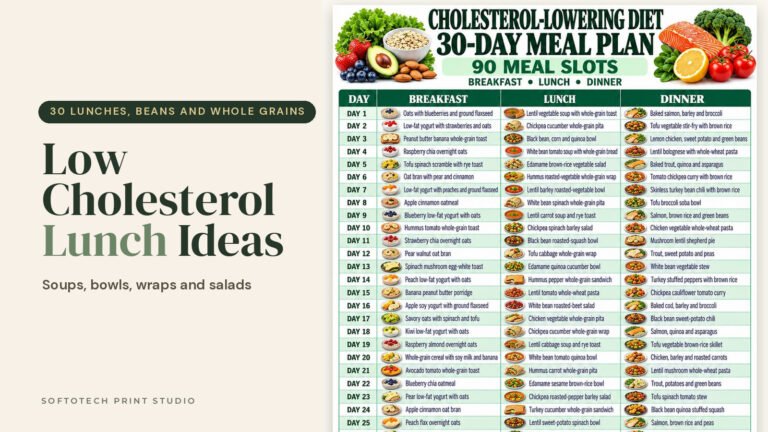 Diet & Food ListsLow Cholesterol Lunch Ideas: 30 Soups, Bowls, Wraps and Salads From a 30 Day Meal Plan, With Swaps and a Prep Week
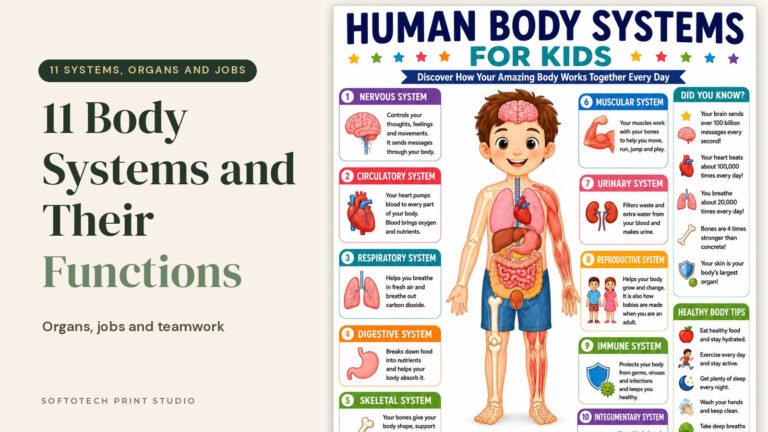 Anatomy Charts11 Body Systems and Their Functions: A Clear Chart of Organs and Jobs, How They Work Together and a Study Plan
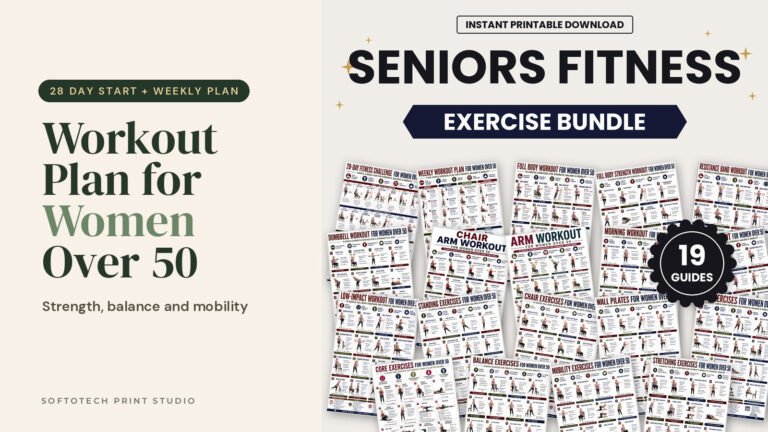 Home WorkoutsWorkout Plan for Women Over 50: A Gentle 28 Day Start, Then a Weekly Plan for Strength, Balance and Walking