
Breathing exercises for sleep are slow, simple breathing patterns you do in bed or just before, like belly breathing, 4-7-8 breathing and box breathing, to help your body and mind settle. They won’t knock you out. What they can do is give a busy head something calm to focus on and slow you down enough that sleep has a chance to arrive.
You probably know the feeling. The lights are off, your body is tired, and your brain decides it’s time to replay the day. Counting sheep rarely helps, because sheep are boring and your worries aren’t. Counting breaths is a little different. It gives your mind a job, and the slow pace does the rest.
This guide covers five bedtime techniques with plain steps, a 10 minute routine that strings them together, and some honest notes on what breathing can and can’t do for sleep. The posters I mention come from the Breathing Exercises Bundle from SoftoTech Print Studio.
If you’ve had trouble sleeping for weeks, or you feel exhausted most days no matter how long you stay in bed, see a doctor. Breathing exercises are a relaxation tool, not a treatment for a sleep disorder.
In this guide:
- Slow Breathing Helps You Wind Down, Not Knock You Out
- Five Bedtime Techniques, Step by Step
- A 10 Minute Lights Out Routine
- Two Weeks of Practice Beats One Perfect Night
- Frequently Asked Questions
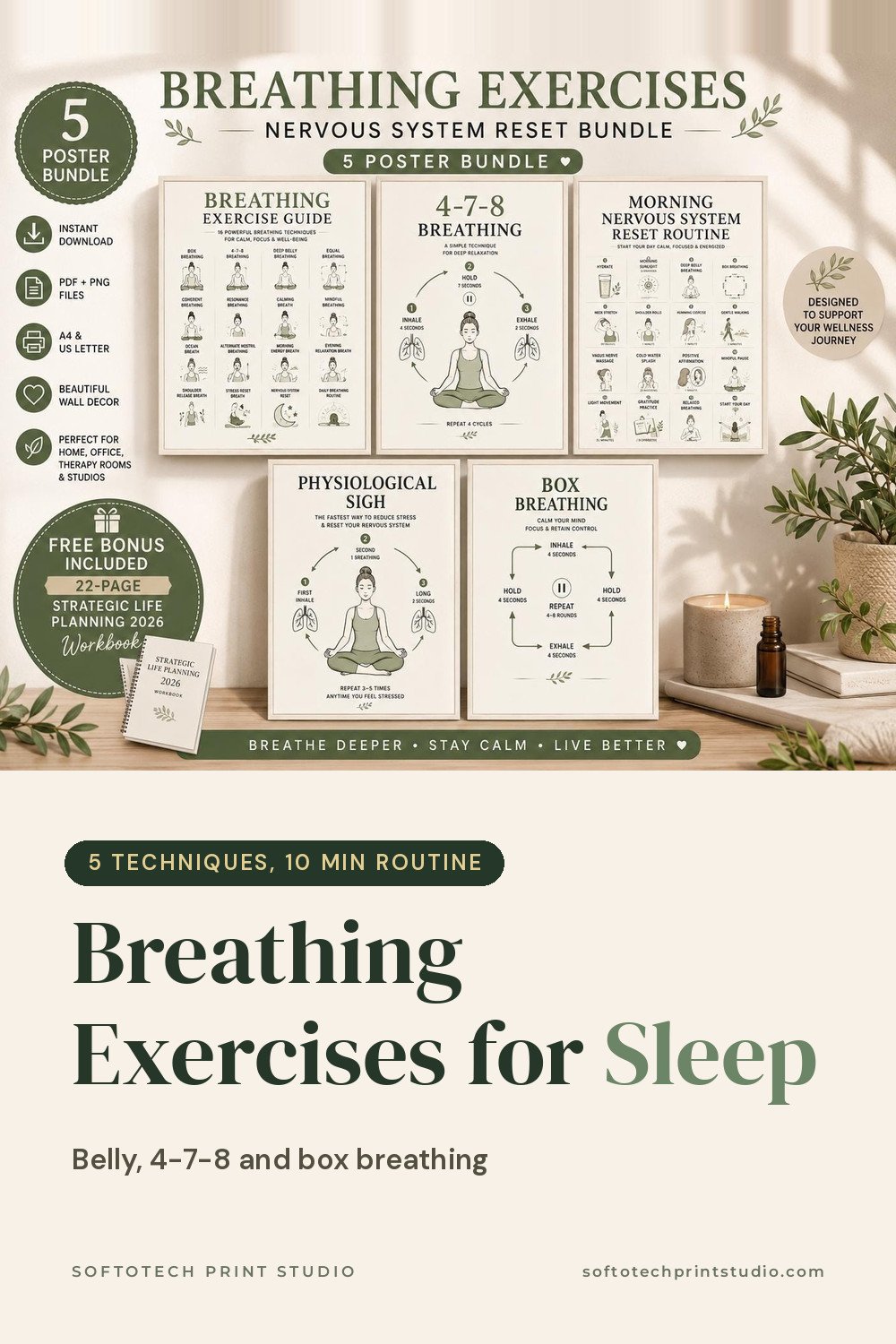
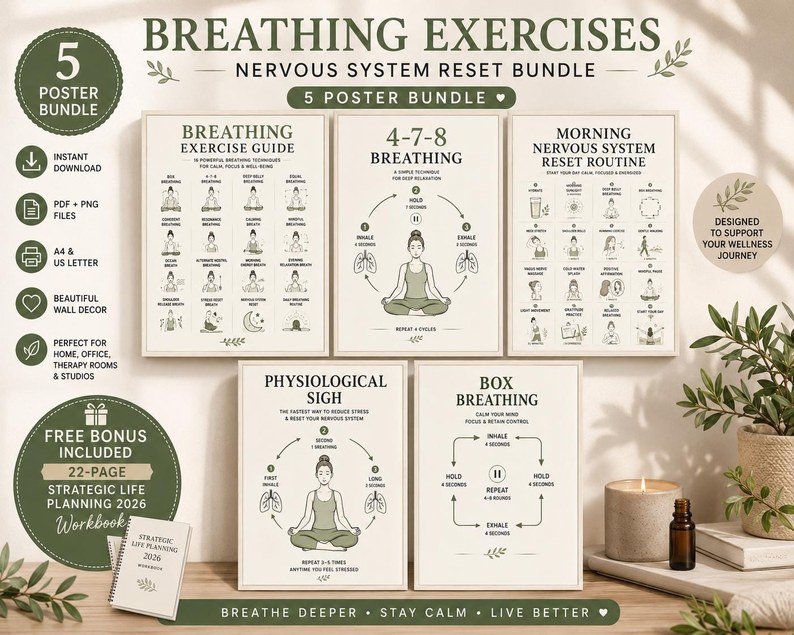
- 5 posters: Breathing Exercise Guide, 4-7-8 Breathing, Physiological Sigh, Box Breathing and Morning Nervous System Reset Routine
- The Breathing Exercise Guide shows 16 techniques, including deep belly breathing, 4-7-8 breathing and evening relaxation breath
- Box Breathing poster: inhale, hold, exhale and hold for 4 seconds each, 4 to 8 rounds
- Physiological Sigh poster: repeat 3 to 5 times, anytime you feel stressed
- Each poster comes in US Letter, A4, A3, A2 and 16 x 20 inch sizes plus a 300 DPI PNG, per the listing
- Instant download · Print at home · Sage line art style
Use code BLOG10 for 65% OFF at Etsy checkout!
Slow Breathing Helps You Wind Down, Not Knock You Out
Poor sleep is common. The Sleep Foundation says over one third of people in the United States report sleeping less than seven hours a night, and nearly half report trouble falling or staying asleep.
What the techniques do. The Sleep Foundation describes breathing exercises as a simple way to manage stress and wind down before bed, and says they may help you relax by slowing your breathing, reducing stress and activating the body’s relaxation response. Cleveland Clinic’s integrative medicine specialist Dr. Melissa Young explains that the counting in 4-7-8 breathing is a way to focus your mind on something other than your worries.
That’s the honest version. Slow breathing is a wind down tool. It helps with the racing thoughts and the tense shoulders that keep you awake. It doesn’t fix noise, a late coffee, a bedroom that’s too hot or a body clock that’s out of step.
Why the exhale matters. Look at the patterns in this guide and you’ll see they all slow you down, and most of them make the out breath long and unhurried. In 4-7-8 the exhale is the longest part. In the physiological sigh it’s described as a long exhale. That slow, easy breath out is the bit most people find calming.
Who should take care. The Sleep Foundation says 4-7-8 may not be the best option if you’re uncomfortable holding your breath, though it’s generally considered safe and easy. If you have a heart or lung condition, or you’re pregnant, check with your doctor before practicing breath holds. Belly breathing without a hold is the gentler choice.
If stress is the main thing keeping you up, our breathwork for anxiety guide goes into daytime techniques that work alongside the bedtime ones here.
Five Bedtime Techniques, Step by Step
Try them one at a time. Spend a few nights on each before deciding which you like. Breathe through your nose unless the steps say otherwise.
1. Belly breathing. Also called diaphragmatic or abdominal breathing. This is the base for everything else. The Sleep Foundation’s steps:
- Sit or lie down with one hand on your chest and the other on your belly, just above your belly button.
- Breathe in through your nose so the hand on your belly rises and the hand on your chest stays still.
- As you breathe out, let the belly hand slowly fall.
- Count each breath. After 20 belly breaths, relax and breathe normally.
2. 4-7-8 breathing. Cleveland Clinic says it was popularized by Dr. Andrew Weil and has roots in yogic breathing called pranayama. Its steps:
- Rest the tip of your tongue just behind your top front teeth and keep it there.
- Breathe out fully through your mouth with a whoosh.
- Breathe in through your nose for a count of 4.
- Hold gently for a count of 7, without straining.
- Breathe out slowly through your mouth for a count of 8, lips slightly pursed.
- That’s one cycle. Cleveland Clinic describes doing three more, four in all. The Sleep Foundation’s version suggests around six cycles.
Pick a counting pace that’s comfortable. Cleveland Clinic says not to go too slowly or too quickly. The ratio matters more than the speed.
3. Box breathing. Four equal sides. The Box Breathing poster in the bundle shows inhale, hold, exhale and hold for 4 seconds each, repeated for 4 to 8 rounds. The Sleep Foundation’s steps are the same: start after a breath out, breathe in through your nose for 4, hold for 4, breathe out through your mouth for 4, hold for 4, and repeat. Some people find picturing the four sides of a square helps them keep count.
4. The physiological sigh. The bundle’s poster shows a first inhale, a short second inhale on top of it, then a long exhale, repeated 3 to 5 times, anytime you feel stressed. It’s quick, so it suits the moment you notice your jaw clenched or your shoulders up by your ears. It’s a good opener before a longer technique.
5. Breathing with a picture. The Sleep Foundation describes guided imagery as a breathing exercise combined with a calming scene. Do belly breathing while you picture somewhere peaceful, a beach, a quiet garden, a favorite walk, and notice the sounds, smells and textures of it. If you can’t come up with a scene, a guided imagery recording can help.
A sixth if you like humming. The Sleep Foundation also lists Bhramari breathing, where you breathe in deeply, then breathe out slowly through your nose while making a humming sound. Some people find the hum soothing. Your partner may have views.
The Breathing Exercise Guide poster in the bundle shows 16 techniques in total, including evening relaxation breath, ocean breath, equal breathing and alternate nostril breathing, if you want more to try once the basics feel easy.
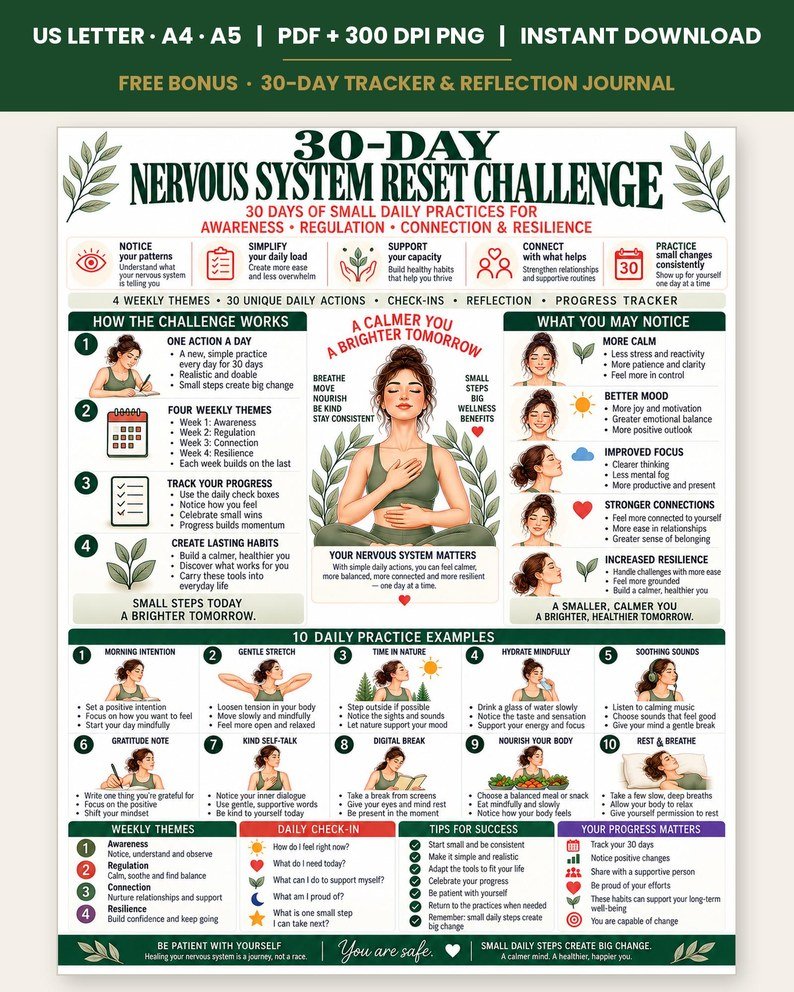
- A 30 day challenge built around 4 weekly themes: awareness, regulation, connection and resilience
- Daily practices include morning intentions, gentle stretches, time in nature, mindful hydration, gratitude and rest
- Bonus 30-day tracker and reflection journal, per the listing
- A simple way to turn one bedtime breathing habit into a month long routine
- US Letter, A4 and A5 PDFs plus a 300 DPI PNG
- Instant download · Print at home · US Letter · A4 · A5
Use code BLOG10 for 65% OFF at Etsy checkout!
A 10 Minute Lights Out Routine
Here’s one way to put the techniques together. Do it in bed, lights off or dimmed, once you’re already comfortable. If you fall asleep halfway, that’s the routine working.
| Minutes | What to do | Why |
|---|---|---|
| 0 to 1 | Physiological sigh, 3 to 5 times | A quick way to let go of the day’s tension |
| 1 to 4 | Belly breathing, one hand on chest, one on belly, 20 breaths | Settles you into slow breathing from the belly |
| 4 to 6 | 4-7-8 breathing, 4 cycles | The counting gives a busy mind a job |
| 6 to 8 | Box breathing, 4 rounds | Keeps the slow pace going with an easier count |
| 8 to 10 | Normal, easy breathing while you picture a calm place | Lets you drift without counting |
Shorter version. On a night when you’re already sleepy, skip to the 4-7-8 block and stop when you’ve done four cycles. On a night when you’re wide awake, repeat the belly breathing block.
If you wake at 3 am. Don’t start the whole routine. Belly breathing on its own, with no counting beyond the breaths, is usually enough. Counting holds can wake you up more if you’re half asleep.
Make the room work with you. Breathing is easier to focus on when nothing else is competing for attention. Put the phone out of reach, turn the clock away from you and settle into the position you normally fall asleep in. You don’t have to lie flat on your back for belly breathing. On your side with one hand resting on your belly works too.
Getting comfortable first. If aches stop you settling, a few gentle stretches before the breathing can help. Our bed exercises for seniors guide has easy moves you can do lying down, and they lead naturally into belly breathing.
Two Weeks of Practice Beats One Perfect Night
Most people try a breathing exercise once, don’t fall asleep instantly and give up. The Sleep Foundation says experts suggest breathing exercises become more effective with practice, so persistence is key.
Practice when you’re not stressed. Cleveland Clinic says that if you practice 4-7-8 breathing regularly, especially at times when you’re not particularly stressed, your body learns to use it as part of its go to stress response. Try a round after lunch or on the sofa in the evening, so it already feels familiar at bedtime.
Expect a wobbly start. Cleveland Clinic says you may feel slightly lightheaded or short of breath when you first learn 4-7-8, simply because you’re not used to breathing slowly. If that happens, stop the holds and breathe normally. Shorter counts at the same ratio are fine while you get used to it.
Plan for setbacks. The Sleep Foundation calls setbacks normal when building a new habit and suggests setting aside time each night to practice and recommitting if you slip.
Do the other sleep basics too. The Sleep Foundation suggests adding other healthy sleep habits to your nightly routine, such as keeping a consistent bedtime and avoiding coffee and large meals late in the day. Breathing works best on top of those, not instead of them.
A simple two week plan.
- Nights 1 to 4: Belly breathing only, 20 breaths, every night.
- Nights 5 to 8: Belly breathing, then 4 cycles of 4-7-8.
- Nights 9 to 14: The full 10 minute routine above.
Keep a note of how long it seemed to take you to fall asleep, without clock watching. After two weeks you’ll have a feel for which technique suits you. If you like a structured month, our 30 day nervous system reset challenge gives you a daily practice to follow, and our breathing exercises to increase lung capacity guide has daytime breathing work if you want to build the habit further.
When to see someone. The Sleep Foundation is clear that relaxation is not a substitute for talking to a doctor or sleep specialist. If you’ve had persistent trouble falling or staying asleep, it’s worth getting checked.
Frequently Asked Questions
What is the best breathing exercise for sleep?
There isn’t one best technique for everyone. The Sleep Foundation lists belly breathing, 4-7-8 breathing, box breathing, alternate nostril breathing, Bhramari humming breath and guided imagery as options. Belly breathing is the easiest place to start, and 4-7-8 adds a count for people whose minds wander.
How do you do 4-7-8 breathing in bed?
Breathe out fully through your mouth. Then breathe in quietly through your nose for a count of 4, hold for 7, and breathe out through your mouth for 8. Cleveland Clinic describes four cycles in total, and says you can do it lying in bed if you’re using it to fall asleep.
How long does it take for breathing exercises to help with sleep?
The Sleep Foundation says breathing exercises become more effective with practice and that setbacks are normal when building a new habit. Give a technique a couple of weeks of nightly practice before deciding whether it suits you.
Is it normal to feel lightheaded during breathing exercises?
Cleveland Clinic says you may feel a little lightheaded or short of breath when you first learn 4-7-8 breathing, and that this is just a function of learning to breathe more slowly. If it happens, go back to normal breathing for a minute. Stop and talk to a doctor if it keeps happening.
Can breathing exercises cure insomnia?
No. Breathing exercises can help you relax before bed, but the Sleep Foundation says relaxation is not a substitute for talking to a doctor or sleep specialist. If you have persistent trouble falling or staying asleep, get it checked.
This guide is for general wellness and is not medical advice. Check with your doctor before starting breathing exercises with breath holds if you have a heart or lung condition, and see a doctor about any ongoing sleep problem.
Related Guides
- Breathwork for Anxiety
- Breathing Exercises to Increase Lung Capacity
- Bed Exercises for Seniors
- 30 Day Nervous System Reset Challenge
Sources
Sources: Sleep Foundation, Best Breathing Exercises for Sleep, Cleveland Clinic, How To Do the 4-7-8 Breathing Exercise
 Senior FitnessBreathing Exercises to Increase Lung Capacity: 8 Techniques, a 10 Minute Routine and What They Can Really Do
 Senior FitnessAnkle Exercises for Sprain Recovery: 12 Gentle Moves in 3 Stages, Once Your Clinician Says It’s Time
 Senior FitnessArm Exercises for Seniors: 16 Gentle Dumbbell Moves and 20 Seated Moves With Reps