
Search for a thyroid diet and you’ll find long lists of “thyroid superfoods” and foods you must never touch. A thyroid diet food list works better when it’s calmer than that: mostly everyday healthy foods, a short list of things to time around your medicine, and a few real hazards to steer clear of.
This guide walks through two printable charts from SoftoTech Print Studio. The first is the Thyroid-Friendly Food List, an Eat, Limit and Avoid chart with about 150 entries and a reminder about medication timing. The second is the Thyroid-Friendly Fruits and Vegetables List, which pictures 127 fruits and vegetables in 11 groups.
It helps to start with what the evidence actually says. Mayo Clinic puts it plainly: there’s no evidence that eating or avoiding certain foods will help the thyroid work better in people with an underactive thyroid. Cleveland Clinic agrees that no diet cures hypothyroidism, and most people need hormone replacement medicine such as levothyroxine. What food can do is support your overall health and avoid getting in the way of that medicine. That’s the job these charts are built for.
A plain caution before we start. Needs vary from person to person, and most of the advice here is aimed at people with an underactive thyroid who take thyroid hormone. If you have an overactive thyroid, are pregnant, or have other conditions, the advice can be quite different. This guide is general information. Check with your doctor or a registered dietitian before you change how you eat or take any supplement.
In this guide:
- What Is on the Thyroid-Friendly Food List
- Worked Day: Meals Timed Around Your Medicine
- The Fruits and Vegetables Chart Adds 127 Picks
- How to Use a Thyroid Food List Safely
- Frequently Asked Questions

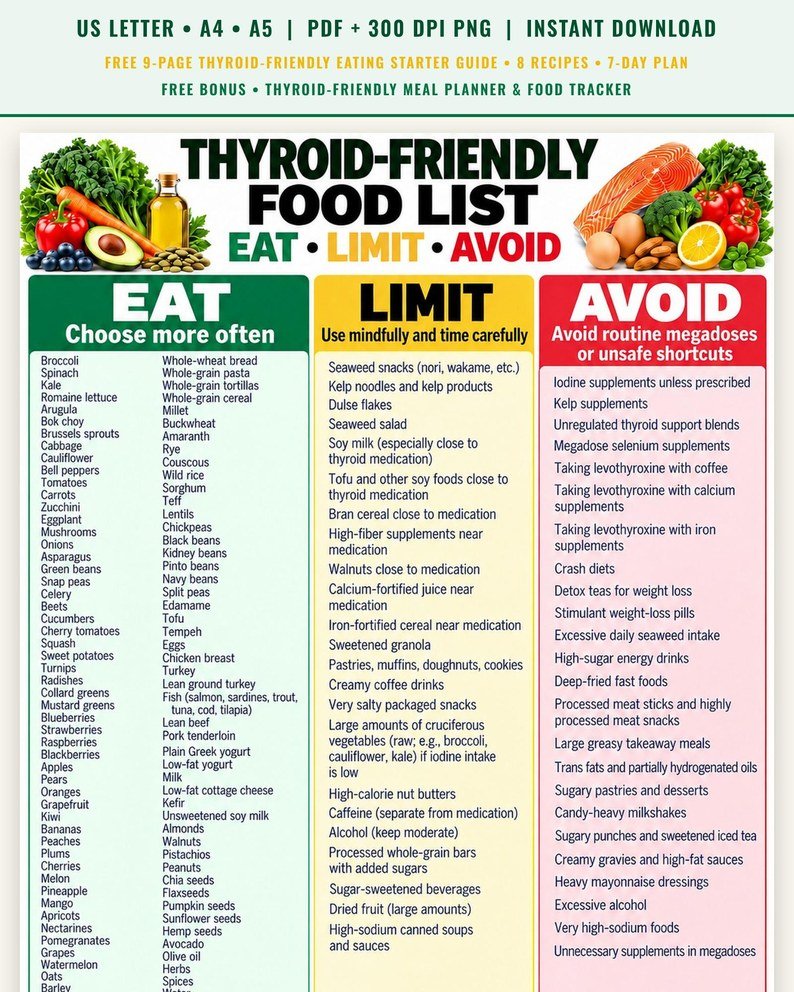
- Three color-coded columns: Eat (choose more often), Limit (use mindfully and time carefully) and Avoid (routine megadoses or unsafe shortcuts)
- 105 Eat foods, from leafy greens, berries and whole grains to beans, eggs, fish, plain Greek yogurt and seeds
- 23 Limit entries, many about timing, such as soy milk, bran cereal, walnuts and fiber supplements close to thyroid medication
- 24 Avoid entries, including iodine supplements unless prescribed, kelp supplements, megadose selenium and detox teas
- A footer reminder to take thyroid medicine as directed and space it from coffee, calcium, iron and fiber supplements; US Letter, A4 and A5 PDFs plus a 300 DPI PNG
- Instant download · Print at home · US Letter · A4 · A5
Use code BLOG10 for 65% OFF at Etsy checkout!
What Is on the Thyroid-Friendly Food List
The chart is headed Thyroid-Friendly Food List, with Eat, Limit and Avoid underneath in green, yellow and red. Each column has its own line. Eat says choose more often. Limit says use mindfully and time carefully. Avoid says avoid routine megadoses or unsafe shortcuts. That last line tells you a lot about the chart: the Avoid column is mostly about supplements and habits, not ordinary foods.
The Eat column. This is the longest column, with 105 foods in two lists. It reads like a general healthy eating list, which matches what both Mayo Clinic and Cleveland Clinic recommend.
- Vegetables: broccoli, spinach, kale, romaine lettuce, arugula, bok choy, Brussels sprouts, cabbage, cauliflower, bell peppers, tomatoes, carrots, zucchini, eggplant, mushrooms, onions, asparagus, green beans, snap peas, celery, beets, cucumbers, cherry tomatoes, squash, sweet potatoes, turnips, radishes, collard greens and mustard greens.
- Fruits: blueberries, strawberries, raspberries, blackberries, apples, pears, oranges, grapefruit, kiwi, bananas, peaches, plums, cherries, melon, pineapple, mango, apricots, nectarines, pomegranates, grapes and watermelon.
- Grains: oats, barley, quinoa, brown rice, farro, whole-wheat bread, whole-grain pasta, tortillas and cereal, millet, buckwheat, amaranth, rye, couscous, wild rice, sorghum and teff.
- Beans and soy: lentils, chickpeas, black beans, kidney beans, pinto beans, navy beans, split peas, edamame, tofu and tempeh.
- Protein foods: eggs, chicken breast, turkey, lean ground turkey, fish (salmon, sardines, trout, tuna, cod, tilapia), lean beef and pork tenderloin.
- Dairy: plain Greek yogurt, low-fat yogurt, milk, low-fat cottage cheese, kefir and unsweetened soy milk.
- Nuts, seeds and fats: almonds, walnuts, pistachios, peanuts, chia seeds, flaxseeds, pumpkin seeds, sunflower seeds, hemp seeds, avocado and olive oil.
- Extras: herbs, spices, water and unsweetened tea.
A few of these are worth a closer look. Fish, eggs, milk and yogurt are among the foods that supply iodine and selenium, two nutrients the thyroid uses. Cleveland Clinic lists tuna, shrimp, turkey, chicken, cottage cheese and eggs as good sources of selenium, and cod, Greek yogurt, milk and eggs as sources of iodine. You don’t need to chase them; a varied diet like this column usually covers both.
You’ll notice that broccoli, kale, cabbage, tofu, edamame and walnuts all appear in the Eat column. They also show up in the Limit column with a condition attached. That isn’t a mistake. They’re fine foods, but they come with a timing or amount note, which the next column explains.
The Limit column. There are 23 entries, and they fall into three groups.
- Very high-iodine foods: seaweed snacks (nori, wakame and others), kelp noodles and kelp products, dulse flakes and seaweed salad.
- Foods to keep away from your dose: soy milk (especially close to thyroid medication), tofu and other soy foods close to thyroid medication, bran cereal close to medication, high-fiber supplements near medication, walnuts close to medication, calcium-fortified juice near medication, iron-fortified cereal near medication, and caffeine (separate from medication).
- General healthy-eating limits: sweetened granola, pastries, muffins, doughnuts and cookies, creamy coffee drinks, very salty packaged snacks, large amounts of cruciferous vegetables (raw, such as broccoli, cauliflower and kale) if iodine intake is low, high-calorie nut butters, alcohol (keep moderate), processed whole-grain bars with added sugars, sugar-sweetened beverages, dried fruit (large amounts) and high-sodium canned soups and sauces.
The timing items line up closely with Mayo Clinic’s list. It says not to take thyroid hormone at the same time as walnuts, soybean flour, iron supplements or multivitamins with iron, calcium supplements, and some antacids and other medicines, and to have those several hours before or after your dose. It also says too much fiber can stop the body absorbing the medicine. Cleveland Clinic adds that soy doesn’t need to be cut out, just spaced a few hours from your medicine.
The cruciferous line is well worded. Cleveland Clinic says cooked cruciferous vegetables are a healthy addition, and that it’s going overboard on raw ones that can affect how the body uses iodine. A side of steamed broccoli is not the problem. Eating a huge bowl of raw kale every day might be.
The Avoid column. 24 entries, and most are about supplements and shortcuts: iodine supplements unless prescribed, kelp supplements, unregulated thyroid support blends, megadose selenium supplements, taking levothyroxine with coffee, taking levothyroxine with calcium supplements, taking levothyroxine with iron supplements, excessive daily seaweed intake and unnecessary supplements in megadoses. The rest are habits and foods that aren’t good for anyone in large amounts: crash diets, detox teas for weight loss, stimulant weight-loss pills, high-sugar energy drinks, deep-fried fast foods, processed meat sticks and highly processed meat snacks, large greasy takeaway meals, trans fats and partially hydrogenated oils, sugary pastries and desserts, candy-heavy milkshakes, sugary punches and sweetened iced tea, creamy gravies and high-fat sauces, heavy mayonnaise dressings, excessive alcohol and very high-sodium foods.
The supplement warnings are the most important part of the chart. Mayo Clinic notes that a balanced diet makes extra iodine unnecessary, and that too much iodine can cause an overactive thyroid in some people. Cleveland Clinic says to stay under 200 micrograms of selenium a day if you take a supplement at all, and warns against thyroid support supplements, including those with L-tyrosine. A footer on the chart sums it up: a balanced diet supports thyroid health, and medication timing matters, so take thyroid medicine as directed and separate it from coffee, calcium, iron and fiber supplements when advised.
One small gap: the chart doesn’t mention biotin. Mayo Clinic says biotin supplements, common in hair and nail products, can throw off thyroid blood tests, and that they should be stopped for at least a week before testing. If you take one, tell your doctor.
Worked Day: Meals Timed Around Your Medicine
Here’s how a day built from the Eat column might look for someone who takes levothyroxine first thing in the morning. The timings are examples only. Your doctor or pharmacist will tell you exactly how long to wait for your own medicine and dose, so use their instructions over anything here.
| Time | What to eat or do | Why |
|---|---|---|
| On waking | Take thyroid medicine with a glass of water | Mayo Clinic says it usually should be taken on an empty stomach |
| Later in the morning | Breakfast: oats with milk, blueberries and pumpkin seeds; coffee once your advised wait is over | Coffee is in the chart’s Limit and Avoid columns when taken with the medicine |
| Lunch | Quinoa salad with chickpeas, spinach, peppers, cucumber and olive oil; an orange | Fiber-rich foods sit well away from the morning dose |
| Afternoon snack | Plain Greek yogurt with a few walnuts | Walnuts are on the Eat list; just not close to your medicine |
| Dinner | Baked salmon or cod, roasted sweet potato and steamed broccoli | Fish for iodine and selenium; cooked crucifers |
| Evening | Calcium or iron supplement, if your doctor has prescribed one | Mayo Clinic says to take these several hours away from thyroid medicine |
Some people take their thyroid medicine at bedtime instead of in the morning. That’s a decision for your doctor, and if you do, the same idea applies in reverse: leave a gap after your last meal and keep calcium, iron and high-fiber foods away from the dose.
The more important habit is to be consistent. Take your medicine at the same time each day, in the same way, so your doctor can judge whether the dose is right. If you start eating much more fiber or soy, or add a supplement, tell your doctor, as it may change how much medicine you absorb.
If you’re also working on weight, the chart’s Avoid column is a useful check. Crash diets, detox teas and stimulant pills are all on it. A steady approach built on protein, vegetables and whole grains is easier to keep up, and our high-protein food list for weight loss has more ideas that fit here. Some people with a thyroid condition also have PCOS, and if that’s you, the PCOS diet food list overlaps a lot with this one.
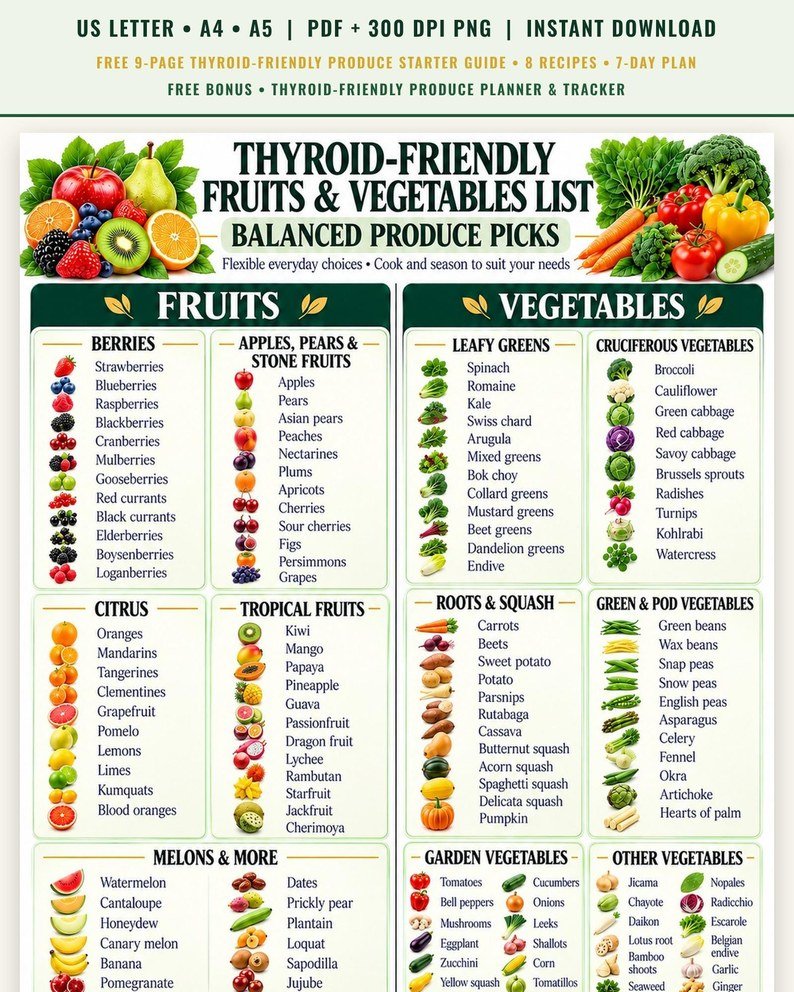
- 127 pictured fruits and vegetables in two big columns, every one labeled
- Fruit groups: berries, apples, pears and stone fruits, citrus, tropical fruits, and melons and more
- Vegetable groups: leafy greens, cruciferous, roots and squash, green and pod, garden and other vegetables
- A footer note that cruciferous vegetables are often well tolerated when cooked and eaten as part of a balanced diet
- US Letter, A4 and A5 PDFs plus a 300 DPI PNG, listed on Etsy as 3 PDFs, a PNG and a ZIP
- Instant download · Print at home · US Letter · A4 · A5
Use code BLOG10 for 65% OFF at Etsy checkout!
The Fruits and Vegetables Chart Adds 127 Picks
The second chart is headed Thyroid-Friendly Fruits and Vegetables List, with the line Balanced Produce Picks and a smaller one: flexible everyday choices, cook and season to suit your needs. It’s split into a Fruits column and a Vegetables column, with every food pictured.
Fruits, 58 in 5 groups:
- Berries: strawberries, blueberries, raspberries, blackberries, cranberries, mulberries, gooseberries, red currants, black currants, elderberries, boysenberries and loganberries.
- Apples, pears and stone fruits: apples, pears, Asian pears, peaches, nectarines, plums, apricots, cherries, sour cherries, figs, persimmons and grapes.
- Citrus: oranges, mandarins, tangerines, clementines, grapefruit, pomelo, lemons, limes, kumquats and blood oranges.
- Tropical fruits: kiwi, mango, papaya, pineapple, guava, passionfruit, dragon fruit, lychee, rambutan, starfruit, jackfruit and cherimoya.
- Melons and more: watermelon, cantaloupe, honeydew, canary melon, banana, pomegranate, dates, prickly pear, plantain, loquat, sapodilla and jujube.
Vegetables, 69 in 6 groups:
- Leafy greens: spinach, romaine, kale, Swiss chard, arugula, mixed greens, bok choy, collard greens, mustard greens, beet greens, dandelion greens and endive.
- Cruciferous vegetables: broccoli, cauliflower, green cabbage, red cabbage, savoy cabbage, Brussels sprouts, radishes, turnips, kohlrabi and watercress.
- Roots and squash: carrots, beets, sweet potato, potato, parsnips, rutabaga, cassava, butternut squash, acorn squash, spaghetti squash, delicata squash and pumpkin.
- Green and pod vegetables: green beans, wax beans, snap peas, snow peas, English peas, asparagus, celery, fennel, okra, artichoke and hearts of palm.
- Garden vegetables: tomatoes, bell peppers, mushrooms, eggplant, zucchini, yellow squash, cucumbers, onions, leeks, shallots, corn and tomatillos.
- Other vegetables: jicama, chayote, daikon, lotus root, bamboo shoots, seaweed, nopales, radicchio, escarole, Belgian endive, garlic and ginger.
That’s 127 foods, which fits the 120+ in the title. The listing’s own summary says 10 produce groups, but I count 11 on the chart: 5 fruit groups and 6 vegetable groups. The footer says a wide variety of fruits and vegetables can fit a thyroid-friendly diet, and that cruciferous vegetables are often fine for many people and are well tolerated when cooked and eaten as part of a balanced diet.
I need to flag two items on this chart honestly. Cassava is listed under roots and squash. Cleveland Clinic, one of the sources for this guide, says cassava is not recommended for people with hypothyroidism, because it can be toxic if not prepared properly and its compounds can slow thyroid hormone production even when it is. If you have an underactive thyroid, I’d skip cassava, including cassava flour, chips and tortillas, unless your doctor says otherwise.
Seaweed is listed under other vegetables. The main food list, by contrast, puts seaweed snacks and seaweed salad in Limit and excessive daily seaweed in Avoid, because seaweed can be very high in iodine. Treat the main chart as the rule here: a little seaweed now and then, not every day.
Everything else on the produce chart is an easy fit. It’s a good way to break out of the same five vegetables every week. Try one new food from each column on your next shop, like kohlrabi or delicata squash, or persimmons when they’re in season.
How to Use a Thyroid Food List Safely
Treat the Eat column as your base. Most of your plate can come from it. A balanced mix of vegetables, fruit, whole grains, beans, fish, eggs and dairy is what both of this guide’s sources recommend, and it suits most other health goals too. If you’d like to lean further into that style of eating, our anti-inflammatory food list follows a similar pattern.
Use the Limit column as a timing list. Write your medicine time at the top of the chart, then mark which Limit foods you eat often: coffee, soy milk, bran cereal, walnuts, fortified juice. Those are the ones to keep a few hours away from your dose. The rest of the Limit column is ordinary advice about sugar, salt and alcohol.
Don’t self-prescribe supplements. Iodine, kelp and selenium supplements are on the Avoid list for a reason. More is not better, and too much iodine can cause problems of its own. If you think you’re low in anything, ask your doctor for a test before you buy a bottle.
Mind your calcium. Dairy, fortified soy milk and leafy greens supply calcium, which matters for bone health, especially as you get older. The only issue is timing around your medicine. For more calcium foods, see our calcium-rich foods for bone health list.
Don’t go gluten-free just for your thyroid. Cleveland Clinic says a gluten-free diet usually isn’t necessary for people with hypothyroidism, unless you’re sensitive to gluten or have celiac disease. If you suspect either, talk to your doctor and get tested first.
Keep track of how you feel. Note your energy, sleep, weight and any symptoms over a few weeks, and bring those notes to your appointments. Your blood tests and your doctor’s advice should guide your treatment, not a food chart.
Print both charts. The main food list for the fridge, where you’ll see the timing reminder each morning, and the produce chart for the shopping trip. Both print in US Letter, A4 and A5, so you can keep the small A5 copy in a meal-planning folder or your bag.
If you have Hashimoto’s, our Hashimoto’s diet plan turns this list into a worked 7 day week with medicine timing.
Frequently Asked Questions
What foods are good on a thyroid diet food list?
A balanced mix: vegetables, fruit, whole grains, beans, eggs, fish, lean meat, plain dairy, nuts, seeds and olive oil. That’s what the Eat column on the chart covers. Mayo Clinic says there’s no evidence that eating or avoiding certain foods helps the thyroid work better, so the aim is an overall healthy diet, not special thyroid foods.
Do I need to avoid broccoli and other cruciferous vegetables?
Usually not. Cleveland Clinic says cooked cruciferous vegetables are a healthy addition, and that it’s very large amounts of raw ones that can affect how your body uses iodine. The chart puts broccoli, kale and cauliflower in its Eat column and only lists large raw amounts, when iodine intake is low, under Limit.
How long should I wait to eat after taking thyroid medicine?
Follow the instructions from your doctor or pharmacist, since they can differ. Mayo Clinic says levothyroxine usually should be taken on an empty stomach, and that walnuts, soybean flour, iron and calcium supplements and some antacids should be taken several hours before or after it. The chart’s footer gives the same reminder.
When should I see a doctor about my thyroid and diet?
See your doctor before you take iodine, kelp or selenium supplements, start a big diet change, or go gluten-free. Also talk to them if you feel more tired, colder, or have weight or heart rate changes despite treatment, if you’re pregnant or planning to be, or if you have an overactive thyroid, since advice differs.
What sizes do the thyroid food charts print in?
Both charts print in US Letter, A4 and A5, as PDFs plus a 300 DPI PNG. Etsy lists each as 3 PDFs, a PNG and a ZIP. They’re instant downloads, so you can print them at home or at a print shop.
This guide is for general wellness and is not medical advice. Check with your doctor before starting a new routine.
Related Guides
- Anti-Inflammatory Food List
- High-Protein Food List for Weight Loss
- PCOS Diet Food List
- Calcium-Rich Foods for Bone Health
Sources
Sources: Cleveland Clinic, A Healthy Hypothyroidism Diet, Mayo Clinic, Hypothyroidism Diet: Can Certain Foods Increase Thyroid Function?
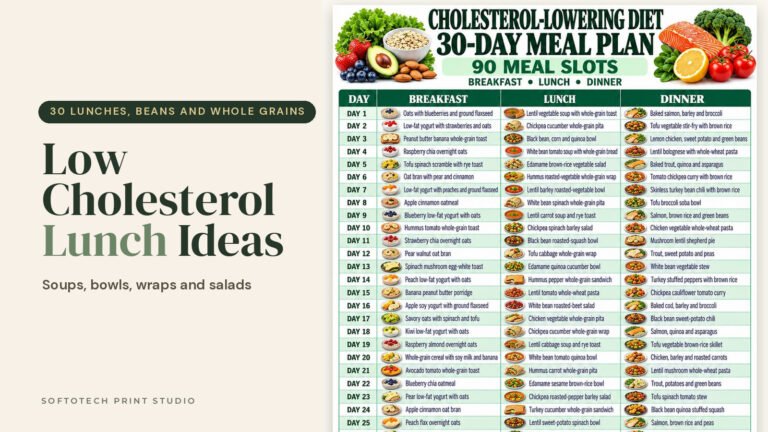 Diet & Food ListsLow Cholesterol Lunch Ideas: 30 Soups, Bowls, Wraps and Salads From a 30 Day Meal Plan, With Swaps and a Prep Week
 Diet & Food ListsPrediabetes Breakfast Ideas: 7 Balanced Breakfasts From a Weekly Meal Plan, Plus Swaps From an Eat, Limit and Avoid List
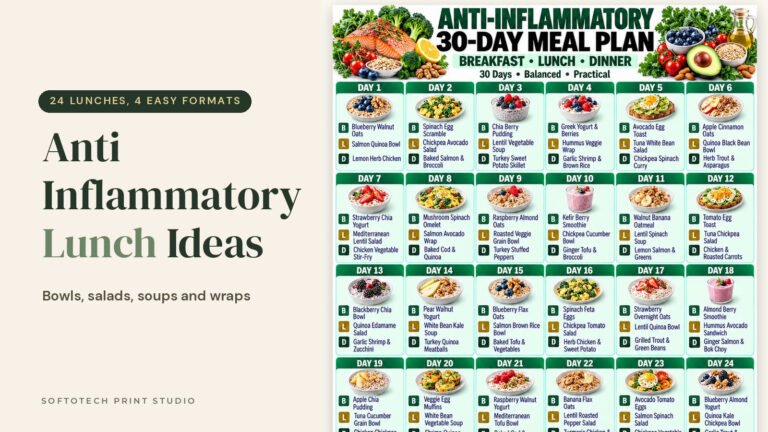 Diet & Food ListsAnti Inflammatory Lunch Ideas: 24 Bowls, Salads, Soups and Wraps From a 30 Day Meal Plan, With a Packed Lunch Week