Good type 2 diabetes snacks follow a simple rule: don’t eat a carb on its own. Pair it with some protein or healthy fat, keep the portion modest, and choose whole foods over packets. An apple with peanut butter, berries with Greek yogurt or hummus with crunchy vegetables are all easy examples.
This guide is built on the Diabetic-Friendly Snack List, one of five guides in the Diabetes and Blood Sugar Bundle from SoftoTech Print Studio. The chart has 62 numbered snacks in six groups, under the line 60+ easy snack ideas, simple pairings, carb-aware choices. I’ll go through all six groups, explain the snack formula printed on the chart, then cover portions, labels and timing, with guidance from Cleveland Clinic and NIDDK.
A note before we start. Diabetes needs vary a lot. The right snack for you depends on your medicines, activity and blood sugar readings. The chart itself says it is general educational reference only, not medical advice, and so is this guide. If you take insulin or tablets that can cause low blood sugar, ask your care team how snacks fit your plan.
In this guide:
- 62 Type 2 Diabetes Snacks in Six Groups
- Build a Snack: Protein Plus Fiber-Rich Carb Plus Healthy Fat
- Portions, Labels and the Snacks to Enjoy Less Often
- When to Snack and a Worked Snack Week
- Frequently Asked Questions

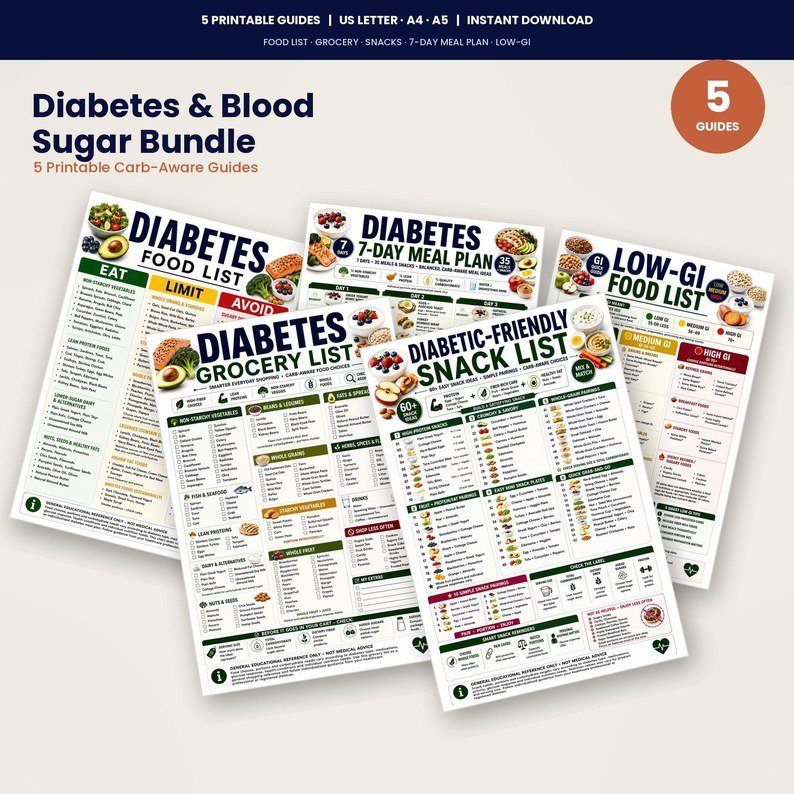
- 5 printable guides: Food List, Grocery List, Snack List, 7-Day Meal Plan and Low-GI Food List
- The Diabetic-Friendly Snack List has 60+ easy snack ideas in six numbered groups
- Build a Satisfying Snack strip: protein plus fiber-rich carb plus healthy fat
- Also on the snack list: 10 Simple Snack Pairings, Check the Label and Smart Snack Reminders
- All 5 guides come in US Letter, A4 and A5 · Instant download
Use code BLOG10 for 65% OFF at Etsy checkout!
62 Type 2 Diabetes Snacks in Six Groups
The snack list is laid out in six numbered panels. The names below are as printed. Where the chart gives a portion, I’ve included it.
Group 1: High-protein snacks (1 to 10).
- Plain Greek yogurt, about 3/4 to 1 cup
- Cottage cheese, 1/2 cup
- Hard-boiled eggs, 1 to 2 eggs
- Plain skyr, 1 serving
- Tuna cucumber bites
- Turkey roll-ups (turkey and veggies)
- Edamame, 1/2 to 1 cup
- Tofu bites
- String cheese, 1 stick
- Plain kefir (the chart says check label)
Group 2: Fruit plus protein or fat pairings (11 to 20). Apple and peanut butter; pear and almonds; berries and Greek yogurt; strawberries and cottage cheese; blueberries and walnuts; peach and cottage cheese; apple and cheese; raspberries and Greek yogurt; blackberries and pistachios; orange and almonds. The panel’s footnote reads: whole fruit portions and individual glucose responses vary.
Group 3: Crunchy and savory (21 to 30). Cucumber and hummus; bell pepper and hummus; celery and peanut butter; carrots and hummus; roasted chickpeas; edamame; almonds; walnuts; pistachios; pumpkin seeds.
Group 4: Easy mini snack plates (31 to 40). Egg, cucumber and tomato; cheese, apple and almonds; hummus and veggie plate; turkey and avocado roll-ups; cottage cheese and berries; Greek yogurt, chia and berries; tuna, cucumber and tomato; edamame and veggies; egg, avocado and tomato; tofu, cucumber and peppers.
Group 5: Whole-grain pairings (41 to 50). Whole-grain crackers and tuna; whole-grain crackers and cheese; whole-grain toast and avocado; whole-grain toast and egg; whole-grain toast and peanut butter; small oatmeal and chia; oatmeal and walnuts; whole-grain pita and hummus; whole-grain crackers and hummus; small popcorn and nuts. This panel carries its own reminder: check serving size and total carbohydrate.
Group 6: Quick grab-and-go (51 to 62). Hard-boiled egg and almonds; string cheese and apple; Greek yogurt and berries; cottage cheese cup; edamame cup; nut and seed mix (unsweetened); tuna pouch and cucumber; hummus cup and vegetables; unsweetened yogurt and chia; peanut butter and celery; cheese and pear; roasted chickpeas and nuts.
Some snacks appear in more than one group, like edamame and Greek yogurt with berries. That’s fine; they’re simply good fits for more than one situation. The low-carb ones, with little or no starch or sugar, are mostly in groups 1 and 3: eggs, cheese, tuna, tofu, plain nuts and seeds, and vegetables with hummus.
The bundle’s other guides include a full food list and a low-GI chart. Our low glycemic food list guide explains how GI fits in, if you want to pick fruit and grains with that in mind.
Build a Snack: Protein Plus Fiber-Rich Carb Plus Healthy Fat
Across the top of the snack list is a strip called Build a Satisfying Snack. It shows three parts joined with plus signs:
| Part | Examples printed on the chart | Why it helps |
|---|---|---|
| Protein | Eggs, yogurt, cottage cheese, tuna, tofu | Makes the snack more filling |
| Fiber-rich carb | Fruit, whole grains, beans, vegetables | Gives you some energy, with fiber to go with it |
| Healthy fat | Nuts, seeds, avocado | Adds staying power and flavour |
A badge beside it says mix and match. You don’t need all three every time. Many of the 62 snacks are just two parts, like apple and peanut butter (carb and fat) or cottage cheese and berries (protein and carb).
Cleveland Clinic gives the same advice in its guide to snacks for type 2 diabetes: pair a carbohydrate with a protein or a fat rather than eating it alone. The chart’s Smart Snack Reminders panel says it in four words: pair carbs, with protein or fat when appropriate.
The 10 Simple Snack Pairings. Lower on the chart is a starred box with the ten pairings it highlights most:
- Apple and peanut butter
- Berries and Greek yogurt
- Cucumber and hummus
- Egg and avocado
- Pear and almonds
- Cottage cheese and berries
- Celery and peanut butter
- Whole-grain crackers and tuna
- Edamame and vegetables
- Cheese and apple
Underneath is the line pair, portion, enjoy. If you only learn ten snacks, learn these. They cover sweet and savory, use cheap everyday foods, and most need no cooking.
Making the pairings work at home. Keep one food from each part ready. A bowl of washed fruit, a tub of hummus, a box of eggs boiled on Sunday, a jar of unsalted nuts and a bag of cut vegetables give you most of the ten pairings without any planning.

- Color-coded EAT, LIMIT and AVOID columns with food groups under each
- Eat column groups include non-starchy vegetables, lean protein foods and lower-sugar dairy and alternatives
- Limit column groups include whole grains and starches, starchy vegetables and whole fruit
- Avoid column groups include sugary drinks, juices and liquid sugars, and sweets and desserts
- US Letter, A4 and A5 · Instant download · Print at home
Use code BLOG10 for 65% OFF at Etsy checkout!
Portions, Labels and the Snacks to Enjoy Less Often
Watch portions. The chart’s reminder reads: watch portions, especially concentrated carbohydrate foods. That means dried fruit, crackers, popcorn, granola and bread more than fresh vegetables. Cleveland Clinic suggests keeping snacks modest, generally under 200 calories, and gives a portion of nuts as about one ounce, or a quarter cup. Nuts are healthy but easy to overeat straight from the bag, so portion them into small tubs.
Check the label. The snack list has a Check the Label panel with five things to look at:
- Serving size: check how much the label represents.
- Total carbohydrate: look beyond sugar alone.
- Dietary fiber: compare similar products.
- Added sugars: choose lower added-sugar options.
- Protein: look for quality protein.
Cleveland Clinic also points to total carbohydrate, not just sugar, as the number to read. A yogurt pot or bag of crackers can be two servings, so the serving size line matters too.
Not as helpful, enjoy less often. The chart has a red panel for snacks to cut back on: sugary drinks; candy and chocolate; cookies, pastries and donuts; sweetened coffee drinks; highly sweetened yogurts; frosted breakfast bars; and sugar-sweetened snacks. Its note says small portions on occasion are okay, and to focus on balance most of the time. That’s a fair approach. A rigid ban often ends in a binge.
Drinks count. NIDDK suggests choosing drinks with little or no added sugar, such as water, low-fat or non-fat milk, and unsweetened tea, coffee or sparkling water, and cutting back on soda, juice, flavoured coffee and sports drinks. Cleveland Clinic makes the same point about liquid carbs.
Where the food list fits. The second box, the Diabetes Food List, shows where snack foods sit overall. Non-starchy vegetables, lean protein foods and lower-sugar dairy are in Eat. Whole grains, starchy vegetables and whole fruit are in Limit, with the note to choose whole fruit more often than juice. Sugary drinks, juices and sweets are in Avoid. Our diabetes diet food list guide walks that chart in full.
When to Snack and a Worked Snack Week
Do you need snacks at all? Not everyone with type 2 diabetes does. NIDDK says what you eat, how much and when are all parts of a meal plan, and suggests talking with your health care professional about the best times to have meals and snacks. Cleveland Clinic suggests not going more than about five hours without eating. For many people, that means a snack in the afternoon between lunch and a late dinner.
Good reasons to snack: a long gap between meals, being active, or advice from your care team because of your medicines. Less good reasons: boredom, the TV, or a packet that happens to be open.
A worked week of afternoon snacks. One snack a day, rotating through the groups. The snacks are from the chart; the schedule is my suggestion.
| Day | Snack (chart number) | Parts |
|---|---|---|
| Monday | Apple and peanut butter (11) | Carb and fat |
| Tuesday | Cucumber and hummus (21) | Vegetable and protein |
| Wednesday | Hard-boiled egg and almonds (51) | Protein and fat |
| Thursday | Greek yogurt, chia and berries (36) | Protein, carb and fat |
| Friday | Whole-grain crackers and tuna (41) | Carb and protein |
| Saturday | Cheese, apple and almonds (32) | Protein, carb and fat |
| Sunday | Edamame and veggies (38) | Protein and vegetable |
Snacks by craving. It helps to know which snacks answer which craving, so you’re not left reaching for the biscuit tin.
- Something sweet: berries and Greek yogurt (13), blueberries and walnuts (15), peach and cottage cheese (16), or raspberries and Greek yogurt (18). Fruit gives the sweetness; the yogurt, cottage cheese or nuts make it last.
- Something salty and crunchy: roasted chickpeas (25), pistachios (29), pumpkin seeds (30), or a small popcorn and nuts (50). Choose unsalted or lightly salted versions where you can.
- Something creamy: hummus with vegetables, cottage cheese, or unsweetened yogurt and chia (59).
- Something warm: small oatmeal and chia (46), oatmeal and walnuts (47), or whole-grain toast with egg (44). The chart reminds you to check serving size and total carbohydrate on these grain-based ones.
- Something more like a mini meal: the snack plates in group 4, like egg, avocado and tomato (39) or tofu, cucumber and peppers (40).
A Sunday prep list. Boil six eggs. Wash and cut a tub of cucumber, celery, carrots and bell pepper. Portion unsalted nuts into small containers, about a quarter cup each. Buy plain Greek yogurt or skyr in a large tub, plus a bag of frozen berries. Keep hummus, a few tuna pouches and whole-grain crackers in the cupboard. That’s enough for most of the 62 snacks with no daily effort.
Snacks on the road. For travel or long days out, the grab-and-go group is built for it: a nut and seed mix, string cheese and an apple, a tuna pouch, or roasted chickpeas. Pack them before you leave so you’re not relying on a petrol station or vending machine.
At work. Keep a tub of unsweetened nut and seed mix (56) in your desk, and bring a tuna pouch (57) or a cottage cheese cup (54) when the office fridge is free.
Evening snacks. If you’re hungry after dinner, a protein-based snack like cottage cheese, Greek yogurt or a boiled egg is a better choice than crackers or cereal. If you take medicine that can cause low blood sugar overnight, ask your care team what they recommend.
Low blood sugar is different. A planned snack is not the same as treating a hypo. If you have symptoms of low blood sugar, follow the treatment plan your care team gave you. The snacks in this guide are for everyday hunger, not for treating a low.
Track your own response. The chart’s last reminder is personal response matters: glucose responses differ. If you use a meter or sensor, check how a new snack affects you, and keep the ones that work. For snacks that fit into full days of eating, see our diabetes diet meal plan, and for lower-calorie options our healthy snacks for weight loss guide.
Frequently Asked Questions
What are good snacks for type 2 diabetes?
Snacks that pair a carb with protein or fat, like apple with peanut butter, berries with Greek yogurt, hummus with vegetables or whole-grain crackers with cheese. All of those are on the Diabetic-Friendly Snack List in this guide. Plain nuts, hard-boiled eggs, edamame and string cheese are low-carb options.
How many carbs should a diabetic snack have?
There isn’t one number for everyone, because carb needs depend on your medicines, activity and blood sugar goals. Ask your doctor or dietitian for your own target. Cleveland Clinic’s general guidance is to pair carbs with protein or fat, read the total carbohydrate on the label, and keep snacks to a modest size.
Is fruit OK for type 2 diabetes snacks?
Yes, whole fruit in sensible portions. The snack list pairs fruit with a protein or fat, like strawberries with cottage cheese or pear with almonds, and notes that whole fruit portions and individual glucose responses vary. The food list puts whole fruit in Limit and fruit juice in Avoid.
Should people with type 2 diabetes snack at all?
It depends on the person. Some people need snacks to avoid long gaps between meals or low blood sugar from certain medicines, and others manage fine on three meals. NIDDK suggests talking with your health care team about when you should eat. Snack because you’re hungry or need to, not out of habit.
What snacks should diabetics avoid?
The snack list’s Not As Helpful, Enjoy Less Often panel names sugary drinks, candy and chocolate, cookies, pastries and donuts, sweetened coffee drinks, highly sweetened yogurts, frosted breakfast bars and sugar-sweetened snacks. It adds that small portions on occasion are okay.
This guide is for general information and is not medical advice. Diabetes needs vary from person to person. Talk to your doctor, diabetes nurse or a registered dietitian about snacks and carb targets, especially if you take insulin or medicines that can cause low blood sugar.
Related Guides
- Diabetes Diet Food List
- Diabetes Diet Meal Plan
- Low Glycemic Food List
- Healthy Snacks for Weight Loss
Sources
Sources: Cleveland Clinic, Snacks for Type 2 Diabetes, NIDDK, Healthy Living with Diabetes
 Diet & Food ListsLow Cholesterol Lunch Ideas: 30 Soups, Bowls, Wraps and Salads From a 30 Day Meal Plan, With Swaps and a Prep Week
 Diet & Food ListsPrediabetes Breakfast Ideas: 7 Balanced Breakfasts From a Weekly Meal Plan, Plus Swaps From an Eat, Limit and Avoid List
 Diet & Food ListsAnti Inflammatory Lunch Ideas: 24 Bowls, Salads, Soups and Wraps From a 30 Day Meal Plan, With a Packed Lunch Week