
If you’ve just brought a tortoise home, the first worry is usually food. A tortoise safe foods list tells you what it can eat from the fridge, what it can graze in the garden and what will make it ill, all in one place, so you aren’t searching your phone every time you pick a dandelion.
This guide is built around the Tortoise Safe Food Chart from SoftoTech Print Studio. It sorts 66 numbered foods into leafy greens, weeds and foraged plants, edible flowers, vegetables, fruit, foods to limit and foods to avoid. The listing title rounds that to 60+ foods. There’s also a plate guide, six feeding safety rules and a short panel on how species differ.
I’ll walk through every section of the chart, show what a varied week of plates can look like, and then cover a second printable from the same shop: a cat safe food list, for homes where a cat lives alongside the tortoise.
One thing to know up front. Tortoises are not all the same. A Hermann’s tortoise from the Mediterranean and a red foot tortoise from South America eat differently in the wild, and the chart says so in its own words: one food chart does not fit every tortoise. It doesn’t give portion sizes or how often to feed each food, so you’ll need to set those for your own animal.
So a plain caution before we start. This is general pet care information, not a diet prescribed for your tortoise. A vet who treats reptiles is the right person to set the diet for your species, age and health, and VCA Animal Hospitals advises having a new tortoise checked by a reptile vet within a week of bringing it home.
In this guide:
- The 66 Foods on the Tortoise Safe Food Chart
- A Worked Week of Varied Tortoise Plates
- The Cat Safe Food List for Homes With More Than One Pet
- Feeding Safety Rules Every Tortoise Keeper Should Follow
- Frequently Asked Questions

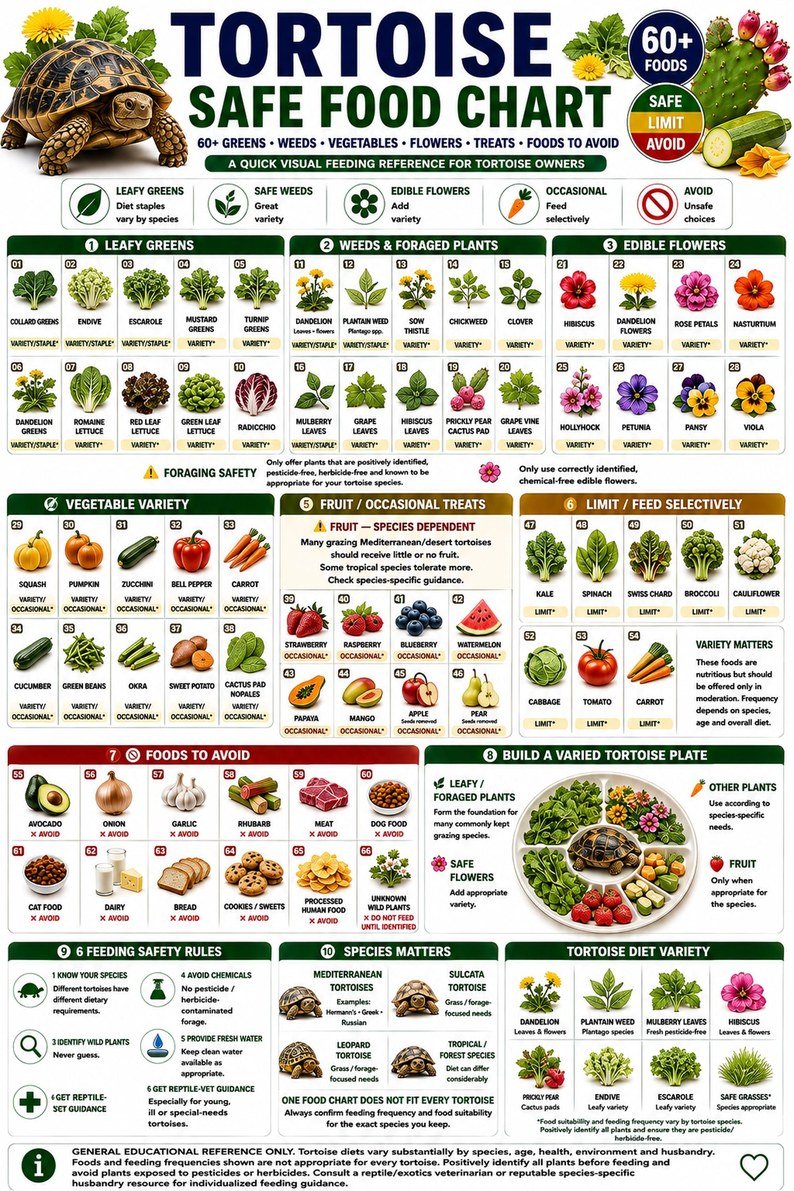
- 66 numbered foods with photos, sorted into leafy greens, weeds and foraged plants, edible flowers, vegetables, fruit, foods to limit and foods to avoid
- Safe weeds include dandelion, plantain weed, sow thistle, chickweed, clover, mulberry leaves and prickly pear cactus pad
- Edible flowers include hibiscus, rose petals, nasturtium, hollyhock, pansy and viola, with a chemical free note
- A build a varied tortoise plate guide, six feeding safety rules and a species matters panel
- Print sizes US Letter, A4 and A5, as 3 PDFs plus a PNG and a ZIP per the listing
- Instant download · Print at home · US Letter · A4 · A5
Use code BLOG10 for 65% OFF at Etsy checkout!
The 66 Foods on the Tortoise Safe Food Chart
The chart is headed Tortoise Safe Food Chart, with a badge for 60+ foods and a traffic light key: safe, limit and avoid. Under the title runs a line that sums it up: greens, weeds, vegetables, flowers, treats and foods to avoid, as a quick visual feeding reference for tortoise owners. Every food has its own numbered tile with a photo and a small label telling you how to use it.
Across the top is a key with five icons. Leafy greens are marked as diet staples that vary by species. Safe weeds give great variety. Edible flowers add variety. Occasional foods are fed selectively. And the red avoid icon means unsafe choices. Keep those five ideas in your head and the rest of the chart reads easily.
Section 1, leafy greens (foods 1 to 10). Collard greens, endive, escarole, mustard greens, turnip greens, dandelion greens, romaine lettuce, red leaf lettuce, green leaf lettuce and radicchio. The first three are labeled variety or staple, and the rest are labeled variety. These line up well with the vets’ advice. VCA lists spring mix, kale, collard or turnip greens and broccoli leaves as the leafy greens most tortoises should be fed, and the Merck Veterinary Manual names romaine, green leaf lettuce and endive as part of its vegetable mix for larger tortoises.
Section 2, weeds and foraged plants (foods 11 to 20). Dandelion leaves and flowers, plantain weed (the garden weed, Plantago species, not the banana), sow thistle, chickweed, clover, mulberry leaves, grape leaves, hibiscus leaves, prickly pear cactus pad and grape vine leaves. For a lot of grazing species, this is the most natural part of the diet. Wild tortoises eat natural vegetation rather than shop lettuce, so weeds bring the plate closer to what they’d find for themselves.
Under this section is a yellow foraging safety warning. Only offer plants that are positively identified, pesticide free, herbicide free and known to be appropriate for your tortoise species. That’s the single most important line on the chart, and I’ll come back to it in the safety section.
Section 3, edible flowers (foods 21 to 28). Hibiscus, dandelion flowers, rose petals, nasturtium, hollyhock, petunia, pansy and viola. The chart adds a note: only use correctly identified, chemical free edible flowers. VCA also mentions chemical free hibiscus flowers by name. Flowers from a florist or garden center may have been sprayed, so grow your own or pick from a garden you know has never been treated.
Section 4, vegetable variety (foods 29 to 38). Squash, pumpkin, zucchini, bell pepper, carrot, cucumber, green beans, okra, sweet potato and cactus pad (nopales). These are all labeled variety or occasional. They’re useful for adding color and texture to a plate of greens, not for making up most of it.
Section 5, fruit and occasional treats (foods 39 to 46). Strawberry, raspberry, blueberry, watermelon, papaya, mango, apple and pear, with the apple and pear marked seeds removed. All are labeled occasional, and this section has its own warning headed fruit, species dependent. Many grazing Mediterranean and desert tortoises should receive little or no fruit. Some tropical species tolerate more. Check species-specific guidance. The Merck manual backs this up from the nutrition side: cultivated fruits are typically poorer sources of protein, calcium and micronutrients than greens.
Section 6, limit or feed selectively (foods 47 to 54). Kale, spinach, Swiss chard, broccoli, cauliflower, cabbage, tomato and carrot. A note beside them, headed variety matters, says these foods are nutritious but should be offered only in moderation, with frequency depending on species, age and overall diet.
Two things here are worth pointing out honestly. Carrot shows up twice, once in the vegetable section and again in the limit section, so treat it as a limited extra. And kale sits in the limit group, while VCA lists kale among its everyday leafy greens and Merck includes it in the vegetable mix. Sources simply differ on how much kale to use. If you’re unsure, rotate it with the greens in section 1 rather than feeding it every day, and ask your vet.
Section 7, foods to avoid (foods 55 to 66). Avocado, onion, garlic, rhubarb, meat, dog food, cat food, dairy, bread, cookies and sweets, processed human food, and unknown wild plants. That last tile carries an extra line: do not feed until identified.
The dog food and cat food tiles matter more than they look. Tortoises are herbivores, and the Merck manual explains that they need plant material to keep their gut working properly, since much of their nutrition comes from microbes fermenting plant fiber. Pet foods made for meat eaters are the wrong fuel. Merck also notes that fast growth on high protein diets has been linked to shell deformities, which is another reason to keep meat and pet food off the menu.
Below the food sections are three panels. Section 8, build a varied tortoise plate, shows a round plate with a tortoise in the middle. Leafy and foraged plants form the foundation for many commonly kept grazing species. Safe flowers add appropriate variety. Other plants are used according to species-specific needs. And fruit goes on only when appropriate for the species.
Section 9 lists the feeding safety rules, and section 10 is headed species matters. It splits tortoises into four groups: Mediterranean tortoises (Hermann’s, Greek and Russian are the examples), the sulcata tortoise and the leopard tortoise (both grass and forage focused), and tropical or forest species, whose diet can differ considerably. Along the bottom is a tortoise diet variety strip showing dandelion, plantain weed, mulberry leaves, hibiscus, prickly pear, endive, escarole and safe grasses, plus a general educational reference note.
A Worked Week of Varied Tortoise Plates
The chart’s plate guide is easy to understand but harder to turn into real meals on a Tuesday. So here’s one way to rotate the foods from the chart across a week. I’ve written it for a typical grazing species such as a Hermann’s, Greek or Russian tortoise, so there’s no fruit in it at all, following the chart’s own note that many Mediterranean tortoises should get little or none.
Please read this table as an example of variety, not as amounts or a feeding schedule. The chart doesn’t give portion sizes or frequencies, and neither do I. Young tortoises, small tortoises and different species need different amounts, and the Merck manual notes that small tortoises should be fed more often than large ones. Your vet can tell you how much and how often.
| Day | Base greens (section 1) | Weeds or flowers (sections 2 and 3) | Small extra (section 4 or 6) |
|---|---|---|---|
| Monday | Collard greens and endive | Dandelion leaves and flowers | A little grated squash |
| Tuesday | Escarole and romaine lettuce | Plantain weed and clover | None |
| Wednesday | Turnip greens and red leaf lettuce | Hibiscus leaves and hibiscus flowers | A few green beans, chopped |
| Thursday | Mustard greens and green leaf lettuce | Sow thistle and chickweed | None |
| Friday | Dandelion greens and radicchio | Mulberry leaves and pansy or viola flowers | A small piece of bell pepper |
| Saturday | Collard greens and escarole | Grape leaves and rose petals | A little kale (from the limit group) |
| Sunday | Endive and romaine lettuce | Prickly pear cactus pad, chopped, and nasturtium | None |
Look at the pattern rather than the exact foods. Every day starts with two greens from section 1. Every day adds something from the weeds or flowers, which is where most of the variety comes from. And the extras are small and not daily. Nothing from the avoid list appears, and the limit foods turn up once.
The weeds and flowers depend on the season and on where you live. In spring you might have dandelions and clover everywhere. In winter you’ll lean on shop greens. That’s fine. The point is to rotate, not to hit every tile every week.
If your tortoise is a sulcata or leopard tortoise, the chart describes both as grass and forage focused. VCA adds that all tortoises can be left outside in the warmer months to graze on grass that is free of fertilizers or pesticides. For a large grazing species, a safe lawn and good hay often do a lot of the work that the plate does for a small Mediterranean tortoise. The Merck manual says larger tortoises can eat grass or alfalfa hay along with a complete pelleted food made for tortoises, and that hay should be cut short because they can’t chew long strands well.
If you keep a red foot tortoise or another tropical species, the chart’s fruit section will matter more. VCA notes that red foot tortoises may also be offered earthworms and mealworms as a treat, which is a good example of how tropical species differ. Don’t copy a desert tortoise plan for a forest tortoise, or the other way round. Ask your vet what suits your species.
A few practical tips for the plate itself:
- Wash shop greens well and shake them dry. Chop larger leaves and pads so a small tortoise can manage them.
- Mix the greens and weeds together on the plate, so a picky tortoise can’t just eat the favorite and leave the rest.
- Take away uneaten food at the end of the day, before it wilts or goes moldy.
- Keep a fresh, shallow water dish available. The chart’s rule 5 says keep clean water available as appropriate.
It also helps to write your rotation down. Our weekly meal planner printable was made for people’s meals, but the seven day grid works just as well for a tortoise. Write the greens, weeds and extras for each day, and you’ll see at a glance if you’ve fed the same lettuce five days running.
Shopping gets easier too. Many of the section 1 greens are the same ones on our calcium-rich foods for bone health list, like collards and kale, so if you buy them for your own meals, set a few leaves aside for the tortoise before you season or cook anything. Only plain, raw, washed leaves go on the tortoise plate.
Finally, keep an eye on growth. The Merck manual says young tortoises should be weighed regularly and should follow a growth curve, because growing too slowly or too fast can cause permanent shell malformation. A kitchen scale and a notebook are enough. Bring the record to your vet visits.
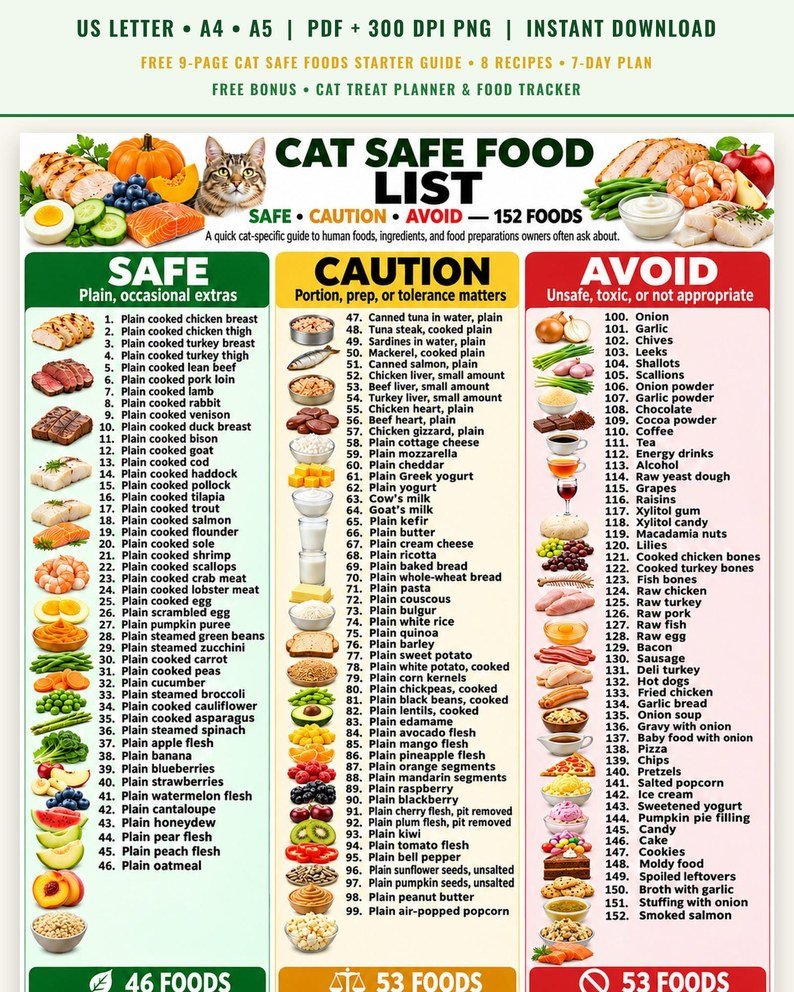
- 152 numbered foods in three color coded columns: 46 safe, 53 caution and 53 avoid
- Safe foods are mostly plain cooked meats and fish, plus small amounts of plain vegetables and fruit
- The avoid column includes onion, garlic, chives, chocolate, grapes, raisins, xylitol, macadamia nuts and lilies
- A handy second chart for homes where a cat lives alongside a tortoise
- Print sizes US Letter, A4 and A5, as 3 PDFs plus a 300 DPI PNG and a ZIP per the listing
- Instant download · Print at home · US Letter · A4 · A5
Use code BLOG10 for 65% OFF at Etsy checkout!
The Cat Safe Food List for Homes With More Than One Pet
The second printable isn’t about tortoises. The shop has only one tortoise chart, so for the second box I’ve picked the closest pet care item it sells: the Cat Safe Food List. It’s here for the many homes where a tortoise shares the house with a cat, and for anyone who wants every pet’s food rules on the fridge.
It’s a three column chart that sorts 152 common foods into safe, caution and avoid, numbered 1 to 152. A line under the title calls it a quick cat-specific guide to human foods, ingredients and food preparations owners often ask about.
The safe column, headed plain, occasional extras, has 46 foods. Almost all are plain cooked meats and fish: chicken breast, chicken thigh, turkey breast, lean beef, pork loin, lamb, rabbit, venison, duck breast, bison, goat, cod, haddock, pollock, tilapia, trout, salmon, flounder, sole, shrimp, scallops, crab meat and lobster meat, plus plain cooked or scrambled egg. Then come small amounts of plain vegetables and fruit, like pumpkin puree, steamed green beans, zucchini, carrot, peas, cucumber, broccoli, cauliflower, asparagus and spinach, and apple flesh, banana, blueberries, strawberries, watermelon flesh, cantaloupe, honeydew, pear flesh, peach flesh and plain oatmeal.
The caution column, headed portion, prep or tolerance matters, has 53 foods. It includes things like canned tuna in water, sardines in water, chicken liver and turkey liver in small amounts, cottage cheese, mozzarella, cheddar, Greek yogurt, cow’s milk and goat’s milk, bread, rice, pasta, sweet potato, corn kernels, beans, edamame, avocado flesh, tomato flesh, plain unsalted seeds, peanut butter and plain air-popped popcorn.
The avoid column, headed unsafe, toxic or not appropriate, has 53 foods. Onion, garlic, chives, leeks, shallots and scallions top the list, along with onion and garlic powder, chocolate, cocoa powder, coffee, tea, energy drinks, alcohol, raw yeast dough, grapes, raisins, xylitol gum and candy, macadamia nuts and lilies. It also lists cooked bones, raw meats, raw fish, raw egg and many processed foods such as bacon, sausage, deli turkey, hot dogs, pizza, chips, ice cream and cake.
What’s interesting, putting the two charts side by side, is how opposite they are. The cat chart’s safe column is mostly cooked meat and fish, which sit firmly on the tortoise chart’s avoid list. The tortoise chart’s safe column is mostly greens and weeds, which a cat would barely touch. A few foods land in the same place for both, like onion and garlic, which are on both avoid lists. That’s a useful reminder that one pet’s treat can be another pet’s problem.
In practice, that means keeping foods apart. Feed the cat away from the tortoise, and don’t let the tortoise reach the cat’s bowl. Cat food is on the tortoise chart’s avoid list for good reason. The listing also mentions extras with the cat chart: a cat treat planner and food tracker, plus a starter guide with recipes and a 7-day plan. Like the tortoise chart, it comes in US Letter, A4 and A5 as PDFs plus a 300 DPI PNG, per the listing.
The same caution applies here as for the tortoise. The listing says the poster carries an ask your vet reminder, and that’s good advice before you add any human food to a cat’s diet.
Feeding Safety Rules Every Tortoise Keeper Should Follow
The chart’s section 9 is headed six feeding safety rules. On the printed preview I could read five of them clearly: know your species, identify wild plants, avoid chemicals, provide fresh water and get reptile vet guidance. The rule numbered 2 doesn’t appear on the preview, and the last rule seems to be printed twice, so check your PDF when it arrives. Here’s what each readable rule means in practice.
Know your species. The chart says different tortoises have different dietary requirements. VCA lists the most common pet tortoises as the sulcata, red foot, Horsfield (Russian), Greek, Hermann’s and leopard tortoise. Sulcata and leopard tortoises come from Africa and prefer dry conditions, red foot tortoises come from Central and South America and need a more humid setup, and Greek, Russian and Hermann’s tortoises come from the Mediterranean. If you don’t know which species you have, find out before you settle on a diet.
Identify wild plants, and never guess. This is the rule people break most often. A plant that looks like a dandelion might not be one. Use a good plant guide or app, check against more than one source, and if you’re still unsure, leave it out. The chart’s last avoid tile says it plainly: unknown wild plants, do not feed until identified. VCA also warns that certain plants can be toxic, so don’t let a tortoise feed on garden shrubs and bushes.
Avoid chemicals. The chart says no pesticide or herbicide contaminated forage. That rules out roadside verges, sprayed lawns, parks you don’t know about and most bought flowers. VCA says the same about grazing: only grass that is free of fertilizers or pesticides.
Provide fresh water. Keep clean water available as appropriate. VCA suggests that most tortoises enjoy a shallow pool to soak in during the warmer months, with the water never higher than the tortoise’s head.
Get reptile vet guidance. The chart adds especially for young, ill or special needs tortoises. VCA recommends a check by a vet familiar with reptiles within one week of getting a new tortoise, then at least once a year, with a stool test for parasites at each visit.
Food isn’t the only part of keeping a tortoise healthy, and it’s worth knowing the basics that sit around the diet. VCA points out that all tortoises need UV light, from the sun outdoors or from a UV bulb over an indoor enclosure, replaced every six months because the UV output wears off. Indoor tortoises also need a basking or heat lamp. Good food can’t make up for missing light and heat.
Signs that something is wrong are worth learning too. VCA lists warning signs when choosing a tortoise, including sunken or swollen shut eyes, discharge from the nose or eyes, a soft shell and inactivity. If you see any of these in your own tortoise, or if it stops eating, call your vet rather than changing the diet on your own.
And one rule for people. Wash your hands well after feeding, cleaning or handling a tortoise. VCA advises this to lower the risk of Salmonella infection. Keep tortoise plates and dishes separate from your kitchen things.
A last thought on fiber. Since the Merck manual explains that tortoises rely on fiber being fermented in the gut, plenty of leafy, fibrous plants is the backbone of the chart. People need fiber too, though in very different foods, and if you’re curious about the human side, our high-fiber foods list for gut health covers it. Similarly, dark leafy greens feature on our anti-inflammatory food list for people, which is a nice excuse to buy one big bag of greens for the whole household. Just keep the tortoise’s share plain and raw.
Print the tortoise chart where you prepare the food. A4 or US Letter suits a kitchen wall or the side of the enclosure, and the A5 size fits inside a care folder with your vet notes and weight records.
Frequently Asked Questions
What foods are safe for tortoises?
The chart lists leafy greens such as collard greens, endive, escarole, mustard greens, turnip greens, dandelion greens and romaine as the base. Safe weeds like dandelion, plantain weed, sow thistle, chickweed and clover add variety, and so do chemical free flowers such as hibiscus, rose petals, pansy and viola. Vegetables like squash and bell pepper are occasional extras.
Can tortoises eat fruit?
It depends on the species. The chart says many grazing Mediterranean and desert tortoises should receive little or no fruit, while some tropical species tolerate more. The Merck Veterinary Manual adds that cultivated fruits are poorer sources of protein, calcium and micronutrients than greens. Ask your reptile vet what suits your tortoise.
What should tortoises never eat?
The chart’s avoid list has 12 tiles: avocado, onion, garlic, rhubarb, meat, dog food, cat food, dairy, bread, cookies and sweets, processed human food, and unknown wild plants. Tortoises are herbivores, so meat and pet foods made for meat eaters are the wrong food for them.
Can tortoises eat kale and spinach every day?
The chart puts kale, spinach, Swiss chard, broccoli, cauliflower, cabbage, tomato and carrot in its limit group, saying they are nutritious but should be offered only in moderation. Sources differ a little on kale, since VCA lists it among everyday leafy greens. Rotating these with the section 1 greens is a sensible middle path.
Can I feed my tortoise weeds from the garden?
Yes, if the plants are positively identified, known to be safe for your species and free of pesticides, herbicides and fertilizers. Never guess with a plant you don’t recognize. VCA also warns against letting tortoises feed on garden shrubs and bushes, since certain plants can be toxic.
This guide is general pet care information and is not veterinary advice. Check with your reptile vet before changing your tortoise’s diet.
Related Guides
- Calcium-Rich Foods for Bone Health
- High-Fiber Foods List for Gut Health
- Weekly Meal Planner Printable
- Anti-Inflammatory Food List
Sources
Sources: Merck Veterinary Manual, Nutrition in Tortoises, VCA Animal Hospitals, Owning a Tortoise
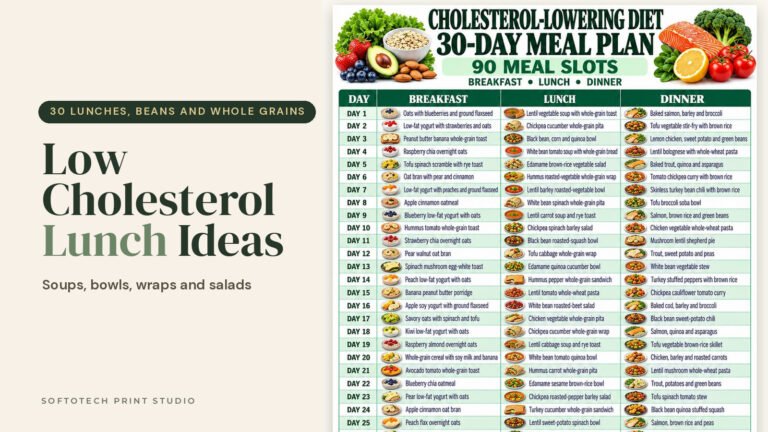 Diet & Food ListsLow Cholesterol Lunch Ideas: 30 Soups, Bowls, Wraps and Salads From a 30 Day Meal Plan, With Swaps and a Prep Week
 Diet & Food ListsPrediabetes Breakfast Ideas: 7 Balanced Breakfasts From a Weekly Meal Plan, Plus Swaps From an Eat, Limit and Avoid List
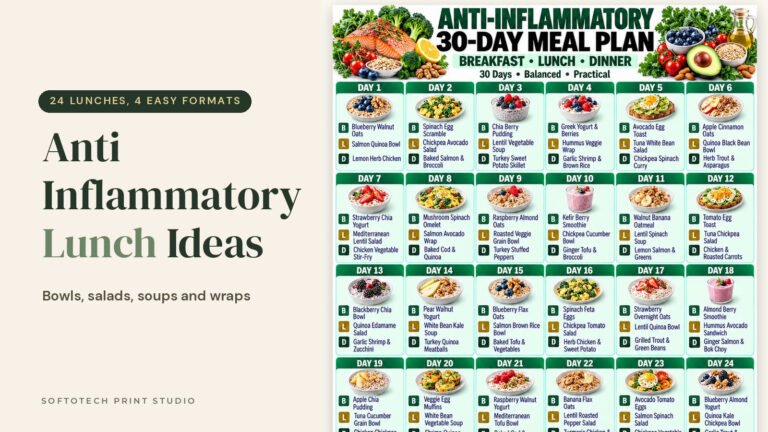 Diet & Food ListsAnti Inflammatory Lunch Ideas: 24 Bowls, Salads, Soups and Wraps From a 30 Day Meal Plan, With a Packed Lunch Week