
The easiest low sodium breakfast ideas start with foods that have no salt added to begin with: oats, fresh or frozen fruit, plain yogurt, eggs, unsalted nuts and seeds, and vegetables. Blueberry Walnut Oats, Peach Chia Yogurt, a Veggie Egg Omelet or an Avocado Tomato Toast on a lower salt bread all keep breakfast light on sodium. The trouble starts when the bread, the cheese and the bacon arrive.
Here’s the odd thing about breakfast and salt. Most breakfast foods don’t taste salty. Cereal tastes sweet. A croissant tastes buttery. Toast tastes of toast. But the FDA points out that foods like cereals and pastries can contain sodium without tasting salty, and that foods you eat several times a day, like bread, can add up even when one serving isn’t high.
So this guide does something a little different. It takes the 24 breakfasts I can read on the DASH Diet 30 Day Meal Plan from SoftoTech Print Studio and sorts them by how much label reading each one needs: none, one label, or two. Then the swaps, using the shop’s Low Sodium Food List, and a few ways to make the routine stick.
If your doctor has given you a sodium limit for high blood pressure, heart failure or kidney disease, that number comes first. This is general information.
In this guide:
- Breakfast Salt Comes From Packages, Not the Shaker
- 24 DASH Breakfasts Sorted by Label Risk
- Bread, Cheese, Bacon and Cereal Have Better Versions
- Five Minute, Make Ahead and Weekend Breakfasts
- Frequently Asked Questions
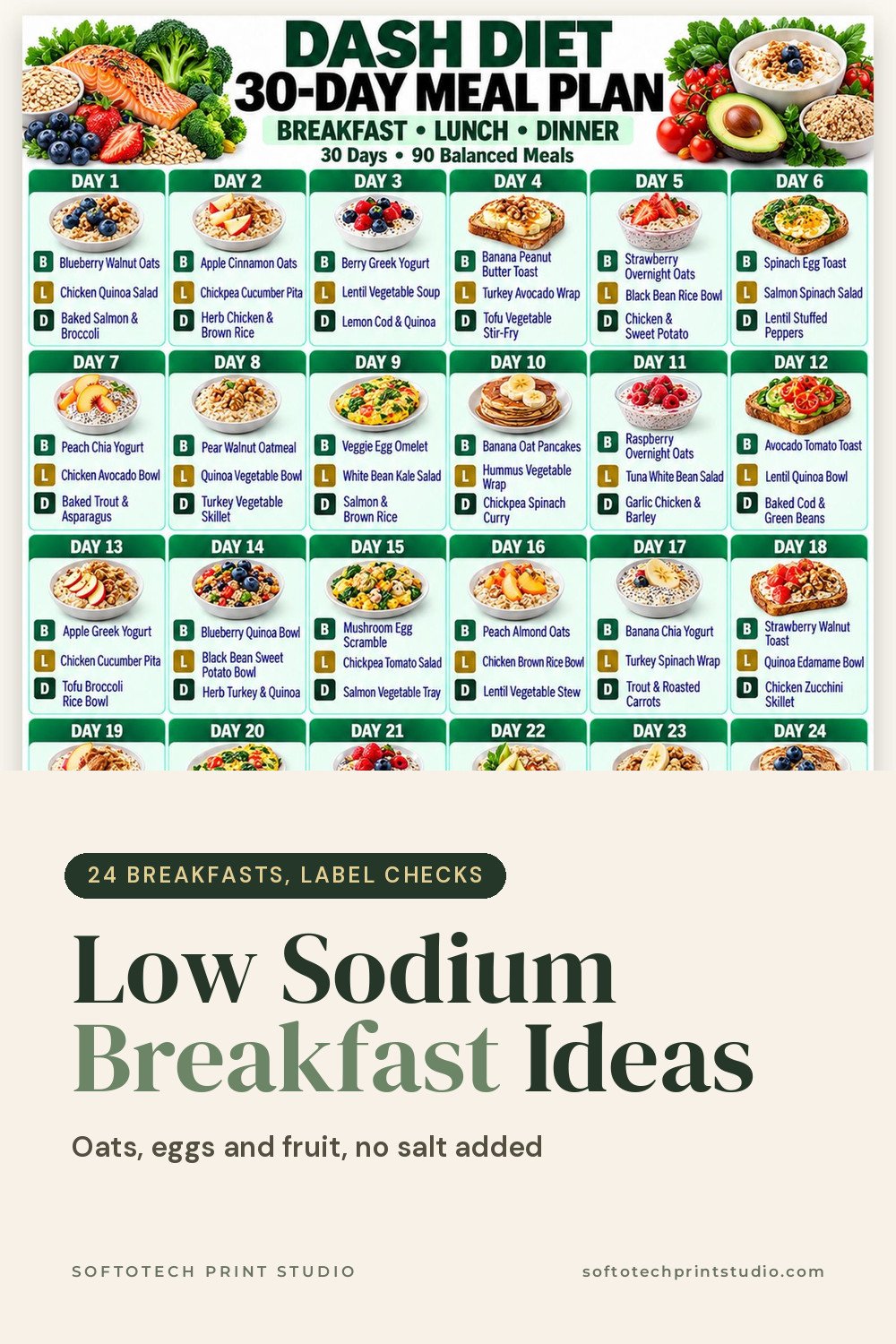
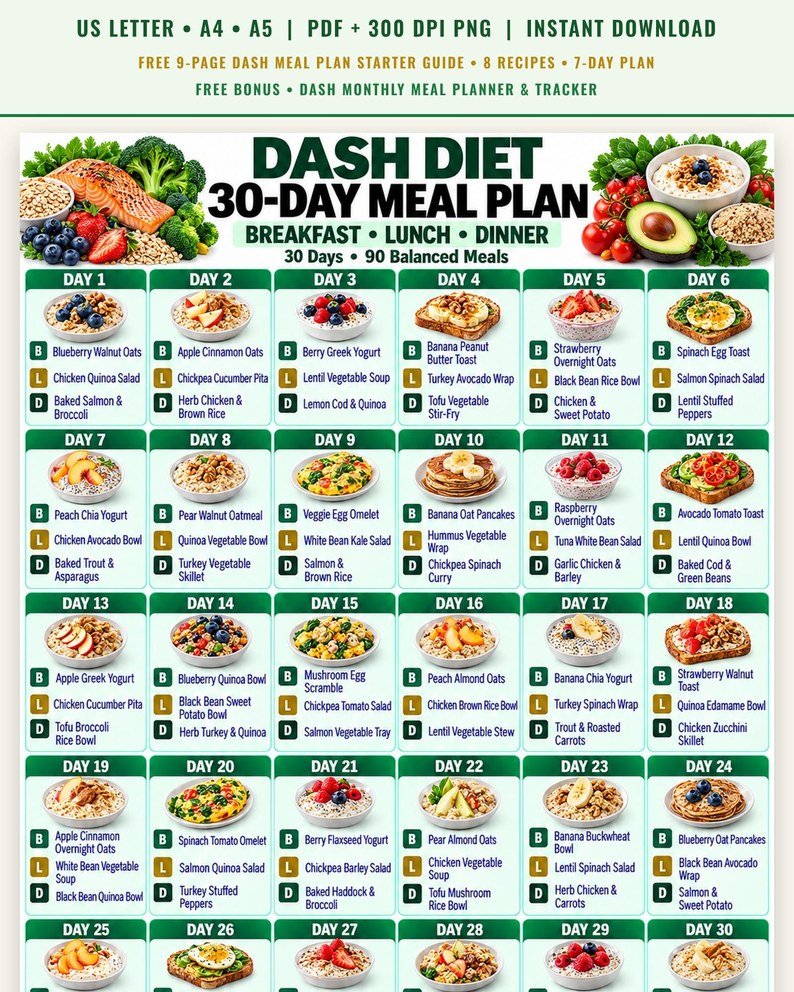
- 30 days and 90 balanced meals on one page: breakfast, lunch and dinner every day
- Breakfasts include Blueberry Walnut Oats, Veggie Egg Omelet, Peach Chia Yogurt and Banana Buckwheat Bowl
- Color-coded B, L and D labels with a food picture for every day
- Built around oats, fruit, yogurt, eggs, whole grains, fish, poultry and beans in the DASH style
- Comes with a 9-page DASH starter guide, 8 recipes, a 7-day plan and a monthly meal planner and tracker, per the listing
- Instant download · Print at home · US Letter · A4 · A5
Use code BLOG10 for 65% OFF at Etsy checkout!
Breakfast Salt Comes From Packages, Not the Shaker
The daily limits. The FDA’s Daily Value for sodium is less than 2,300 mg a day, about 1 teaspoon of table salt, and it says Americans eat on average about 3,400 mg. In the UK, the NHS says adults should have no more than 6 g of salt a day, around 1 level teaspoon, including the salt already in food.
Where it comes from. The FDA says over 70% of the sodium people eat comes from packaged and prepared foods, not the salt shaker. The NHS puts it at around three quarters, and its examples read like a breakfast menu: bread, breakfast cereals, meat products and ready meals.
The breakfast culprits on the FDA list. The FDA, citing the CDC, lists the foods that supply about 40% of the sodium Americans eat. Two of them are breakfast regulars: deli meat sandwiches, and egg dishes and omelets. The eggs aren’t the problem. The ham, cheese, bacon and salt that go in with them are.
A hidden one: baking soda. The FDA notes that sodium bicarbonate, which is baking soda, contributes to the sodium on a label. That’s worth knowing if you buy pancake mix, muffins or quick breads. Homemade pancakes made with fewer raising agents and no added salt usually come out lower.
The 10 second label check. The FDA’s rule of thumb: 5% Daily Value of sodium or less per serving is low, and 20% or more is high. Check the serving size too. The FDA’s package claims are handy shortcuts:
- Sodium free: less than 5 mg per serving.
- Very low sodium: 35 mg or less per serving.
- Low sodium: 140 mg or less per serving.
- Reduced sodium: at least 25% less than the regular product.
- No salt added or unsalted: no salt added during processing, but not necessarily sodium free.
For a complete list of lower sodium foods by group, see our low sodium food list guide.
24 DASH Breakfasts Sorted by Label Risk
The DASH chart shows breakfast, lunch and dinner for each of 30 numbered days, with color coded B, L and D labels. The breakfasts for Days 1 to 24 are clear on the listing photo; Days 25 to 30 run off the bottom, so I haven’t named them. Here are the 24, sorted by how many packaged, possibly salty ingredients each one has. The breakfasts and day numbers are the chart’s. The sorting is mine.
| Label risk | Breakfasts (chart day) | What to check |
|---|---|---|
| No label needed | Blueberry Walnut Oats (1), Apple Cinnamon Oats (2), Strawberry Overnight Oats (5), Pear Walnut Oatmeal (8), Raspberry Overnight Oats (11), Blueberry Quinoa Bowl (14), Peach Almond Oats (16), Apple Cinnamon Overnight Oats (19), Pear Almond Oats (22), Banana Buckwheat Bowl (23) | Use plain oats, unsalted nuts, water or milk |
| One label | Berry Greek Yogurt (3), Peach Chia Yogurt (7), Apple Greek Yogurt (13), Banana Chia Yogurt (17), Berry Flaxseed Yogurt (21), Veggie Egg Omelet (9), Mushroom Egg Scramble (15), Spinach Tomato Omelet (20) | The yogurt, or any cheese added to the eggs |
| Two labels | Banana Peanut Butter Toast (4), Spinach Egg Toast (6), Avocado Tomato Toast (12), Strawberry Walnut Toast (18), Banana Oat Pancakes (10), Blueberry Oat Pancakes (24) | The bread and the spread, or the pancake mix and any syrup |
Ten breakfasts need no label at all. That’s the headline. Oats, quinoa, buckwheat, fruit and unsalted nuts are naturally very low in sodium. If you want the simplest possible low sodium breakfast, pick from the top row and you’re done.
The one label breakfasts. Plain yogurt is usually modest in sodium, but the Low Sodium Food List’s dairy group carries a note: compare labels, because sodium varies among dairy products and plant based alternatives. The three egg dishes are fine as long as you season them with herbs and pepper and keep cheese off.
The two label breakfasts. Toast is where breakfast sodium sneaks up. Bread on its own isn’t usually high, but the FDA’s point about foods eaten several times a day applies: toast at breakfast, a sandwich at lunch and a roll with dinner adds up. Then there’s the spread. Peanut butter can be salted or unsalted. Pancakes depend on the mix.
The pattern of the column. Ten oat or grain bowls, five yogurt bowls, three egg dishes, four toasts, two pancake breakfasts. Fruit in almost every one. No bacon, no sausage, no ham, no cheese, no bagels. That’s the DASH shape at breakfast. For the full month, see our DASH diet meal plan guide.
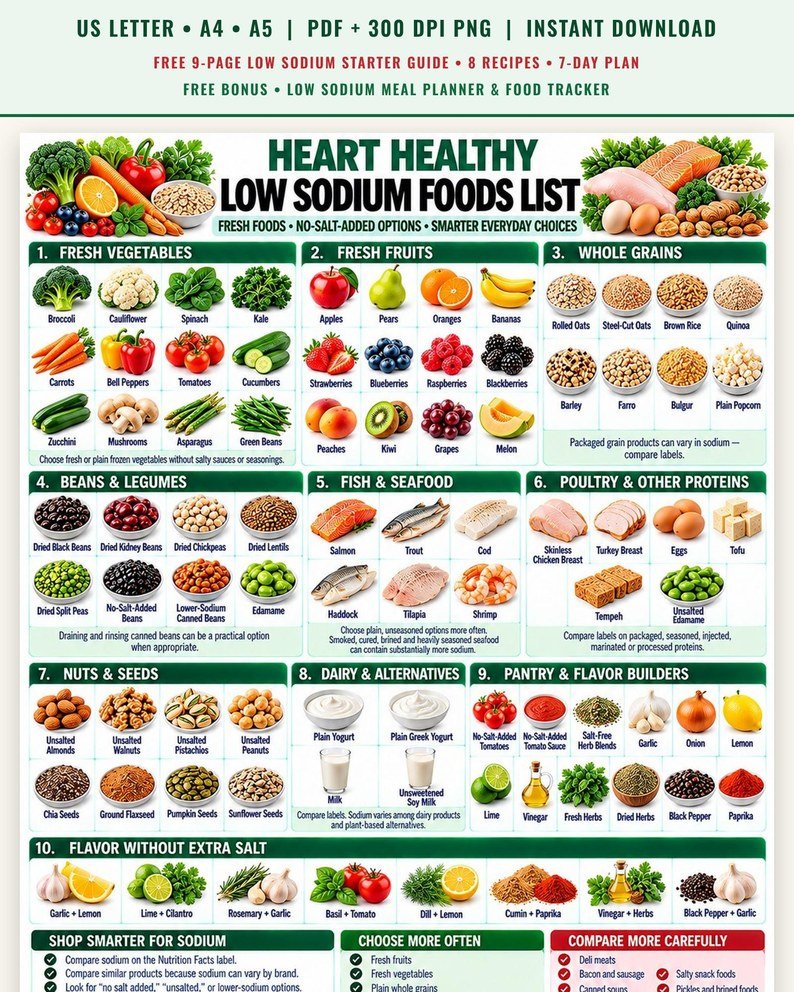
- 75+ pictured fresh and no-salt-added foods in 9 groups, from vegetables and whole grains to dairy and pantry flavor builders
- Breakfast basics include rolled and steel-cut oats, eggs, plain Greek yogurt, unsweetened soy milk and unsalted nuts and seeds
- 8 Flavor Without Extra Salt pairings, such as garlic and lemon or cumin and paprika
- Shop Smarter for Sodium, Choose More Often and Compare More Carefully panels
- Comes with a 9-page low sodium starter guide, 8 recipes, a 7-day plan and a meal planner and food tracker, per the listing
- Instant download · Print at home · US Letter · A4 · A5
Use code BLOG10 for 65% OFF at Etsy checkout!
Bread, Cheese, Bacon and Cereal Have Better Versions
The Low Sodium Food List from the same shop shows 75 plus fresh and no salt added foods in nine groups. At the bottom, a Compare More Carefully panel lists deli meats, bacon and sausage, canned soups, salty snack foods, and pickles and brined foods. Here’s how to handle the breakfast ones. The swaps use foods from the list’s own groups.
| Breakfast food | Why it’s tricky | Swap |
|---|---|---|
| Bacon, sausage | On the Compare More Carefully panel | Eggs or tofu from the poultry and other proteins group |
| Ham, deli turkey | Deli meats are on the same panel | Leftover home cooked chicken or turkey breast |
| Cheese on eggs or toast | The NHS lists cheese among salty foods to eat less often | Herbs, black pepper, tomato, avocado |
| Bread, bagels | Eaten often, adds up | Compare brands; or swap to oats or quinoa bowls |
| Flavored cereal, instant oats | Packaged grain products vary, says the list | Rolled or steel-cut oats from the whole grains group |
| Salted peanut butter | Salt added | Unsalted nut butter; unsalted almonds, walnuts, peanuts |
| Pancake mix | Baking soda and added salt | Homemade oat pancakes with no added salt |
The proteins to build on. The list’s poultry and other proteins group shows skinless chicken breast, turkey breast, eggs, tofu, tempeh and unsalted edamame, with a note to compare labels on packaged, seasoned, injected, marinated or processed proteins. The FDA makes the same point: check fresh meat and poultry packs to see if salt water or saline has been added.
Flavor without salt. The list has a Flavor Without Extra Salt strip with eight pairings: garlic and lemon, lime and cilantro, rosemary and garlic, basil and tomato, dill and lemon, cumin and paprika, vinegar and herbs, and black pepper and garlic. At breakfast, basil and tomato on eggs, dill and lemon on avocado toast, and cumin and paprika in a scramble all work. The NHS suggests herbs and spices, black pepper, garlic, chili or lemon juice instead of salt.
Taste first. The NHS suggests tasting food before adding extra salt and not keeping salt on the table if you’re trying to cut down. The FDA says your taste for sodium gradually decreases as you cut back, so eventually you may not miss it.
Our low sodium meal ideas guide has more ideas for every meal from a 90 meal DASH chart.
Five Minute, Make Ahead and Weekend Breakfasts
Instead of a daily plan, here are the 24 breakfasts sorted by how much time you have. Pick one from each row and you’ve got variety without thinking about it.
- Five minutes, no cooking: Berry Greek Yogurt, Peach Chia Yogurt, Apple Greek Yogurt, Banana Chia Yogurt, Berry Flaxseed Yogurt, Avocado Tomato Toast, Strawberry Walnut Toast, Banana Peanut Butter Toast.
- Make the night before: Strawberry Overnight Oats, Raspberry Overnight Oats, Apple Cinnamon Overnight Oats. Make two jars at once and you’ve covered two mornings.
- Ten minutes on the stove: Blueberry Walnut Oats, Apple Cinnamon Oats, Pear Walnut Oatmeal, Peach Almond Oats, Pear Almond Oats, Veggie Egg Omelet, Mushroom Egg Scramble, Spinach Tomato Omelet, Spinach Egg Toast.
- Weekend or batch cooked: Banana Oat Pancakes, Blueberry Oat Pancakes, Blueberry Quinoa Bowl, Banana Buckwheat Bowl. Cook a pot of quinoa or buckwheat on Sunday and the bowls take two minutes on a weekday.
The shopping list. Rolled oats, quinoa, buckwheat, plain Greek yogurt, eggs, a lower sodium bread you’ve compared, unsalted peanut butter, unsalted walnuts and almonds, chia and ground flaxseed, mushrooms, spinach, tomatoes, an avocado, and fruit: blueberries, strawberries, raspberries, bananas, apples, pears and peaches. Frozen berries and canned fruit in juice are fine.
Coffee shop and hotel breakfasts. The NHS notes salt is also found in takeaways and café meals. Porridge, fruit, yogurt and a boiled or poached egg are the safest picks on most breakfast menus. Skip the bacon roll, the cheese croissant and the hash browns, or have them as a once in a while treat.
Watch the medicine cabinet too. The NHS points out that some dissolvable tablets, such as painkillers and vitamins, may be high in salt, and suggests speaking to your GP before changing any medicines. A fizzy vitamin with breakfast can carry more salt than you’d expect.
For the evening meal, our low sodium dinner ideas guide does the same job for dinner, with sauce swaps and a sodium budget per plate.
Frequently Asked Questions
What is a good low sodium breakfast?
Oats with fruit and unsalted nuts, plain yogurt with fruit and chia or flaxseed, or eggs cooked with vegetables and herbs. Blueberry Walnut Oats, Berry Greek Yogurt and a Spinach Tomato Omelet from the DASH 30 day plan are good examples. Keep bread, cheese and processed meat to a minimum.
How much sodium should breakfast have?
There’s no official breakfast number. The FDA’s Daily Value for sodium is less than 2,300 mg a day, and the NHS says adults should have no more than 6 g of salt a day. Breakfast is the easiest meal to keep low, because simple foods like oats, fruit, eggs and plain yogurt start with little or no added salt.
Is oatmeal low in sodium?
Plain rolled or steel-cut oats cooked in water or milk are naturally low in sodium. Flavored instant oats can carry added salt, so check the label. The FDA’s rule of thumb is that 5% Daily Value of sodium or less per serving is low and 20% or more is high.
Are eggs high in sodium?
A plain egg isn’t a salty food, but egg dishes can be. The FDA lists egg dishes and omelets among the foods that, together with deli meat sandwiches, pizza and soups, supply about 40% of the sodium Americans eat. It’s the cheese, ham, bacon and salt added to them that does it.
Which breakfast foods are highest in salt?
The NHS says around three quarters of the salt we eat comes from packaged foods like bread, breakfast cereals, meat products and ready meals. At breakfast, that means bacon, sausage, ham, cheese, bagels and some cereals. The low sodium food list puts deli meats and bacon and sausage in its Compare More Carefully panel.
This guide is general information and is not medical advice. Check with your doctor before changing your diet, especially if you have high blood pressure, heart failure or kidney disease.
Related Guides
Sources
Sources: U.S. Food and Drug Administration, Sodium in Your Diet, NHS, Salt in your diet
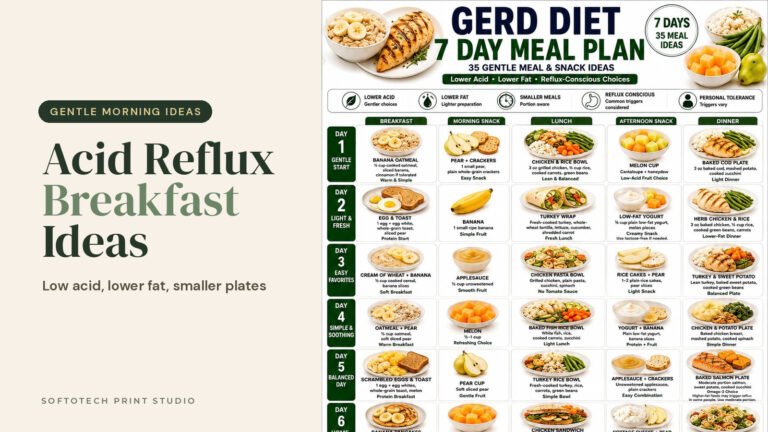 Diet & Food ListsAcid Reflux Breakfast Ideas: What to Leave Out, 7 Gentle Plan Breakfasts and How to Build Your Own
 Diet & Food ListsPCOS Breakfast Ideas: 16 Breakfasts From the Last Half of a 30 Day Plan, an Eat Limit Avoid Check and a Simple Formula
 Diet & Food ListsAnti Inflammatory Dinner Ideas: 24 Dinners From a 30 Day Plan, What to Limit at Night and a Weeknight Plan