
Most advice about eating to calm inflammation comes as a list of foods, and a set of anti-inflammatory diet meal ideas is what turns that list into lunch. Knowing that leafy greens, olive oil, nuts and salmon are good choices is a start. Putting them in a bowl you actually want to eat on a Wednesday is the part that sticks.
This guide is built around the Anti-Inflammatory Salad and Bowl Builder from SoftoTech Print Studio. Instead of a fixed list of recipes, it gives you a seven-step formula. Pick a green base, a whole grain, vegetables, a protein, a healthy fat, a topping and a dressing, and you’ve built a meal. The chart says you can make more than 50 combinations, and it shows eight finished bowls to get you started.
I’ll walk through each step, build a full day of meals from the chart, look at a 7-day plan that covers breakfasts, dinners and snacks too, and finish with the habits that make anti-inflammatory eating easier to keep up.
Some background first. Harvard Health explains that short bursts of inflammation protect your health, but inflammation that persists day in and day out has been linked to many major diseases, including heart disease, diabetes, arthritis and depression. It says food choices may help, and that the Mediterranean diet closely follows the ideas of anti-inflammatory eating. No single meal is a treatment, though. Treat this as general information and talk to your doctor or a dietitian about what suits you.
In this guide:
- Seven Steps Build a Balanced Anti-Inflammatory Bowl
- Worked Day: Anti-Inflammatory Meals From Morning to Night
- A 7-Day Anti-Inflammatory Plan Fills In Every Meal
- Anti-Inflammatory Meal Ideas Stick With a Few Simple Habits
- Frequently Asked Questions
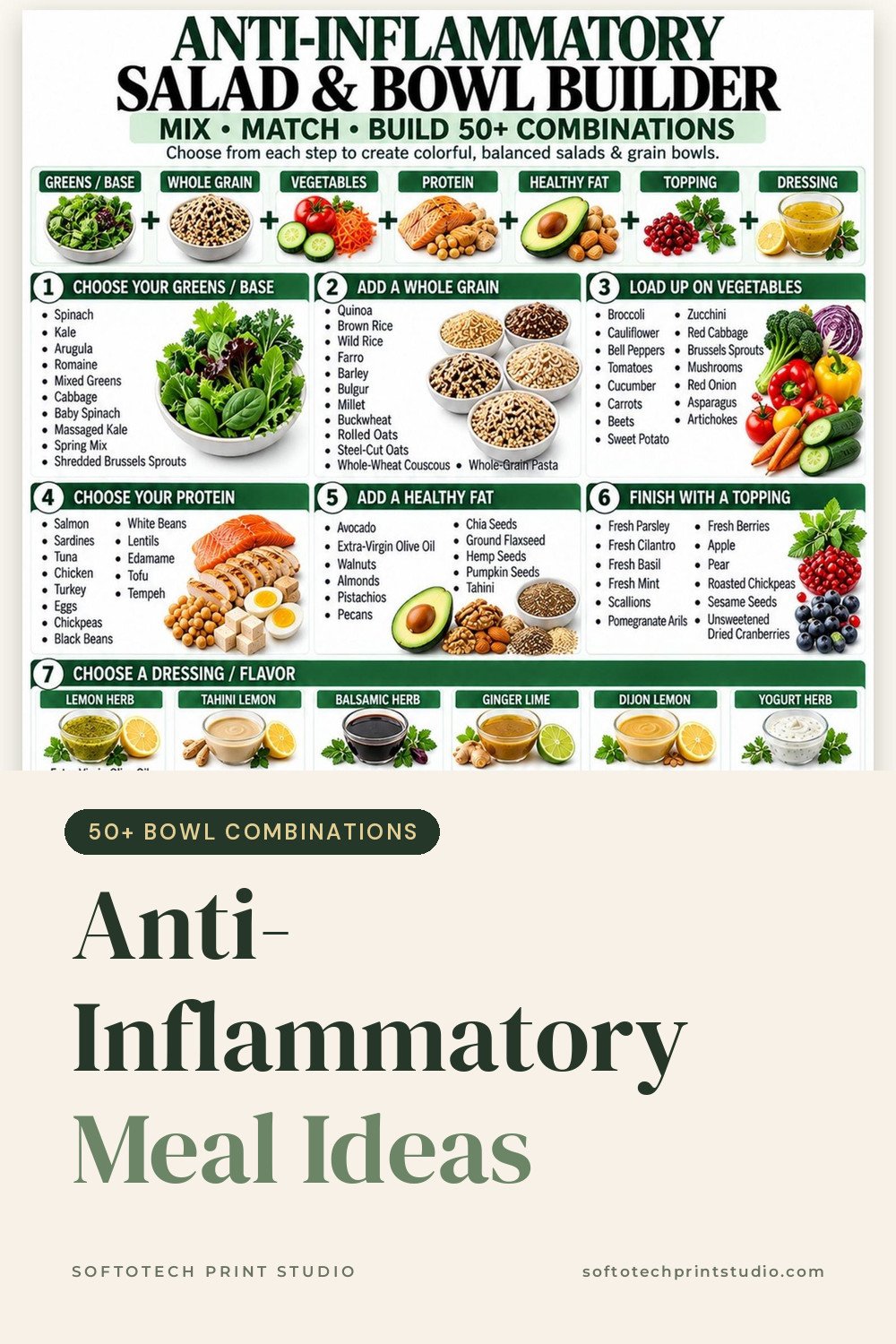

- A 7-step mix and match builder: greens, whole grain, vegetables, protein, healthy fat, topping and dressing
- 75+ ingredients to combine into 50+ salads and grain bowls, per the listing
- 6 simple dressing ideas with ingredients, from lemon herb and tahini lemon to ginger lime and yogurt herb
- 8 ready-to-make combinations, including a Mediterranean Chickpea Bowl, Salmon Power Bowl and Lentil Harvest Bowl
- Comes with a 9-page starter guide (bowl basics, 8 recipes, a 7-day plan, grocery list, swaps, meal prep) and a salad and bowl planner and combo tracker; 3 PDFs, 1 PNG and 1 ZIP per the listing
- Instant download · Print at home · US Letter · A4 · A5
Use code BLOG10 for 65% OFF at Etsy checkout!
Seven Steps Build a Balanced Anti-Inflammatory Bowl
The chart’s heading reads Anti-Inflammatory Salad and Bowl Builder, with the line mix, match, build 50+ combinations. Underneath, a row of pictures shows the formula at a glance: greens or base, plus whole grain, plus vegetables, plus protein, plus healthy fat, plus topping, plus dressing. Then each step gets its own box with a list of choices.
Before going through them, it helps to see what Harvard Health puts on its list of foods to include: tomatoes, olive oil, green leafy vegetables such as spinach, kale and collards, nuts like almonds and walnuts, fatty fish like salmon, mackerel, tuna and sardines, and fruits such as strawberries, blueberries, cherries and oranges. You’ll find almost all of those somewhere in the seven steps.
Step 1: choose your greens or base
Spinach, kale, arugula, romaine, mixed greens, cabbage, baby spinach, massaged kale, spring mix and shredded Brussels sprouts. Spinach and kale are both named by Harvard Health as green leafy vegetables to include. Massaged kale is just kale rubbed with a little oil and lemon until it softens, which makes it much nicer raw.
Step 2: add a whole grain
Quinoa, brown rice, wild rice, farro, barley, bulgur, millet, buckwheat, rolled oats, steel-cut oats, whole-wheat couscous and whole-grain pasta. Harvard Health lists refined carbohydrates, such as white bread and pastries, among the foods to avoid or limit, so whole grains are the natural swap. The Mediterranean diet it recommends is high in whole grains too.
Step 3: load up on vegetables
Broccoli, cauliflower, bell peppers, tomatoes, cucumber, carrots, beets, sweet potato, zucchini, red cabbage, Brussels sprouts, mushrooms, red onion, asparagus and artichokes. This is the longest list on the chart, with 15 options. Tomatoes are on Harvard’s list by name. The chart’s tip at the bottom, build for variety, is really about this step: a mix of colours from week to week.
Step 4: choose your protein
Salmon, sardines, tuna, chicken, turkey, eggs, chickpeas, black beans, white beans, lentils, edamame, tofu and tempeh. Salmon, sardines and tuna are all fatty fish on Harvard’s list. Red meat and processed meat, which Harvard suggests limiting, aren’t on the chart at all. Nearly half the options are plant proteins, which keeps the bowls affordable.
Step 5: add a healthy fat
Avocado, extra-virgin olive oil, walnuts, almonds, pistachios, pecans, chia seeds, ground flaxseed, hemp seeds, pumpkin seeds and tahini. Olive oil, almonds and walnuts are named by Harvard Health, which also notes that studies have linked nuts with reduced markers of inflammation. Harvard lists margarine, shortening and lard among the fats to limit, and none of those appear here.
Step 6: finish with a topping
Fresh parsley, fresh cilantro, fresh basil, fresh mint, scallions, pomegranate arils, fresh berries, apple, pear, roasted chickpeas, sesame seeds and unsweetened dried cranberries. Berries and apples come up in Harvard Health’s article as fruits high in natural antioxidants and polyphenols, the protective compounds found in plants.
Step 7: choose a dressing
Six dressings, each with its ingredients listed. Lemon herb: extra-virgin olive oil, lemon, herbs and black pepper. Tahini lemon: tahini, lemon, water and garlic. Balsamic herb: balsamic vinegar, olive oil and herbs. Ginger lime: lime, fresh ginger, olive oil and herbs. Dijon lemon: Dijon mustard, lemon and olive oil. Yogurt herb: plain Greek yogurt, lemon and fresh herbs. All six are simple to make at home, which helps you skip bottled dressings.
The eight ready-made combinations
If you don’t want to build from scratch, the bottom of the chart has eight finished bowls:
- Mediterranean Chickpea Bowl: mixed greens, quinoa, tomatoes, cucumber, chickpeas, avocado and tahini lemon.
- Salmon Power Bowl: spinach, brown rice, broccoli, salmon, walnuts and lemon herb.
- Lentil Harvest Bowl: kale, farro, sweet potato, lentils, pumpkin seeds and balsamic herb.
- Tofu Crunch Bowl: cabbage, quinoa, peppers, tofu, avocado, sesame seeds and ginger lime.
- Chicken Grain Bowl: arugula, barley, tomatoes, chicken, almonds, parsley and Dijon lemon.
- Black Bean Veggie Bowl: romaine, brown rice, peppers, black beans, avocado, cilantro and a lime dressing.
- Berry Walnut Salad: spinach, quinoa, berries, chickpeas, walnuts, mint and balsamic herb.
- Edamame Green Bowl: kale, wild rice, cucumber, edamame, hemp seeds, scallions and ginger lime.
The footer is sensible: for general educational and meal-planning purposes only, individual nutrition needs vary, and consult a qualified healthcare professional or registered dietitian for personalised guidance.
If you want the full list of foods behind these bowls, our anti-inflammatory food list covers more than 60 of the best choices.
Worked Day: Anti-Inflammatory Meals From Morning to Night
A bowl builder is great for lunch, but a full day shows how it fits with the rest of your eating. Here’s a day that uses one of the chart’s bowls for lunch, with the other meals taken from the Andrew Weil Center for Integrative Medicine’s budget friendly sample week.
| Meal | What to eat | Where it comes from |
|---|---|---|
| Breakfast | Oatmeal with frozen blueberries, nuts and banana, plus green tea or coffee | Andrew Weil Center, Monday |
| Lunch | Mediterranean Chickpea Bowl: mixed greens, quinoa, tomatoes, cucumber, chickpeas, avocado, tahini lemon dressing | Bowl builder combination 1 |
| Snack | A handful of almonds, or celery with hummus | Andrew Weil Center, Monday |
| Dinner | Baked salmon, steamed broccoli or greens, brown rice, herbal tea | Andrew Weil Center, Monday |
| Swap night | Tofu stir fry with mushrooms, steamed broccoli and carrots, brown rice | Andrew Weil Center, Wednesday |
Breakfast is oatmeal with frozen blueberries, nuts and banana. Frozen berries keep the cost down and last for weeks. Blueberries and nuts are both on Harvard’s list. The Weil Center pairs breakfast with green tea or coffee, and Harvard notes that coffee contains polyphenols and other compounds that may protect against inflammation.
Lunch is the chart’s first combination. Cook a batch of quinoa at the start of the week and this bowl takes five minutes: a handful of mixed greens, a scoop of quinoa, chopped tomato and cucumber, a few spoonfuls of chickpeas, sliced avocado and the tahini lemon dressing. It covers a leafy green, a whole grain, two vegetables, a plant protein and two healthy fats in one go.
The snack is either almonds or celery with hummus, both from the Weil Center’s Monday. Nuts come up again and again in the sources, and almonds keep well in a bag or desk drawer.
Dinner is baked salmon with steamed broccoli or greens and brown rice. The Weil Center uses frozen salmon, which is a good budget choice, and finishes the meal with herbal tea. If you’d rather not have fish two days running, the swap night line uses the Weil Center’s tofu stir fry with mushrooms, broccoli, carrots and brown rice.
The shopping list is short and mostly long-lasting: oats, frozen blueberries, bananas, mixed nuts, almonds, mixed greens, quinoa, tomatoes, cucumber, a can of chickpeas, an avocado, tahini, lemons, celery, hummus, frozen salmon, broccoli and brown rice. Tea and coffee if you drink them.
A day like this is easy to repeat with different bowls. Swap combination 1 for the Lentil Harvest Bowl one day and the Chicken Grain Bowl the next, and lunch never feels the same twice. The Weil Center’s own week does something similar, rotating lentil soup, sardines on crackers, black bean tacos and salads at lunch.
For a month of planned meals instead of a single day, our anti-inflammatory diet meal plan lays out 30 days and 90 meals.
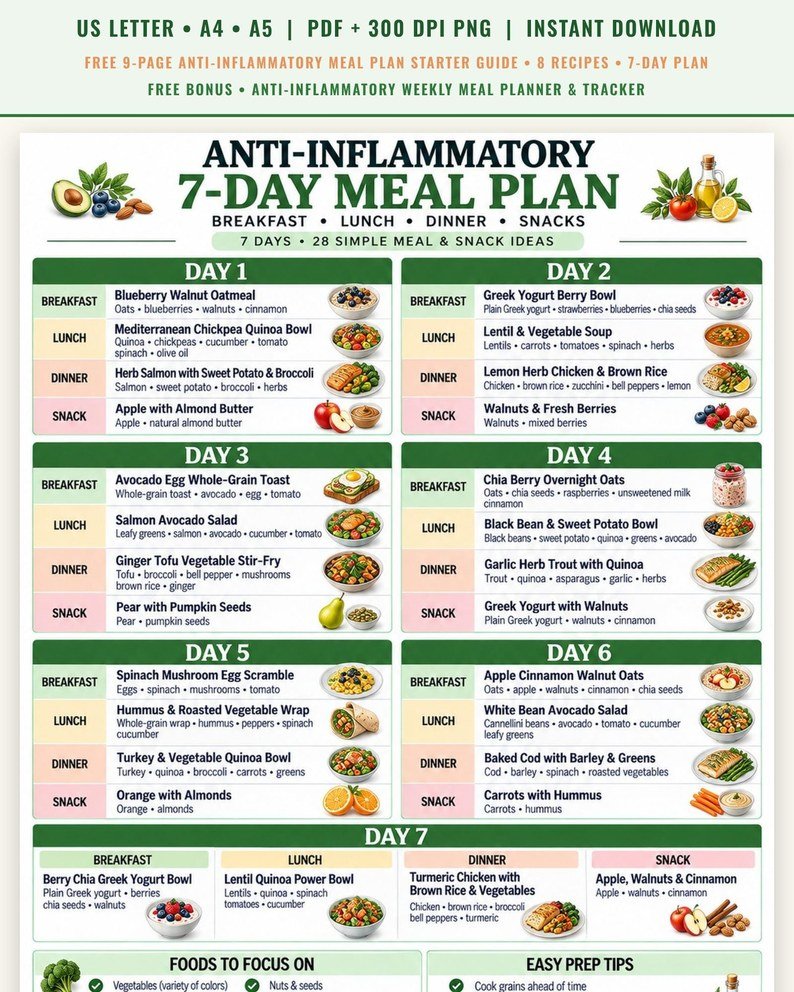
- 28 meals and snacks over 7 days: breakfast, lunch, dinner and a snack daily
- Key ingredients listed for every meal, from Blueberry Walnut Oatmeal to Garlic Herb Trout with Quinoa
- Simple snacks like apple with almond butter, pear with pumpkin seeds and carrots with hummus
- A Foods to Focus On panel and an Easy Prep Tips panel
- Includes a 9-page starter guide (meal basics, 8 recipes, a 7-day plan, grocery list, swaps, meal prep) and a weekly meal planner and tracker; 3 PDFs, 1 PNG and 1 ZIP per the listing
- Instant download · Print at home · US Letter · A4 · A5
Use code BLOG10 for 65% OFF at Etsy checkout!
A 7-Day Anti-Inflammatory Plan Fills In Every Meal
The second printable is the Anti-Inflammatory 7-Day Meal Plan from the same shop. Where the bowl builder focuses on salads and grain bowls, this one plans a whole week: breakfast, lunch, dinner and a snack each day, which comes to 28 simple meal and snack ideas. Each meal has its key ingredients listed underneath.
Here’s the week:
- Day 1: Blueberry Walnut Oatmeal; Mediterranean Chickpea Quinoa Bowl; Herb Salmon with Sweet Potato and Broccoli; apple with almond butter.
- Day 2: Greek Yogurt Berry Bowl; Lentil and Vegetable Soup; Lemon Herb Chicken and Brown Rice; walnuts and fresh berries.
- Day 3: Avocado Egg Whole-Grain Toast; Salmon Avocado Salad; Ginger Tofu Vegetable Stir-Fry; pear with pumpkin seeds.
- Day 4: Chia Berry Overnight Oats; Black Bean and Sweet Potato Bowl; Garlic Herb Trout with Quinoa; Greek yogurt with walnuts.
- Day 5: Spinach Mushroom Egg Scramble; Hummus and Roasted Vegetable Wrap; Turkey and Vegetable Quinoa Bowl; orange with almonds.
- Day 6: Apple Cinnamon Walnut Oats; White Bean Avocado Salad; Baked Cod with Barley and Greens; carrots with hummus.
- Day 7: Berry Chia Greek Yogurt Bowl; Lentil Quinoa Power Bowl; Turmeric Chicken with Brown Rice and Vegetables; apple, walnuts and cinnamon.
It lines up closely with the Weil Center’s sample week. Both start several days with oats and berries. Both use lentil soup at lunch, salmon at dinner and carrots with hummus as a snack. Both lean on tofu, beans, chicken and fish rather than red meat. And the fish choices, salmon, trout and cod, are the kind of meals the Mediterranean diet is built on.
Two panels at the bottom are worth a read. Foods to focus on lists vegetables in a variety of colours, fresh whole fruits, whole grains, beans and legumes, nuts and seeds, fish and seafood, lean proteins and healthy fats such as olive oil and avocado. That’s close to a summary of Harvard Health’s list. Easy prep tips suggests cooking grains ahead of time, washing and chopping produce, prepping beans or proteins in batches, and keeping nuts, fruit and yogurt ready for quick snacks.
How do the two printables work together? Use the 7-day plan when you want every decision made for you, especially in your first week or two. Use the bowl builder when you want lunch to be flexible, or when you’re using up what’s in the fridge. Some ideas overlap, like the Mediterranean chickpea and quinoa bowl that appears on both, so moving between them feels natural. Both come with a 9-page starter guide covering basics, 8 recipes, a 7-day plan, a grocery list, swaps and meal prep, plus a planner and tracker page.
If you like the Mediterranean style of these meals, our Mediterranean diet meal ideas guide has 28 more breakfasts, lunches and dinners.
Anti-Inflammatory Meal Ideas Stick With a Few Simple Habits
Think in patterns, not single foods. Harvard Health’s main advice is to aim for an overall healthy diet, and it points to the Mediterranean diet, high in fruits, vegetables, nuts, whole grains, fish and healthy oils, as a close match. The bowl builder’s seven steps are a simple way to hit most of those at every lunch.
Cut back on the usual suspects. Harvard Health lists the foods to avoid or limit as much as possible: refined carbohydrates such as white bread and pastries, French fries and other fried foods, soda and other sugar-sweetened drinks, red meat and processed meat, and margarine, shortening and lard. You don’t need to be perfect. Swapping one of these out each week adds up.
Prep once, eat all week. The 7-day plan’s prep tips work for the bowl builder too. Cook a pot of quinoa or brown rice, roast a tray of vegetables, cook a batch of lentils or chicken, wash your greens, and make one jar of dressing. With those in the fridge, a bowl takes minutes.
Keep it affordable. Anti-inflammatory eating doesn’t have to mean expensive ingredients. The Weil Center’s sample week is labelled budget friendly and uses frozen blueberries, frozen salmon, canned sardines, beans, lentils, oats, brown rice and peanut butter. Frozen and canned foods count.
Make your own dressings. Every dressing on the chart is three or four ingredients. Shaking up a jar of lemon herb or balsamic herb dressing saves buying bottled versions.
Choose drinks with care. The Weil Center suggests green tea, herbal tea or coffee alongside its meals, and Harvard notes coffee may help protect against inflammation. Harvard lists soda and sugar-sweetened beverages among the drinks to limit.
Offer dairy-free options. The Weil Center notes that non-dairy options such as coconut yogurt can be swapped in for yogurt. The bowl builder’s yogurt herb dressing can be replaced with tahini lemon if you avoid dairy.
Connect it to your health goals. Harvard Health names arthritis among the conditions linked to chronic inflammation. If joint pain is your main reason for changing how you eat, our arthritis food list sorts 45 foods into eat, limit and avoid, and it’s worth discussing with your doctor too.
Print it where you’ll see it. US Letter or A4 suits the fridge. A5 fits inside a cupboard door or your meal prep folder. Tick off a new combination each week and you’ll have tried every one in a couple of months.
For bowls that keep you full for longer, see these protein and fiber foods, with lentils, beans and seeds charted side by side.
If lunch is the meal you struggle with most, our guide to anti inflammatory lunches lists 24 options from a 30 day plan, sorted by type.
Frequently Asked Questions
What is a good anti-inflammatory lunch?
A bowl that combines a leafy green, a whole grain, vegetables, a protein and a healthy fat works well. The bowl builder’s Mediterranean Chickpea Bowl, for example, uses mixed greens, quinoa, tomatoes, cucumber, chickpeas, avocado and a tahini lemon dressing. The Andrew Weil Center’s sample week includes lentil soup, black bean tacos on corn tortillas and a salad with avocado and olive oil.
Which foods should I limit on an anti-inflammatory diet?
Harvard Health suggests avoiding or limiting refined carbohydrates such as white bread and pastries, French fries and other fried foods, soda and other sugar-sweetened beverages, red meat and processed meat, and margarine, shortening and lard. None of these appear in the bowl builder.
What are good anti-inflammatory snacks?
The Andrew Weil Center’s sample week includes almonds, celery with peanut butter or hummus, an apple, yogurt, a boiled egg, pumpkin or sunflower seeds and carrots with hummus. The 7-day plan’s snacks are similar, such as apple with almond butter, walnuts and berries, pear with pumpkin seeds and orange with almonds.
Is the Mediterranean diet anti-inflammatory?
Harvard Health says the Mediterranean diet closely follows the tenets of anti-inflammatory eating. It is high in fruits, vegetables, nuts, whole grains, fish and healthy oils, which are the same foods the bowl builder and 7-day plan are built around.
What sizes does the anti-inflammatory bowl builder print in?
The Anti-Inflammatory Salad and Bowl Builder comes as PDFs in US Letter, A4 and A5 plus a 300 DPI PNG, listed as 3 PDF, 1 PNG and 1 ZIP. The Anti-Inflammatory 7 Day Meal Plan comes in the same sizes and formats. Both are instant downloads you can print at home.
This guide is for general wellness and is not medical advice. Check with your doctor before starting a new routine.
Related Guides
- Anti-Inflammatory Diet Meal Plan
- Anti-Inflammatory Food List
- Arthritis Food List
- Mediterranean Diet Meal Ideas
Sources
Sources: Harvard Health Publishing, Foods that fight inflammation, Andrew Weil Center for Integrative Medicine (University of Arizona), Anti-Inflammatory Diet: Budget Friendly Sample Meal Plan
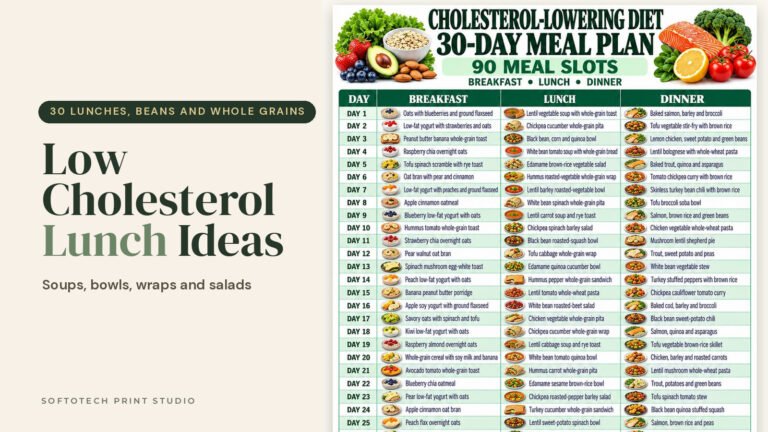 Diet & Food ListsLow Cholesterol Lunch Ideas: 30 Soups, Bowls, Wraps and Salads From a 30 Day Meal Plan, With Swaps and a Prep Week
 Diet & Food ListsPrediabetes Breakfast Ideas: 7 Balanced Breakfasts From a Weekly Meal Plan, Plus Swaps From an Eat, Limit and Avoid List
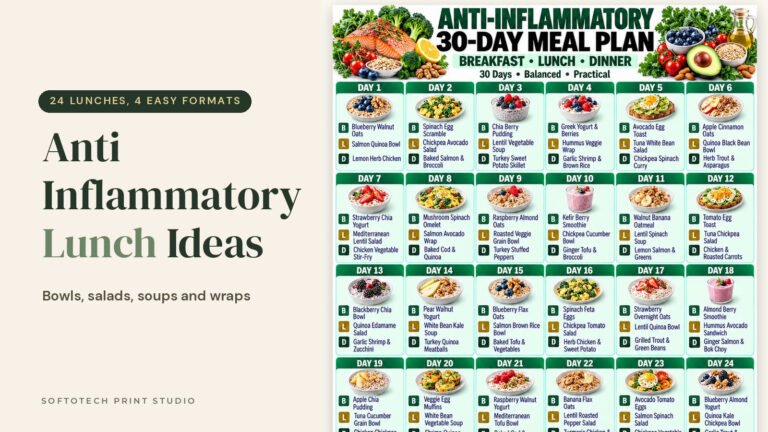 Diet & Food ListsAnti Inflammatory Lunch Ideas: 24 Bowls, Salads, Soups and Wraps From a 30 Day Meal Plan, With a Packed Lunch Week