
Dumbbell exercises for seniors are one of the simplest ways to build full body strength at home: a pair of light dumbbells, a clear floor, and a short list of moves you can repeat week after week. You do not need a gym, a rack of weights, or a complicated program. Sixteen standing moves, grouped by upper body, back and posture, and lower body, cover the whole body in a single session.
Strength matters more with age, not less. The muscles that lift a shopping bag, rise from a chair, carry laundry up the stairs, and steady you on an uneven step are the same muscles a dumbbell session trains. Light weights, done with control, help keep those everyday movements easier for longer, and a printed chart keeps the session honest: you see the moves, work through them in order, and tick them off as you go.
This guide is built around one printed chart: a 16 move standing dumbbell chart for seniors, grouped into upper body, back and posture, and lower body. One honest note first: no listing titled exactly “Dumbbell Exercises for Seniors” exists in the shop, and the chart in this guide is the standing dumbbell chart for seniors, the closest match. Below you will find the moves on the chart and what each one trains, how to choose a safe starting weight, the form rules that keep dumbbell work gentle on joints, a worked full body session built from the 16 chart moves group by group, and the matching printable chart from SoftoTech Print Studio.
In this guide:
- The 16 Moves on the Chart
- Choosing a Safe Starting Weight
- Form Rules for Dumbbell Training
- Worked Example: A Full Body Dumbbell Session
- Frequently Asked Questions
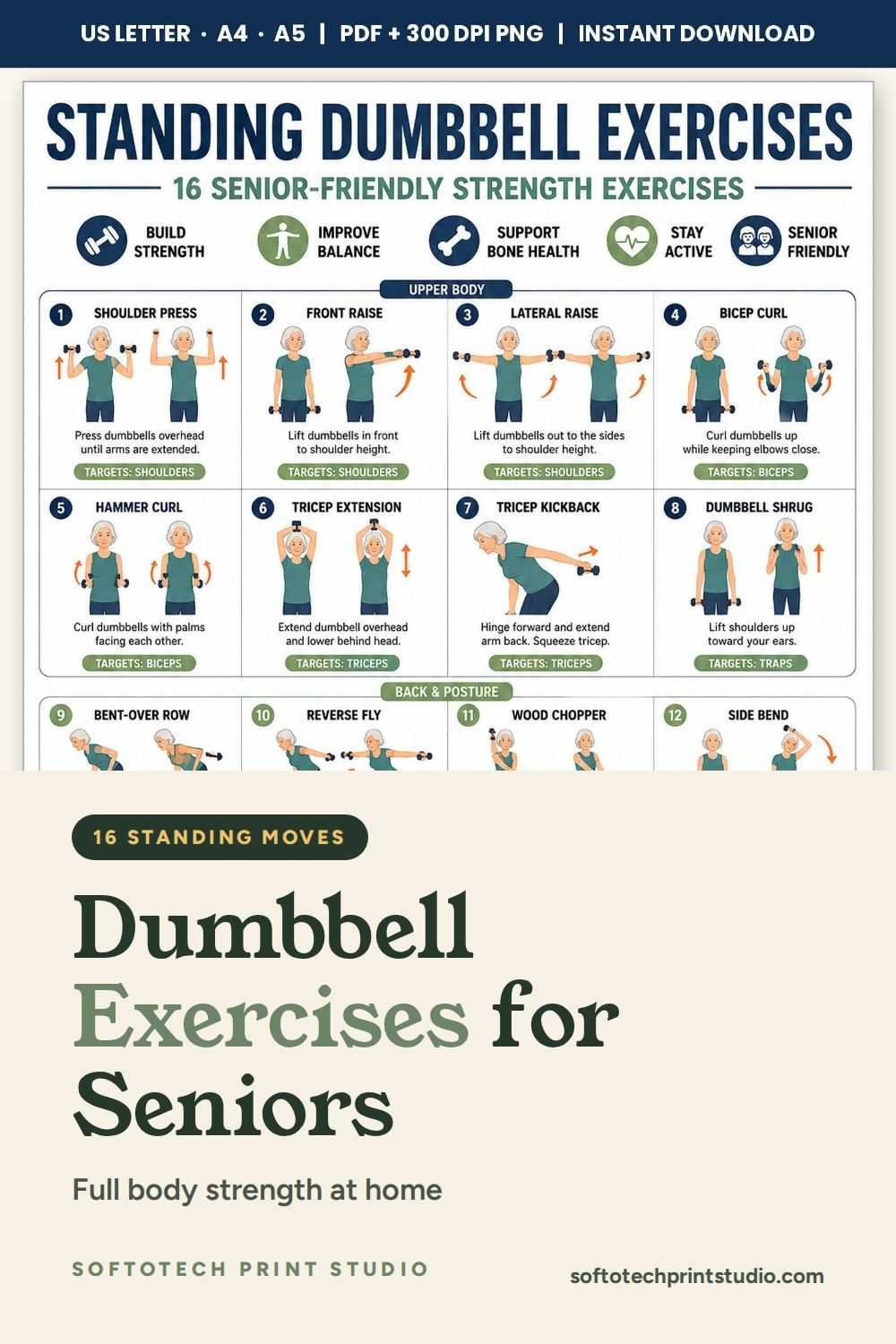
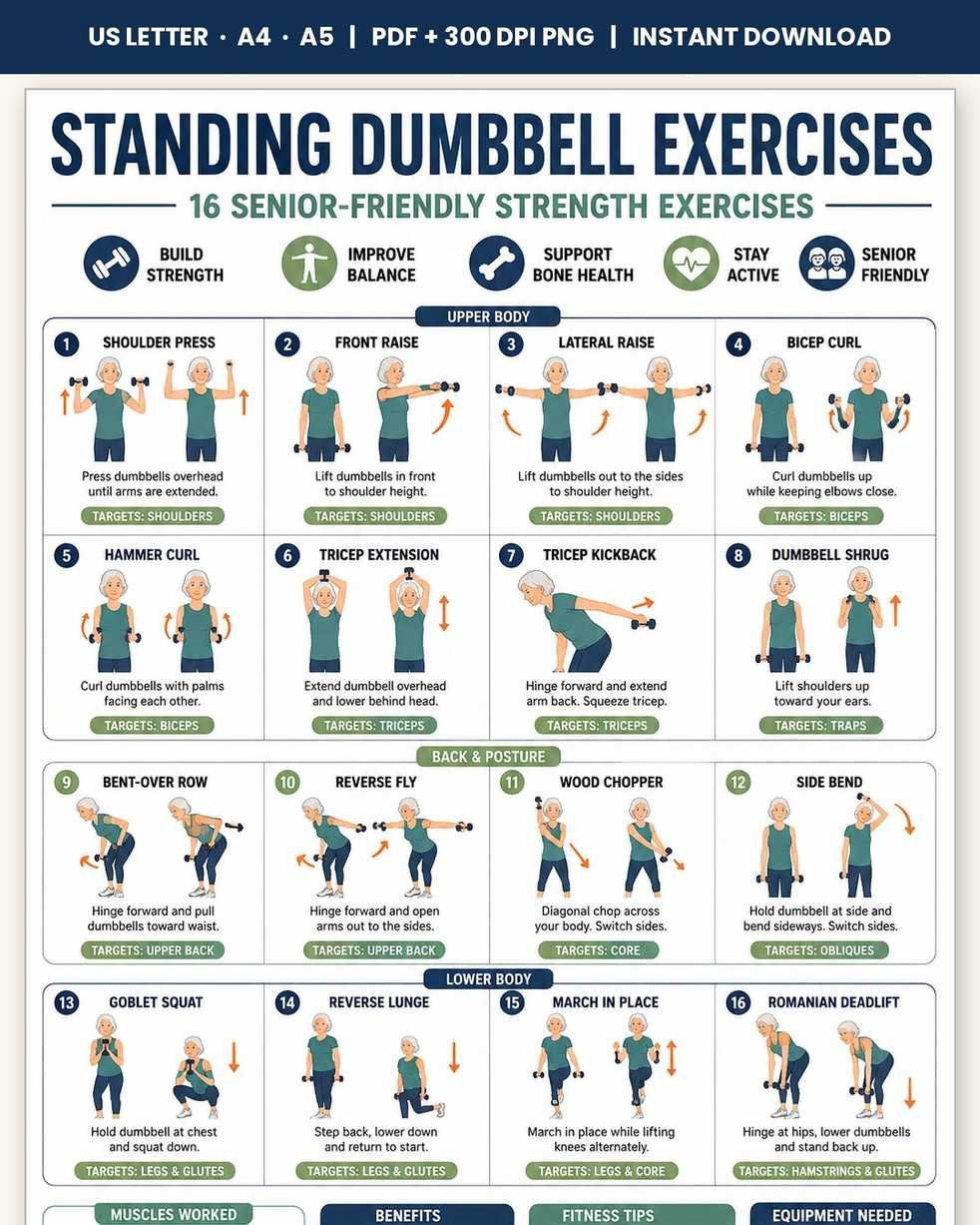
The printable from this guide
Standing Dumbbell Exercises for Seniors
- 16 standing dumbbell exercises in three groups: upper body (Shoulder Press, Front Raise, Lateral Raise, Bicep Curl, Hammer Curl, Tricep Extension, Tricep Kickback, Dumbbell Shrug), back and posture (Bent-Over Row, Reverse Fly, Wood Chopper, Side Bend) and lower body (Goblet Squat, Reverse Lunge, March in Place, Romanian Deadlift)
- The session in this guide is built from these 16 chart moves, group by group
- Full body strength training at home, written for seniors
- Print sizes US Letter, A4 and A5, as 2 PDFs plus a PNG per the listing
- Instant download · Print at home · US Letter · A4 · A5
Use code BLOG10 for 65% OFF at Etsy checkout!
Get the Standing Dumbbell Chart on Etsy →
The 16 Moves on the Chart
The printable chart in this guide, the Standing Dumbbell Exercises for Seniors chart, lists 16 standing dumbbell exercises in three groups. The upper body group has eight moves: Shoulder Press, Front Raise, Lateral Raise, Bicep Curl, Hammer Curl, Tricep Extension, Tricep Kickback and Dumbbell Shrug. These cover the shoulders, the front and back of the upper arms, and the top of the back, the muscles that lift, carry and reach.
| Group | Moves from the chart | Main job |
|---|---|---|
| Upper body | Shoulder Press, Front Raise, Lateral Raise, Bicep Curl, Hammer Curl, Tricep Extension, Tricep Kickback, Dumbbell Shrug | Shoulders, arms and reaching strength |
| Back and posture | Bent-Over Row, Reverse Fly, Wood Chopper, Side Bend | Posture, pulling strength and trunk control |
| Lower body | Goblet Squat, Reverse Lunge, March in Place, Romanian Deadlift | Legs, hips and standing strength |
The back and posture group has four moves: Bent-Over Row, Reverse Fly, Wood Chopper and Side Bend. These work the pulling muscles of the back and the trunk, the muscles that hold you upright and counter the rounded shoulders that come from years of sitting. The lower body group has four moves: Goblet Squat, Reverse Lunge, March in Place and Romanian Deadlift, which train the thighs, hips and glutes, the muscles that stand you up from a chair and carry you up stairs.
Every move on the chart is done standing, with both feet on the floor and a light pair of dumbbells. That standing position is part of the training: it asks your balance and your legs to work while your arms move, which is closer to real life than any seated machine. If standing for a full session feels like too much on a given day, the seated companion chart in the second box below offers the same dumbbell work from a chair, and our leg exercises for seniors guide covers bodyweight leg work you can do without any weights at all.
Choosing a Safe Starting Weight
The right starting weight for dumbbell exercises for seniors is lighter than most people expect. For most older adults, that means 1 to 3 pounds in each hand for the first sessions, moving up only when every move feels controlled and easy for two sessions in a row. A weight that lets you finish a set with good form and two or three repetitions still in reserve is the right weight. A weight that makes your shoulders shrug, your back arch, or your grip fail is too heavy, whatever the number on the dumbbell says.
Two practical tests help. First, the talking test: you should be able to speak a short sentence during a set without gasping. Second, the last two repetitions test: the final two reps of a set should feel like work, but the form should look the same as the first two reps. If the last reps wobble, swing, or pull you off balance, the weight is too heavy for that move today. Different moves need different weights, and that is normal: the Goblet Squat and Romanian Deadlift usually take more weight than the Lateral Raise and Front Raise, which ask small shoulder muscles to lift the weight out to the side.
Buy or borrow adjustable dumbbells if you can, or two light fixed pairs, one lighter and one slightly heavier. Keep them in the same place every time, near a wall or a sturdy chair you can touch for balance. Rest the dumbbells on a low table between sets rather than on the floor, so you are not bending to pick them up cold between moves. And remember that progress in dumbbell training for seniors is measured in weeks of steady sessions, not in the heaviest weight lifted on one day. Our core exercises for seniors guide adds trunk work that pairs well with this dumbbell session.
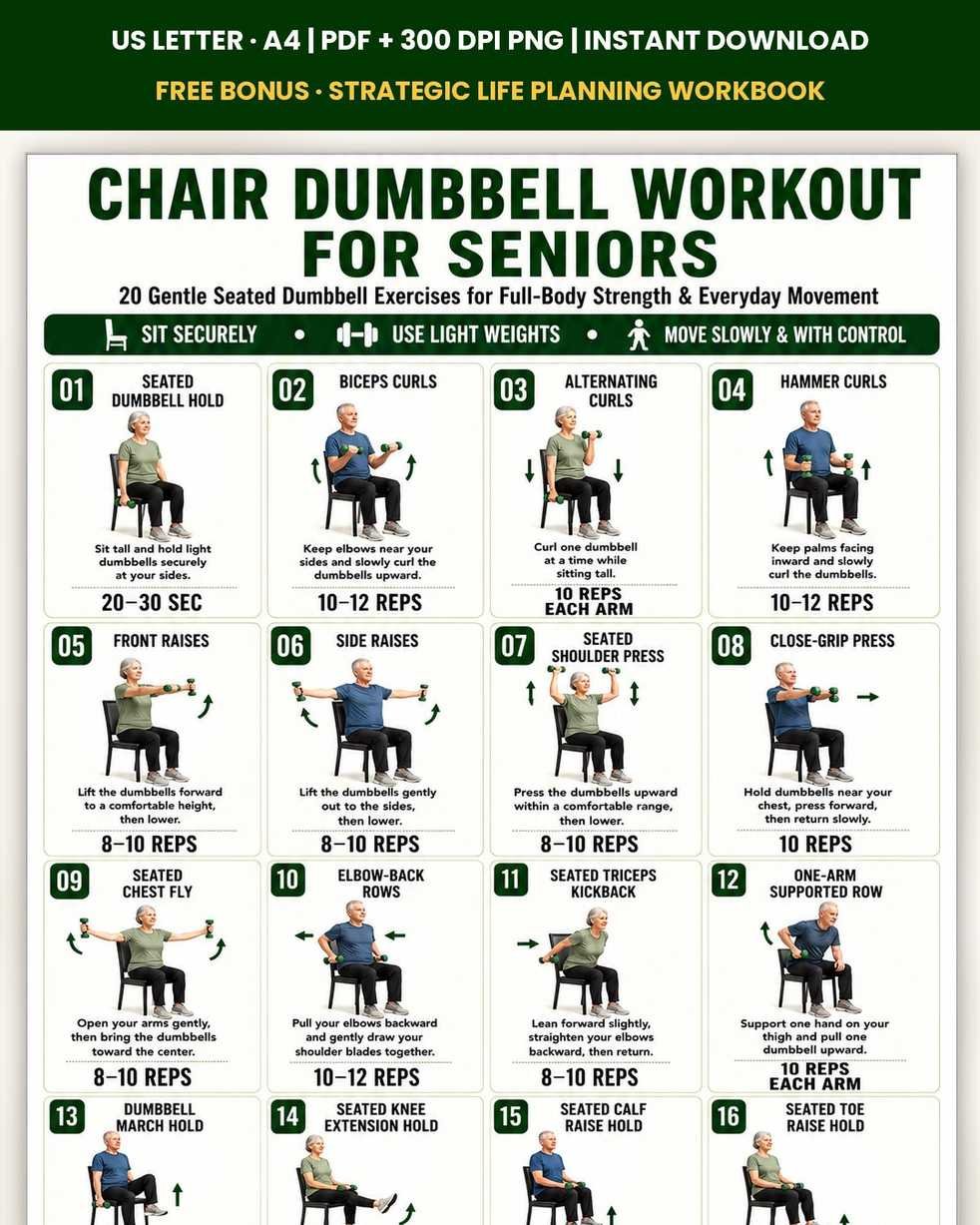
The seated dumbbell companion
Chair Dumbbell Workout for Seniors Printable Chart
- 20 gentle seated dumbbell exercises for full body strength; the first 16 verified on the chart are Seated Dumbbell Hold, Biceps Curls, Alternating Curls, Hammer Curls, Front Raises, Side Raises, Seated Shoulder Press, Close-Grip Press, Seated Chest Fly, Elbow-Back Rows, Seated Triceps Kickback, One-Arm Supported Row, Dumbbell March Hold, Seated Knee Extension Hold, Seated Calf Raise Hold and Seated Toe Raise Hold
- The seated version of the same dumbbell work: use it on days when standing feels like too much
- Print sizes US Letter and A4, as 2 PDFs plus a PNG per the listing (banner does not mention A5)
- Instant download · Print at home · US Letter · A4
Use code BLOG10 for 65% OFF at Etsy checkout!
Get the Chair Dumbbell Chart on Etsy → Instant download · Print at home
Form Rules for Dumbbell Training
Four rules cover most of dumbbell safety for older adults. First, move slowly on the way down. Lowering the weight under control, over two or three seconds, trains the muscles more and strains the joints less than dropping it. Second, keep the trunk braced and the knees soft on every standing move. A slight bend in the knees and a tall chest protect the lower back far better than locked knees and a leaned back posture.
Third, keep the shoulders down and away from the ears, especially on presses, raises and shrugs. The Shrug is the one move where the shoulders do rise, and even there the lift is short and controlled, not a yank. Fourth, stop a set when form breaks down, not when the number on the chart is reached. Ten clean curls build more strength than fifteen swung ones, and a set stopped early is a set you can finish well next time.
Warm up for three to five minutes before touching the dumbbells: easy marching in place, arm circles, gentle shoulder rolls and a few slow bodyweight squats to a chair. Cool down with walking around the room and gentle stretching for the shoulders, chest and legs. The CDC notes that muscle strengthening activity for all major muscle groups on at least two days a week is part of the guidance for older adults, and a session like this one, done twice a week with a day of rest between sessions, covers that guidance in a simple, repeatable form. For a fuller arm focus, our dumbbell arm workout for women guide works the same muscles with a different session shape, and the full body dumbbell workout at home 5 day plan for beginners spreads dumbbell work across a full week.
Worked Example: A Full Body Dumbbell Session
Here is how the full session runs when you follow the chart group by group, with light dumbbells and a chair nearby for balance. Start with the upper body group. Shoulder Press: press both dumbbells overhead slowly, then lower them to shoulder height with control. Front Raise: lift the dumbbells forward to shoulder height, keeping the elbows soft. Lateral Raise: lift the dumbbells out to the sides, only as high as the shoulders, without shrugging. Bicep Curl: curl the weights up toward the shoulders, keeping the elbows close to the body. Hammer Curl: the same curl with the palms facing each other, which works the forearms as well as the biceps. Tricep Extension: hold one dumbbell with both hands overhead and lower it behind the head slowly, then press it back up. Tricep Kickback: hinge slightly forward and press the dumbbells back behind you. Dumbbell Shrug: lift the shoulders straight up toward the ears and lower them slowly.
Rest for a minute, take a drink of water, and move to the back and posture group. Bent-Over Row: hinge at the hips with a flat back and pull the dumbbells toward the waist, squeezing the shoulder blades. Reverse Fly: hinge forward and open the arms out to the sides, like a slow reverse hug, to work the upper back. Wood Chopper: hold one dumbbell with both hands and move it diagonally across the body, from one hip to the opposite shoulder, with a controlled twist of the trunk. Side Bend: hold a dumbbell in one hand and bend gently to that side, then switch hands, keeping the movement small and the spine long.
Finish with the lower body group. Goblet Squat: hold one dumbbell at your chest and sit back into a squat as far as feels comfortable, keeping the heels down. Reverse Lunge: step one foot back and lower the back knee toward the floor, then return, alternating legs, with a hand on the chair if balance wobbles. March in Place: hold the dumbbells at your sides and march, lifting the knees to a comfortable height. Romanian Deadlift: hold the dumbbells in front of the thighs, hinge at the hips with soft knees, and slide the weights down the legs as far as the hamstrings allow, then stand tall. The whole session takes about 25 to 35 minutes including the warm up and a short cool down, and the chart keeps the order in front of you so no group is skipped. On days when standing feels like too much, use the seated chair dumbbell chart instead: the same muscles, the same light weights, from a chair.
For a routine that is only about the upper body, see these gentle arm exercises with light dumbbells, including a seated option with no equipment.
Frequently Asked Questions
What are dumbbell exercises for seniors?
Dumbbell exercises for seniors are strength moves done with light dumbbells, usually 1 to 3 pounds to start, covering the upper body, back and posture, and lower body. The chart in this guide lists 16 standing moves: eight for the upper body, four for back and posture, and four for the lower body, so one session trains the whole body.
How heavy should dumbbells be for seniors?
Most older adults start with 1 to 3 pounds in each hand. The right weight lets you finish a set with good form and a couple of repetitions still in reserve. Different moves need different weights: squats and deadlifts usually take more weight than lateral raises and front raises. Move up only when a weight feels controlled and easy for two sessions in a row.
How often should seniors do dumbbell exercises?
Two days a week is a good target, with at least one rest day between sessions, which matches the CDC guidance for muscle strengthening activity in older adults. The full 16 move session takes about 25 to 35 minutes including warm up and cool down, so two sessions fit easily into a week.
Are dumbbells safe for seniors with arthritis?
Light dumbbells with slow, controlled movement are often well tolerated, but arthritis varies from person to person and from joint to joint. Use the lightest weight that still feels like work, keep the range of motion pain free, and skip any move that causes sharp joint pain. Check with your doctor before starting if you have arthritis or another joint condition.
What size is the printable dumbbell chart?
The SoftoTech Print Studio Standing Dumbbell Exercises for Seniors chart is an instant download that prints at home in US Letter, A4 and A5 sizes, as 2 PDFs plus a PNG per the listing. It shows all 16 standing dumbbell moves in three groups, so you can follow the session in order from the chart.
This guide is for general wellness and is not medical advice. Check with your doctor before starting a new routine.
Related Guides
- Dumbbell Arm Workout for Women
- Full Body Dumbbell Workout at Home: 5-Day Plan for Beginners
- Leg Exercises for Seniors
- Core Exercises for Seniors
Sources
Sources: CDC: Physical Activity for Older Adults, National Institute on Aging: Exercise and Physical Activity
 Senior FitnessBreathing Exercises to Increase Lung Capacity: 8 Techniques, a 10 Minute Routine and What They Can Really Do
 Senior FitnessAnkle Exercises for Sprain Recovery: 12 Gentle Moves in 3 Stages, Once Your Clinician Says It’s Time
 Senior FitnessArm Exercises for Seniors: 16 Gentle Dumbbell Moves and 20 Seated Moves With Reps