
An anti inflammatory salad is less a recipe than a way of building a bowl. You pick greens, a whole grain, vegetables, a protein, a healthy fat, a topping and a dressing, and almost any mix of those lands in the right place. That’s good news if you’ve ever stared at a fridge full of random ingredients and settled for toast.
This guide is built around the Anti-Inflammatory Salad and Bowl Builder from SoftoTech Print Studio. The chart sets out seven numbered steps, each with a list of choices and a photo, then six dressings and eight ready-made combinations along the bottom. The second printable is the shop’s Anti-Inflammatory 30-Day Meal Plan, which shows where a salad can sit in a full month of meals.
First I’ll go through the seven steps and what the chart puts in each. Then there’s a worked week of salads, with a different step changed each day so you aren’t eating the same bowl five times. After that comes a section on dressings and the eight combinations, and a last section on what Harvard Health says about anti-inflammatory foods and what it doesn’t.
One honest note before we start. Food is one part of managing inflammation, and a salad won’t treat a medical condition. Harvard Health describes the pattern as an overall healthy diet, and points to the Mediterranean diet as the closest match. I’ll stick to that and not make bigger promises.
In this guide:
- The 7 Steps of the Salad and Bowl Builder
- A Worked Week of Anti Inflammatory Salads
- Dressings and the 8 Ready-Made Combinations
- What Harvard Health Says About Anti-Inflammatory Foods
- Frequently Asked Questions

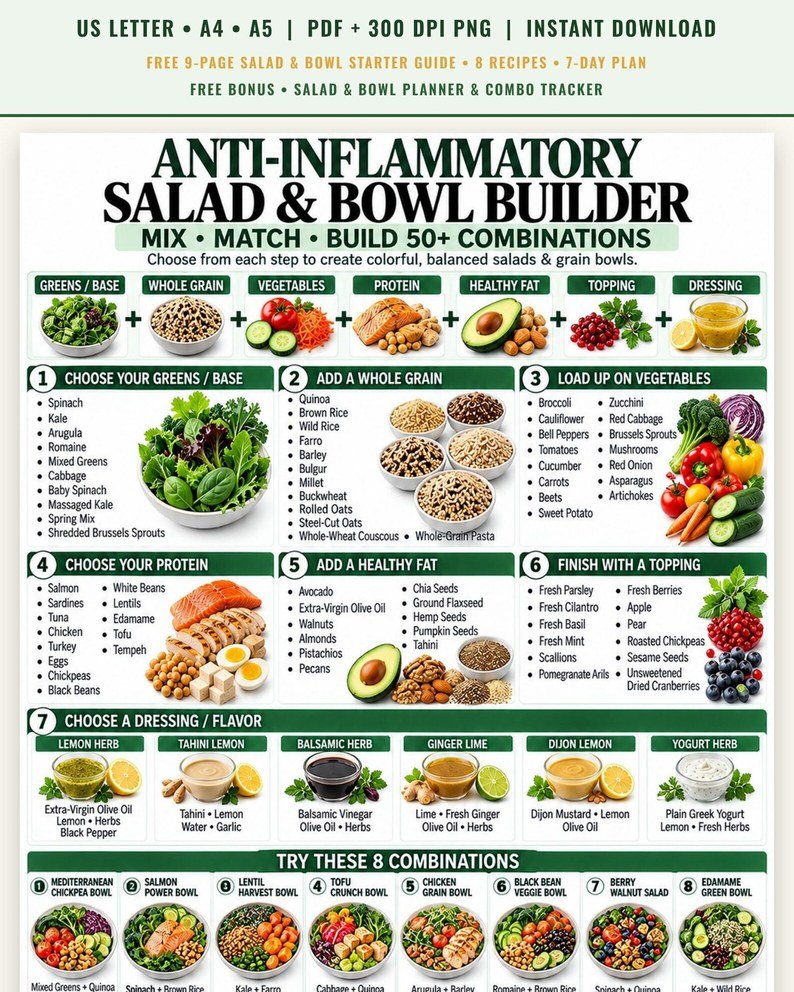
- A 7-step mix and match builder: greens, whole grain, vegetables, protein, healthy fat, topping and dressing
- 75+ ingredients to combine into 50+ salads and grain bowls, per the listing
- 6 dressing ideas with ingredients, from lemon herb and tahini lemon to ginger lime and yogurt herb
- 8 ready-to-make combinations, including a Mediterranean Chickpea Bowl, Salmon Power Bowl and Lentil Harvest Bowl
- Comes with a 9-page starter guide and a salad and bowl planner and combo tracker, per the listing
- Instant download · Print at home · US Letter · A4 · A5
Use code BLOG10 for 65% OFF at Etsy checkout!
The 7 Steps of the Salad and Bowl Builder
The chart’s headline is Mix, Match, Build 50 plus combinations, and the line under it says to choose from each step to create colorful, balanced salads and grain bowls. Across the top, a strip shows the formula in pictures: greens or base, plus whole grain, plus vegetables, plus protein, plus healthy fat, plus topping, plus dressing. Here is what sits in each step.
Step 1, greens and base. Ten choices: spinach, kale, arugula, romaine, mixed greens, cabbage, baby spinach, massaged kale, spring mix and shredded Brussels sprouts. Notice that cabbage and shredded sprouts are in the list. They’re sturdier than lettuce and they’re what you want for a salad that has to survive a lunchbox.
Step 2, a whole grain. Twelve choices: quinoa, brown rice, wild rice, farro, barley, bulgur, millet, buckwheat, rolled oats, steel-cut oats, whole-wheat couscous and whole-grain pasta. The oats are a surprise in a salad context, but cooked steel-cut oats can be used savory, and the chart includes them for people who do. Quinoa, barley and farro are the easy ones, since they keep their bite in the fridge.
Step 3, vegetables. Fifteen choices in two columns: broccoli, cauliflower, bell peppers, tomatoes, cucumber, carrots, beets and sweet potato, then zucchini, red cabbage, Brussels sprouts, mushrooms, red onion, asparagus and artichokes. Tomatoes, one of the foods Harvard Health names, are on the list.
Step 4, protein. Thirteen choices: salmon, sardines, tuna, chicken, turkey, eggs, chickpeas and black beans, then white beans, lentils, edamame, tofu and tempeh. That’s a good spread for meat eaters and vegetarians alike, and it includes the fatty fish that Harvard Health lists, salmon, tuna and sardines.
Step 5, a healthy fat. Eleven choices: avocado, extra-virgin olive oil, walnuts, almonds, pistachios and pecans, then chia seeds, ground flaxseed, hemp seeds, pumpkin seeds and tahini. This is the step people skip, and it matters for taste. A salad without any fat tastes thin and leaves you hungry an hour later.
Step 6, a topping. Twelve choices: fresh parsley, cilantro, basil, mint, scallions and pomegranate arils, then fresh berries, apple, pear, roasted chickpeas, sesame seeds and unsweetened dried cranberries. Toppings are where a plain bowl gets its personality. A handful of mint and pomegranate does more than another spoon of dressing.
Step 7, the dressing. Six dressing cards, which I’ll cover in their own section below.
It’s worth saying what the chart does not give you. It has no calories, no portion sizes and no nutrition numbers. It’s a choosing tool, not a nutrition label. For the bigger picture, our anti-inflammatory food list sorts foods into eat, limit and avoid, and works well next to this builder.
A Worked Week of Anti Inflammatory Salads
Here’s one way to use the builder across five weekday lunches. Each day changes the base, the protein and the dressing, so the week doesn’t feel repetitive, and I’ve kept the shopping short by reusing a few ingredients. Everything below comes from the chart’s lists. The pairings are my own suggestions, not the chart’s.
| Day | Greens and grain | Veg and protein | Fat and topping | Dressing |
|---|---|---|---|---|
| Monday | Spinach and quinoa | Cucumber, tomatoes, chickpeas | Avocado, parsley | Lemon herb |
| Tuesday | Kale and farro | Sweet potato, lentils | Pumpkin seeds, scallions | Balsamic herb |
| Wednesday | Arugula and barley | Tomatoes, grilled chicken | Almonds, basil | Dijon lemon |
| Thursday | Cabbage and brown rice | Bell peppers, tofu | Sesame seeds, cilantro | Ginger lime |
| Friday | Spring mix and wild rice | Beets, salmon | Walnuts, fresh berries | Tahini lemon |
The Sunday prep. Cook one pot of quinoa and one of farro or barley. Roast a tray of sweet potato and beets. Boil a few eggs if you want a backup protein. Wash and dry the greens, and make two dressings in small jars. That’s about an hour, and it covers most of the week.
How to pack it. Dressing goes in its own container. Grain and protein go in first, then vegetables, then greens on top. Soft things, like avocado, berries and herbs, get added at the table. If you pack a salad with spinach or arugula, eat it the same day or the next. Kale and cabbage hold for three or four days, which is why Tuesday and Thursday use them.
Where the salad sits in your day. A salad can be a whole lunch, but it can also be a side. If you’d like to see how salads fit into full days of meals, the shop’s 30-day anti-inflammatory plan lists 90 meals, and our anti-inflammatory diet meal plan guide shows a week of it. For more bowls in the same style, see our anti-inflammatory diet meal ideas.
A shopping list for that week. Greens: one big box of spinach, a head of kale, a bag of arugula, half a red cabbage and a tub of spring mix. Grains: quinoa, farro or barley, brown rice and wild rice, bought dry and cooked in batches. Vegetables: cucumbers, tomatoes, a sweet potato, bell peppers and a few beets. Proteins: two cans of chickpeas, a bag of lentils, chicken breast, a block of tofu and two salmon fillets. Fats and toppings: an avocado or two, walnuts, almonds, pumpkin seeds, sesame seeds, a lemon or three, fresh herbs and a small punnet of berries. Most of that is pantry stock that lasts well beyond one week.
Swaps when something doesn’t suit. If you can’t eat nuts, the chart’s seeds work in step five, and tahini or avocado give richness without either. If raw vegetables are hard on your stomach, roast or steam the vegetables in step three and serve the bowl warm over the grain. If you don’t eat fish, move to the chickpea, lentil or tofu bowls. If you’re short on time, buy pre-cooked grain pouches and canned beans, rinsed, and treat the chart as a quick-choice menu rather than a cooking plan.
Common mistakes. Dressing the salad too early is the big one, because it turns greens to mush. The second is skipping the grain, which leaves a bowl that looks healthy and leaves you hungry by three o’clock. The third is piling on too many toppings. The chart asks for one from each step. Keep to that and the bowl tastes clean, with each part easy to pick out.
Making it a warm bowl in winter. A cold salad in November isn’t everyone’s idea of lunch. Roast the sweet potato, beets and broccoli, warm the grain, and put the greens in last so they wilt a little. Lentils, tofu and chicken all work well warm. The dressing can stay cold, and the lemon herb and Dijon lemon versions are especially good poured over warm roasted vegetables.
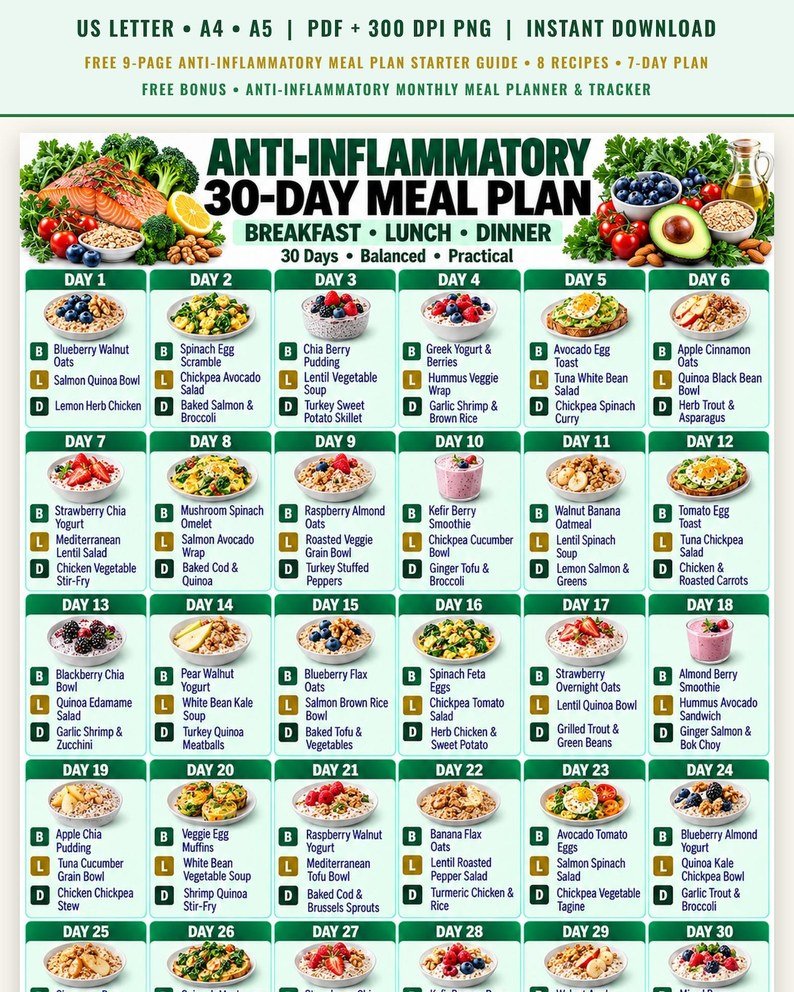
- 30 days of breakfast, lunch and dinner, 90 meals on one page
- Day 1 starts with blueberry walnut oats, a salmon quinoa bowl and lemon herb chicken
- Lunches include lentil vegetable soup, tuna white bean salad and chickpea cucumber bowls
- Free 9-page starter guide and a monthly planner and tracker, per the listing
- US Letter, A4 and A5 PDFs plus a 300 DPI PNG, per the listing
- Instant download · Print at home · US Letter · A4 · A5
Use code BLOG10 for 65% OFF at Etsy checkout!
Dressings and the 8 Ready-Made Combinations
Dressing is the part that makes a healthy salad something you want to eat again tomorrow. The chart gives six, each with its ingredients on a small card.
- Lemon herb: extra-virgin olive oil, lemon, herbs and black pepper.
- Tahini lemon: tahini, lemon, water and garlic.
- Balsamic herb: balsamic vinegar, olive oil and herbs.
- Ginger lime: lime, fresh ginger, olive oil and herbs.
- Dijon lemon: Dijon mustard, lemon and olive oil.
- Yogurt herb: plain Greek yogurt, lemon and fresh herbs.
None of them has sugar on its ingredient list, and that’s a quiet point in the chart’s favor, because Harvard Health lists sugar-sweetened drinks and refined carbohydrates among the things to limit. A small jar of any of these keeps for a few days in the fridge. Shake it before you pour. The tahini and yogurt versions thicken in the cold, so add a spoonful of water or lemon to loosen them.
A simple ratio helps if you don’t want to measure. Use about three parts oil to one part acid, lemon, lime or vinegar, then add the herbs, mustard or ginger to taste. Season with black pepper, and go easy on salt if you’re watching sodium.
The eight combinations. The bottom strip of the chart lists eight ready-to-make bowls, each with the ingredients printed under its picture. The names are the Mediterranean Chickpea Bowl, Salmon Power Bowl, Lentil Harvest Bowl, Tofu Crunch Bowl, Chicken Grain Bowl, Black Bean Veggie Bowl, Berry Walnut Salad and Edamame Green Bowl.
Three of them are easy to read on the listing photo. The Mediterranean Chickpea Bowl is mixed greens and quinoa, tomatoes and cucumber, chickpeas and avocado, with tahini lemon. The Salmon Power Bowl is spinach and brown rice, broccoli and salmon, walnuts, with lemon herb. The Lentil Harvest Bowl is kale and farro, sweet potato and lentils, pumpkin seeds, with balsamic herb. You can see that each one just takes one choice from steps one to seven, which is the whole idea.
A line at the foot of the chart says to build for variety: mix vegetables, whole grains, legumes or other proteins, nuts, seeds and flavorful dressings to create meals you prefer. That’s the best advice on the page. If you eat the same bowl every day you’ll get bored by Wednesday, and boredom is what sends people back to takeaway.
Making it a Mediterranean lunch. If you like the olive oil, tomatoes, beans and fish in these bowls, you may like the wider pattern behind them. Our Mediterranean diet food list covers the same foods across a whole day of eating, and Harvard Health calls that diet the closest fit to anti-inflammatory eating.
What Harvard Health Says About Anti-Inflammatory Foods
It helps to know what the evidence does and doesn’t say, so here’s a short summary of what Harvard Health Publishing writes on the topic.
The foods it lists. Harvard Health says an anti-inflammatory diet should include tomatoes, olive oil, green leafy vegetables such as spinach, kale and collards, nuts like almonds and walnuts, fatty fish like salmon, mackerel, tuna and sardines, and fruits such as strawberries, blueberries, cherries and oranges. Every one of those has a place in the builder, which is reassuring, because the chart wasn’t made to match that list. It simply follows common sense eating.
The foods it says to limit. The same page lists refined carbohydrates like white bread and pastries, French fries and other fried foods, soda and other sugar-sweetened drinks, red meat and processed meat such as hot dogs and sausage, and margarine, shortening and lard. A salad bowl built from the chart doesn’t need any of them.
A pattern, not a single food. Harvard Health’s advice is to aim for an overall healthy diet and it suggests the Mediterranean diet as a plan that closely follows anti-inflammatory eating, high in fruits, vegetables, nuts, whole grains, fish and healthy oils. No one salad does the work. It’s the habit of eating this way most days.
Nuts and polyphenols. Harvard Health notes that studies have linked nuts with lower markers of inflammation and a lower risk of heart disease and diabetes, and that fruits and vegetables such as blueberries, apples and leafy greens are high in natural antioxidants and polyphenols. Oldways, which promotes the Mediterranean diet, lists key elements as an abundance of vegetables and fruits, herbs, seafood, olive oil, beans and whole grains, and suggests eating seafood twice a week and a vegetarian meal once a week. These are reasons to enjoy a salad, not guarantees about your own health.
Who should check first. If you take blood thinners, have a nut or seed allergy, are on a kidney or low-potassium diet, or have a digestive condition that makes raw vegetables or seeds hard to tolerate, talk to your doctor or dietitian before changing what you eat. Some of the chart’s choices, like raw cabbage, seeds and beans, won’t suit everyone.
A salad is a small, friendly way to eat more vegetables, beans, fish and olive oil without turning dinner into a project. Pick one bowl from the table, shop for it on the weekend, and change one step next week.
For soups, wraps and grain bowls as well as salads, see our anti inflammatory lunch ideas, with 24 lunches and a packed lunch week.
Frequently Asked Questions
What makes a salad anti-inflammatory?
There’s no single rule, but Harvard Health lists the foods it counts as anti-inflammatory: tomatoes, olive oil, green leafy vegetables, nuts like almonds and walnuts, fatty fish such as salmon and sardines, and fruits like strawberries and blueberries. A salad that uses several of those, with a simple oil and lemon dressing, fits the pattern.
What is the best base for an anti-inflammatory salad?
Dark leafy greens are the usual pick. The builder’s first step lists spinach, kale, arugula, romaine, mixed greens, cabbage, baby spinach, massaged kale, spring mix and shredded Brussels sprouts, so you can rotate through them. Massaged kale holds up best if you’re packing a salad for the next day.
Which dressing is best?
Choose one you’ll actually make. The chart’s six are lemon herb, tahini lemon, balsamic herb, ginger lime, Dijon lemon and yogurt herb, and all use olive oil, tahini, yogurt or vinegar with citrus and herbs. Harvard Health lists olive oil among the foods to include, while bottled dressings with added sugar are an easy thing to swap out.
Can I meal prep these salads?
Yes, with a little care. Keep the dressing in a small jar, pack the grain and protein at the bottom, and add soft toppings like avocado and berries on the day. Sturdy greens such as kale and cabbage last longer than spinach or arugula.
Is a salad enough for a whole meal?
It can be, if you add a protein and a grain, which is exactly what steps two and four of the builder do. A bowl with greens, quinoa, chickpeas, vegetables and a fat such as avocado or nuts is a full meal for most people. If you have a medical condition or special needs, ask your dietitian.
This guide is for general wellness and is not medical advice. Check with your doctor or dietitian before changing your diet, especially if you take blood thinners, have a food allergy or follow a kidney diet.
Related Guides
- Anti-Inflammatory Diet Meal Ideas
- Anti-Inflammatory Food List
- Anti-Inflammatory Diet Meal Plan
- Mediterranean Diet Food List
Sources
Sources: Harvard Health Publishing, Foods that fight inflammation, Oldways, Mediterranean Diet
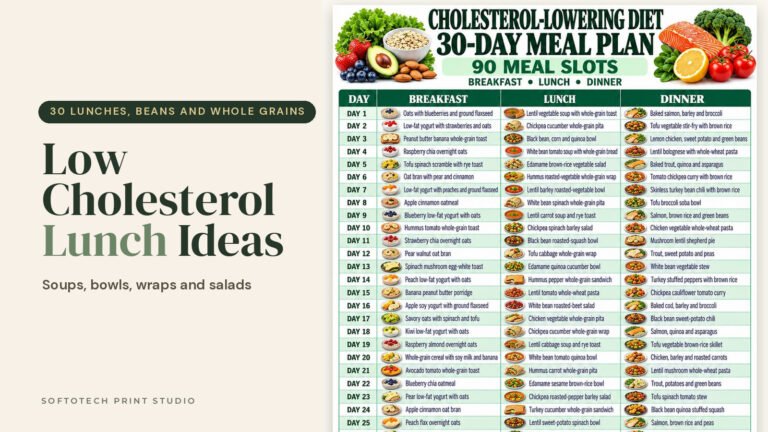 Diet & Food ListsLow Cholesterol Lunch Ideas: 30 Soups, Bowls, Wraps and Salads From a 30 Day Meal Plan, With Swaps and a Prep Week
 Diet & Food ListsPrediabetes Breakfast Ideas: 7 Balanced Breakfasts From a Weekly Meal Plan, Plus Swaps From an Eat, Limit and Avoid List
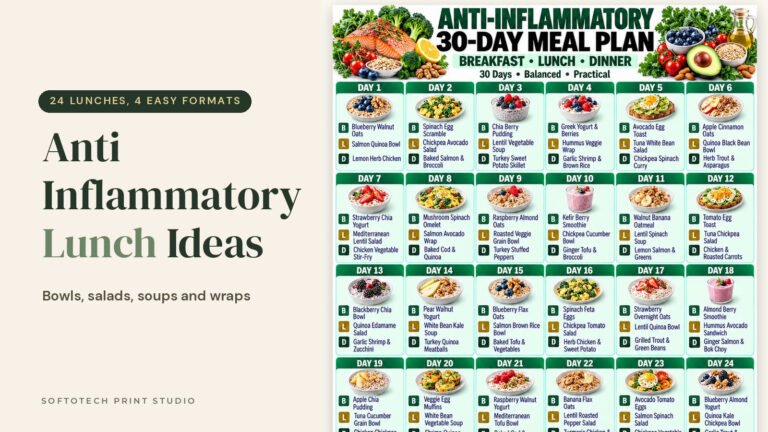 Diet & Food ListsAnti Inflammatory Lunch Ideas: 24 Bowls, Salads, Soups and Wraps From a 30 Day Meal Plan, With a Packed Lunch Week